
To help prevent wandering, consider using door alarms that alert you whenever an exit is opened, providing immediate warnings. GPS trackers worn as pendants or bracelets let you locate your loved one in real time, especially if they venture outside familiar areas. Combining these safety tools with medication management, routines, and support from caregivers greatly reduces risks. If you want practical tips on choosing and using these solutions, stay with us for more helpful insights.
Key Takeaways
- Door alarms alert caregivers immediately when exits are opened, preventing unpredictable wandering episodes.
- GPS trackers worn as pendants or bracelets enable real-time location monitoring for quick rescue.
- Combining door alarms with GPS devices enhances safety by providing early warnings and precise tracking.
- Proper medication and routine management reduce confusion and the urge to wander, supporting overall safety.
- Support networks and caregiver training improve implementation of safety strategies, ensuring effective wandering prevention.
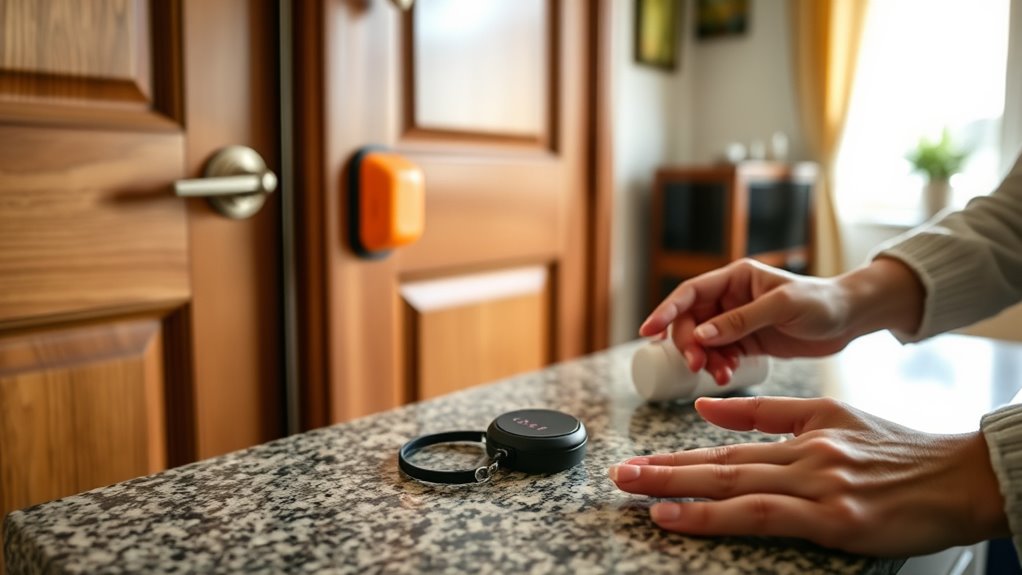
Wandering can pose serious safety risks for individuals with cognitive impairments or dementia, making prevention essential. When your loved one begins to wander, it’s often unpredictable and can lead to dangerous situations, such as getting lost, injury, or exposure to harsh weather. To minimize these risks, you need effective strategies that provide peace of mind and guarantee safety. Implementing door alarms and GPS trackers is a proactive approach that can make a significant difference. These tools serve as early warning systems, alerting you immediately if your loved one attempts to leave a safe area. Door alarms are simple to install on entrances and exits, sounding off when opened, giving you precious seconds to intervene. GPS trackers, often worn as pendants or bracelets, allow you to pinpoint their exact location in real time through a smartphone app. This technology is especially useful if your loved one is prone to wandering beyond familiar surroundings, such as outside the home or in unfamiliar places. Additionally, cellular connectivity ensures that you can stay connected even when your loved one is in remote areas, further enhancing safety and peace of mind.
However, preventing wandering isn’t just about technology; medication management also plays an essential role. Proper medication schedules can help stabilize behaviors and reduce agitation, which sometimes triggers wandering episodes. Guaranteeing your loved one adheres to their prescribed medications can decrease confusion and restlessness. Additionally, consistent routines and a structured environment contribute to reducing the impulse to wander. You should work closely with healthcare providers to adjust medications as needed and explore behavioral interventions that support your loved one’s safety.
Caregiver support is equally indispensable in this process. Managing someone with dementia’s wandering tendencies is stressful and demanding. Connecting with local support groups or professional caregivers can provide you with valuable advice, emotional backing, and practical assistance. Sharing experiences with others facing similar challenges can help you feel less isolated and more empowered. Moreover, caregiver training programs often include strategies for implementing safety measures like door alarms and GPS devices effectively. You don’t have to navigate this alone; community resources and professional guidance can bolster your efforts and improve your loved one’s quality of life.
Frequently Asked Questions
How Effective Are Door Alarms in Preventing Wandering Incidents?
Door alarm effectiveness is high when it comes to wandering prevention strategies. You’ll find that these alarms alert you instantly if your loved one tries to leave, giving you vital moments to intervene. Combined with other strategies like GPS trackers, door alarms greatly reduce wandering incidents. They serve as a reliable, immediate alert system, helping you maintain safety and peace of mind while supporting your loved one’s independence.
Can GPS Trackers Be Used Discreetly Without Upsetting the Person With Dementia?
Think of a GPS tracker as a silent sentinel, blending seamlessly into daily life. Yes, you can use them discreetly, minimizing visibility to avoid upsetting your loved one. Modern trackers are small, lightweight, and designed for discreet monitoring, helping balance safety with privacy concerns. By choosing subtle devices and explaining their purpose gently, you can maintain trust while ensuring their safety without making them feel watched.
What Are the Privacy Considerations When Using GPS Tracking Devices?
When using GPS tracking devices, you need to prioritize data security by choosing reputable providers that encrypt information. Always obtain clear consent from the person with dementia, explaining how the device works and its purpose. Regularly review privacy settings and update consent as needed. Respect their dignity by balancing safety with their right to privacy, ensuring you follow legal guidelines and ethical practices throughout.
Are There Legal Regulations for Using Tracking Devices on Dementia Patients?
Yes, there are legal regulations you must follow when using tracking devices on dementia patients. You need to guarantee legal compliance by respecting privacy laws and obtaining informed consent whenever possible. Ethical considerations also come into play, so it’s important to balance safety with respecting the patient’s dignity. Always stay informed about local regulations and consult healthcare professionals to make sure you’re using tracking devices responsibly and legally.
How Do I Choose the Best Alarm System for My Loved One’s Needs?
You should choose an alarm system that offers essential features like real-time location tracking, easy-to-use alerts, and reliable alerts for door openings. Did you know that 70% of wandering incidents can be prevented with the right tools? Focus on system features that match your loved one’s needs, and make sure caregivers receive proper training to manage the device effectively. This combination helps keep your loved one safe and gives you peace of mind.
Conclusion
By using door alarms and GPS trackers, you turn the unpredictable tide of wandering into a manageable current. These tools act as your lighthouse, guiding your loved one safely back home and preventing potential dangers. With vigilance and the right technology, you create a safety net that catches your loved one before they drift too far. Remember, you’re not just protecting them—you’re anchoring their sense of security amidst the storm of dementia.