
To senior-proof your home, start by installing grab bars in bathrooms, near toilets, and showers for extra support. Improve lighting throughout the house, especially in hallways and staircases, by using motion sensors or smart bulbs. Clear clutter and secure rugs to prevent tripping. Upgrade bathroom safety with non-slip mats and raised seats. Widen doorways and add handrails where needed. Setting up emergency alert systems is also essential. Keep exploring to learn more ways to create a safer environment.
Key Takeaways
- Install grab bars, non-slip mats, and walk-in showers in bathrooms to prevent falls.
- Improve lighting with smart bulbs, motion sensors, and brighter fixtures in key areas.
- Clear clutter and secure rugs to eliminate tripping hazards throughout the home.
- Widen doorways, modify thresholds, and add sturdy handrails for better accessibility.
- Set up reliable emergency systems with voice activation and location tracking in critical areas.
Install Grab Bars in Key Areas
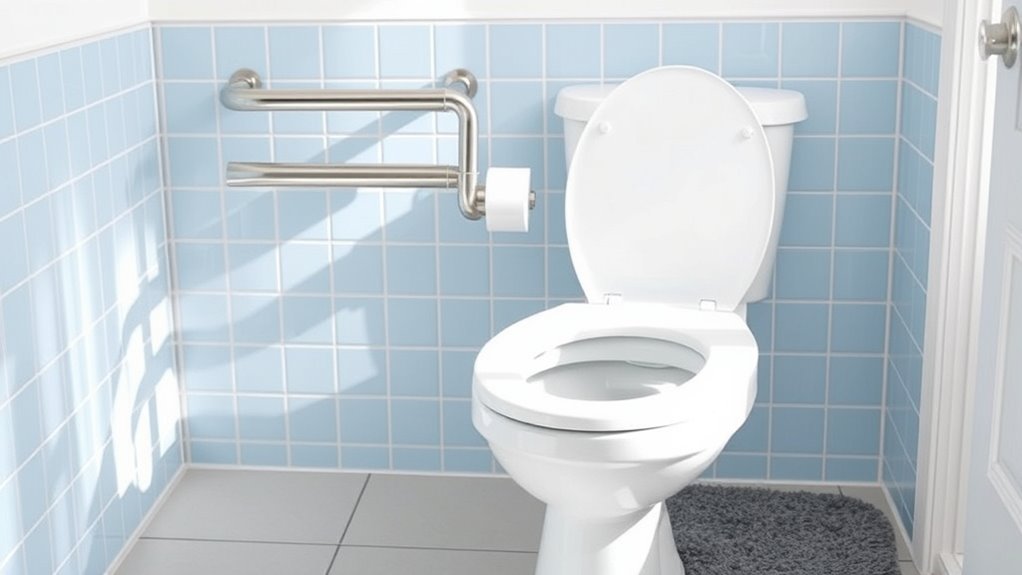
Installing grab bars in key areas can markedly reduce the risk of falls and increase safety around your home. Focus on locations like the bathroom, where slips are common. Bathtub grips provide extra support when entering or exiting the tub, preventing slips that could cause injury. Shower benches also offer stability, allowing you to sit comfortably while washing, reducing the risk of losing balance. Securely mounted grab bars give you something sturdy to hold onto during transfers or while standing. Make sure they are installed at the right height and location for easy access. Proper installation techniques ensure that grab bars are both secure and effective in providing safety. Additionally, selecting grab bars with appropriate strength and durability ensures they can support your weight when needed. Choosing the right materials and mounting hardware can further enhance safety and longevity. Using proper mounting hardware is essential to ensure that grab bars are securely anchored into wall studs or appropriate anchors, preventing accidents. Proper installation and maintenance ensure ongoing safety and stability. By adding these safety features, you create a safer environment that encourages independence and minimizes accidents. Simple adjustments like bathtub grips and shower benches can make a significant difference in your daily safety.
Improve Lighting Throughout the Home

Have you ever stumbled in the dark or struggled to find the light switch? Improving lighting throughout your home makes a big difference in safety. Consider installing smart bulbs, which you can control remotely or set to turn on automatically when you enter a room. They provide bright, consistent lighting and can be adjusted for different needs. Adding dimmer switches allows you to customize lighting levels, reducing glare and making navigation easier. Bright, well-lit hallways and staircases help prevent falls. Ensure all areas, especially bathrooms and kitchens, are adequately illuminated. Good lighting minimizes shadows and blind spots, making daily activities safer and more comfortable. Incorporating free floating lighting fixtures can also enhance the ambiance while maintaining safety. These simple upgrades create a safer environment, giving you confidence in moving around your home at any time. Proper lighting design can further improve visibility and safety throughout your living space, especially when combined with techniques like field recording to optimize lighting placement and effectiveness. Additionally, using energy-efficient bulbs can help reduce electricity costs while maintaining optimal brightness. Being aware of lighting technology trends can help you choose the most effective solutions for your needs.
Remove Tripping Hazards and Clutter

Clutter and tripping hazards can quickly turn your safe home into a dangerous one, especially for seniors. To reduce risks, start by organizing belongings so everything has a designated spot. This clears pathways and prevents items from being left on floors. Minimize decorations and unnecessary furniture that can block hallways or create obstacles. Keep walkways clear, and regularly check for loose cords, shoes, or other objects that could cause falls. Use storage solutions to keep clutter out of sight but accessible. Limiting clutter not only makes your home safer but also easier to navigate. Incorporating organization strategies can further enhance safety and create a more calming home environment. Additionally, applying home safety tips can help identify other potential hazards and improve overall safety. Regularly inspecting your home for tripping hazards and hazardous clutter can also prevent accidents before they happen.
Secure Rugs and Carpets
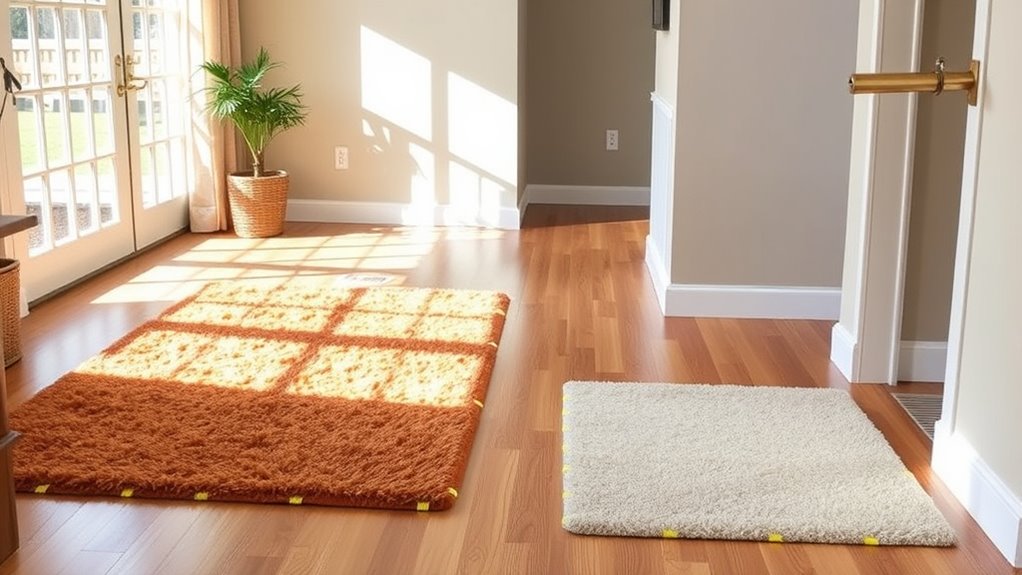
Secure rugs and carpets by using non-slip pads or adhesive tape underneath. This simple step prevents area rugs from sliding and causing falls. For added stability, consider installing carpet padding beneath your carpets; it provides extra grip and cushioning, reducing the risk of tripping. Make sure the pads or tape are designed specifically for the type of flooring you have. When choosing area rugs, opt for those with rubber backing or secure the edges with double-sided tape. Regularly check and reattach loose rugs to avoid slips. Ensuring your rugs are properly secured is especially important if you have piercings, as maintaining a safe environment helps prevent accidents. Securing your rugs and carpets is an effective way to create a safer environment, especially in high-traffic areas or spots prone to spills. Additionally, using non-slip rug pads can significantly improve safety by preventing movement even on smooth surfaces. Incorporating proper installation techniques can further enhance stability and safety. Using appropriate materials for securing rugs can also help prevent damage to your flooring and extend the lifespan of your carpets. Employing proper maintenance routines contributes to the long-term safety and appearance of your rugs. Taking these precautions minimizes hazards and gives you peace of mind.
Upgrade Bathroom Safety Features
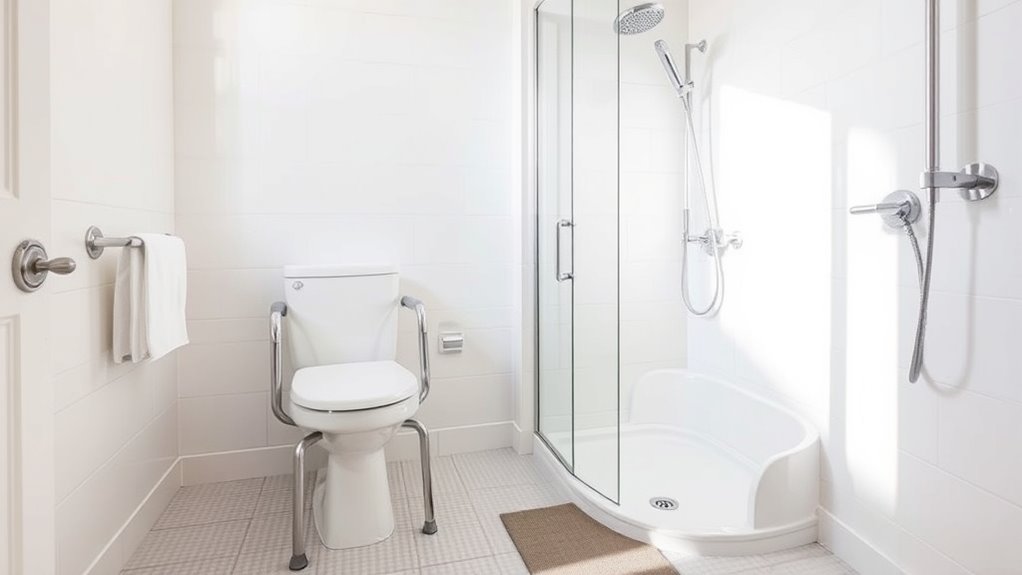
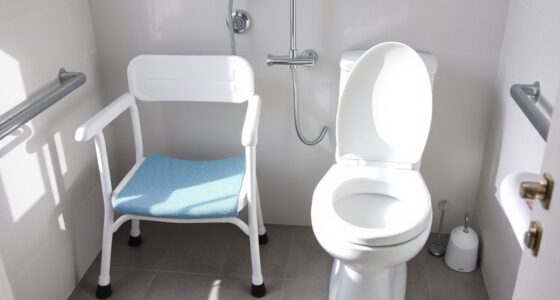
Adding safety features to your bathroom can considerably reduce the risk of slips and falls. Start by improving bathtub safety; install grab bars and non-slip mats to prevent slipping during baths or showers. Consider replacing your bathtub with a walk-in shower or adding a low-threshold entry for easier access. For toilet accessibility, add raised toilet seats and grab bars nearby, making it easier to sit down and stand up safely. Make certain the bathroom has good lighting to avoid accidents in low visibility. Keep floors dry and clear of clutter to minimize slipping hazards. These upgrades not only protect you but also promote independence, making your bathroom a safer space for everyday use. Using non-slip options can further enhance safety and reduce fall risks. Incorporating slip-resistant bathroom surfaces can provide additional safety benefits. Additionally, choosing safety-approved fixtures can ensure long-term reliability and safety compliance. Upgrading to smart safety devices, such as motion-activated lights or alarms, can also help alert you to hazards and improve overall bathroom safety.
Adjust Kitchen Safety Measures
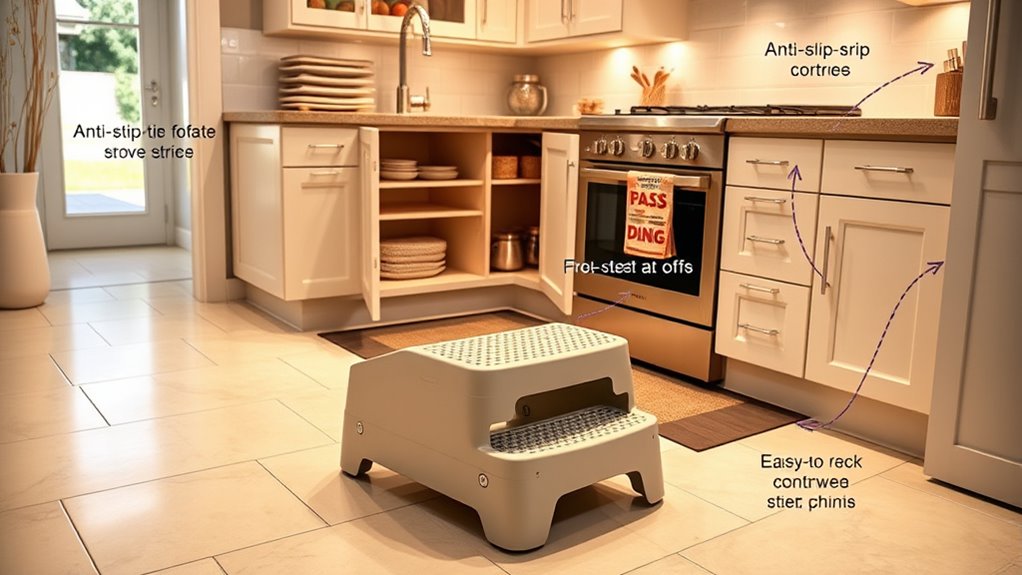
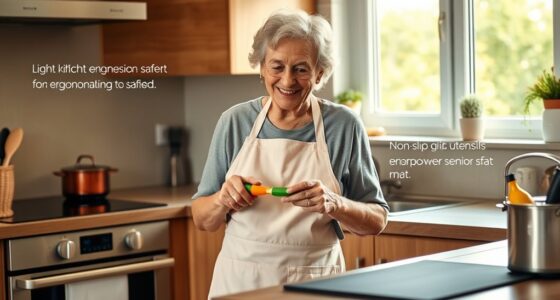
To make your kitchen safer, start by evaluating and adjusting the placement of frequently used items to minimize reaching or bending risks. Store everyday essentials at waist level to prevent strain. Consider upgrading to smart appliances that offer voice commands or remote controls, reducing the need to bend or stretch. Use ergonomic tools like lightweight pots, easy-grip utensils, and non-slip mats to enhance safety and comfort. Install pull-out shelves or lazy Susans to make accessing items simpler. Keep the countertop clear of clutter to prevent accidents. Ensure that heavy or sharp objects are stored safely out of reach. Additionally, incorporating ergonomic tools can significantly reduce physical strain and prevent injuries. Incorporating home safety strategies such as proper lighting and secure storage can further prevent falls and injuries, making your kitchen a safer space for everyone, especially seniors.
Enhance Doorway and Staircase Accessibility
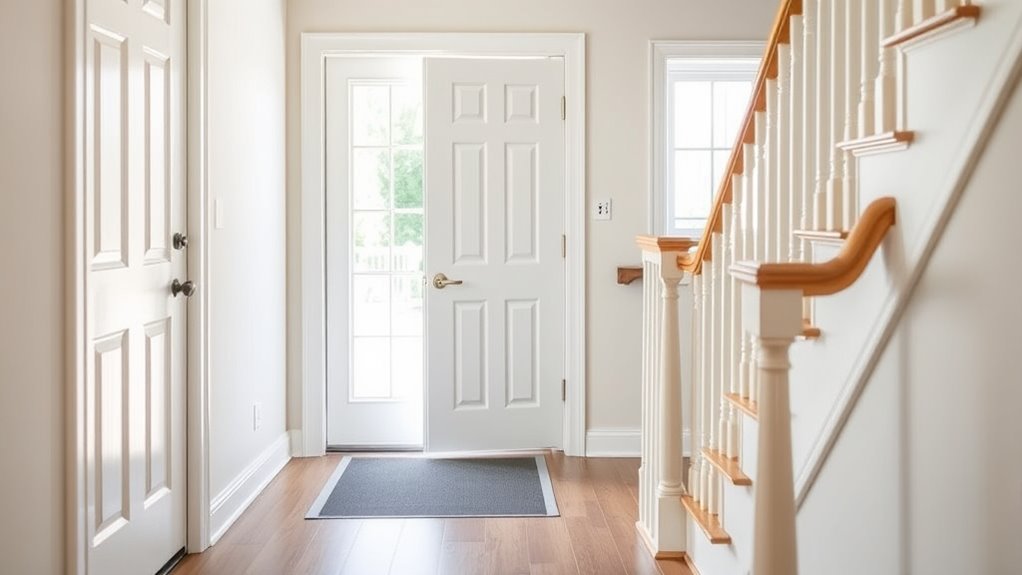
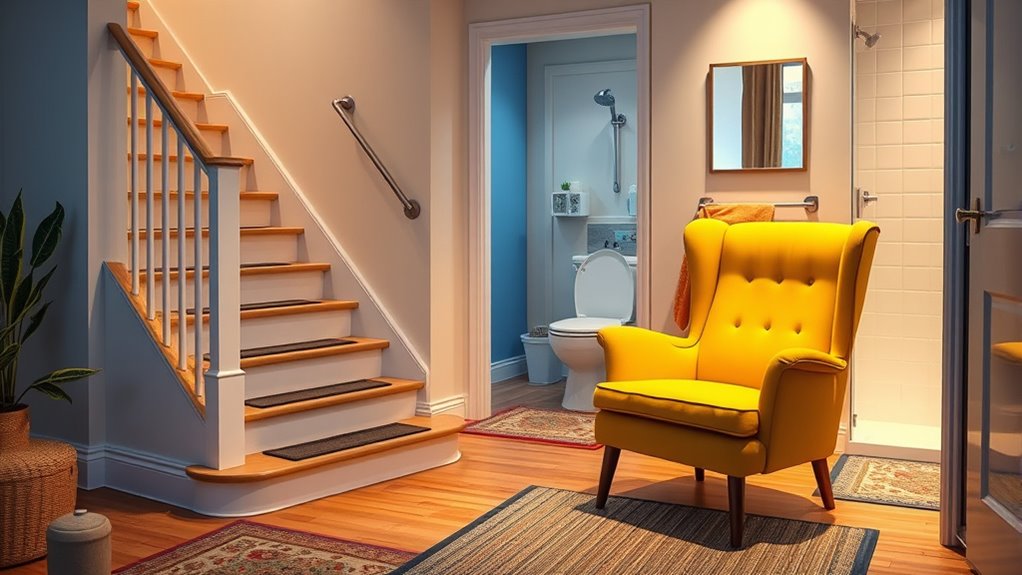
Improving doorway and staircase accessibility can considerably reduce fall risks and make your home safer. Start by considering threshold modifications to eliminate tripping hazards. Lower or remove thresholds at doorways to create a smooth passage between rooms, making it easier for mobility aids or walkers to pass through. Doorway widening is another essential step; enlarging narrow doorways provides more space for wheelchairs or walkers, preventing accidental bumps. Additionally, installing sturdy handrails along staircases offers support and stability when ascending or descending. Ensure steps are even, clearly marked, and well-lit for added safety. These modifications make your home more navigable, reduce the chance of falls, and promote independence for seniors. Small changes in doorway and staircase design can markedly enhance overall safety.
Install Motion-Activated Lighting
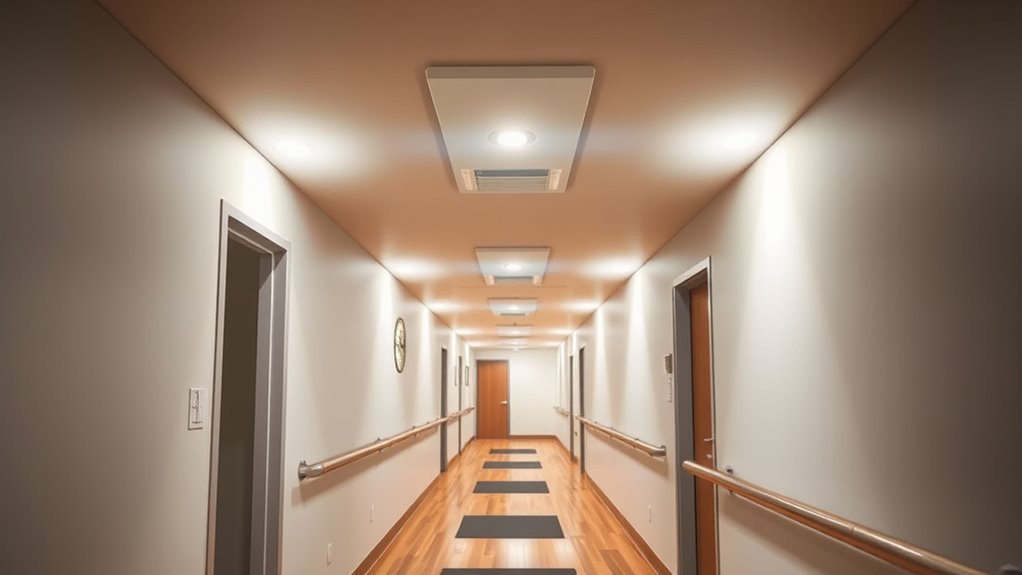
Installing motion-activated lighting improves your night visibility, making it easier to navigate safely. It also acts as a strong deterrent to intruders, keeping your home more secure. With these benefits, you can feel more confident and protected during nighttime hours.
Enhances Night Visibility
Motion-activated lighting automatically turns on when it detects movement, making it easier for you to see and navigate your property at night. This enhancement boosts outdoor visibility, so you won’t stumble or miss hazards after dark. Better illumination also supports your nighttime security by eliminating dark spots where intruders could hide. When you approach your driveway, walkway, or porch, the lights activate instantly, providing clear, focused light without you having to fumble for switches. This simple upgrade helps you move safely and confidently during evening hours, reducing the risk of trips and falls. Plus, heightened outdoor visibility discourages unwanted visitors, making your home safer and more secure throughout the night.
Deters Intruders Effectively
When you set up motion-activated lighting around your home, you make it much harder for intruders to go unnoticed. These lights automatically turn on when movement is detected, startling potential intruders and drawing attention to their presence. This simple upgrade enhances your home security by increasing intruder prevention efforts. To understand its effectiveness, consider this table:
| Benefit | Explanation |
|---|---|
| Deterrence | Lights scare off would-be intruders |
| Increased visibility | Illuminates dark areas around your home |
| 24/7 protection | Active day and night |
| Cost-effective | Inexpensive installation, long-term savings |
| Ease of use | Automated, no manual operation needed |
Adding motion-activated lighting is a proactive step toward securing your home and protecting your loved ones.
Use Non-Slip Mats and Flooring
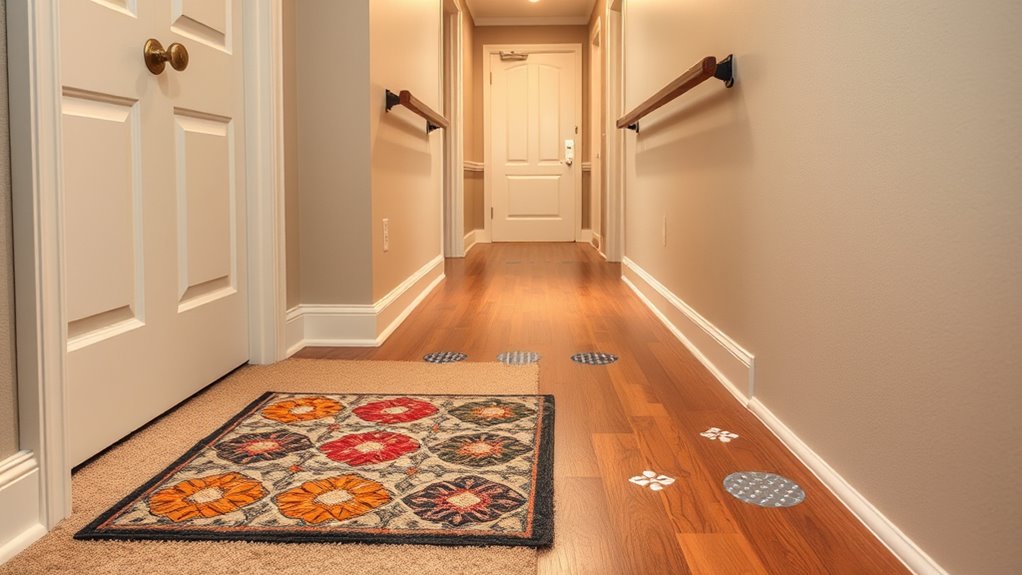
To help prevent slips and falls, incorporating non-slip mats and flooring is essential. Non-slip flooring provides a stable surface, reducing the risk of accidents, while safety mats add extra grip in high-risk areas like bathrooms and kitchens. You can enhance safety by:
- Installing non-slip flooring in bathrooms, kitchens, and entryways
- Placing safety mats in showers, bathtubs, and on slippery stairs
- Choosing textured surfaces that increase traction and reduce slipperiness
These measures make your home safer and more senior-friendly. Non-slip flooring options are available in various materials, including vinyl and rubber, which are durable and easy to maintain. Safety mats are simple to move and replace, providing immediate slip resistance where needed most. Together, they create a safer environment, helping you stay independent and confident at home.
Set Up Emergency Alert Systems
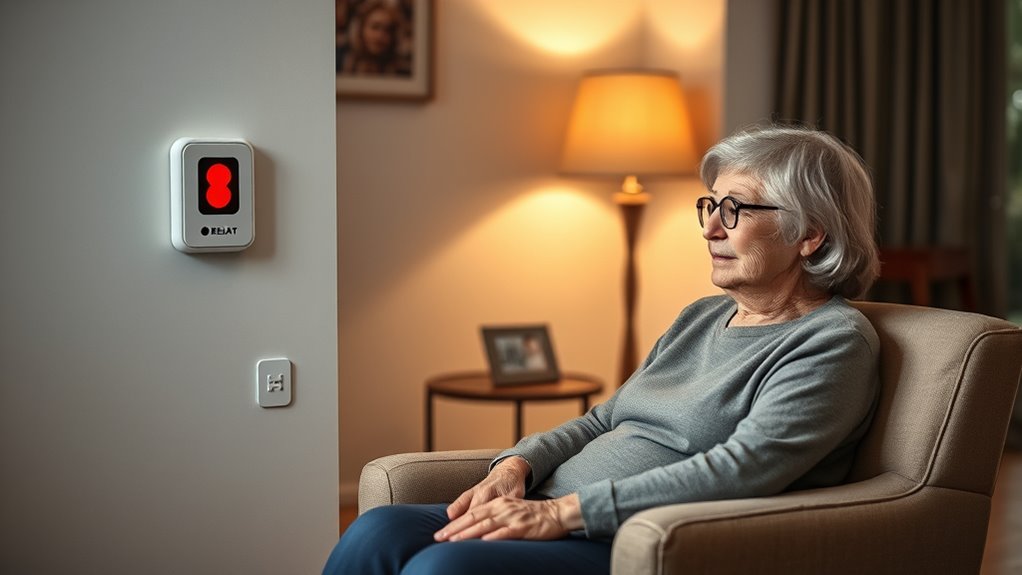
Have you considered how quickly you can get help in an emergency? Setting up emergency alert systems guarantees you’re never alone when help is needed. Voice-activated alerts make summoning assistance simple—you just speak, and help is on the way. Wearable emergency devices are another crucial option; you can press a button or even activate them with a voice command. These devices can track your location and connect you directly to emergency services or loved ones. Installing these systems in key areas like bedrooms and bathrooms provides peace of mind. Make sure your home is equipped with reliable, easy-to-use emergency alert options, so help is always just a voice command or a quick press away.
Frequently Asked Questions
How Often Should Safety Features Be Inspected or Maintained?
You should inspect safety features at least once a year to guarantee fire safety and electrical safety. Regular checks help catch potential hazards early, like frayed wires or malfunctioning smoke detectors. Keep fire extinguishers updated and test smoke alarms monthly. Also, schedule professional inspections every 12 months for electrical systems. Staying proactive minimizes risks, keeps your home safe, and ensures that safety measures work effectively when needed most.
Are There Age-Specific Safety Modifications to Consider?
Absolutely, age-specific safety modifications are essential! You should focus on features like medication management systems to prevent accidental overdoses, grab bars to avoid falls, and emergency preparedness plans tailored for seniors. As you age, your needs change rapidly—what worked yesterday might not today. Prioritize these adjustments to keep your home safe and your independence intact, making every day safer and more comfortable.
What Budget Options Exist for Senior-Proofing a Home?
You can find plenty of budget-friendly solutions for senior-proofing your home. Look for cost-effective safety upgrades like grab bars, non-slip mats, and improved lighting, which don’t break the bank but markedly boost safety. Consider DIY projects or shopping at discount stores for quality equipment at lower prices. Prioritizing these affordable options helps create a safer environment without straining your budget.
How Can I Involve Seniors in Safety Assessments?
You can involve seniors in safety assessments by asking for their input on assistive technology that might help them, like grab bars or motion sensors. Encourage open discussions about emergency planning, making sure they feel comfortable sharing concerns. Walk through the home together, noting potential hazards, and listen carefully to their suggestions. This collaborative approach boosts their confidence and ensures safety measures truly meet their needs.
Are There Local Programs or Resources for Home Safety Upgrades?
You can explore community workshops and local grants to upgrade your home safety. Many areas offer free or low-cost workshops where you learn safety modifications tailored for seniors. Local grants may also assist with expenses for installing grab bars, ramps, or better lighting. Check with your city or senior centers to find programs designed to make your home safer and more accessible, ensuring peace of mind for both you and your loved ones.
Conclusion
By making these safety updates, you’re planting sturdy roots that support your independence and well-being. Think of your home as a fortress of comfort, where every tweak strengthens its defenses against accidental falls and hazards. With these simple fixes, you’re weaving a safety net that catches you before a stumble, turning your space into a sanctuary where confidence and peace of mind blossom. Your home will be a safe harbor, welcoming you with open arms every day.