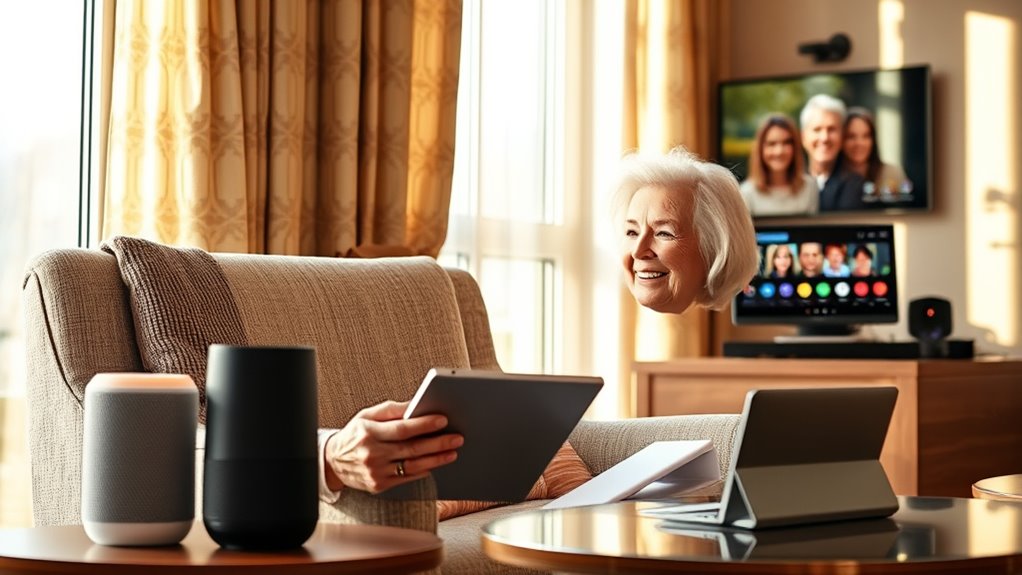

To check in on seniors living alone daily, consider using remote monitoring systems with sensors, cameras, and alert devices that detect unusual activity or emergencies. Smart speakers and connected home devices can remind them to take medications or stay hydrated while alerting caregivers if no movement is detected. These technologies promote safety and independence without intruding on their privacy. Explore further options to guarantee your loved one stays safe and connected every day.
Key Takeaways
- Use remote monitoring sensors and cameras to detect activity and alert caregivers if no movement is observed.
- Implement connected devices like smart speakers for daily check-ins on medication, hydration, and mood.
- Utilize alert systems that notify family or caregivers immediately in case of emergencies or unusual activity.
- Encourage virtual social engagement through video calls and online community platforms to reduce loneliness.
- Automate routine safety checks and reminders to promote independence while ensuring consistent oversight.
Living alone as a senior can be both rewarding and challenging. While it offers independence and control over your daily routine, it also requires careful attention to your safety and well-being. Fortunately, technology now makes it easier to stay connected and secure without sacrificing your autonomy. Remote monitoring systems are a key part of this, allowing family members or caregivers to keep an eye on you from afar. These systems use sensors, cameras, and alert devices to detect unusual activity or emergencies, like a fall or a sudden health issue. They provide peace of mind for both you and your loved ones, knowing that help can be summoned quickly if needed. Many remote monitoring setups are unobtrusive and easy to use, so you can go about your day without feeling watched or restricted. Incorporating connected home devices can further enhance your safety and convenience by automating routine tasks and alerts.
Social engagement is equally important, especially when you live alone. Staying socially active helps combat loneliness and keeps your mind sharp. Technology offers numerous ways to stay connected—video calls, social media, or virtual community groups can all foster interaction with friends, family, and neighbors. Platforms designed specifically for seniors can be simple to navigate, making it easier to maintain regular contact. Some smart devices even promote social engagement by reminding you to call loved ones or join online activities. These tools can help you build routines that include social interactions, which are essential for your emotional health. Plus, many community programs now incorporate digital platforms to keep seniors involved in local events, classes, or discussion groups. By leveraging these digital options, you can stay socially engaged without leaving your home, reducing feelings of isolation.
Integrating remote monitoring and social engagement technologies creates a safety net that promotes independence while ensuring you’re supported. For example, a smart speaker can serve as a daily check-in, reminding you to take medication, stay hydrated, or participate in online social activities. Simultaneously, sensors can alert caregivers if there’s no movement during expected times, indicating potential issues. This combination offers a proactive approach to senior living, where technology acts as an invisible helper, providing reassurance and promoting a vibrant, connected lifestyle. You’ll find that these tools not only enhance safety but also empower you to maintain your routines and social connections confidently. As new innovations continue to emerge, staying informed about available tech can help you make the most of your independence, ensuring that living alone remains a positive experience rather than a source of worry.
Frequently Asked Questions
What Are the Best Budget-Friendly Tech Options for Seniors?
You can find budget-friendly tech options like wearable devices that monitor health and activity, providing peace of mind. Smart home systems, such as affordable voice assistants or security cameras, help you check in and guarantee safety without breaking the bank. These tools are easy to set up and use, making daily monitoring affordable and accessible, ensuring your loved ones stay safe and connected without high costs.
How Can Families Ensure Privacy With Monitoring Devices?
To address privacy concerns and data security, you should choose monitoring devices with strong encryption and clear privacy policies. Always inform your loved one about what data is collected and how it’s used, ensuring transparency. Regularly update device software, and limit access to authorized family members. By actively managing these aspects, you can help protect your senior’s privacy while using helpful monitoring tech for their safety.
Are There Any Health Concerns With Using Certain Tech Devices?
Think of tech devices as trusted friends; some might have hidden health concerns or cause privacy issues if incompatible. For example, a recent study showed certain health monitors could trigger false alarms, causing unnecessary worry. To avoid this, check device compatibility and understand privacy concerns beforehand. Staying informed helps you verify that the tech your loved ones use supports their health without risking their privacy or introducing new health concerns.
How User-Friendly Are These Technologies for Seniors Unfamiliar With Gadgets?
You’ll find that many smartphone apps and voice assistants are designed to be user-friendly for seniors unfamiliar with gadgets. These devices often feature simple interfaces, large buttons, and clear instructions, making them easy to navigate. Voice assistants, in particular, allow quick checks-in and reminders through simple voice commands. With some guidance, your loved ones can comfortably use these technologies daily, helping them stay connected and safe without feeling overwhelmed.
What Emergency Response Features Are Most Reliable?
Are you confident these emergency response features will work when needed? Fall detection and medication reminders are among the most reliable, ensuring quick alerts if a senior falls or forgets medication. Devices with automatic alerts to caregivers or emergency services provide peace of mind. Look for systems with proven accuracy and easy activation, so help arrives fast, even if your loved one can’t manually call for assistance.
Conclusion
As you consider how to keep your loved ones safe, it’s remarkable how technology can quietly become their best guardian. Sometimes, a simple device or app can make all the difference, giving you peace of mind and ensuring they’re okay each day. It’s funny how the right tools appear just when you need them most—like a coincidence that brings reassurance. With these innovations, you can stay connected and confident, no matter the distance.