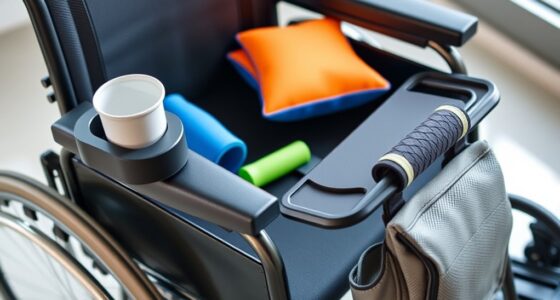
To safely use a walker after hip replacement, start by adjusting it so your elbows are slightly bent when gripping the handles. Step forward slowly and place the walker slightly ahead, then shift your weight onto it before moving your legs. Keep your posture upright, engage your core, and avoid leaning or twisting. Regularly check the walker’s condition, clear your path, and practice controlled movements. For detailed guidance, continue exploring proven techniques to boost your confidence and safety.

Turn quiet afternoons into listening time
- Thousands of audiobooks, podcasts and originals
- Listen on your phone, tablet or Echo — also offline
- Cancel anytime
Key Takeaways
- Adjust the walker height so elbows are slightly bent when grasping handles for proper posture.
- Take slow, deliberate steps, placing the walker slightly ahead before shifting weight onto it for stability.
- Engage core muscles and maintain good posture to ensure balance and proper gait during walking.
- Regularly check rubber tips and environment for safety, removing obstacles and ensuring good lighting.
- Practice gait and safety techniques under supervision, gradually increasing walking distance and confidence.

After hip surgery, using a walker can considerably improve your mobility and safety during recovery. It provides stability and support, helping you regain confidence as you start moving around again. To maximize the benefits, focusing on walker safety is essential. Before you begin walking, make sure your walker is set up correctly—its height should be adjusted so that your elbows are slightly bent when you grasp the handles. This positioning helps prevent strain on your shoulders and arms. Always check that the walker’s rubber tips are in good condition and firmly grip the ground to prevent slipping. Keep your environment clear of obstacles like loose rugs, cords, or clutter that could cause you to trip. Good lighting is also fundamental to see where you’re stepping, especially during the early stages of recovery.
Gait training plays a vital role in your recovery process, helping you develop safe and efficient walking patterns. When you start walking with your walker, focus on taking slow, deliberate steps. Keep your weight evenly distributed between your legs and the walker, avoiding leaning too far forward or to the sides. As you move, place your walker slightly ahead of you, ensuring it’s stable before shifting your weight onto it. Engage your core muscles to maintain good posture and balance throughout each step. It’s normal to feel some discomfort or weakness initially, but if you experience pain, stop and rest. Your physical therapist will likely guide you through specific gait training exercises tailored to your needs, emphasizing proper technique to prevent falls and promote healing. Additionally, practicing walker safety measures and proper gait techniques can significantly reduce the risk of falls and injuries during your recovery.
As you become more comfortable, you can gradually increase your walking distance, but always listen to your body. Take breaks frequently to avoid fatigue, which can compromise your walker safety. Practice turning and maneuvering around furniture in a controlled manner to build confidence and coordination. Remember, the goal is to develop a natural, balanced gait that minimizes strain on your hips and ensures stability. Consistent practice under supervision or following your therapist’s instructions will help you progress safely. Over time, as your strength improves, your gait will become more natural, allowing you to move confidently with the walker. Staying attentive to proper walker safety and dedicated gait training will support your recovery, reduce the risk of falls, and help you regain independence after hip surgery.
Products Worth Considering

BowFlex Results Series SelectTech 552 Adjustable Dumbbell

Bowflex SelectTech 840 Adjustable Kettlebell

Bowflex PR1000 Home Gym
As an affiliate, we earn on qualifying purchases.
Frequently Asked Questions
How Long Should I Use the Walker Daily?
You should use your walker as recommended by your doctor, typically for several weeks daily, gradually reducing use as you gain strength. Prioritize walker comfort by adjusting it properly and ensuring handles are at the right height. Remember to perform regular walker maintenance—check for loose parts or worn-out tips—to keep it safe. Listen to your body and avoid overusing it to prevent fatigue or discomfort.
Can I Climb Stairs With a Walker?
You can climb stairs with a walker, but only if your healthcare provider says it’s safe. Walker safety during stair navigation is essential; always use the handrails and make certain your walker is stable. Take one step at a time, and move your unaffected leg up first, then the affected leg. Practice slowly and carefully until you feel confident. Never rush, and stop if you feel unsteady.
When Is It Safe to Stop Using the Walker?
Most people regain walker independence within 4 to 6 weeks after surgery, but it varies. You’ll know it’s safe to stop using your walker when your healthcare provider confirms you’ve achieved key mobility milestones, like walking steadily without pain. Trust your body’s signals and progress gradually. Remember, rushing can risk setbacks, so follow your doctor’s advice closely to ensure safe, confident movement as you recover.
Are There Specific Walker Types Better for Hip Recovery?
You should choose a walker with features like adjustable height and sturdy hand grips for better support during hip recovery. Ergonomic designs help reduce strain on your hands and wrists, making mobility easier and more comfortable. Opt for lightweight models with stable frames to guarantee safety and ease of use. These specific walker types support your healing process and make walking safer as you regain strength after surgery.
How Do I Prevent Falls While Using a Walker?
A stitch in time saves nine—so prioritize walker safety to prevent falls. Always check your walker’s stability before use, keep it on flat surfaces, and make certain it’s adjusted to your height. Use fall prevention techniques like placing your walker firmly, looking where you’re going, and taking small, deliberate steps. Stay alert, avoid distractions, and wear non-slip shoes to reduce risks and keep your recovery on track.
Conclusion
Using a walker after your hip replacement can feel challenging at first, but with patience, progress will come. You’ll stand taller, move steadier, and regain independence. The journey may seem slow, but each step forward builds confidence. Remember, setbacks are normal; perseverance is key. Embrace the support, trust your body’s healing, and celebrate small victories. Soon, the walker will become a symbol of your strength—your path to recovery, steady and sure.