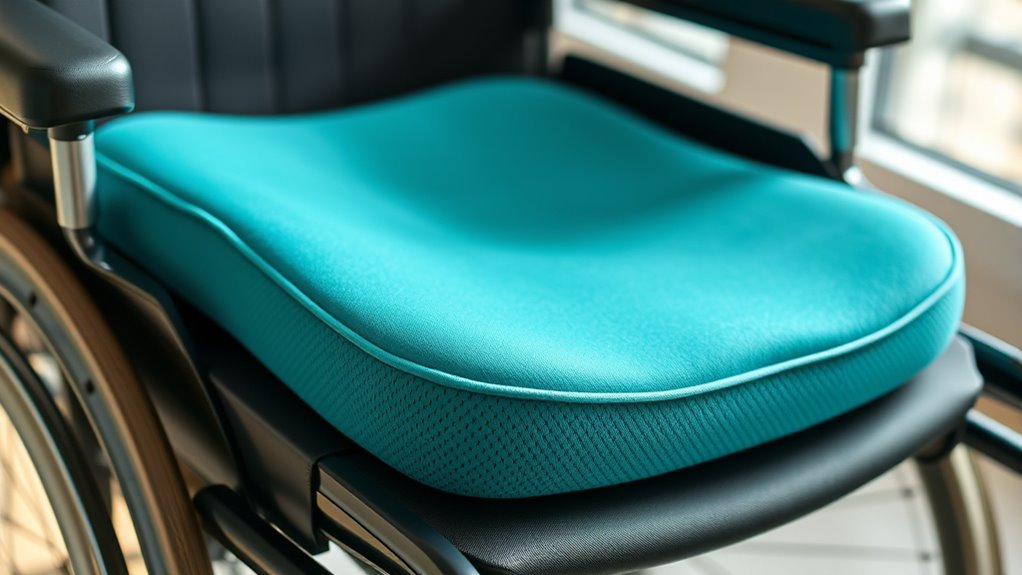

To prevent sores, choose a wheelchair cushion that offers reliable support and pressure distribution, like foam for long-term comfort or gel for added shock absorption. Make sure it fits your wheelchair perfectly, supporting your pelvis comfortably without slipping. Regular maintenance keeps it effective, so follow care instructions closely. Knowing your activity level and specific needs helps you pick the best option. Keep exploring to find tips for making the most of your cushion and stay comfortable longer.
Key Takeaways
- Ensure the cushion fits your wheelchair dimensions and provides proper pelvis support to prevent pressure points.
- Choose foam cushions for long-term pressure relief or gel cushions for added shock absorption and comfort.
- Consider your activity level; stationary users may need firm foam, while active users benefit from gel’s adaptability.
- Look for cushions that mold to your body, distributing weight evenly and reducing hotspots.
- Follow manufacturer cleaning instructions to maintain cushion integrity and support effectiveness over time.
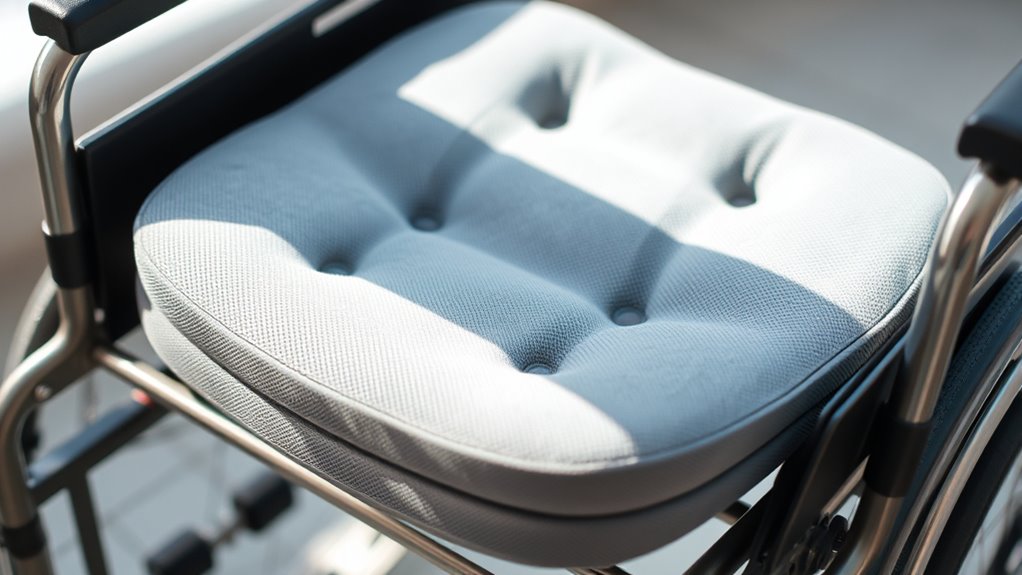
Selecting the right wheelchair cushion is essential for comfort, skin protection, and proper posture. When you’re choosing a cushion, you want something that provides reliable foam support to prevent pressure points and ensure even weight distribution. Foam cushions are popular because they mold to your body, offering firm support that reduces the risk of sores caused by prolonged pressure. Look for high-quality foam that maintains its shape over time and doesn’t compress too quickly, so you get consistent support during your daily activities. Foam support is vital because it helps you stay comfortable and minimizes the chance of developing skin breakdown, especially if you spend many hours in your wheelchair.
Choosing a foam cushion ensures reliable support and helps prevent skin breakdown during long hours in your wheelchair.
While foam cushions are excellent for support, many people also seek gel comfort features for added relief. Gel cushions combine the benefits of foam support with a layer of gel that absorbs shock and redistributes pressure more evenly. If you experience discomfort from sitting for long periods or notice soreness developing, a gel cushion might be the right choice. Gel comfort works by providing a cooling, cushioning layer that adapts to your body’s contours, reducing localized pressure and preventing hotspots that can lead to sores. It’s especially helpful if you’re prone to sweating or have sensitive skin, as the gel layer helps maintain a cooler, more comfortable surface.
When selecting a cushion, consider your activity level and specific needs. If you’re mostly stationary and need long-term pressure relief, a foam cushion with high-density support may be sufficient. However, if you’re more active or require extra shock absorption—say, for uneven surfaces or rough terrain—a gel cushion can provide that added comfort. Also, think about the cushion’s shape and size; it should fit your wheelchair properly and support your pelvis comfortably without altering your sitting posture. Proper fit is key to making sure you get the benefits of foam support and gel comfort without causing new issues like slipping or instability.
Maintenance is another factor to keep in mind. Foam cushions are generally easy to clean and maintain, while gel cushions may require more careful handling to prevent punctures or leaks. Whichever you choose, always follow the manufacturer’s instructions for cleaning and care to prolong the lifespan of your cushion. Additionally, understanding pressure distribution and how it affects skin health can help you select the most suitable cushion for your needs. Ultimately, your goal is to find a cushion that offers enough support to prevent pressure sores while providing comfort that encourages proper posture and reduces fatigue. By prioritizing foam support and gel comfort features, you can considerably improve your sitting experience and safeguard your skin health.
Frequently Asked Questions
How Often Should I Replace My Wheelchair Cushion?
You should replace your wheelchair cushion every 1 to 2 years, depending on foam durability and cushion lifespan. Regularly check for signs of wear, such as loss of support or visible damage, which indicate it’s time for a new cushion. Keep in mind that a worn-out cushion can compromise comfort and skin protection. By replacing it when needed, you ensure proper pressure relief and reduce the risk of sores.
Are There Cushions Suitable for All Types of Wheelchairs?
Yes, there are cushions suitable for all types of wheelchairs. These cushions offer universal compatibility, fitting various chair models easily. They also feature adjustable fit, guaranteeing you get personalized comfort and support. With versatile designs, you can confidently use them whether your wheelchair is manual or powered. By choosing a cushion with universal compatibility and adjustable fit, you ensure a seamless, comfortable experience while reducing the risk of sores.
What Materials Are Best for Pressure Redistribution?
You should look for cushions made with gel padding and high foam density, as they offer excellent pressure redistribution. Gel padding conforms to your body, reducing pressure points, while dense foam provides support and maintains shape over time. Combining these materials helps prevent sores by evenly distributing your weight and absorbing shocks. Make sure the cushion’s materials suit your needs for comfort and pressure relief, ensuring better skin protection during prolonged use.
Can Cushion Customization Help Prevent Sores?
Think of your cushion as a tailored suit, fitting perfectly to prevent sores. Customization, guided by pressure mapping, ensures your cushion adapts to your body’s unique shape, distributing pressure effectively. Whether foam or gel, customizing enhances support, reduces pressure points, and minimizes the risk of sores. By personalizing your cushion, you create a snug, supportive environment that feels like it was made just for you, keeping you comfortable and protected.
How Do I Clean and Maintain My Wheelchair Cushion?
To keep your wheelchair cushion clean and maintain its durability, create regular cleaning routines based on the manufacturer’s instructions. Use mild soap and water or specific cleaning wipes for fabric or foam cushions, and avoid harsh chemicals. Regularly inspect for wear and tear, replacing the cushion when needed. Proper maintenance not only keeps your cushion hygienic but also prolongs its lifespan, ensuring continued comfort and pressure relief.
Conclusion
Choosing the right wheelchair cushion isn’t just a choice; it’s your shield against sores and discomfort. As you weigh your options, remember that the perfect fit acts like a trusted companion, supporting you through every move. Don’t settle for less—your comfort and health depend on it. Like a well-crafted key opens a door, the right cushion unlocks a world of relief and confidence. Invest wisely, and let your comfort lead the way.