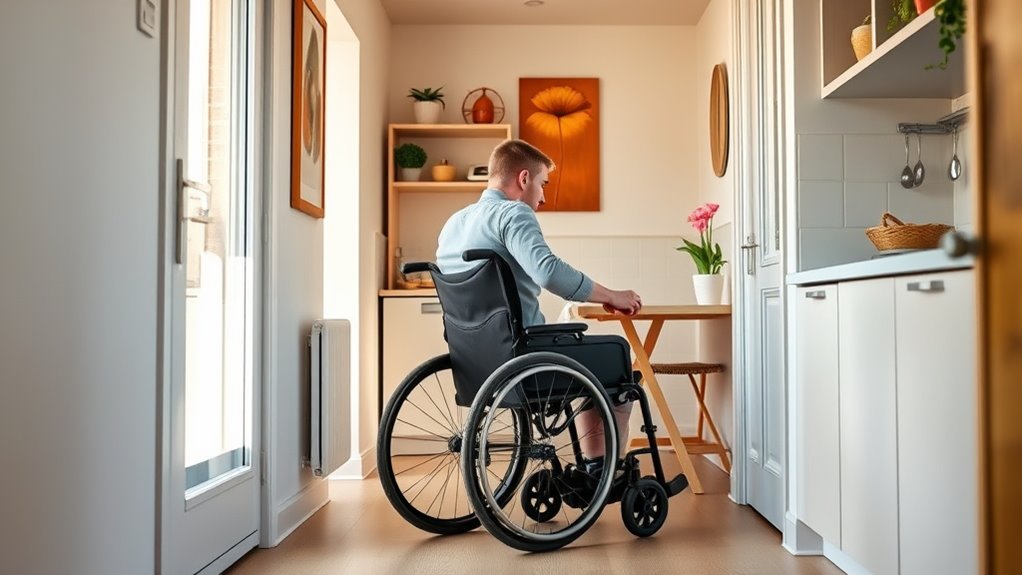

To handle a wheelchair in small apartments, focus on creating clear, wide pathways by decluttering and rearranging furniture with slim or multi-functional pieces. Widen doorways or opt for sliding doors to improve access, and keep furniture against walls to open up space. Use good lighting for safety and regularly reassess your setup to maintain easy maneuverability. For more tips on optimizing small spaces, keep exploring ways to transform your environment for better mobility and comfort.
Key Takeaways
- Widen doorways or install sliding doors to improve wheelchair access and maneuverability.
- Arrange furniture against walls and choose slim, multi-functional pieces to maximize space.
- Maintain clear, wide pathways and designate open zones for turning and navigation.
- Use bright, well-distributed lighting to enhance visibility and reduce obstacles.
- Declutter regularly and optimize layout to create a safe, accessible environment in tight spaces.

Living in a small apartment can be challenging when you need to manage a wheelchair, but with the right strategies, you can make it work smoothly. One of the biggest obstacles is narrow doorways that make navigation difficult. To overcome this, you might consider widening doorways if possible or installing sliding or pocket doors. These options eliminate the swing space that traditional doors require, giving you more room to move comfortably. If renovation isn’t an option, using portable door frame extenders or thresholds can create a little extra clearance. Be sure to measure doorways carefully to identify the tight spots and prioritize modifications that make everyday movement easier.
Widen doorways or install sliding doors to improve wheelchair access in small apartments.
Furniture arrangement plays a vital role in maximizing your space. Start by decluttering your apartment to free up pathways. Opt for furniture with slim profiles or multi-functional pieces that serve multiple purposes without taking up too much space. For example, a fold-out sofa bed or a wall-mounted desk can free up valuable floor space. When arranging furniture, keep the main walking paths clear and wide enough for your wheelchair to maneuver comfortably. Position larger pieces against the walls to avoid obstructing essential routes. Also, consider adjustable or modular furniture that can be moved or reconfigured as needed. This flexibility allows you to adapt your space depending on your daily needs.
Another tip is to create a dedicated, open area for turning and navigation. This means arranging furniture so that you have at least a 5-6 foot turning radius, which is necessary for comfortable wheelchair movement. Use rugs or mats to define zones without creating tripping hazards or uneven surfaces. Remember, every piece of furniture should serve a purpose and be placed with accessibility in mind. Avoid cluttering corners or tight spaces, as these can become obstacles. Regularly reassess your setup to identify what works and what doesn’t, making adjustments to improve flow and safety. Additionally, accessible design principles can guide you in optimizing your small space for wheelchair navigation.
Lighting is also key in small spaces. Good lighting helps you see obstacles clearly and navigate more confidently. Use bright, evenly distributed lighting throughout your apartment, especially near doorways and along main pathways. Wall-mounted lights or ceiling fixtures free up floor space and reduce clutter. With proper lighting and strategic furniture placement, you’ll find that your small apartment becomes a more manageable, comfortable environment. By addressing narrow doorways and optimizing furniture arrangement, you’ll turn your limited space into an accessible home that suits your needs perfectly.
Frequently Asked Questions
How Can I Prevent My Wheelchair From Damaging Walls?
To prevent your wheelchair from damaging walls, you should use wall protection like bumpers or corner guards on sharp edges. Move slowly and carefully to avoid accidental bumps. Keep a small paint touch-up kit handy for quick repairs if scratches do occur. Regularly check your wheelchair’s paint and bumpers, replacing or repairing them as needed, so your walls stay protected and looking fresh.
What Are the Best Storage Solutions for Wheelchairs?
You should consider folding storage options like collapsible chairs or beds to save space when not in use. Wall-mounted racks are also excellent for keeping your wheelchair off the floor, freeing up room. These solutions keep your wheelchair accessible yet out of the way, making your small apartment more organized. Combining folding storage and wall-mounted racks guarantees your wheelchair stays secure and your space remains functional.
How Do I Navigate Doorways With Limited Clearance?
Did you know that standard doorways are only 30-32 inches wide, but wheelchair users need at least 32 inches? To navigate doorways with limited clearance, measure your doorway width and consider installing threshold ramps for smoother passage. If space is tight, opt for door hinges that swing outward or use sliding doors. These adjustments make it easier to move your wheelchair comfortably through tight spaces.
Are There Specific Wheelchair Models Suited for Small Spaces?
Yes, you should look for wheelchairs with a compact design and lightweight frames. These models are easier to maneuver in small spaces and fit through narrow doorways. Opt for foldable or portable options that you can store away easily. Choosing a wheelchair with a slim profile helps you navigate tight corners comfortably. This way, you maintain mobility without sacrificing space or convenience in your small apartment.
How Can I Improve Maneuverability in Tight Corners?
Think of maneuvering your wheelchair in tight corners like steering a winding river—you need a small turning radius. To improve your maneuverability, focus on reducing obstacles by removing clutter and tight-fitting furniture. Choose a wheelchair with a tight turning radius, which allows sharper turns. Practice slow, controlled movements, and use your upper body to pivot smoothly. These steps help you master tight spaces and make navigation easier.
Conclusion
Guiding your small apartment with a wheelchair might feel like threading a needle, but with patience and clever moves, you create a smooth flow through your cozy space. Imagine gliding effortlessly past furniture, each turn precise and confident, transforming tight corners into opportunities for clever maneuvers. Your space becomes a sanctuary where every inch is optimized for your comfort. Embrace the challenge—soon, you’ll master the art of moving gracefully through your small, vibrant home.