
TL;DR

Turn quiet afternoons into listening time
- Thousands of audiobooks, podcasts and originals
- Listen on your phone, tablet or Echo — also offline
- Cancel anytime
A U.S. study announced by Biograph found elevated coronary inflammation in 42.9% of its asymptomatic, conventionally low-risk participants, using AI analysis of coronary CT scans. The company says routine blood tests and a standard risk calculator did not identify which participants had inflammation; the study does not establish whether the finding predicts future heart disease or whether screening improves outcomes.
AI analysis of coronary CT scans found elevated inflammation in 42.9% of participants in a U.S. study of asymptomatic adults considered low risk by conventional measures, Biograph announced. The result suggests that this scan-based measure may identify a finding that routine cardiovascular tests did not flag in the study, but it does not show whether those participants will develop heart disease.
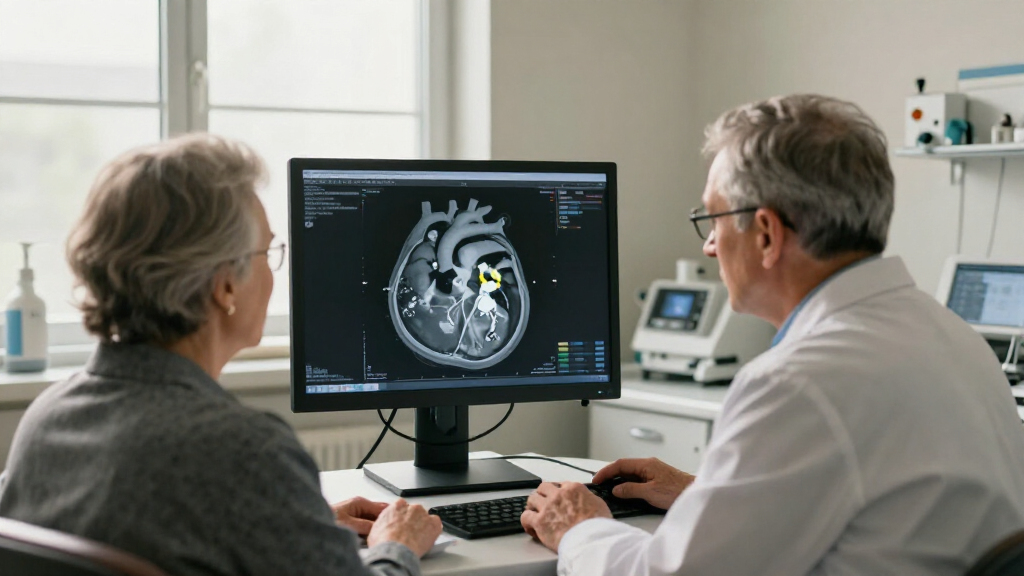
The study used Caristo Diagnostics’ CaRi-Heart technology to analyze coronary computed tomography angiography (CCTA) scans from clinically eligible Biograph members. Biograph said the research combined high-resolution imaging with cardiometabolic profiling and evaluated participants who had no symptoms and were considered low risk. The company did not provide the number of participants in its announcement.
According to Biograph, 17.9% of participants had very high inflammation in at least one major coronary artery. The company also reported that about 47% of participants with no detectable plaque had elevated coronary perivascular inflammation. These are study findings reported by Biograph; the announcement does not provide enough detail to independently assess the participant group or the precision of those estimates.
Biograph said routine measures—including ApoB and non-HDL cholesterol, HbA1c, high-sensitivity C-reactive protein and the AHA PREVENT-ASCVD risk calculator—did not correlate with the scan-derived inflammation or identify which participants had it. The study assessed inflammation alongside plaque and narrowing of the arteries, rather than treating the AI result as a diagnosis of coronary disease.
What the Scan Found Beyond Plaque
The reported findings raise a question for cardiovascular risk assessment: could inflammation around coronary arteries be present even when standard risk indicators and visible plaque are absent? If future research confirms that the measure predicts meaningful health outcomes, it could add information to clinicians’ assessment of some patients. For now, this study establishes a prevalence finding in a particular group, not a proven screening benefit.
The distinction matters because detecting a biological signal is not the same as showing that acting on it improves health. The announcement does not establish that elevated inflammation causes a later heart attack, identify an effective treatment for people with this result, or show that widespread CT screening is appropriate. Those questions require follow-up research and clinical evaluation.
As an affiliate, we earn on qualifying purchases.
How the AI CT Analysis Works
Coronary CT angiography creates images of the heart’s arteries. Biograph said CaRi-Heart uses AI analysis of the tissue surrounding coronary arteries to quantify perivascular inflammation from CCTA images. The study also used Caristo’s CaRi-Plaque technology to assess plaque and stenosis, according to the announcement.
Biograph said CaRi-Heart has FDA De Novo marketing authorization and CaRi-Plaque has FDA clearance. Those regulatory statuses relate to the technologies; they do not, by themselves, validate every claim about long-term prediction or establish that using the tool changes patient outcomes. The company described the study as its first U.S. study using CaRi-Heart in this population and said a manuscript is available as a preprint.
““More than 42% of asymptomatic, conventionally low-risk adults had elevated coronary inflammation.””
— Biograph’s study statement
cardiovascular inflammation detection device
As an affiliate, we earn on qualifying purchases.
As an affiliate, we earn on qualifying purchases.
Questions About Risk and Outcomes
The company announcement does not state the number of participants, recruitment details, or duration of follow-up, and it does not provide enough information to assess how representative the group was. The findings are presented in a preprint, so readers should distinguish them from results established through broader replication and peer-reviewed evidence.
It is also unclear whether elevated inflammation predicts future cardiovascular events in these participants, how often the AI result might be incorrect, or whether additional scans and follow-up care would improve outcomes. The reported absence of correlation with routine tests applies to this study’s analysis and should not be taken to mean those tests have no role in cardiovascular care.
As an affiliate, we earn on qualifying purchases.
Validation and Follow-Up Studies
The immediate next step is scrutiny of the preprint and its methods, followed by independent studies in larger and more diverse populations. Longitudinal research would be needed to determine whether inflammation scores are associated with later heart attacks or other cardiovascular events, beyond established risk factors.
Researchers would also need to test whether decisions guided by the scan result lead to better outcomes than usual care. Until that evidence is available, the announcement does not establish a new screening recommendation. People with questions about cardiovascular risk or imaging should discuss them with a qualified health professional.
As an affiliate, we earn on qualifying purchases.
Key Questions
What did the study find?
Biograph reported that 42.9% of participants had elevated coronary inflammation on AI analysis of coronary CT angiography scans. The participants were described as asymptomatic and conventionally low risk.
Does the finding mean those participants have heart disease?
No. The announcement reports an inflammation measure, not a diagnosis of heart disease or proof that participants will develop it. The relationship between the finding and future health outcomes remains to be established.
Did standard blood tests identify the inflammation?
Biograph said the routine biomarkers and risk calculator it assessed did not identify which participants had elevated inflammation. That result is specific to the study and does not mean those tests are generally unhelpful.
Should people get a coronary CT scan because of this study?
The study announcement does not establish a recommendation for general CT screening. Whether imaging is appropriate depends on individual circumstances and should be discussed with a qualified health professional.
Source: hn
Cold & flu season Picks
humidifiers
As an affiliate, we earn on qualifying purchases.