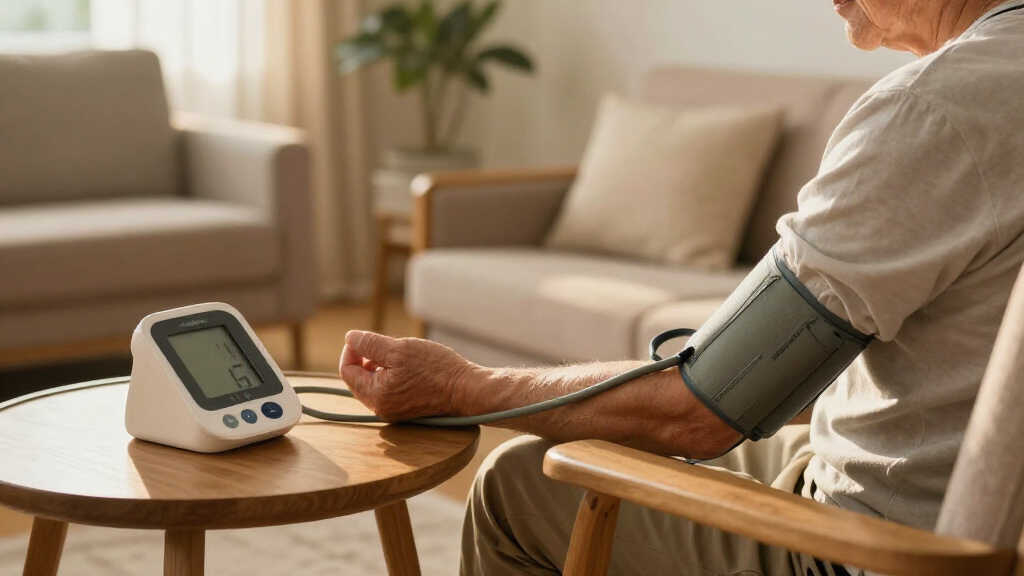
Senior-friendly blood pressure monitors should be easy to put on, simple to read, and practical for regular home checks. My best overall pick is the iHealth Track, whose wide-range cuff and app connectivity suit people who want clear readings plus digital tracking; the Medisana 5-inch LED model stands out for its large display, while the talking monitor may help users who have trouble reading a screen. The main tradeoffs are upper-arm stability versus wrist convenience, and straightforward controls versus app features or voice prompts. Cuff fit, dexterity, vision, and whether another person can help with setup all affect which design makes sense. Read on for the full comparison and guidance on matching a monitor to your routine.

Turn quiet afternoons into listening time
- Thousands of audiobooks, podcasts and originals
- Listen on your phone, tablet or Echo — also offline
- Cancel anytime
Complete the kit


Key Takeaways
- The iHealth Track leads for connected tracking: its wide-range cuff and app features make it a stronger fit for people who want readings recorded digitally than simpler screen-only models.
- Large displays address a real usability gap: the Medisana’s 5-inch LED display is the clearest screen-focused option in this lineup, while a talking model may suit someone who relies more on hearing than sight.
- No-wrap cuffs trade easier placement for a different fit experience: the Zdeer, Saker, and other no-wrap designs may reduce cuff-wrapping effort, but buyers should check the manufacturer’s arm-fit guidance before choosing one.
- Rechargeable wrist models favor portability, not every home routine: the Oklar wrist monitor is easier to carry, while an upper-arm model may be the more suitable starting point for people following a clinician’s home-monitoring instructions.
- Simple operation and connected features serve different buyers: one-touch and basic upper-arm models avoid app setup, while connected options make sense when digital records are useful and manageable.
| Paramed Automatic Upper Arm Blood Pressure Monitor |  | Best for Easy-to-Read Controls | Type: Automatic upper-arm blood pressure monitor | Cuff size: 8.7–16.5 inches | Memory: 120 readings | VIEW LATEST PRICE | See Our Full Breakdown |
| Oklar Rechargeable Wrist Blood Pressure Monitor |  | Best Compact Rechargeable Pick | Measurement time: About 35 seconds | Memory: Up to 240 readings for two users | Cuff size: 4.92–8.46 inches | VIEW LATEST PRICE | See Our Full Breakdown |
| iHealth Track Smart Upper Arm Blood Pressure Monitor with Wide-Range Cuff |  | Best for Smartphone Tracking | Measurement type: Upper-arm blood pressure | On-device storage: Up to 99 readings | App compatibility: iOS 12.0 or later; Android 9.0 or later | VIEW LATEST PRICE | See Our Full Breakdown |
| Zdeer Automatic No-Wrap Upper Arm Blood Pressure Monitor |  | Best for One-Handed Setup | Type: Automatic upper-arm blood pressure monitor | Cuff design: No-wrap, barrel-style | Arm circumference: 8.5–15.7 inches | VIEW LATEST PRICE | See Our Full Breakdown |
| Barrel-Type Upper Arm Blood Pressure Monitor for Home Use |  | Best No-Wrap Fit Range | Monitor type: Barrel-style upper-arm | Arm circumference range: 7.1–16.5 inches | Pressure accuracy: ±3 mmHg when used as directed | VIEW LATEST PRICE | See Our Full Breakdown |
| Oklar Upper Arm Blood Pressure Monitor for Home Use |  | Best for Simple Two-Person Tracking | Measurement location: Upper arm | Operation: One-button | Display: Backlit LED | VIEW LATEST PRICE | See Our Full Breakdown |
| Medisana Upper Arm Blood Pressure Monitor with 5-Inch LED Display | 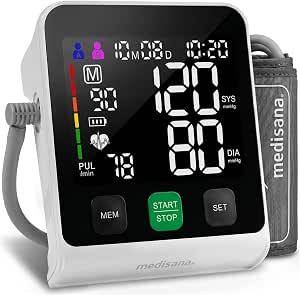 | Best for Clear, Guided Readings | Display: 5-inch high-contrast LED | Operation: One-button | Memory: Up to 199 readings per user for 2 users | VIEW LATEST PRICE | See Our Full Breakdown |
| Blood Pressure Monitor Rechargeable Upper Arm, Large Screen, Black |  | Best Rechargeable Pick | Measurement location: Upper arm | Cuff size: 22–42 cm (8.7–16.5 in) | Memory capacity: 240 records; 120 per user | VIEW LATEST PRICE | See Our Full Breakdown |
| Saker Upper Arm Blood Pressure Monitor with No-Wrap Design |  | Best for Easier Cuff Placement | Type: Automatic upper-arm blood pressure monitor | Cuff design: Slide-in, no-wrap | Arm circumference: 8.5–15.7 in | VIEW LATEST PRICE | See Our Full Breakdown |
| OMRON Iron Upper Arm Blood Pressure Monitor |  | Best for Movement Alerts and Straightforward Setup | Monitor type: Upper-arm blood pressure monitor | Cuff size: Fits arms 9–17 inches | Operation: One-touch | VIEW LATEST PRICE | See Our Full Breakdown |
| CAVN One-Touch Upper Arm Blood Pressure Monitor |  | Best for Easy Cuff Setup | Monitor type: Upper-arm blood pressure monitor with built-in no-wrap cuff | Arm circumference: 7.1–16.5 inches (18–42 cm) | Arm use: Left or right arm | VIEW LATEST PRICE | See Our Full Breakdown |
| No-Wrap Upper Arm Blood Pressure Monitor |  | Best No-Wrap Alternative for Two Users | Monitor type: Upper-arm monitor with barrel-style no-wrap cuff | Arm circumference: 7.1–16.5 inches | Number of users: 2 | VIEW LATEST PRICE | See Our Full Breakdown |
| OMRON Bronze Upper Arm Blood Pressure Monitor |  | Best for App-Based Health Tracking | Monitor type: Upper-arm blood pressure monitor | Cuff fit: 9–17 inches | On-device storage: Up to 14 readings | VIEW LATEST PRICE | See Our Full Breakdown |
| Talking Upper Arm Blood Pressure Monitor with Large Backlit Display |  | Best for Low Vision | Measurement type: Automatic upper-arm blood pressure and pulse | Cuff fit: 8–16 inches | User profiles: 3 | VIEW LATEST PRICE | See Our Full Breakdown |
| Adjustable Upper Arm Blood Pressure Monitor with Storage Bag |  | Best for Flexible Power Options | Monitor type: Upper-arm blood pressure monitor | Cuff circumference: 8.7–16.5 inches | User memory: 2 users; 120 readings per user | VIEW LATEST PRICE | See Our Full Breakdown |
| senior-friendly blood pressure monitor | Display | Power | Memory |
|---|---|---|---|
| Paramed Automatic Upper Arm Bl | Large LCD | 4 AA batteries included | 120 readings |
| Oklar Rechargeable Wrist Blood | Large backlit LED | Built-in rechargeable battery | Up to 240 readings for two users |
| iHealth Track Smart Upper Arm | — | 4 AAA batteries | — |
| Zdeer Automatic No-Wrap Upper | Large display | USB cable or 4 AA batteries | 199 readings per user |
| Barrel-Type Upper Arm Blood Pr | Large display with three-color backlight | — | 2 users, 99 readings per user |
| Oklar Upper Arm Blood Pressure | Backlit LED | 3 AA batteries or Type-C cable; not rechargeable | — |
| Medisana Upper Arm Blood Press | 5-inch high-contrast LED | 4 AAA batteries or Type-C | Up to 199 readings per user for 2 users |
| Blood Pressure Monitor Recharg | Large LED screen with optional voice prompts | — | — |
| Saker Upper Arm Blood Pressure | — | — | — |
| OMRON Iron Upper Arm Blood Pre | — | — | — |
| CAVN One-Touch Upper Arm Blood | Large LCD with three-color backlight | — | 99 readings per user for two users |
| No-Wrap Upper Arm Blood Pressu | Large backlit LCD with three-color guide | — | 99 readings per user |
| OMRON Bronze Upper Arm Blood P | — | Four AA batteries included | — |
| Talking Upper Arm Blood Pressu | Large backlit digits with color range indicators | Four AA batteries or USB-C cable with a 5 V wall adapter | 240 readings total; 80 per user |
| Adjustable Upper Arm Blood Pre | Large digital LED screen | USB-C cable or three AA batteries | — |
More Details on Our Top Picks
Paramed Automatic Upper Arm Blood Pressure Monitor
The large LCD, oversized numbers, and large buttons make this a strong fit for seniors who want to take readings without squinting or managing a complicated interface. Its conventional upper-arm cuff may take more setup than the no-wrap Zdeer, but it offers a familiar format and a self-check feature to help with cuff placement. The 120-reading memory across two profiles is useful for keeping separate records, though the iHealth Track offers app-based tracking for people who want a digital log beyond the monitor. Voice broadcast can be turned off, giving users a choice between spoken guidance and a quieter reading. The tradeoff is that it runs on four AA batteries rather than a built-in rechargeable battery, although batteries and a carrying bag are included.
Pros:- Large LCD and oversized numbers are easier to read
- Large buttons support straightforward operation
- Stores up to 120 readings across two user profiles
- Cuff self-check helps with placement; batteries and a carrying bag are included
Cons:- The wraparound cuff may be harder to position than the Zdeer no-wrap design
- Requires four AA batteries rather than offering built-in rechargeable power
Best for: Seniors who prefer a standard upper-arm cuff, prominent controls, and stored readings for two people without needing a smartphone app
Not ideal for: People who have difficulty wrapping a cuff around their arm or want rechargeable power and app-based tracking
- Type:Automatic upper-arm blood pressure monitor
- Cuff size:8.7–16.5 inches
- Memory:120 readings
- User profiles:2
- Display:Large LCD
- Voice broadcast:Can be turned off
- Power:4 AA batteries included
- Included accessory:Carrying bag
Our verdict“Choose the Paramed if readable controls and a familiar upper-arm cuff matter more than app tracking or a no-wrap design.”
Oklar Rechargeable Wrist Blood Pressure Monitor
The wrist format and built-in rechargeable battery make this Oklar a practical choice for seniors who want a compact monitor and find upper-arm cuffs awkward to put on. Its large backlit LED display and voice broadcast provide two ways to access readings, while storage for 240 measurements across two users gives it more on-device capacity than the Paramed. The tradeoff is measurement position: wrist monitors require careful placement at heart level, so users who may struggle to hold their arm correctly could prefer the iHealth Track upper-arm model. Readings take about 35 seconds, and USB-C charging avoids routine battery replacement. The charging cable is included, but the adapter is not, which may mean sourcing a compatible power adapter separately.
Pros:- Wrist cuff avoids wrapping a cuff around the upper arm
- Large backlit display and voice broadcast offer visual and spoken access to readings
- Stores up to 240 readings for two users
- Built-in rechargeable battery uses a Type-C cable
Cons:- Correct wrist positioning is important for taking readings
- Charging adapter is not included
Best for: Seniors who need a compact monitor, prefer a wrist cuff to an upper-arm wrap, and can keep the wrist correctly positioned during readings
Not ideal for: People who may have trouble holding their wrist at heart level or want a complete charging setup with an included adapter
- Measurement time:About 35 seconds
- Memory:Up to 240 readings for two users
- Cuff size:4.92–8.46 inches
- Power:Built-in rechargeable battery
- Charging connection:Type-C
- Display:Large backlit LED
- Automatic shutoff:After 60 seconds of inactivity
- Charging adapter:Not included
Our verdict“Choose this Oklar for compact rechargeable convenience if you can position your wrist consistently during measurements.”
iHealth Track Smart Upper Arm Blood Pressure Monitor with Wide-Range Cuff
The iHealth Track is the clearest choice here for seniors who want readings to move from the monitor into a smartphone tracking app. Its two-button operation and color-coded backlit display keep the basic routine simple, while app support can help users or caregivers follow longer-term patterns. Compared with the Paramed, its on-device memory is smaller at 99 readings, but the app allows unlimited tracking. The upper-arm cuff fits the same stated range as the Paramed, so this model does not solve cuff-placement challenges; users seeking a simpler one-handed setup may prefer the Zdeer no-wrap monitor. It also flags detected heart rhythm disturbances, but that alert is not a diagnosis. App tracking requires a compatible phone and Bluetooth, and the instructions call for careful reading before use.
Pros:- Large color-coded backlit display makes readings easier to distinguish
- Two-button operation keeps the monitor’s basic controls simple
- App supports unlimited tracking beyond the 99 on-device readings
- Includes a wide-range cuff and alerts for detected heart rhythm disturbances
Cons:- App tracking requires a compatible smartphone and Bluetooth
- Upper-arm cuff still needs to be positioned and wrapped correctly
- Instructions recommend careful reading before first use
Best for: Seniors who use a compatible iPhone or Android phone and want readings available for ongoing personal or caregiver tracking
Not ideal for: People who do not use a compatible smartphone, want a no-wrap cuff, or prefer a monitor that works without app setup
- Measurement type:Upper-arm blood pressure
- On-device storage:Up to 99 readings
- App compatibility:iOS 12.0 or later; Android 9.0 or later
- Connectivity:Bluetooth 4.0 or later
- Cuff fit:8.7–16.5 inches
- Power:4 AAA batteries
- Standards:Meets ESH 2010 performance standards
- Warranty:12 months
Our verdict“Choose the iHealth Track if smartphone-based records matter more to you than maximum on-device memory or a no-wrap cuff.”
Zdeer Automatic No-Wrap Upper Arm Blood Pressure Monitor
The Zdeer’s barrel-style no-wrap cuff and one-touch start give it a distinct advantage for seniors who find fastening a conventional cuff difficult. It also stores 199 readings for each of three users, the largest multi-user setup in this group, making it a better household record-keeper than the two-profile Paramed. A large display shows systolic, diastolic, and pulse readings, and USB power offers an alternative to four AA batteries. The tradeoff is fit: the arm range is 8.5–15.7 inches, narrower at the upper end than the Paramed and iHealth Track cuffs. The monitor is FDA-cleared for home use and has an irregular-pulse reminder, but that reminder flags a change rather than identifying a condition.
Pros:- No-wrap barrel-style cuff is designed for easier one-handed use
- One-touch start and large display simplify routine readings
- Stores 199 readings for each of three users
- Can run on USB power or four AA batteries
Cons:- Cuff fits a narrower arm range than the Paramed and iHealth Track
- Irregular-pulse reminder flags changes but does not diagnose a condition
Best for: Seniors or households with up to three users who want a one-touch monitor that avoids wrapping a cuff around the arm
Not ideal for: People whose arm circumference falls outside 8.5–15.7 inches or who need an irregular-pulse alert to provide a diagnosis
- Type:Automatic upper-arm blood pressure monitor
- Cuff design:No-wrap, barrel-style
- Arm circumference:8.5–15.7 inches
- User profiles:3
- Memory:199 readings per user
- Display:Large display
- Operation:One-touch start
- Power:USB cable or 4 AA batteries
- Home-use clearance:FDA-cleared
Our verdict“Choose the Zdeer if cuff handling is your main obstacle and its fit range suits your arm.”
Barrel-Type Upper Arm Blood Pressure Monitor for Home Use
This barrel-style monitor pairs one-button operation with a 7.1–16.5-inch arm range, giving it a broader stated fit than the Zdeer no-wrap model. That makes it a more flexible option for seniors who want to avoid cuff wrapping but are unsure whether a narrower barrel cuff will fit. Its three-color display and USB-C rechargeable battery add clear visual cues and reduce dependence on replacement batteries. Compared with the Zdeer, however, it stores fewer readings—99 per user for two people rather than 199 for each of three users—and its accuracy depends on following the usage directions. The required arm position and staying still during a measurement may also be a challenge for users with limited mobility or difficulty maintaining posture.
Pros:- No-wrap design and one-button operation reduce cuff-handling steps
- 7.1–16.5-inch arm range is broader than the Zdeer range
- Three-color backlight helps distinguish display information
- Rechargeable 2000mAh battery charges through USB-C
Cons:- Stores 99 readings per user for two users, less capacity than the Zdeer
- Proper use depends on following directions and maintaining the supported arm position
- Users must remain still during measurement
Best for: Seniors seeking a no-wrap upper-arm monitor with a broad stated arm range and rechargeable USB-C power
Not ideal for: Households needing records for three people or users who may have difficulty keeping the required arm position and remaining still
- Monitor type:Barrel-style upper-arm
- Arm circumference range:7.1–16.5 inches
- Pressure accuracy:±3 mmHg when used as directed
- Display:Large display with three-color backlight
- Memory:2 users, 99 readings per user
- Battery:2000mAh rechargeable
- Charging port:USB-C
Our verdict“Choose this barrel-style model over the Zdeer when a wider stated fit range and USB-C charging matter more than extra user profiles and memory.”
Oklar Upper Arm Blood Pressure Monitor for Home Use
The one-button operation and large backlit LED screen keep routine readings straightforward, including in dim rooms. Its memory holds 120 readings for each of two users, enough to review patterns between appointments without keeping a paper log. Compared with the Medisana monitor, the Oklar stores more readings per person, while Medisana adds a three-reading average and irregular-heartbeat detection. The Oklar’s Type-C power option can spare you frequent battery changes when it stays near an outlet, but it does not recharge its batteries, and three AA cells are needed for battery operation. The cuff fits arms from 8.7 to 15.7 inches, a narrower upper limit than Medisana’s. I’d choose it for uncomplicated shared tracking, not for extra reading indicators or a particularly broad cuff fit.
Pros:- One-button operation reduces steps during everyday readings.
- Large backlit LED display is easier to read in low light.
- Stores 120 readings for each of two users.
- Can run on three AA batteries or via Type-C cable.
Cons:- Type-C powers the monitor but does not recharge batteries.
- Cuff fit tops out at 15.7 inches, narrower than the Medisana’s stated range.
- No average-reading or irregular-heartbeat feature is listed.
Best for: Two people who want simple daily upper-arm readings and separate, generous memory without app features.
Not ideal for: Buyers who want a rechargeable monitor, irregular-heartbeat alerts, or a cuff that fits arms wider than 15.7 inches.
- Measurement location:Upper arm
- Operation:One-button
- Display:Backlit LED
- Reading storage:240 total; 120 per user
- Users:2
- Power:3 AA batteries or Type-C cable; not rechargeable
- Cuff range:8.7–15.7 in (22–40 cm)
- Reading time:About 1 minute
Our verdict“Choose the Oklar for easy two-person tracking and a readable screen, but pick Medisana if you want added reading indicators and a wider cuff range.”
Medisana Upper Arm Blood Pressure Monitor with 5-Inch LED Display
The 5-inch high-contrast display gives this Medisana an advantage for readers who find smaller screens difficult, while one-button operation keeps the measuring routine simple. It also does more than the Oklar: Medisana averages the latest three readings, flags irregular heartbeat, and uses a green, yellow, and red indicator to make the result easier to interpret at a glance. Those features can add context, but they are not a substitute for a clinician’s advice. Its memory stores 199 readings per person, more than the Oklar’s 120, and its cuff accommodates arms up to 16.5 inches. The tradeoff is four AAA batteries if you do not use Type-C power; the product details do not say that it is rechargeable. This is a stronger fit for users who value visible cues over a minimal display.
Pros:- 5-inch high-contrast LED display is easy to see.
- Stores up to 199 readings for each of two users.
- Averages the latest three readings and includes irregular-heartbeat detection.
- Color-coded indicator and Type-C power option add convenience.
Cons:- Requires four AAA batteries for battery operation, and rechargeability is not specified.
- Color-coded results may be less useful to people who have difficulty distinguishing colors.
- Its extra indicators may be unnecessary for buyers seeking only basic readings.
Best for: Older adults who want a large, high-contrast screen, separate household memory, and simple visual reading cues.
Not ideal for: People who need a rechargeable device or whose arm circumference falls outside the 8.7–16.5-inch cuff range.
- Display:5-inch high-contrast LED
- Operation:One-button
- Memory:Up to 199 readings per user for 2 users
- Average:Latest 3 readings
- Measurements:Systolic pressure, diastolic pressure, and pulse
- Detection and indicator:Irregular-heartbeat detection; green, yellow, and red color-coded indicator
- Cuff fit:8.7–16.5-inch arm circumference
- Power:4 AAA batteries or Type-C
Our verdict“Choose Medisana over the simpler Oklar if a large screen, three-reading average, and visual cues matter more than keeping the controls bare-bones.”
Blood Pressure Monitor Rechargeable Upper Arm, Large Screen, Black
For seniors who would rather avoid stocking disposable batteries, this monitor’s built-in rechargeable battery is its clearest advantage: one charge is rated for about 150 uses. The large LED screen and optional voice prompts offer extra access for users who have trouble reading a display, and memory is split between two users. Against the Oklar, it trades the option to run from a Type-C cable for a rechargeable battery and voice guidance; against Medisana, it lacks a three-reading average and color-coded indicator. Its stated cuff range reaches 16.5 inches, matching Medisana’s upper limit. The product data does not specify the exact operation method or a way to export readings, so it may be less suitable for caregivers who need records outside the device. Voice prompts also may not suit every household.
Pros:- Rechargeable battery is rated for about 150 uses per charge.
- Large LED screen with optional voice prompts supports different reading needs.
- Stores 120 measurements per user for two users.
- Measures blood pressure and heart rate with abnormal-heartbeat alerts.
Cons:- No Bluetooth or app connectivity for exporting readings.
- Voice prompts may be unnecessary and cannot be fully customized.
- The described data does not specify one-button operation or a reading-time estimate.
Best for: Seniors who want to avoid routine battery replacement and may benefit from spoken prompts alongside a large screen.
Not ideal for: Caregivers who need app-based data export, users who want customizable voice guidance, or buyers who prefer a simple non-rechargeable setup.
- Measurement location:Upper arm
- Cuff size:22–42 cm (8.7–16.5 in)
- Memory capacity:240 records; 120 per user
- Users:2
- Battery:Rechargeable lithium; up to 150 uses per charge
- Display:Large LED screen with optional voice prompts
- Measurements:Blood pressure and heart rate
- Alerts:Abnormal-heartbeat alerts
Our verdict“Pick this over the battery-powered Oklar if rechargeable power and voice prompts matter more than data export or extra averaging features.”
Saker Upper Arm Blood Pressure Monitor with No-Wrap Design
The Saker’s slide-in, no-wrap design is its defining distinction: it may be easier to position than a conventional cuff for someone with limited hand dexterity. It also supports four user profiles, each with 199 stored readings, giving it a clear household advantage over the two-user Oklar, Medisana, and rechargeable monitor. One-touch operation and a large display keep the basic process accessible, while USB power offers an alternative to batteries. The tradeoff is that the cuff fits arms from 8.5 to 15.7 inches, so its upper limit is narrower than the Medisana’s and the OMRON Iron’s. The description recommends USB to avoid frequent battery changes, and it does not give a battery type or a rechargeable-battery claim. I’d favor it for shared homes and cuff-placement difficulty, rather than for the broadest arm fit.
Pros:- Slide-in no-wrap design may simplify cuff placement for users with limited dexterity.
- Four profiles each store up to 199 readings.
- Large display and one-touch operation keep use straightforward.
- Can run using the included USB cable.
Cons:- USB power is recommended to avoid frequent battery changes.
- Cuff range ends at 15.7 inches, below the Medisana and OMRON Iron upper limits.
- No rechargeable battery or reading-average feature is specified.
Best for: Households with three or four people sharing a monitor, especially users who find wrapping a conventional cuff difficult.
Not ideal for: People with arms wider than 15.7 inches or buyers who need rechargeable power, app connectivity, or a stated reading average.
- Type:Automatic upper-arm blood pressure monitor
- Cuff design:Slide-in, no-wrap
- Arm circumference:8.5–15.7 in
- User profiles:4
- Stored readings:199 per user
- Operation and display:One-touch operation; large display
- Additional feature:Pulse irregularity reminder
- Power and clearance:USB cable or batteries; FDA-cleared
Our verdict“Choose the Saker over the two-user models if several people need separate records or cuff wrapping is difficult, provided its cuff range fits.”
OMRON Iron Upper Arm Blood Pressure Monitor
The OMRON Iron focuses on measurement support rather than storage extras: one-touch operation keeps the routine simple, while body-movement detection can alert users when movement may affect a reading. It also detects irregular heartbeats and includes a wide-range D-ring cuff, instruction manual, and quick-start guide. Compared with the Saker, it uses a conventional cuff rather than a slide-in design and supports arms up to 17 inches, wider than the Saker’s stated limit. Compared with Medisana, the OMRON details do not list a large display, multi-user memory, or a three-reading average. That missing memory information is a real limitation for anyone tracking trends at home or sharing a device. I’d select it for buyers who value setup guidance and movement alerts, not those who need clearly specified long-term records.
Pros:- One-touch operation keeps the measurement process simple.
- Body-movement detection can flag readings taken while moving.
- Irregular-heartbeat detection is included.
- Wide-range D-ring cuff, instruction manual, and quick-start guide are included.
Cons:- Cuff fit is limited to arms measuring 9–17 inches.
- Memory capacity and connectivity details are not provided.
- No display size, voice prompts, or multi-user storage is specified.
Best for: Seniors who want one-touch use, movement alerts, and printed setup guidance, with an arm circumference between 9 and 17 inches.
Not ideal for: People whose arms are under 9 inches or over 17 inches, and households needing confirmed multi-user memory or stored-reading details.
- Monitor type:Upper-arm blood pressure monitor
- Cuff size:Fits arms 9–17 inches
- Operation:One-touch
- Detection features:Irregular-heartbeat and body-movement detection
- Included cuff:Wide-range D-ring cuff
- Included guides:Instruction manual and quick-start guide
Our verdict“Choose the OMRON Iron over the Saker if movement alerts and setup guides matter more than a no-wrap cuff or clearly specified multi-user memory.”
CAVN One-Touch Upper Arm Blood Pressure Monitor
The CAVN’s no-wrap, one-touch cuff is its clearest advantage for someone who finds positioning and fastening a traditional cuff awkward. Its barrel shape slides onto either arm, and the 7.1–16.5-inch fit range covers more arm sizes than the Talking Upper Arm Blood Pressure Monitor’s 8–16-inch cuff. The large, three-color LCD gives a quick visual cue, while separate storage for two users helps keep household records apart. Unlike the OMRON Bronze, it has no stated Bluetooth app connection or irregular-heartbeat alert, so it is better for straightforward home tracking than extra monitoring features. It can run while charging, but the power adapter is not included, and its tabletop design is less suited to travel.
Pros:- No-wrap cuff supports one-touch use without fastening a fabric wrap
- Fits upper arms from 7.1 to 16.5 inches and works on either arm
- Keeps up to 99 readings for each of two users
- Rechargeable and usable while connected to power
Cons:- USB-C power adapter is not included
- Tabletop design is less convenient for travel or small storage spaces
- Does not list Bluetooth tracking or an irregular-heartbeat alert
Best for: Older adults or couples who want a simpler cuff routine, need a broad arm-size range, and plan to take readings at home.
Not ideal for: People who want app-based trend sharing, an irregular-heartbeat alert, or a monitor that is easy to pack for travel.
- Monitor type:Upper-arm blood pressure monitor with built-in no-wrap cuff
- Arm circumference:7.1–16.5 inches (18–42 cm)
- Arm use:Left or right arm
- Display:Large LCD with three-color backlight
- Memory:99 readings per user for two users
- Accuracy:±3 mmHg
- Battery and charging:2000 mAh rechargeable battery; Type-C; usable while charging
- Additional reading feature:Recent-reading average
- Included power accessories:Type-C cable; power adapter not included
Our verdict“Choose the CAVN if avoiding cuff wrapping matters more than app features or portability.”
No-Wrap Upper Arm Blood Pressure Monitor
This monitor pairs a slide-on barrel cuff with separate records for two people, making it a strong fit for seniors who want to avoid wrapping a cuff but still share a device. Its listed ±3 mmHg blood pressure accuracy and pulse accuracy of ±5% give buyers concrete performance details, while a large, three-color backlit screen makes results easier to read at home. Against the CAVN One-Touch monitor, its feature set is very similar: both offer a 7.1–16.5-inch fit, USB-C charging, and 99 readings per user. That means the choice may come down to the exact device and its controls rather than a major capability difference. The tradeoff is the barrel cuff’s bulk, and it measures only on the upper arm.
Pros:- Slide-on cuff avoids the steps of wrapping and fastening a cuff
- Fits upper arms from 7.1 to 16.5 inches
- Stores 99 readings separately for each of two users
- USB-C rechargeable battery and three-color backlit display
Cons:- Barrel-style cuff can take up more room than a standard cuff
- Designed for upper-arm readings only
- Does not list an app connection or irregular-heartbeat alert
Best for: Two-person households seeking a rechargeable, no-wrap upper-arm monitor with separate reading histories.
Not ideal for: People who need a compact device, prefer a traditional wrap cuff, or need readings from the wrist.
- Monitor type:Upper-arm monitor with barrel-style no-wrap cuff
- Arm circumference:7.1–16.5 inches
- Number of users:2
- Memory:99 readings per user
- Blood pressure accuracy:±3 mmHg
- Pulse accuracy:±5%
- Display:Large backlit LCD with three-color guide
- Battery and charging:2000 mAh rechargeable battery; USB-C
Our verdict“Pick this model for shared, no-wrap home monitoring if its larger barrel cuff suits your storage space.”
OMRON Bronze Upper Arm Blood Pressure Monitor
The OMRON Bronze suits seniors who want more than a number on a screen: it flags elevated readings and irregular heartbeats, then sends results by Bluetooth to the OMRON connect app for trend tracking and sharing with a doctor. That connected record is a useful contrast with the CAVN One-Touch monitor, which stores more readings on the device but does not list app syncing or an irregular-heartbeat alert. The Bronze itself holds only 14 readings, so regular app use matters if you want a longer history. Its 9–17-inch cuff also has a narrower fit range at the smaller end than the two no-wrap options in this roundup. Included batteries and a storage case make setup straightforward, though the app adds a phone-based step that may not suit every user.
Pros:- Alerts for elevated readings and irregular heartbeats
- Bluetooth connection supports tracking and report sharing through the OMRON connect app
- Includes a wide-range D-ring cuff, storage case, guides, and four AA batteries
- App can store readings beyond the monitor’s built-in capacity
Cons:- Monitor stores only 14 readings without the app
- Requires a compatible phone and app use for longer-term digital tracking
- Cuff fit starts at 9 inches, narrower at the small end than the no-wrap alternatives
Best for: Seniors comfortable using a smartphone who want to review trends and share readings with a clinician.
Not ideal for: People who avoid apps or need extensive on-device history, or whose upper arms fall outside the 9–17-inch cuff range.
- Monitor type:Upper-arm blood pressure monitor
- Cuff fit:9–17 inches
- On-device storage:Up to 14 readings
- App storage:Unlimited readings in the OMRON connect app
- Connectivity:Bluetooth
- Reading alerts:Irregular-heartbeat detection and hypertension indicator
- Power:Four AA batteries included
- Included accessories:Wide-range D-ring cuff, storage case, instruction manual, and quick start guide
Our verdict“Choose the OMRON Bronze if app-based history and health alerts matter more than keeping a large record on the monitor itself.”
Talking Upper Arm Blood Pressure Monitor with Large Backlit Display
For seniors who have difficulty reading a display, this monitor’s strongest feature is that it announces systolic, diastolic, and pulse results aloud. Adjustable volume and an audio-off option let users tailor the experience, while the large backlit screen remains available as a visual backup. Its three-user memory also gives it an advantage over the CAVN and No-Wrap models, which store readings for two people. The tradeoff is fit: its 8–16-inch cuff does not reach as far at either end as those no-wrap cuffs. The 240-reading total is divided among three users, so each person gets 80 stored readings. It includes batteries and a carry bag, but the listed USB-C setup calls for a 5 V wall adapter that is not included.
Pros:- Speaks blood pressure and pulse results, with adjustable volume
- Large backlit digits and color indicators provide visual cues
- Stores 80 readings for each of three users with date and time
- Includes four AA batteries, USB-C cable, and carry bag
Cons:- Cuff fits only 8–16-inch arm circumferences
- A 5 V wall adapter for USB-C power is not listed as included
- Three-user memory gives each profile fewer readings than the two-user options
Best for: Seniors with low vision, especially in households where up to three people need separate reading records.
Not ideal for: Users whose arms are smaller than 8 inches or larger than 16 inches, or anyone who prefers a no-wrap cuff.
- Measurement type:Automatic upper-arm blood pressure and pulse
- Cuff fit:8–16 inches
- User profiles:3
- Memory:240 readings total; 80 per user
- Display:Large backlit digits with color range indicators
- Audio:Announces readings and provides audio instructions; adjustable volume and can be turned off
- Power:Four AA batteries or USB-C cable with a 5 V wall adapter
- Included accessories:Carry bag, USB-C cable, four AA batteries, and instruction manual
Our verdict“Choose this model when spoken results are more helpful than a wider cuff range or a no-wrap design.”
Adjustable Upper Arm Blood Pressure Monitor with Storage Bag
This monitor is a practical pick for seniors who want a familiar one-touch reading process and a choice of USB-C power or three AA batteries. Its large digital display and included storage bag keep the basics simple, while its 120 readings per user give each of two people more on-device history than the Talking Upper Arm monitor’s 80 readings per user. Unlike the CAVN and No-Wrap monitor, however, it uses an adjustable cuff rather than a slide-on barrel design, and its fit starts at 8.7 inches. That makes cuff placement a more hands-on task and may rule it out for some smaller arms. The dual power options help when an outlet is not convenient, but battery operation requires three AA cells.
Pros:- Stores up to 120 readings for each of two users
- Offers one-touch operation with a large digital display
- Can run from a USB-C cable or three AA batteries
- Includes an adjustable upper-arm cuff and storage bag
Cons:- Traditional adjustable cuff requires more handling than the no-wrap options
- Fit range starts at 8.7 inches, so it may not fit smaller arms
- Three AA batteries are needed when not using USB-C power
Best for: Seniors who prefer a standard adjustable cuff, want substantial records for two people, and value battery or USB-C power.
Not ideal for: People who find cuff wrapping difficult, need a no-wrap design, or have an upper arm smaller than 8.7 inches.
- Monitor type:Upper-arm blood pressure monitor
- Cuff circumference:8.7–16.5 inches
- User memory:2 users; 120 readings per user
- Operation:One-touch
- Display:Large digital LED screen
- Power:USB-C cable or three AA batteries
- Included accessories:Adjustable upper-arm cuff, USB-C cable, instruction manual, user guide, and storage bag
Our verdict“Choose this monitor if you want generous two-person memory and flexible power more than a no-wrap cuff or spoken readings.”
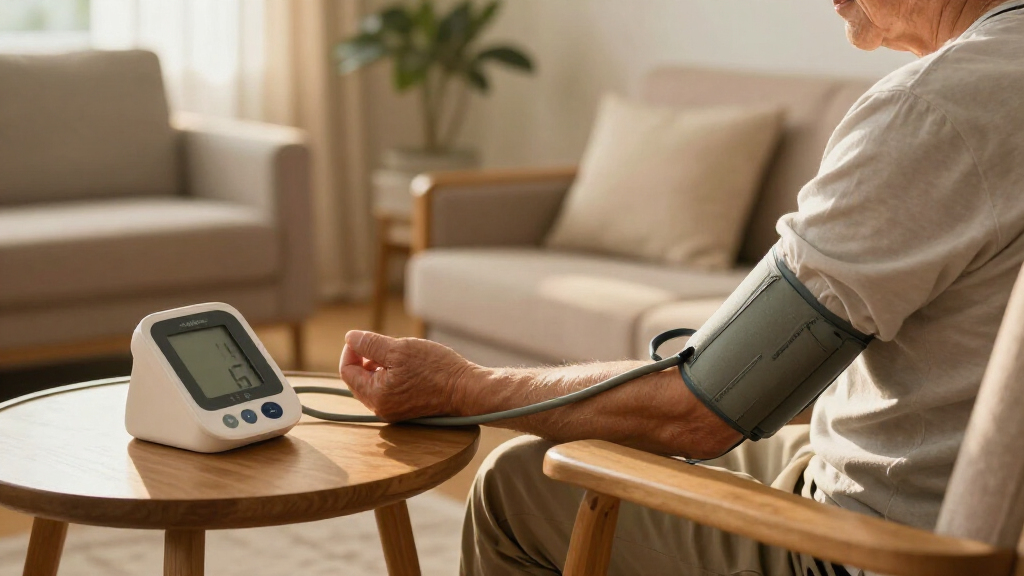
How We Picked
I ranked these monitors around the tasks that can make home readings harder with age: getting the cuff on correctly, seeing or hearing the result, operating the controls, and keeping the device ready to use. I gave more weight to clear displays, manageable cuff placement, accessible controls, and practical power choices than to features that add steps without helping a particular user. I also considered whether the form factor suits a regular home routine or a need for portability.
The order reflects the balance of those needs, not a claim that one monitor is right for every senior. The iHealth Track ranks first for combining a wide-range cuff with digital tracking; the Medisana and talking models serve people with specific reading needs, while simpler and no-wrap options may be more appealing when ease of operation or cuff handling matters most. Wrist monitors and feature-heavy models rank lower for buyers who prioritize a familiar upper-arm routine or want minimal setup. Confirm cuff fit and follow a clinician’s guidance before relying on any home monitor.
Factors to Consider When Choosing Senior-friendly Blood Pressure Monitors
Before choosing a model, match the monitor to the person who will use it and the way readings will be taken. A feature that helps one person can add friction for another, so I would start with fit, accessibility, and routine rather than a long feature list.
Choose a cuff that the user can position correctly
A cuff that is difficult to place can lead to skipped checks or repeated attempts, even if the monitor itself is simple. Measure the upper arm and compare it with the device’s stated cuff range rather than assuming a wide-range cuff fits everyone. A no-wrap style may reduce the need to fasten a conventional cuff, but it still needs correct positioning and a suitable fit. Wrist monitors can be easier to carry or put on for some users, yet arm position during a reading can be harder to maintain. If hand strength, shoulder movement, or one-sided weakness is an issue, have the intended user try the cuff motion before choosing. Ask a clinician which location and device style suits the person’s monitoring plan.
Match the display and feedback to vision and hearing
Large digits are useful only if the screen has adequate contrast and can be read from the user’s normal seated position. A backlit display can help in dim rooms, while spoken readings may reduce reliance on eyesight; however, voice prompts can be distracting or difficult to hear in a noisy home. Check whether the monitor communicates more than the final numbers, such as cuff errors or an unsuccessful reading, since that feedback can prevent confusion. Avoid judging readability from screen size alone: brightness, glare, and the user’s glasses all affect what is legible. If multiple people will use the device, make sure the interface clearly distinguishes their records. When possible, review the display in the room where readings will usually happen.
Decide how much setup the routine can support
One-touch operation can be a better fit than app connectivity when the goal is simply to take and record a reading. Connected models can help maintain a longer history or share information, but pairing, permissions, phone updates, and account access add tasks. Before paying for those features, ask who will manage the phone and whether the readings need to be shared outside the home. A paper log may be easier for some households and can still support a clinician visit. Memory stored on the monitor is useful when the user wants to review recent readings without opening another device. Choose the simplest workflow that supports the actual care plan.
Plan for power, storage, and repeat use
Battery-powered models can be moved easily, but the household needs a way to notice and replace depleted batteries. Rechargeable devices reduce disposable-battery changes, though they need regular charging and may be inconvenient if a cable is misplaced. Check whether the monitor can be used while charging rather than assuming it can. A storage bag can keep the cuff and accessories together, which helps if the device is moved between rooms or taken on trips. Keep the monitor in a dry, accessible place instead of storing it somewhere that makes setup a chore. The best power choice depends on who will maintain the device, not just how often it is used.
Treat measurement instructions as part of the purchase
A user-friendly interface cannot compensate for inconsistent measurement habits. Read the manufacturer’s instructions and follow the clinician’s schedule, including guidance on posture, rest, and timing. A monitor that is easy to use may encourage regular checks, but taking extra readings outside the care plan can create unnecessary worry. Check that the model’s instructions explain how to respond to error messages and how to store readings. If the user has questions about device accuracy or whether a wrist model is appropriate, discuss the specific model with a healthcare professional. Bring the monitor to an appointment when possible so staff can review the technique and compare its readings with clinic equipment.
Frequently Asked Questions
Should I choose an upper-arm monitor or the Oklar wrist monitor?
Start with the monitoring method recommended by the person’s clinician, especially if readings are being used to guide treatment. An upper-arm monitor may fit a familiar home routine, while a wrist model can be easier to carry or may suit someone who cannot manage an upper-arm cuff. Wrist readings depend heavily on keeping the device at the right height and position, which can be difficult for some users to repeat consistently. Compare the effort required to put on each style, not only its size. If you are unsure whether wrist measurement is suitable, ask a clinician before purchasing.
Is a no-wrap cuff easier for someone with limited hand strength?
It may be easier for a person who struggles to fasten or tighten a conventional cuff, but the design does not remove the need for correct arm placement. Some users may find a rigid or shaped cuff harder to position than a soft cuff, especially if arm movement is limited. Check the fit range and look at the device instructions before deciding. If possible, have the intended user practice putting it on without assistance. The best choice is the cuff the person can place consistently, not simply the one with the fewest fastening steps.
Do I need an app to keep useful blood pressure records?
No. A notebook or a monitor with built-in memory can work if the user can record readings reliably and bring the information to appointments. An app may help when a family member or clinician needs remote access, but it can add phone setup, account, and troubleshooting tasks. Decide who will manage those tasks before choosing a connected monitor. If the user prefers paper, confirm that the monitor displays readings clearly long enough to write them down. Follow the clinician’s instructions about which readings and details to record.
Is a large screen or a talking monitor better for low vision?
It depends on whether the user can read high-contrast text more easily or would rather hear the result. A large screen, such as the Medisana model’s 5-inch display, may help someone who can see digits but has trouble with small displays. A talking monitor may suit someone who cannot comfortably read a screen, though audio must be clear enough for the home environment. Check whether spoken feedback can be adjusted or repeated, and whether the user can distinguish the reading from setup prompts. If possible, compare both styles with the user before buying.
What should I check before buying a monitor for two people?
Check whether the device supports separate user profiles or memory records, and how clearly it shows which person’s readings are being saved. If it does not separate users, the household will need a dependable way to label readings outside the monitor. Also confirm that the cuff range works for both people; a shared monitor is not useful if one user cannot get a proper fit. Consider whether both users can manage the controls and understand any app or voice features. Ask a clinician whether the same device and measurement routine are suitable for both users.
Conclusion
For most buyers seeking a balance of cuff flexibility and digital record keeping, I would start with the iHealth Track as best overall. The Paramed or CAVN one-touch model may be the best value-style choice for a household that wants straightforward upper-arm operation without app setup, while the iHealth Track is the premium-leaning pick for buyers who will use connected tracking. For beginners, I would favor a simple upper-arm monitor with controls the user can manage; the CAVN one-touch option is a sensible starting point. For low vision, compare the Medisana’s large display with the talking monitor; for reduced cuff-wrapping effort, examine the no-wrap designs and confirm fit first. Choose the Oklar wrist model when portability or upper-arm cuff handling is the main obstacle, and check with a clinician if you are unsure which measurement style fits the care plan.