This checklist is for older adults managing several medications, as well as family members and caregivers helping keep a routine clear and consistent. It covers everyday organization, reminders, and select handling and travel needs.

Get comfort and care essentials delivered free — and shop member deals
- Fast, free delivery on millions of items
- Access to Prime Big Deal Days deals on October 6–7
- Prime Video, Amazon Music and more included
The sections follow common medication-management tasks: sorting doses, remembering schedules, preparing medications, and transporting insulin. Picks are included where provided; the pill crusher and prescription bottle magnifier sections offer general selection advice.
Use the list to identify the task that causes the most difficulty, then compare the relevant features with the medication routine and the person’s abilities. Before changing how a medication is stored, crushed, or taken, check with a pharmacist about its specific requirements.
Weekly Pill Organizer
A weekly organizer can make a medication routine easier to see at a glance and help caregivers check whether doses have been set out. The listed pick, Waterproof Pill Organizer Set with Removable Pouch System, pairs a weekly organizer with a removable pouch system. Consider whether the daily compartments are easy to open, label, and distinguish, and whether the set can be packed without mixing up days or doses.A common mistake is choosing a layout that does not match the actual schedule. Some prescriptions are taken more than once a day, while others have special timing or storage directions. Check that the organizer has enough clearly separated compartments for the person’s routine, and confirm with a pharmacist that each medication may be removed from its original packaging. Do not assume all pills can be stored together.
Think through dexterity, vision, and who will fill the organizer. Compartments should be manageable for the person using them, and labels should remain readable. If a caregiver prepares doses, choose a system that supports a repeatable setup and a simple handoff. Keep the original prescription information available for medication checks.
What to look for:
- Compartments that match the weekly schedule and dose frequency
- Lids that are manageable for the user’s hand strength and dexterity
- Clear day labels that are easy to read
- A pouch system that suits the person’s carrying routine
- Pharmacist guidance on which medications can be transferred
Waterproof Pill Organizer Set with Removable Pouch System

This waterproof travel pill organizer features a durable, leather-look exterior with a removable binder-style system containing 14 sealed pill pouches. It offers flexible storage for pills, vitamins, and small first-aid items, with color-coded labels and mesh pockets for easy organization and portability.
Pros:
- Waterproof and durable design keeps medications secure and discreet
- Removable binder system allows flexible organization for up to 14 days
- Color-coded labels and writable pouches enhance sorting and identification
- Includes mesh pockets for additional storage of small items
Cons:
- May be bulky for minimalists or those with limited space
- Relies on manual labeling, which may require extra effort
- Not suitable for large pill quantities or bulk medication storage
Best for: People who want a weekly setup with a removable pouch system
Not ideal for: Users whose medication schedule needs more compartments than the organizer provides
Bottom line: Match the compartment layout to the prescribed routine and confirm storage suitability with a pharmacist.
Automatic Pill Dispenser
An automatic dispenser may suit a routine where scheduled doses need a prominent reminder and controlled access. The listed pick is the 42-Day Automatic Pill Dispenser with App Control, LCD Display, Digital. Before choosing it, compare the way its alerts and display work with the user’s hearing, eyesight, comfort with technology, and daily habits. App control can be useful only if someone will reliably manage the app and its setup.Do not choose by capacity alone. Confirm that the dispenser’s dosing schedule, compartments, and loading process fit the prescription routine, including any doses that occur at unusual times. Ask a pharmacist whether the medications can be loaded into the device and whether their storage requirements are compatible. A device is not a substitute for confirming that the right medication and dose are being taken.
Consider who will set up and monitor the dispenser, and what the user should do if an alert is missed or the device is difficult to operate. Review the display and controls in the actual setting where it will be used. A straightforward written backup plan and caregiver contact can support safe daily use.
What to look for:
- A dosing schedule and compartment arrangement that match the prescription routine
- Readable LCD text and controls the user can operate
- Alert options that suit the user’s hearing and routine
- An app setup that a user or caregiver can manage consistently
- Pharmacist confirmation that medications suit device storage
42-Day Automatic Pill Dispenser with App Control, LCD Display, Digital Lock, and

This automatic pill dispenser has three trays with 14 dose slots each, for up to 42 days of once-daily medication. Users can set schedules on the device with voice guidance or through the app, which also tracks doses and sends missed-dose alerts.
Pros:
- Offers both on-device and remote app setup
- Tracks dosage history and can alert caregivers to missed doses
- Multiple alert options and a digital lock
- Sealed storage includes a desiccant pack
Cons:
- Listing’s stated supply durations are inconsistent: twice- and three-times-daily use are both listed as 14 days
- Not intended for assisted living facilities, nursing homes, or other regulated institutions
Best for: People whose routine benefits from a dispenser with app control and an LCD display
Not ideal for: Users who need a simpler setup or cannot reliably manage its controls
Bottom line: Confirm the schedule, medication compatibility, and alert plan before relying on an automatic dispenser.
Medication Reminder Clock
A dedicated clock with alarms can make medication times easier to notice without asking the user to check a phone. The listed pick is the ORKA Talking Clock with Customizable Alarms and Large Display for Seni. Its talking-clock format, customizable alarms, and large display are features to compare against the person’s hearing, vision, and preference for spoken or visual cues.A frequent mistake is assuming that a clock’s alarms automatically map neatly to every prescription. Write down medication times and confirm that the available alarm settings can represent them clearly. Ask whether reminders need to distinguish different doses, and decide who will update the settings if the schedule changes. Verify changes against current prescription instructions rather than relying on an old alarm setup.
Place the clock where the user can see or hear it during the day, and check that its controls are understandable to the person who will maintain it. If hearing is limited, consider whether the large display alone is enough; if vision is limited, assess whether spoken alerts are clear in the intended room. Pair reminders with an established routine and caregiver communication where appropriate for reliable follow-through.
What to look for:
- Alarm settings that can represent the medication schedule
- A display size and contrast the user can see comfortably
- Spoken reminders that suit the user’s hearing
- Controls that the user or caregiver can update confidently
- A placement location where alerts are noticeable
ORKA Talking Clock with Customizable Alarms and Large Display for Seniors
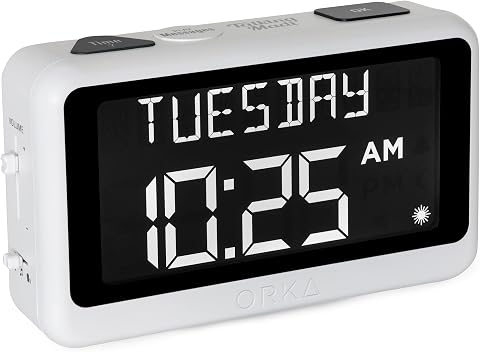
The ORKA Talking Clock is a large digital alarm clock designed for seniors, visually impaired, and dementia patients. It features customizable voice reminders, a large HD display with extra-large digits, and multilingual support to help users keep track of time and medication schedules.
Pros:
- Large, easy-to-read display with extra-large digits
- Customizable voice alarms with up to 8 reminders
- Supports multiple languages and volume control
- Ideal for seniors, visually impaired, and dementia patients
Cons:
- Requires AC power, not battery operated for regular use
- Setup may be complex for some users
- No mention of smartphone app integration
Best for: People who benefit from a large display and spoken, customizable alarms
Not ideal for: Users whose schedule needs reminder features the clock does not provide
Bottom line: Set alarms from the current medication schedule and check that the user can perceive them.
Pill Crusher Grinder
A pill crusher can help with tablets that a clinician or pharmacist has confirmed may be crushed, but crushing is not appropriate for every medication. Some tablets must remain whole or have special coatings or release properties. The first step is to ask a pharmacist about each medication; do not infer suitability from a tablet’s appearance or from the fact that a crusher is available.When choosing a device, look for a stable base, a mechanism the user can operate without pain or excessive force, and a chamber that is easy to inspect and clean. Consider whether the design limits powder residue and whether it can be used without transferring medication between people. Avoid a model that is hard to open, grip, or clean, since residue can complicate dose accuracy and hygiene.
Also ask how the crushed medication should be administered and whether it can be mixed with food or liquid. Follow the medication-specific directions, and keep each dose separate unless a healthcare professional instructs otherwise. If hand strength, coordination, or swallowing needs are changing, ask the care team about alternatives rather than relying on a crusher alone. Use only with professional guidance.
What to look for:
- Pharmacist confirmation that the specific tablet may be crushed
- A stable design that is manageable with the user’s grip and strength
- A chamber that is easy to inspect and clean
- A mechanism that limits leftover residue between doses
- Clear guidance for administering the crushed medication
Insulin Travel Case
Travel can make insulin storage more complicated, so a purpose-built case may help keep temperature monitoring in view. The listed pick is the Insulin Cooler Travel Case with Digital Temperature Display and 2 Ice. Check the full product details to understand what the included cooling components are and how the temperature display works. Compare those details with the storage instructions for the person’s specific insulin.A common mistake is assuming that a cooler case guarantees safe storage in every climate or for every trip length. Ask a pharmacist or diabetes care professional about the required temperature range, permitted exposure, and what to do if insulin becomes too warm or cold. Confirm how long the case is intended to maintain conditions, how it should be prepared, and whether the display needs separate attention. Follow product and medication guidance together.
Consider the travel plan: carrying method, trip duration, access to the case, and whether the user can read the display. Make sure the case accommodates the insulin supplies that must travel, and plan for checking conditions during transit. Keep medication instructions accessible and know whom to contact if storage conditions are uncertain. Plan for the whole trip, including time away from the cooler.
What to look for:
- Temperature guidance that matches the specific insulin’s storage instructions
- Clear product details on the included cooling components
- A digital display the user can read and monitor
- Capacity suited to the insulin and supplies being carried
- Preparation and trip-duration instructions for the case
Insulin Cooler Travel Case with Digital Temperature Display and 2 Ice Packs
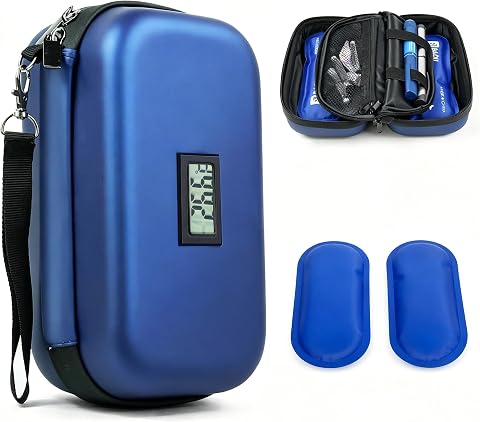
This TSA-approved insulin travel cooler features a digital temperature display to ensure medications stay between 35.6°F and 46.4°F. It includes two reusable ice packs, a pressure-resistant shell, and a watertight interior that protects insulin pens, syringes, and supplies during travel.
Pros:
- Digital temperature display for accurate monitoring
- Includes reusable ice packs for extended cooling
- Compact and lightweight for travel convenience
- Watertight and impact-resistant design
Cons:
- Cooling duration varies with climate conditions
- Limited capacity for larger supplies
- Requires ice packs to maintain temperature
Best for: People who need a travel case with a digital temperature display
Not ideal for: Travelers whose insulin storage needs are not addressed by the case instructions
Bottom line: Check the case guidance against the insulin’s storage requirements before travel.
Prescription Bottle Magnifier
A bottle magnifier can make small prescription labels easier to inspect, especially when print size or lighting makes reading difficult. Choose one that helps the user read the actual bottle label without obscuring important details such as the medication name, directions, or warnings. A clear, comfortable view matters more than added features the user will not use.Check whether the magnifier fits the bottle shapes used by the pharmacy and whether it can be positioned without covering the label. Consider whether the person needs a handheld tool, a stand, or another format that avoids tiring hands. Test it with the user’s usual lighting and reading distance. A common mistake is buying a magnifier based on enlargement alone without checking readability and handling in everyday use.
Magnification does not replace confirming the label or asking for help when the directions are unclear. Keep prescriptions organized and ask the pharmacist about large-print labels or other accessibility options. If vision changes make medication identification difficult, involve a caregiver or clinician in creating a safer process. Choose a tool the user can retrieve and use consistently, then verify that the full label remains legible.
What to look for:
- A view that keeps medication names and directions visible
- Compatibility with the bottle shapes the user receives
- A format the user can hold or position comfortably
- Useful performance with the user’s normal lighting
- Pharmacy options such as large-print labels
When deciding what to get first, start with the part of the routine that creates the most uncertainty: organizing doses, noticing medication times, or managing travel storage. Check prescription requirements with a pharmacist before transferring or crushing medication, and compare any organizer or reminder with the actual schedule. Fit the tool to the routine and the person who will use it.
Medication systems work best when they are understandable to the older adult and any caregiver involved. Set up one change at a time, review it together, and keep current instructions close at hand. With a little planning and the right support, daily medication tasks can feel more manageable.
Cold & flu season Picks
humidifiers
As an affiliate, we earn on qualifying purchases.