To check your eyesight between exams, you can use simple home vision tests like printable charts or online apps designed for self-assessment. Keep your glasses or contacts on if you usually wear them for more accurate results. Sit at the recommended distance in good lighting, follow instructions carefully, and track any changes over time. If you notice worsening vision or discomfort, it’s time to see an eye care professional; more tips await you if you keep exploring.
Key Takeaways
- Use printable charts or digital apps for quick, at-home visual acuity checks between professional exams.
- Keep corrective lenses on during tests to mimic real-world vision and improve accuracy.
- Follow proper setup guidelines, including correct distance and lighting, for reliable results.
- Regular home testing helps monitor vision changes and identify potential issues early.
- Use home tests as screening tools; consult an eye care professional if vision worsens or symptoms occur.
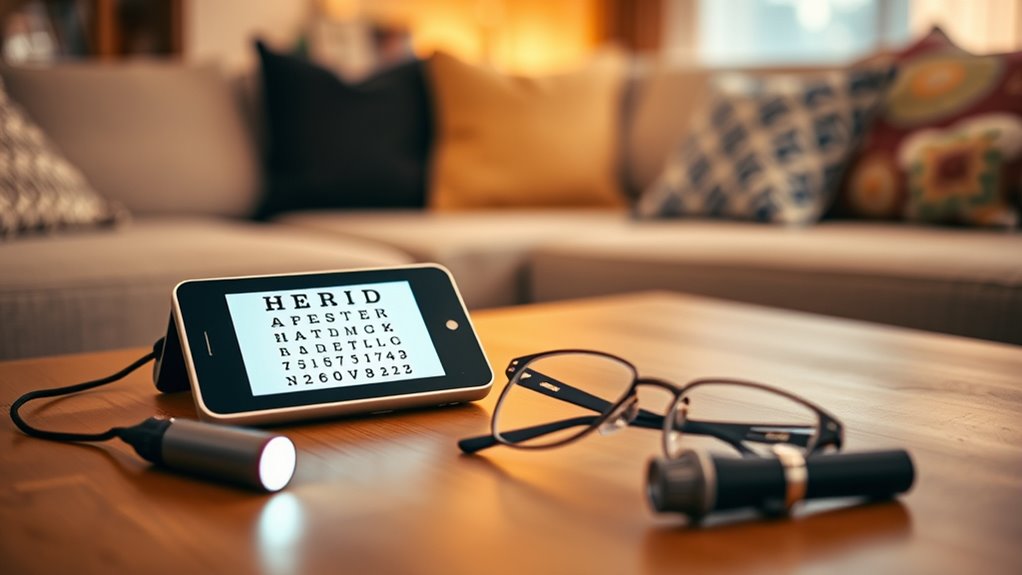
Have you ever wondered if you can check your vision without visiting an eye doctor? With the rise of home vision tests and tools, it’s more possible than ever to get a sense of your eyesight from the comfort of your home. While these tools aren’t replacements for thorough eye exams, they can help you monitor your vision between appointments and determine if you need a professional assessment. When considering how to evaluate your eyesight at home, it’s important to understand how these tests work and what they can reveal about your vision correction methods and glasses compatibility.
Many home vision tests focus on basic visual acuity, helping you see how clearly you can read letters or symbols at different distances. These tests typically use printable charts or digital applications that you can access online. They’re designed to give you a rough idea of whether your eyesight has changed over time. Keep in mind, however, that these tests are not as precise as professional evaluations and can be influenced by factors like lighting, screen quality, or improper test setup. But they serve as useful screening tools that can alert you to potential issues needing further investigation.
Home vision tests offer quick screening but are less precise than professional eye exams.
If you wear glasses or contact lenses, understanding your glasses compatibility is essential when using home tests. Many digital tools are calibrated for users with corrective lenses, allowing you to keep your glasses on during the test if that’s what you normally wear. This helps mimic real-world conditions and provides more accurate results. If you find that your vision has worsened or your current glasses no longer provide clear correction, it might be time to schedule an eye exam. These home assessments can act as a preliminary check, but they shouldn’t replace professional advice, especially if you experience symptoms like headaches, eye strain, or blurred vision.
When using these tools, always follow the instructions carefully to get the most reliable results. Sit at the recommended distance from your screen or chart, ensure proper lighting, and take the test in a quiet environment free from distractions. Regularly performing these simple checks can help you track changes over time and decide when it’s necessary to visit an eye care specialist. Additionally, understanding the importance of natural vision maintenance can support your eye health routine. Remember, while home vision tests are convenient and accessible, they’re best viewed as supplementary tools that support your overall eye health routine. If you notice significant differences or persistent issues, schedule a thorough eye exam to determine the best vision correction methods tailored for you.

Snellen Eye Chart, Eye Charts for Eye Exams 20 Feet with Wooden Frame 11×22 Inches, Canvas Low Vision Eye Test Wall Chart with Eye Occluder Hand Pointer for Kids Gifts (20 Feet Test Distance)
Practical Snellen Chart: The snellen eye chart is made of canvas with wood handle, it is easy to…
As an affiliate, we earn on qualifying purchases.
As an affiliate, we earn on qualifying purchases.
Frequently Asked Questions
How Accurate Are Home Vision Tests Compared to Professional Exams?
Home vision tests can give you a general idea of your eyesight, but their accuracy comparison to professional validation isn’t perfect. They might miss subtle issues or result in inconsistent measurements. While convenient, these tests aren’t a substitute for regular eye exams, especially if you notice changes. For reliable results, always consult an eye care professional, as they provide precise, validated assessments to guarantee your vision health.
Can Home Tests Detect All Eye Conditions Effectively?
Home tests can’t detect all eye conditions effectively, but they’re useful for DIY screening and early detection. You can spot signs like vision changes or discomfort, prompting you to see an eye care professional. However, conditions like glaucoma or retinal issues often require specialized equipment and exams. Regular professional checkups remain essential, as home tests serve as a helpful, initial step rather than a thorough diagnosis.
How Often Should I Perform a Home Vision Check?
You should perform a home vision check once every few months to support your routine eye care and maintain good vision. Regular self-assessments can catch early signs of changes, but they shouldn’t replace professional exams. Keep track of any noticeable shifts in clarity, color, or discomfort, and consult your eye care provider if you notice anything unusual. Consistent testing helps you stay proactive about your eye health and vision maintenance.
Are There Recommended Apps for Reliable Home Eye Testing?
Many believe vision apps are unreliable, but some eye test tools like EyeQue and Opternative offer validated results when used correctly. These vision apps are designed to help you monitor your eyesight between professional exams. While they shouldn’t replace an eye doctor, they can be convenient for spotting changes early. Make sure to follow instructions carefully and use reputable apps to get the most accurate home eye testing results.
What Should I Do if My Home Test Indicates Vision Problems?
If your home test shows vision problems, schedule an eye exam promptly. Don’t delay; proper eye health maintenance and accurate vision correction are essential. Use the results as a guide, but remember they’re not a substitute for professional care. Visit an eye care specialist to get a thorough check-up, discuss your symptoms, and determine the right treatment. Regular exams help preserve your eye health and ensure your vision correction remains effective.
LED Eye Screen BT APP Controlled LED Eyes Module USB Powered Eye Sign for Backpack 48 X 96 Resolution
LED Eyes: This LED Sign features concealed magical eyes that make you the center of attention as you…
As an affiliate, we earn on qualifying purchases.
As an affiliate, we earn on qualifying purchases.
Conclusion
Taking control of your eye health is like steering your own ship—you don’t want to wait for storms to detect trouble. Home vision tests and tools put the compass in your hands, allowing you to spot issues early and navigate your eyesight with confidence. Remember, regular check-ins are your lighthouse, guiding you safely through clear vision days. Stay proactive, and your eyes will thank you for the voyage.

6×6 Focus Checker MF Slide by Vlads Test Target in 70×70 mm GEPE Mount for Camera Scanning Tune-up. Digitize Your Priceless Slides and Negatives with The Highest Sharpness and Fidelity.
This ready-to-use Test Target in standard 6×6 MF slide mount is crafted with meticulous care to ensure the…
As an affiliate, we earn on qualifying purchases.
As an affiliate, we earn on qualifying purchases.

Graham-Field Pocket Size Plastic Eye Chart, 6 3/8" x 3 ½", 1 Count (Pack of 1)
0
As an affiliate, we earn on qualifying purchases.
As an affiliate, we earn on qualifying purchases.