

To customize your wheelchair for comfort, start by choosing supportive cushions like memory foam or gel that fit your body shape and distribute pressure evenly. Adjust the footrests so your feet rest flat with knees at a 90-degree angle, ensuring proper posture and circulation. Consider ergonomic features like backrest support and customizable armrests. Selecting durable, comfortable materials enhances longevity and tailored support. Keep exploring ways to optimize your chair’s setup for the best comfort and health benefits.
Key Takeaways
- Select supportive cushions like memory foam or gel that conform to body contours and reduce pressure points.
- Adjust or customize footrests to ensure feet rest flat with knees at a 90-degree angle for proper posture.
- Choose ergonomic seats and backrests designed to match individual body shapes, promoting better alignment.
- Use adjustable features to tailor cushion firmness and footrest positioning to individual comfort needs.
- Opt for durable, suitable materials that enhance comfort and meet environmental or lifestyle requirements.
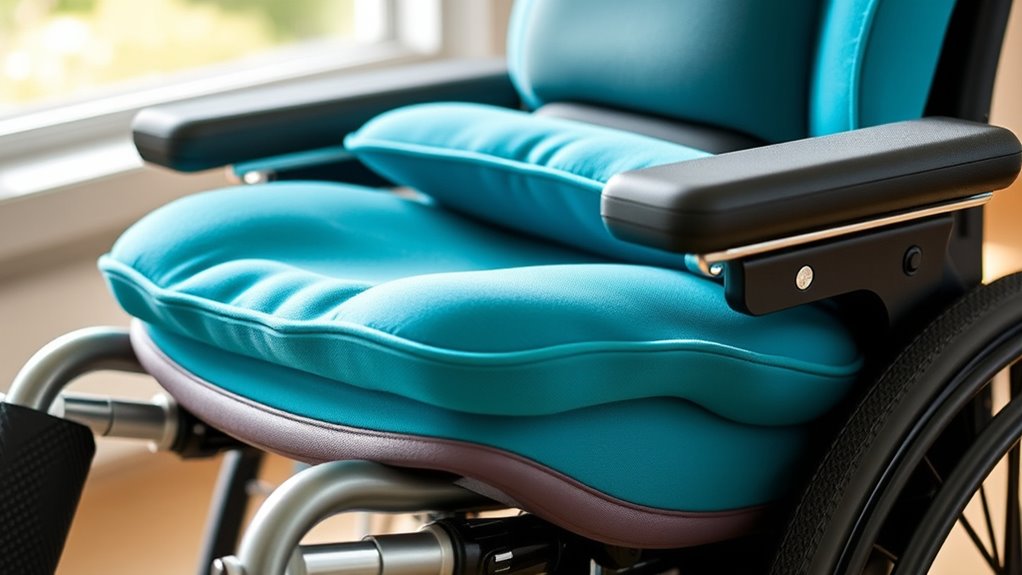
Customizing your wheelchair allows you to tailor it to your specific needs and preferences, guaranteeing greater comfort and functionality. One of the most effective ways to do this is by focusing on ergonomic design and selecting the right mobility aids. When you prioritize ergonomic features, you reduce strain on your body, prevent pressure sores, and improve overall posture. This means paying attention to the seat design, backrest support, and cushioning to make sure they align with your body’s contours. Proper ergonomic design not only enhances comfort but also promotes better health, especially if you spend extended periods in your wheelchair.
Adding supportive cushions is a key step in customization. Memory foam, gel, or air cushions distribute pressure evenly, preventing discomfort and skin breakdown. You should choose a cushion that fits your body shape and provides enough support for your hips and thighs. These cushions often come with adjustable features, allowing you to customize the firmness and positioning. When selecting a cushion, consider your typical activities and any existing pressure points. A well-chosen cushion can make a significant difference in how long you can comfortably sit and how your body feels afterward.
Supportive cushions like memory foam or gel improve comfort and prevent skin issues.
Footrests are another essential mobility aid that can be customized for better comfort. Adjustable footrests allow you to set the height to match your leg length, ensuring your feet are supported without dangling or slipping. Some models come with swing-away or removable features, making transfers easier and reducing strain on your legs and hips. Properly positioned footrests help maintain good posture and prevent fatigue. Remember, your feet should rest flat and comfortably, with knees at a 90-degree angle, which minimizes pressure and promotes circulation.
Additionally, exploring different material options for your wheelchair components can further enhance comfort and durability, ensuring your wheelchair suits your lifestyle and environment.

AUVON Ventilation Seat Cushion with Innovation Heat Dissipation Design
- Innovative Ventilation System: 30 air holes and 11 grooves for airflow
- Supportive Memory Foam: Molds to your shape, prevents flattening
- Skin-Friendly Waterproof Cover: High-quality plush fabric with waterproof membrane
As an affiliate, we earn on qualifying purchases.
As an affiliate, we earn on qualifying purchases.
Frequently Asked Questions
How Do I Choose the Right Cushion for Pressure Relief?
To select the right cushion for pressure relief, consider pressure mapping to identify areas needing extra support. Look for cushions made of materials like foam, gel, or air that distribute pressure evenly and reduce risk of sores. Think about your specific needs, such as activity level and skin sensitivity. Testing different options and consulting with a specialist ensures you find a cushion that provides ideal comfort and pressure relief.
Can I Customize My Wheelchair’s Armrests for Better Support?
Yes, you can personalize your wheelchair’s armrests for better support. Look for armrests made from durable materials like foam or gel for added comfort, and choose adjustable armrest heights to suit your needs. Adjusting the height ensures proper support for your arms and shoulders, reducing strain. Customizing these features helps you maintain proper posture and enhances your overall comfort during use.
What Are the Options for Adjustable Footrest Heights?
Did you know that adjustable footrest heights can considerably improve comfort, with over 60% of wheelchair users reporting better posture? You can customize your footrest height through easy-to-use adjustment mechanisms, allowing you to set the perfect position for ideal support. Most wheelchairs offer multiple options for footrest adjustments, enabling you to find the perfect height, which helps reduce pressure and enhances your overall mobility.
How Do I Ensure My Wheelchair Fits Different Terrains?
To guarantee your wheelchair handles different terrains, focus on terrain adaptation and choose the right wheel size options. Opt for larger wheels for better stability on uneven surfaces and consider adding all-terrain tires for enhanced traction. Adjust the suspension if available, and test your wheelchair on various terrains to see how it performs. These modifications help you stay comfortable and mobile across different environments.
Are There Temperature-Sensitive Cushions Available for Comfort?
Imagine your comfort adapting effortlessly—yes, temperature-sensitive cushions are a real game-changer. Made with climate adaptive materials, these cushions respond to your body’s warmth, providing a cozy feel in cooler weather and a breathable, cool sensation when it’s warm. They’re designed to keep you comfortable throughout the day, making your wheelchair experience more enjoyable and tailored to your body’s needs, no matter the weather outside.

Universal Wheelchair Footrest Replacement – Adjustable Composite Footboard & Heel Loop, Foldable Comfort Support, Affordable, Black, Lightweight, Easy Installation
- Universal Fit: Compatible with standard wheelchairs and more
- Tool-Free Installation: Easy to install with cam-lock design
- Secure Adjustment: 1.46-inch hemi pin spacing for stability
As an affiliate, we earn on qualifying purchases.
As an affiliate, we earn on qualifying purchases.
Conclusion
By customizing your wheelchair with the right cushions, footrests, and adjustments, you’re not just enhancing comfort—you’re reclaiming independence. Think of your wheelchair as a blank canvas, waiting for your personal touch to turn it into a true extension of yourself. When you tailor it to your needs, every journey becomes smoother, more secure, and truly yours. So, don’t settle for standard—your comfort is worth the effort to create a masterpiece of mobility.

BALAPET Wheelchair Back Cushion,3.5’‘ Thick Wheelchair Cushions Ergonomic Design Foam Support Lumbar Pillow for Long Sitting Reduce Back Pressure Essential Wheelchair Accessory
- Ergonomic Lumbar Support: Supports back and reduces pain
- Breathable and Comfortable: Made of breathable knit fabric and foam
- Adjustable Straps: Ensures a secure fit on various chairs
As an affiliate, we earn on qualifying purchases.
As an affiliate, we earn on qualifying purchases.

Gel Seat Cushion for Long Sitting, (Thick & Large) Cushion for Wheelchair
- Thickened and Soft: 1.6-inch thick gel cushion for comfort
- Large and Breathable: 18.9×17.7 inches with airflow vents
- Pressure and Pain Relief: Ergonomic design reduces pressure and sciatica
As an affiliate, we earn on qualifying purchases.
As an affiliate, we earn on qualifying purchases.