To safeguard your bathroom, consider how each option helps with safety and mobility. Toilet risers boost height to make sitting and standing easier, reducing strain and falls. Grab bars provide sturdy support near toilets, showers, or tubs, helping you maintain balance and prevent slips. Comodes act as portable toilets, offering a safe, comfortable alternative for those with limited mobility. Understanding their differences will guide you in creating a safer bathroom environment—continue to explore for more helpful insights.
Key Takeaways
- Toilet risers improve toilet height, reducing strain and fall risk, ideal for elderly independence.
- Grab bars provide essential support and stability, preventing slips and enhancing safety near toilets and showers.
- Commodes offer portable, stable options for those with mobility issues, reducing the need for walking or stairs.
- Combining all three enhances bathroom safety, supporting mobility, balance, and fall prevention.
- The choice depends on individual needs: risers for comfort, grab bars for support, and commodes for accessibility.
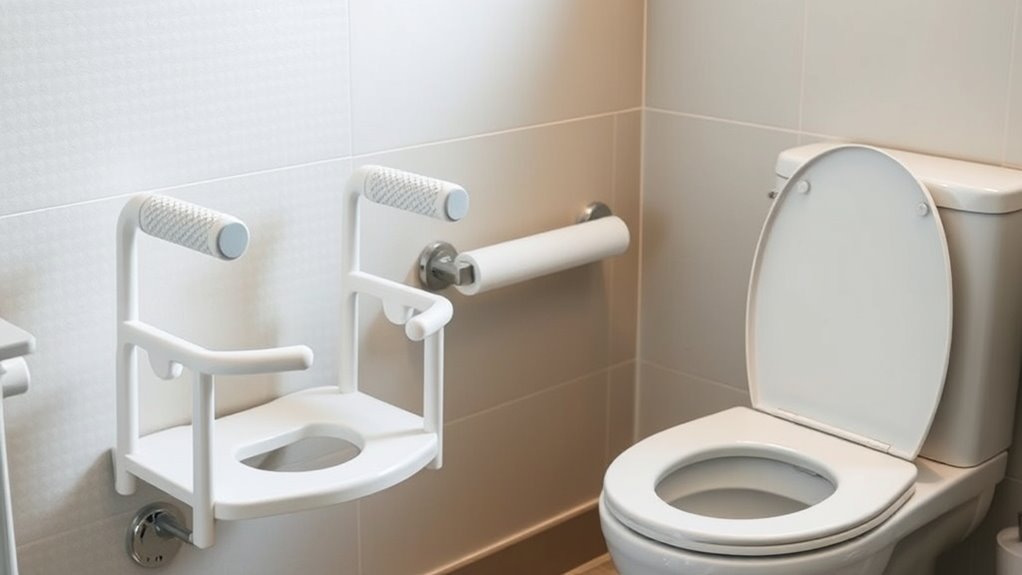
The bathroom is one of the most common areas where accidents can happen, especially for children and seniors. If you’re looking to improve elderly safety, making thoughtful bathroom modifications is essential. These adjustments can substantially reduce the risk of slips, falls, and injuries, giving you peace of mind and guaranteeing a safer environment for everyone. One effective way to enhance safety is by considering toilet risers. These simple devices elevate the height of your toilet, making it easier for seniors or those with mobility challenges to sit down and stand up comfortably. By reducing the strain on joints and muscles, toilet risers help prevent falls and make daily routines less stressful. They’re an affordable, straightforward upgrade that can be easily installed, fitting seamlessly into most bathroom setups.
Bathroom safety is crucial; toilet risers make sitting and standing easier, reducing fall risks and supporting elderly independence.
Another essential element in safeguarding the bathroom is the installation of grab bars. These sturdy bars provide essential support and stability, especially near the toilet, shower, or bathtub. When you install grab bars, you give yourself or your loved ones a reliable handhold that can prevent slips and assist with balance. It’s important to choose bars with a strong grip surface and secure mounting to the wall, ensuring they can withstand weight and pressure. Grab bars are an excellent addition to any bathroom modification plan aimed at enhancing elderly safety. They empower users to move more confidently, reducing the likelihood of falls that could lead to serious injuries.
Lastly, the use of commodes can be a practical solution for those with limited mobility or during recovery from injury. A commode functions as a portable toilet, making it easier for individuals to access the bathroom without navigating stairs or long distances. This reduces the risk of falls and makes daytime or nighttime bathroom visits safer. When selecting a commode, look for features like stability, comfort, and ease of cleaning. Properly positioned, a commode can be a fundamental part of your bathroom modifications, especially for seniors or people with specific health needs.
Incorporating these safety features—toilet risers, grab bars, and commodes—can transform your bathroom into a safer space. Each element addresses different aspects of elderly safety, offering support, stability, and ease of use. Additionally, understanding the importance of contrast ratio in projectors can help in creating a comfortable environment for visual tasks, whether for entertainment or safety monitoring. When you invest in thoughtful bathroom modifications, you’re not just preventing accidents; you’re creating a more comfortable, accessible environment for everyone. Whether you’re making minor upgrades or a complete overhaul, focusing on these key safety features guarantees your bathroom remains a secure, welcoming place for all users.
As an affiliate, we earn on qualifying purchases.
Frequently Asked Questions
Are Toilet Risers Suitable for All Toilet Types?
Toilet risers aren’t suitable for all toilet types because toilet compatibility varies. You need to check your toilet’s size and shape before riser installation to guarantee a secure fit. Some risers work best with standard toilets, while others may not fit elongated or wall-mounted models. Always measure carefully and follow the manufacturer’s guidelines to ensure safe and effective riser installation, making sure it suits your specific toilet setup.
How Do Grab Bars Affect Bathroom Aesthetics?
Grab bars can impact your bathroom aesthetics, but decorative fixtures help maintain visual integration. When you choose stylish, sleek designs, they blend seamlessly with your decor, making safety features less obvious. Opt for finishes and styles that match your existing fixtures, so they don’t stand out. This way, you prioritize safety without compromising your bathroom’s look, creating a functional yet attractive space that feels cohesive and inviting.
Can Commodes Be Used as Regular Toilets?
Yes, commodes can be used as regular toilets if your bathroom remodeling includes suitable plumbing and space adjustments. They offer convenience for elderly independence by providing a portable or semi-permanent solution, especially during recovery or mobility challenges. When choosing a commode, consider your specific needs and bathroom layout to guarantee safety and comfort. Proper installation ensures it functions seamlessly as part of your regular bathroom routine.
What Is the Lifespan of Bathroom Safety Equipment?
The lifespan of bathroom safety equipment varies, but with proper care, they can last for years. You should follow installation guidelines carefully and stay on top of maintenance requirements, like cleaning and checking for wear. Think of it as giving your safety tools a long-term tune-up. Generally, toilet risers, grab bars, and commodes can last 5-10 years, but regular inspection helps make sure they stay reliable and safe for use.
Are There Specific Safety Standards for Bathroom Aids?
Yes, there are specific safety standards for bathroom aids. You should follow installation guidelines carefully to guarantee proper safety and stability. Regular maintenance requirements include checking for loose parts and cleaning to prevent mold or damage. These standards help maintain safety and extend the lifespan of your equipment. Always verify that products meet ADA or relevant local safety regulations to ensure you’re using compliant and reliable bathroom aids.
As an affiliate, we earn on qualifying purchases.
Conclusion
Think of your bathroom as a delicate dance floor—you want every step to be confident and secure. Whether you choose toilet risers, grab bars, or commodes, each adds a sturdy rhythm to your daily routine. By safeguarding your space, you’re not just preventing falls; you’re choreographing peace of mind. Embrace these safety tools as your trusted dance partners, guiding you safely through each move. After all, a secure bathroom is the foundation for your independence to shine.
As an affiliate, we earn on qualifying purchases.
bathroom safety accessories for seniors
As an affiliate, we earn on qualifying purchases.
As an affiliate, we earn on qualifying purchases.