To make a senior’s bedside area more helpful, keep essentials like water, medications, and personal care items within easy reach. Use bedside caddies or shelves to organize everything and reduce clutter. Install safety features like bed alarms, motion-activated lamps, and nightlights to prevent falls and monitor their needs. Add calming decorations and comfortable lighting to create an inviting environment. Moving forward, you’ll discover more tips to enhance safety, comfort, and independence even further.

Turn quiet afternoons into listening time
- Thousands of audiobooks, podcasts and originals
- Listen on your phone, tablet or Echo — also offline
- Cancel anytime
Key Takeaways
- Organize essential items like water, medication, and personal care within easy reach using caddies or shelves.
- Install accessible lighting such as motion-activated lamps and nightlights to enhance visibility and safety.
- Use large, clear clocks and calendars to help seniors stay aware of time and appointments.
- Incorporate safety features like bed alarms and call buttons connected to caregivers.
- Arrange furniture to ensure clear pathways and easy access for mobility aids, reducing fall risks.
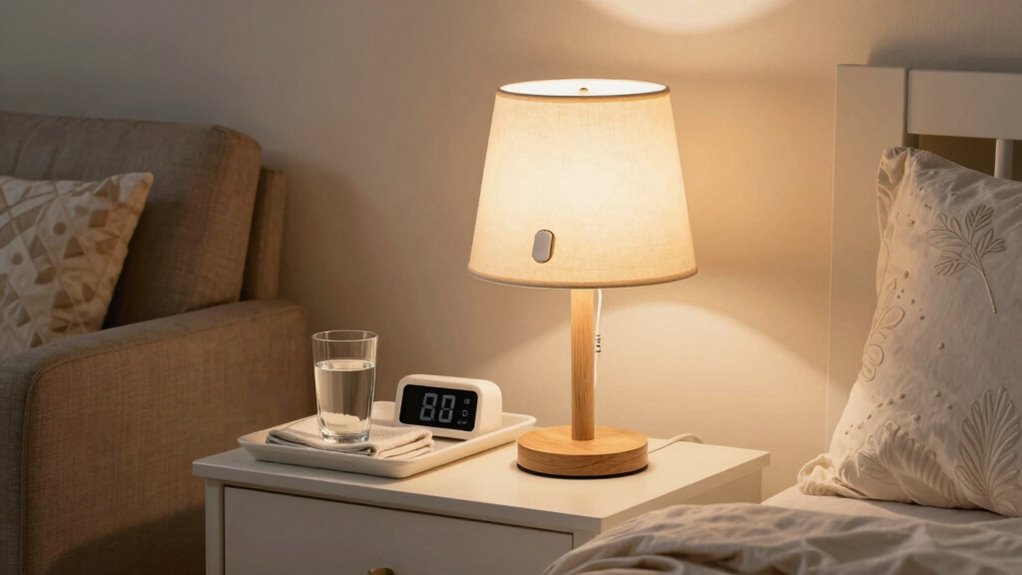
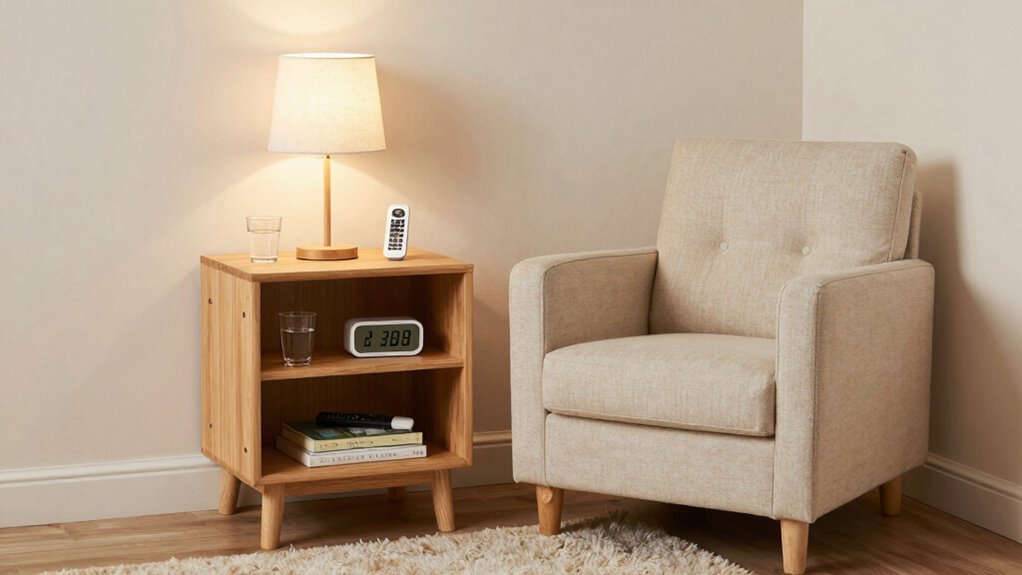
Creating a functional bedside area can markedly improve a senior’s comfort and independence. When you design this space thoughtfully, you help them manage daily tasks more easily and reduce their reliance on others. Start by placing essential items within easy reach, such as a glass of water, medication, and personal care items. To make these items accessible, consider using a bedside caddy or small shelves that keep everything organized and within arm’s length. This setup minimizes the need for unnecessary movement, which can be especially important if mobility is limited.
A thoughtfully arranged bedside enhances comfort, independence, and easy access to essentials for seniors.
Incorporating tech gadgets into the bedside area can greatly enhance safety and convenience. A simple bed alarm or a call button connected to a nurse or caregiver ensures quick assistance if needed. Smart lighting, like motion-activated lamps, allows your loved one to adjust lighting without fumbling for switches, reducing the risk of falls. A digital clock with large numbers and a calendar can help seniors keep track of time and stay organized. Some devices even feature voice-activated controls, making it easier for them to operate tech without having to move or strain.
Decorative touches should not be overlooked, as they create a warm and inviting environment. Choose calming colors and soft textures for bedding and curtains to promote relaxation. Personal touches—like framed photos or a favorite stuffed animal—add a sense of familiarity and comfort. Small potted plants or fresh flowers can also brighten the space and boost mood. When you select these decorative elements, aim for items that are easy to clean and maintain, avoiding clutter that can cause confusion or hazards.
Lighting plays an essential role in making the bedside area more helpful. Besides installing adjustable lamps, consider adding nightlights that automatically turn on when it gets dark. This provides gentle illumination, making it safer for your loved one to navigate the room at night without startling or disturbing their sleep. Keep a flashlight nearby as an emergency backup.
Finally, pay attention to the overall layout. Make certain there’s enough space to move freely, especially if the senior uses mobility aids like walkers or wheelchairs. Keep pathways clear of cords and clutter to prevent trips. By combining practical tech gadgets with thoughtful decorative touches, you create a bedside area that’s not only functional but also comforting—a space that supports independence and enhances quality of life.
Products Worth Considering

Levoit Core 600S-P Smart Air Purifier for Large Rooms

Levoit Vital 200S-P Smart Air Purifier for Large Rooms

Withings Body Scan Smart Scale with Segmental Body Composition and ECG, Black
As an affiliate, we earn on qualifying purchases.
Frequently Asked Questions
What Are the Best Lighting Options for Senior Bedside Areas?
You should choose smart lighting and adjustable lamps for a senior’s bedside area. Smart lighting offers customizable brightness and color options, making it easier to create a comfortable environment at night. Adjustable lamps allow you to direct light where needed, reducing glare and preventing falls. These options make it simple for seniors to control their lighting independently, enhancing safety, convenience, and overall comfort during nighttime or early mornings.
How Can I Prevent Falls Near the Bedside?
You might be surprised to learn that simple fall prevention tips can greatly improve bedside safety. To prevent falls, keep pathways clear of clutter, secure rugs, and ensure adequate lighting. Use grab bars and non-slip mats near the bed, and encourage seniors to sit up slowly to avoid dizziness. Regularly check the area for hazards, and stay proactive—these steps help create a safer environment and reduce fall risks effectively.
What Emergency Tools Should Be Kept Nearby?
You should keep essential emergency tools nearby to guarantee safety and quick response. Include safety equipment like a cordless phone or emergency call button, a flashlight with extra batteries, and a small first aid kit. For emergency preparedness, consider having a list of emergency contacts visible and an easily accessible whistle for alerting others. These tools help you respond promptly, reducing risks and ensuring your loved ones are cared for in urgent situations.
How to Organize Medications for Easy Access?
Think of your senior’s medication routine as a well-orchestrated symphony. Use a clear pill organizer with labeled compartments for each day and time, making medication reminders easy to follow. Keep it within arm’s reach on the bedside table, so they don’t have to search or bend. This simple setup guarantees they stay on schedule, reducing confusion and enhancing safety—like a conductor guiding each note perfectly.
Are There Special Furniture Considerations for Seniors?
Yes, selecting ergonomic furniture is essential for seniors, as it reduces strain and enhances comfort. Consider assistive devices like adjustable beds or chairs with supportive features to promote independence. Make certain furniture has non-slip surfaces and easy-to-reach controls, making daily tasks safer and more manageable. By choosing the right ergonomic pieces and assistive devices, you create a more accessible and comfortable bedside area that supports seniors’ needs.
Conclusion
Transforming your loved one’s bedside into a cozy, accessible haven is like turning a simple lighthouse into a guiding star. With just a few thoughtful touches, you create a space where comfort and safety shine brightly, helping seniors navigate their nights with confidence. Think of it as planting a gentle garden of ease and reassurance—every small detail blooms into a peaceful sanctuary, illuminating their path with love and care.