
Drive Medical 4-Wheel Rollator Walker with Seat
- ✔ Frame material: Steel
- ✔ Wheel size: 7.5 inches
- ✔ Weight capacity: 350 lbs

Turn quiet afternoons into listening time
- Thousands of audiobooks, podcasts and originals
- Listen on your phone, tablet or Echo — also offline
- Cancel anytime
Why This Product Stands Out
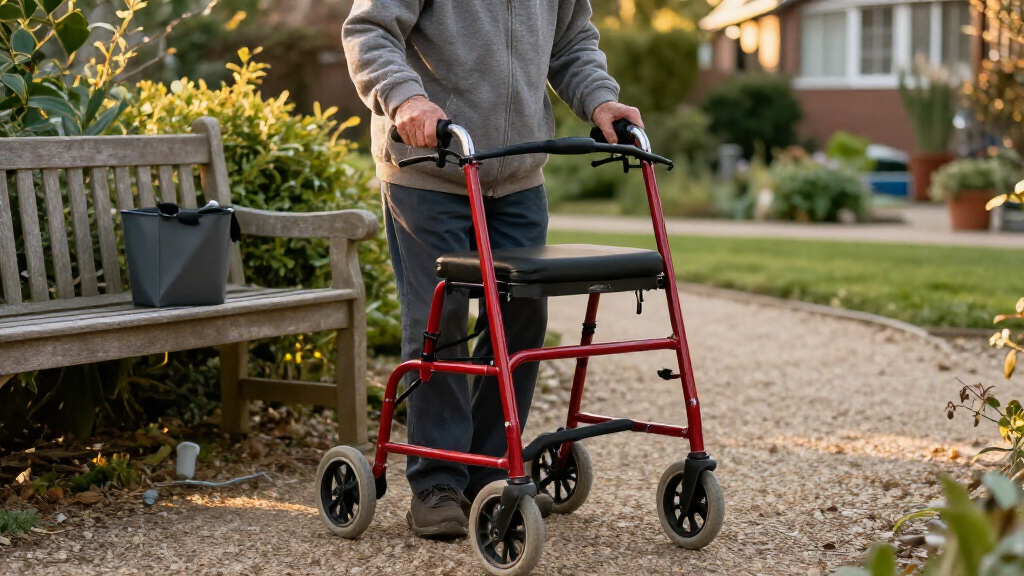
The Drive Medical rollator fits the everyday four-wheel category: it combines walking support with brakes, a seat and basic carry space. That package matters most for people who need occasional support on walks and want the option to stop without planning their route around places to sit. The padded seat and fold-down backrest are central to its appeal, rather than minor additions to a basic walker.Its 350-pound weight capacity, adjustable handles and locking hand brakes cover useful fundamentals for a broad range of buyers. The 7.5-inch wheels are intended for indoor and outdoor use, which gives it more flexibility than a design meant only for indoor floors. Still, the stated features do not make it a specialized solution for rough terrain. Buyers who regularly encounter uneven paths should compare it with the VOCIC Z21 All-Terrain Rollator.
For this kind of rollator, folding, storage and a resting seat are familiar category benefits. The Drive Medical model stands out most through how directly it serves a practical daily routine: walk, carry a few essentials, and sit when needed. Its steel construction is the balancing factor. A buyer who mostly uses it at home or stores it near the point of use may find that tradeoff acceptable; frequent lifting and car transfers make a lighter option more appealing.
Key Features and What They Mean
The padded seat and fold-down backrest let someone rest during an outing without needing to find a bench, which can make walks more manageable for users who tire easily or need regular breaks. The backrest gives support while seated. Buyers who rarely stop to rest may get less value from these features, and the seat is for resting rather than a substitute for choosing a mobility aid with appropriate professional guidance.Adjustable handles let the user set the grip height to suit their reach. A better-fitting height can make the handles easier to use and support a more comfortable walking position, which matters on routine walks. This is especially useful for buyers whose needs are not met by a fixed-height design. The adjustment range is not specified, so check that it accommodates the intended user.
Locking hand brakes let the user control the wheels while moving and secure the rollator when stopped. Keeping it still is especially important when sitting down for a break, so these controls support the seat’s practical use. Buyers benefit most if they can operate the brakes reliably; people with limited hand strength or dexterity should assess the controls before choosing a hand-brake model.
7.5-inch wheels support the stated indoor and outdoor use, giving buyers a setup for home floors, sidewalks and other ordinary routes. That flexibility can help someone move between indoor and outdoor parts of a daily routine without switching devices. Wheel size alone does not establish suitability for rough ground, so people who often use uneven trails should compare an all-terrain model such as the VOCIC Z21.
The under-seat pouch gives small belongings a dedicated place, so users can keep essentials nearby instead of carrying them by hand. The folding frame makes the rollator easier to put away or fit into some transport spaces, which helps when storage is limited. Folding does not remove the steel frame’s lifting weight, and folded dimensions are not provided; check the available space and who will need to lift it before buying.
Performance and Real-World Use
In day-to-day use, the rollator is designed to combine walking support, braking and occasional rest in one device. The pouch can reduce the need to carry small items by hand, and the adjustable handles offer a way to tailor the setup. The value of these features depends on fit and on whether the user can comfortably operate the hand brakes; they are practical functions, not a guarantee that every person will find the rollator easy to manage.The folding frame helps when the rollator needs to be stored or taken along, but folding does not remove the steel frame’s weight. That distinction matters for people who will load it into a vehicle frequently, live with stairs or need someone else to move it. If it will usually remain in one home or move between nearby indoor and outdoor areas, lifting may matter less than it would on a travel-heavy routine.
The 7.5-inch wheels support use on a range of ordinary surfaces, but route conditions should guide the decision. A user who mainly walks indoors, on sidewalks or on similarly manageable paths may find the wheel setup appropriate. Someone who regularly takes uneven trails or rough outdoor routes should compare a model designed around all-terrain use. The product facts do not specify maintenance intervals or durability under particular conditions, so buyers should avoid assuming those details from the steel frame alone.
Who Should Buy This
This rollator makes the most sense for someone who wants support on routine walks and expects to use a seat for breaks. It is a good candidate for a person who can operate hand brakes, benefits from adjustable handle height, and wants a pouch for small essentials. It may also suit a household where the rollator can be stored near where it is used, so the steel frame does not need frequent lifting. Before buying, the intended user should confirm that the handle adjustment and brake controls feel suitable and that the frame’s weight is manageable for whoever will transport it.Who Should Skip This
Look elsewhere if the rollator will be lifted into a car often, carried over stairs or handled by someone who needs a lighter frame. A lighter-frame alternative such as the HOMLAND Foldable Rollator may be a better comparison point when transport weight is the main concern; confirm the specific model’s weight and fit before deciding. Buyers who routinely travel over rough or uneven ground should compare the VOCIC Z21 All-Terrain Rollator. Someone who does not need a seat or storage may also prefer a simpler mobility aid, since those features add little value if they go unused.Value for Money
The value rests on whether the buyer will use the seat, adjustable handles and pouch as part of a regular routine. Together with folding and locking hand brakes, they make this a capable everyday package within the standard four-wheel rollator segment. The 350-pound capacity is a useful published specification, though it does not by itself settle questions of fit or comfort. The main value penalty is practical: a steel frame may be less convenient to lift than lighter alternatives. This is worth the tradeoff for someone who prioritizes a seated rest and everyday support and can manage the weight. For frequent car loading or rough terrain, a lighter or all-terrain competitor may be a better use of the budget.Drive Medical 4-Wheel Rollator Walker with Seat
The Drive Medical rollator fits the everyday four-wheel category : it combines walking support with brakes, a seat and basic carry space. That package matters most for people who need occasional support on walks and want the option to stop without planning their route around places to sit.
Pros:
- The padded seat and fold-down backrest let the user pause during a walk without needing to find a bench.
- Adjustable handles allow a more personalized grip height, which can make the rollator easier to use comfortably.
- Locking hand brakes provide a way to control the wheels and keep the rollator still when parked for a rest.
- The under-seat pouch keeps small personal items close, reducing the need to carry them separately by hand.
- Its folding frame makes storage and transport more manageable than leaving the rollator fully open.
Cons:
- The steel construction may be heavy to lift into a car or carry up steps, especially for someone who transports it often.
- The 7.5-inch wheels suit general indoor and outdoor use, but buyers who regularly face rough or uneven routes may prefer an all-terrain model.
- The seat and pouch add practical convenience, but buyers who rarely stop to rest may be paying in bulk and carrying weight for features they will not use.
- A folding design helps with storage, but buyers should check the folded size against their vehicle or available storage space before choosing it.
Best for: People seeking everyday walking support with an integrated seat, adjustable handles and a pouch for essentials.
Not ideal for: Anyone who regularly lifts a rollator into a car or needs a lighter frame or more specialized all-terrain design.
Bottom line: The Drive Medical 4-Wheel Rollator is worth considering for everyday mobility when a padded seat, adjustable handles, locking hand brakes and a pouch match the user’s needs.