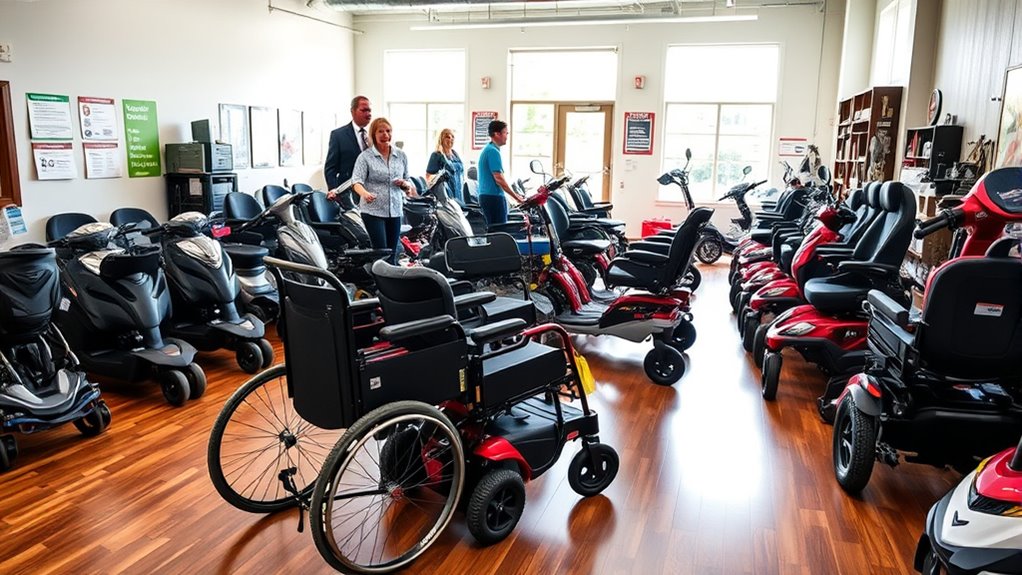

To find quality used mobility equipment, check local stores, medical supply shops, or reputable online marketplaces like eBay and Facebook Marketplace. Look for vendors that perform safety checks, offer warranties, and provide maintenance records. Carefully inspect the device for signs of wear, corrosion, or damage, and verify that all parts and controls function properly. Keep these tips in mind, and you’ll discover the key steps to making a safe, informed purchase.

Get comfort and care essentials delivered free — and shop member deals
- Fast, free delivery on millions of items
- Access to Prime Big Deal Days deals on October 6–7
- Prime Video, Amazon Music and more included
Key Takeaways
- Consider local stores or medical supply shops for pre-owned devices with safety checks and rental options.
- Use reputable online marketplaces, ensuring seller reviews and detailed device descriptions before purchasing.
- Verify devices meet current safety standards, checking for signs of wear, damage, and operational functionality.
- Explore rental services for short-term use, testing equipment firsthand before deciding to buy.
- Always request maintenance history, conduct thorough inspections, and clarify warranties or return policies prior to purchase.

If you’re looking to save money or find a reliable solution, buying used mobility equipment can be a smart choice. Not only does it lower costs, but it also offers access to quality devices that are still in good condition. When exploring where to buy used mobility equipment, consider options like local stores, online marketplaces, and specialty dealers. Many local medical supply stores sell pre-owned devices, often checked for safety and functionality. These shops sometimes offer rental options, giving you the flexibility to try equipment before committing to a purchase. Additionally, inquire about insurance coverage; some insurance plans may cover used equipment or provide partial reimbursements, which can substantially reduce your out-of-pocket expenses.
Buying used mobility equipment saves money and provides access to quality, well-maintained devices.
Online platforms like eBay, Facebook Marketplace, and specialized medical equipment websites open up a wider range of choices. When shopping online, you can compare prices easily, but it’s essential to vet sellers thoroughly. Look for sellers with good reviews and clear return policies. Many online sellers also provide detailed descriptions and photos, so you can assess the equipment’s condition before buying. Check if the device has been serviced recently and if it comes with any warranties. Remember, buying used doesn’t mean sacrificing safety—ensure the equipment meets current safety standards and hasn’t been involved in any accidents or damages.
Furthermore, many reputable vendors perform safety checks on used mobility devices to ensure they are functioning properly and meet all required standards before resale. When considering where to buy, don’t overlook rental options from reputable providers. Renting used mobility equipment can be a cost-effective way to access what you need for a short-term or temporary use. Many rental companies maintain their equipment regularly and offer options to buy after renting for a certain period. This way, you get to test the device firsthand, ensuring it’s suitable for your needs before making a long-term investment.
No matter where you choose to buy or rent, always check the equipment thoroughly. Look for signs of wear, corrosion, or damage. Confirm that all parts are functioning correctly, including brakes, wheels, and controls. Ask for maintenance records or service history if available. If you’re purchasing from a private seller, consider having the equipment inspected by a professional before finalizing the deal. It’s also wise to clarify return policies and warranties upfront, especially when buying online or from less established sources. By taking these precautions, you can confidently find used mobility equipment that fits your needs, budget, and safety standards.
As an affiliate, we earn on qualifying purchases.
Frequently Asked Questions
How Do I Verify the Safety Standards of Used Mobility Equipment?
You verify safety standards by checking for relevant safety certifications and thoroughly reviewing an inspection checklist. Look for labels from trusted organizations like the FDA or ANSI, which ensure compliance with safety standards. Conduct a detailed inspection of the equipment’s frame, tires, brakes, and electrical components. If possible, have a professional inspect it too. This helps guarantee the used mobility equipment is safe, reliable, and ready for use.
Can I Negotiate Prices at Used Mobility Equipment Stores?
Yes, you can negotiate prices at used mobility equipment stores. Many stores are open to price negotiation, especially if you’re buying multiple items or if the equipment has minor cosmetic flaws. Be sure to review the store policies beforehand, as some places have strict pricing rules. Approach staff politely, and don’t be afraid to ask for a better deal—being respectful and informed increases your chances of success.
What Warranty Options Are Available for Purchased Used Equipment?
You might wonder if used mobility equipment comes with warranty coverage or repair guarantees. Some sellers offer limited warranties, covering repairs for a set period, giving you peace of mind. Others may provide repair guarantees, ensuring the equipment functions properly after purchase. Always ask about warranty options upfront, and read the fine print to understand what’s covered and for how long—this can make all the difference in your investment.
Are There Financing Options for Buying Used Mobility Devices?
Yes, you can find financing options and payment plans when buying used mobility devices. Many sellers or specialized medical equipment stores offer flexible financing, allowing you to spread out payments over time. You should ask about these options upfront, compare terms, and make certain there are no hidden fees. This way, you can comfortably afford your used mobility equipment without straining your budget.
How Do I Identify Hidden Damages in Used Mobility Equipment?
To spot hidden damages in used mobility equipment, you should conduct thorough inspection tips. Start by examining all moving parts for rust or corrosion, check the frame for cracks or dents, and test the brakes and wheels for smooth operation. Look closely at upholstery or padding for tears or stains. Don’t forget to verify the battery condition if applicable. Being meticulous helps you identify hidden damages before making a purchase.
pre-owned wheelchair with warranty
As an affiliate, we earn on qualifying purchases.
As an affiliate, we earn on qualifying purchases.
Conclusion
So, next time you’re hunting for used mobility gear, remember—your perfect ride might be hiding where you least expect. Sometimes, the best deals come from places you’d never think of, and the most reliable equipment might be just a visit away. Irony’s sweet, isn’t it? You set out to find the cheapest option and end up with the most trustworthy. Happy hunting—you might just find your perfect match where you least imagined.
As an affiliate, we earn on qualifying purchases.
reliable used mobility equipment
As an affiliate, we earn on qualifying purchases.
As an affiliate, we earn on qualifying purchases.
Halloween Picks
halloween
As an affiliate, we earn on qualifying purchases.