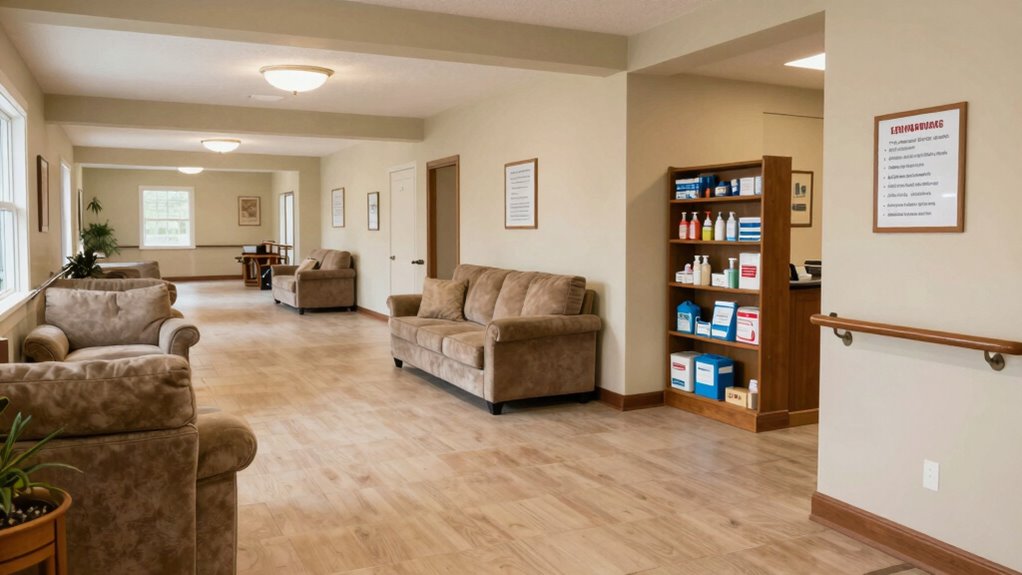

Start by evaluating your home for common hazards like clutter, loose rugs, and poor lighting, and make immediate improvements like installing non-slip mats and grab bars in key areas. Focus on creating clear walkways and ensuring smoke and CO detectors are working properly. Then, prioritize emergency preparedness with accessible plans, kits, and technology that can alert you to hazards. Keep safety a continuous effort, and you’ll discover more ways to create a truly secure environment for your loved one.

Turn quiet afternoons into listening time
- Thousands of audiobooks, podcasts and originals
- Listen on your phone, tablet or Echo — also offline
- Cancel anytime
Key Takeaways
- Conduct a hazard assessment to identify and eliminate immediate safety risks.
- Install essential safety devices like smoke alarms, carbon monoxide detectors, and non-slip mats.
- Develop and practice emergency plans, ensuring accessibility of emergency contacts and kits.
- Implement assistive technologies such as grab bars, stairlifts, and remote monitoring systems.
- Establish ongoing communication and regular safety check-ins with caregivers and medical professionals.
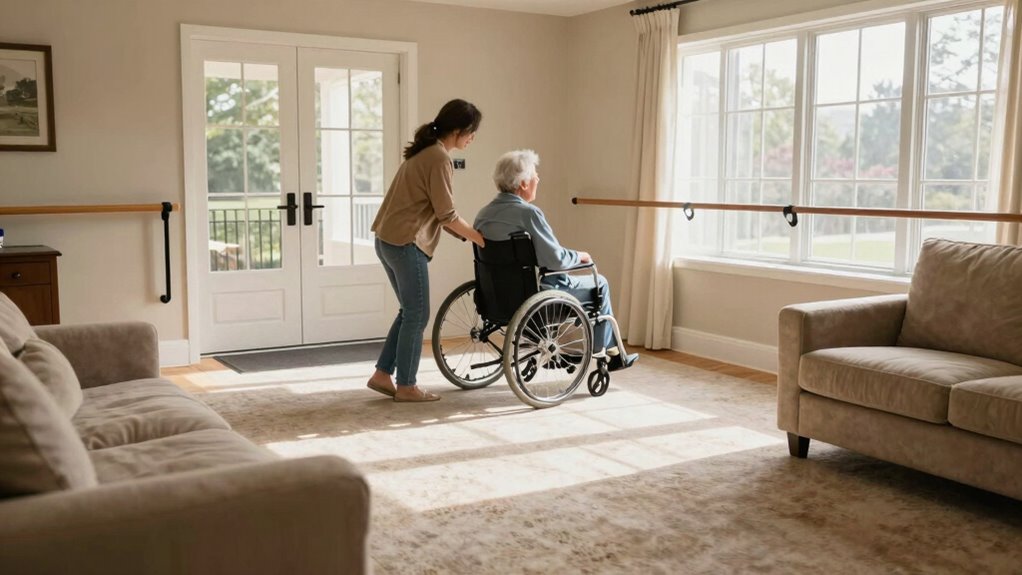
Ensuring safety in a senior home isn’t just a checklist—it’s a priority that requires ongoing attention from families. The first thing you should focus on is creating an environment that minimizes risks. This involves assessing the home for common hazards like loose rugs, poor lighting, or clutter that can cause falls. You want to make sure walkways are clear and non-slip mats are in place, especially in bathrooms and kitchens. As you do this, consider integrating assistive technology—devices like grab bars, stairlifts, and bedside call systems—that can help your loved one move safely and alert caregivers or family members when assistance is needed. These tools not only support independence but also give you peace of mind, knowing your senior is protected against preventable accidents. Incorporating storage and connectivity gear can also help you stay organized and monitor safety devices remotely.
Creating a safe senior home involves minimizing hazards and integrating assistive technology for peace of mind.
Another critical aspect to prioritize is emergency preparedness. You should have a clear plan in place for various emergencies, such as fires, medical crises, or natural disasters. This involves making sure your loved one knows what to do and where to go in case of an emergency. Keep emergency numbers visible and accessible, and ensure that all family members and caregivers are familiar with the plan. It’s wise to have a well-stocked emergency kit that includes medications, important documents, and supplies like water and non-perishable food. Regular drills can also help your senior feel more confident and prepared, reducing panic during actual emergencies. Additionally, understanding home safety technology can significantly enhance your ability to respond quickly and effectively in crises. Utilizing monitoring systems can provide peace of mind by alerting you to any unusual activity or potential hazards in real time. Incorporating smart sensors into your home can also proactively detect hazards such as smoke, carbon monoxide, or water leaks before they escalate into emergencies.
Investing in technology can bolster both safety and emergency response. Automated alert systems, medical monitoring devices, and even smart home sensors can provide real-time updates on your loved one’s safety. These tools can detect falls, unusual activity, or changes in vital signs, prompting swift action. You should also ensure that your senior home has functioning smoke alarms, carbon monoxide detectors, and emergency lighting, all of which are vital in crisis situations.
Lastly, staying involved is key. Regular check-ins, health monitoring, and open communication with caregivers and medical professionals help you stay ahead of potential issues. Family involvement combined with the right safety measures creates a protective environment where your loved one can thrive. Prioritizing assistive technology and emergency preparedness forms the foundation for a safer senior home, giving you confidence that your loved one’s well-being is always a top priority.
non-slip bathroom mats for seniors
As an affiliate, we earn on qualifying purchases.
As an affiliate, we earn on qualifying purchases.
Frequently Asked Questions
How Can I Assess My Senior Loved One’s Specific Safety Needs?
To assess your senior loved one’s safety needs, start by observing their elderly mobility and any challenges they face, such as difficulty walking or balancing. Talk openly about emergency preparedness and identify potential hazards like loose rugs or poor lighting. Consult with healthcare providers for tailored recommendations, and consider a professional safety assessment. Regularly update this evaluation as their needs evolve to guarantee a safe, supportive environment.
What Budget-Friendly Safety Improvements Are Most Effective?
Think of your home as a safe haven, and affordable upgrades make it even safer. You can start with simple, budget-friendly safety improvements like grab bars, non-slip rugs, and improved lighting. Additionally, investing in emergency preparedness items—such as a medical alert system and easy-to-access emergency contacts—can make a significant difference. These small steps help create a secure environment without breaking the bank, giving your loved one peace of mind.
How Often Should Safety Checks Be Performed in a Senior Home?
You should perform safety checks in a senior home at least once a month to guarantee fire hazards are eliminated and emergency preparedness is up to date. Regular inspections help identify potential dangers like faulty wiring or clutter that could cause falls. Additionally, review smoke alarms and fire extinguishers to guarantee they’re functional. Staying vigilant with monthly checks promotes a safer environment and gives peace of mind for your loved one’s well-being.
Are There Legal Considerations When Modifying a Home for Safety?
Yes, there are legal considerations when modifying a home for safety. You need to guarantee all changes meet legal compliance standards, such as building codes and accessibility laws. Failing to do so could increase liability concerns if an accident happens. It’s essential to consult local regulations and possibly get permits before making modifications. This way, you protect your loved ones and yourself from legal issues while creating a safer environment.
How Can I Involve Seniors in Safety Planning and Decision-Making?
You can involve seniors in safety planning by encouraging senior empowerment through open conversations about their preferences and concerns. Practice decision collaboration, where you listen actively and include them in choices about home modifications. Ask for their input on safety features and respect their wishes, fostering independence. By valuing their opinions and promoting shared decision-making, you help seniors feel more confident and engaged in creating a safer living environment.
As an affiliate, we earn on qualifying purchases.
Conclusion
Prioritize safety, prioritize comfort, and prioritize peace of mind. When you focus on creating a secure environment, you guarantee your loved one’s independence, foster their confidence, and provide your family with reassurance. By addressing hazards, implementing thoughtful modifications, and staying vigilant, you’re not just building a safer senior home—you’re building a foundation of trust, care, and love. Remember, a safe home is a happy home, and happiness begins with your commitment to their well-being.
As an affiliate, we earn on qualifying purchases.
As an affiliate, we earn on qualifying purchases.
Fall Picks
fall essentials
As an affiliate, we earn on qualifying purchases.