To keep a senior with dementia safe at night, use bed alarms to alert you if they get up and place night lights along pathways to prevent falls. Remove hazards, install grab bars, and keep the environment simple and clutter-free. Establish calming routines to reduce confusion, and combine safety devices for better protection. Staying attentive to their environment helps create a secure space, and more tips await if you continue exploring effective safety strategies.
Key Takeaways
- Install bed alarms and pressure-sensitive pads to alert when the senior tries to get out of bed.
- Use night lights along pathways to prevent disorientation and trips during nighttime movements.
- Remove obstacles, secure loose rugs, and install grab bars to minimize fall risks.
- Establish calming bedtime routines to promote restful sleep and reduce nighttime wandering.
- Maintain a safe, clutter-free environment and monitor regularly for hazards to ensure overall safety.
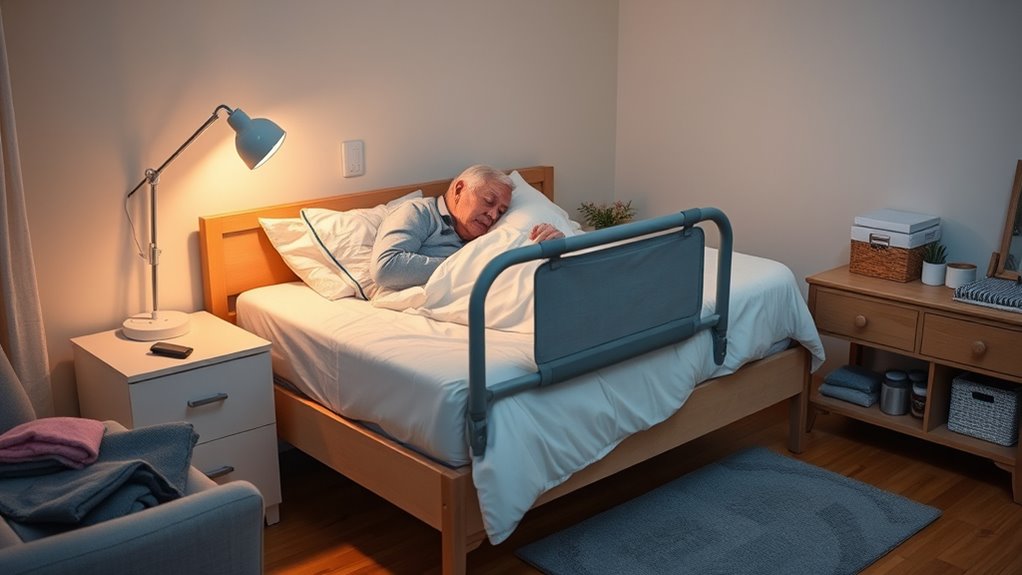
Having a reliable sauna heater can also contribute to creating a calming environment that helps manage agitation and promote restful sleep, which benefits seniors with dementia.
Have you ever worried about your loved one with dementia wandering or getting hurt during the night? It’s a common concern for caregivers, but there are practical steps you can take to keep them safe and give yourself peace of mind. One effective way is to install bed alarms. These devices alert you immediately if your loved one gets out of bed, helping you respond quickly before they can wander into danger. Bed alarms come in various styles—some attach directly to the bed frame, while others are pressure-sensitive pads placed under the mattress. Whichever you choose, guarantee it’s loud enough to alert you from another room. Using bed alarms creates a safety net, especially during the night when you might be asleep or resting.
In addition to alarms, night lights play a vital role. Darkness can be confusing and frightening for people with dementia, increasing the likelihood of wandering or accidents. By placing night lights along the pathway from the bedroom to the bathroom and other key areas, you help your loved one see where they’re going. This reduces the risk of trips and falls and provides reassurance. Opt for soft, warm lighting that isn’t too harsh but bright enough to illuminate the space. Keep night lights in accessible locations—near the bathroom, along hallways, and in the bedroom. This way, your loved one can navigate safely without feeling disoriented or scared.
Combining bed alarms with night lights creates a thorough approach to nighttime safety. When your loved one gets out of bed, the alarm sounds, giving you immediate notice. The night lights help them find their way safely, possibly preventing panic or injury. It’s also helpful to establish a calming bedtime routine and keep the environment simple and uncluttered. Remove obstacles that could cause falls and install grab bars in the bathroom if needed. Make sure the bedroom is safe and free of sharp edges or loose rugs.
bed alarm for seniors with dementia
As an affiliate, we earn on qualifying purchases.
As an affiliate, we earn on qualifying purchases.
Frequently Asked Questions
How Can I Prevent My Loved One From Wandering Outside?
You can prevent your loved one from wandering outside by installing outdoor alarms that alert you if they attempt to leave. Use secure locks on doors and windows, ensuring they’re difficult for your loved one to open but easy for you to access. Regularly check that these safety measures are working, and consider using door alarms or sensors to provide extra security, giving you peace of mind during the night.
What Are the Best Nighttime Routines for Seniors With Dementia?
Did you know that consistent bedtime routines can reduce nighttime confusion in seniors with dementia by up to 50%? You should establish calming techniques like gentle music, soft lighting, and a warm bath to create a soothing environment. Stick to regular sleep and activity schedules, and incorporate relaxing bedtime rituals. This helps promote better sleep, reduces agitation, and makes the night safer and more comfortable for your loved one.
How Do I Handle Nighttime Agitation or Aggression?
When your loved one shows nighttime agitation or aggression, stay calm and use calming techniques like soft voices, gentle touches, or calming music. Install bed alarms to alert you if they get up unexpectedly. Redirect their attention to familiar objects or activities, and make certain the environment is safe and soothing. Avoid arguing or raising your voice, as this can increase agitation. Consistency and patience help manage these challenging moments effectively.
Are There Specific Medications to Improve Sleep Safety?
Yes, there are specific medications you can consider for sleep safety in seniors with dementia. Your healthcare provider might recommend sleep aids or medications for medication management that help improve sleep quality and reduce nighttime agitation. Always consult a doctor before using any sleep aids, as they can assess risks and tailor treatments to guarantee safety. Proper medication management helps promote restful sleep while minimizing side effects or complications.
How Can Technology Assist in Monitoring Seniors Overnight?
Think of technology as a guardian angel watching over your loved one. Wearable devices act like a heartbeat, providing real-time alerts, while home monitoring systems serve as silent sentinels, detecting movement and unusual activity. These tools let you stay connected, ensuring safety without intrusion. With this technology, you can rest easier, knowing your senior’s well-being is constantly monitored, even when you’re not physically present.
night lights for dementia safety
As an affiliate, we earn on qualifying purchases.
As an affiliate, we earn on qualifying purchases.
Conclusion
To keep a senior with dementia safe at night, stay proactive and attentive. For example, you might install door alarms and ensure their room is clutter-free to prevent falls. Regular routines and gentle reassurance help reduce anxiety. By creating a secure and comforting environment, you help your loved one rest peacefully. Remember, your vigilance and care make a significant difference in their safety and well-being each night.
pressure-sensitive bed pad alarm
As an affiliate, we earn on qualifying purchases.
As an affiliate, we earn on qualifying purchases.
As an affiliate, we earn on qualifying purchases.