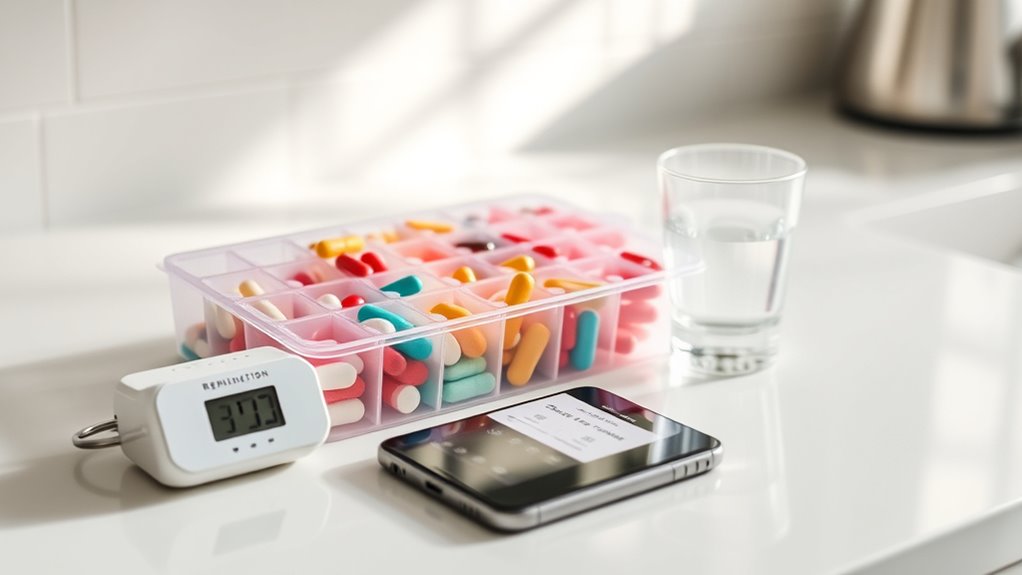

To create a medication management system that works, start by choosing a suitable pill organizer with compartments aligned to your dosing schedule, and fill it weekly, labeling each section if needed. Set alarms or reminders for each dose and keep your system in a visible, consistent place. Regularly review and update your routine with your healthcare provider’s input. Keeping an organized system helps boost confidence and ensures you don’t miss any doses—so continue to see how you can optimize your plan.

Get comfort and care essentials delivered free — and shop member deals
- Fast, free delivery on millions of items
- Access to Prime Big Deal Days deals on October 6–7
- Prime Video, Amazon Music and more included
Key Takeaways
- Choose a suitable pill organizer to match your medication schedule and ensure easy access.
- Develop a consistent routine by aligning medication times with daily activities and using reminders.
- Fill and check your pill organizer weekly, labeling compartments for clarity and preventing missed doses.
- Store medications in a safe, accessible location, avoiding extreme temperatures or humidity.
- Regularly review and consult healthcare providers to refine your medication management system.
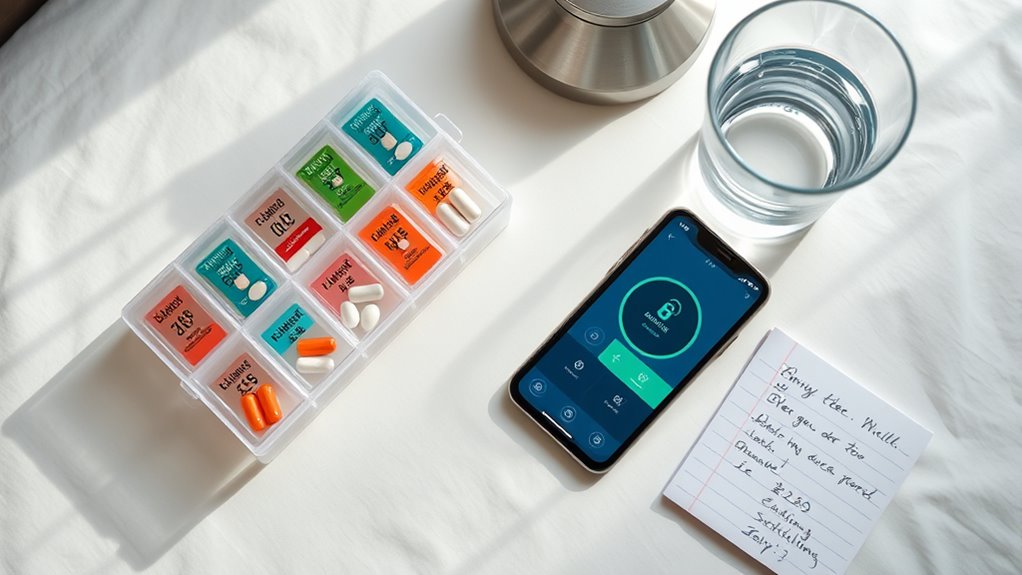
Managing medications effectively is essential for maintaining your health and ensuring treatments work as intended. One of the best ways to do this is by using pill organizers and establishing clear medication schedules. When you have a structured system, you’re less likely to forget doses, take the wrong pills, or miss important timing. Pill organizers come in various sizes and styles, making it easy to customize your medication routine. Whether you prefer a simple weekly tray or one with multiple compartments for different times of day, these tools help you stay organized and confident that you’re taking your medications correctly.
Creating a medication schedule is equally important. When you plan your doses around your daily routine—like meals, bedtime, or specific times—you build consistency, which is key to effective treatment. You might find it helpful to set alarms or reminders on your phone to prompt you when it’s time to take your pills. This way, you reduce the risk of forgetting, especially if you have a busy schedule. Writing down your schedule or keeping it in a dedicated medication journal can also reinforce your routine. The goal is to make your medication-taking process as seamless as possible so it becomes a natural part of your day.
To make your system even more reliable, consider integrating your pill organizer into your daily habits. For example, you could fill your organizer every Sunday evening, aligning it with your weekly planning. This weekly routine helps you stay ahead of your medication needs and reduces last-minute scrambling. If you take multiple medications, labeling compartments with the specific times or purposes can prevent mix-ups. Additionally, always double-check your organizer before each dose to ensure nothing is missed or duplicated.
It’s also important to keep your pill organizer in a consistent, accessible location—somewhere you see it regularly. Avoid storing medications in places with extreme temperatures or humidity, as this can compromise their effectiveness. Using trusted storage options can further protect your medications. And if you find yourself unsure about your medication schedule or have questions about your pills, don’t hesitate to consult your healthcare provider. They can help you refine your system or suggest additional tools, like medication management apps, if needed.
weekly pill organizer with labels
As an affiliate, we earn on qualifying purchases.
As an affiliate, we earn on qualifying purchases.
Frequently Asked Questions
How Can I Coordinate Medication Schedules With Multiple Healthcare Providers?
You can coordinate medication schedules with multiple healthcare providers by keeping a detailed medication reconciliation list, updating it regularly. Communicate openly with your providers, sharing this list and any changes. Use a shared digital tool or app if possible, to guarantee everyone stays informed. Clear provider communication minimizes errors, keeps your medication schedule aligned, and helps you manage your medications effectively and safely.
What Should I Do if I Experience Side Effects From a Medication?
Your reaction to medication side effects can feel like an earthquake, but don’t ignore it. If you experience adverse reactions or suspect medication allergies, stop taking the medication immediately and contact your healthcare provider. Keep a detailed record of your symptoms, including when they started and their severity, to help your provider determine the next steps. Never try to manage serious side effects on your own; professional guidance is essential.
How Can Technology Assist in Managing Complex Medication Regimens?
You can leverage technology to manage complex medication regimens effectively. Use medication reminders on your phone or digital pill organizers to stay on schedule. These tools alert you when it’s time to take each dose, reducing forgetfulness and ensuring consistency. Digital pill organizers also help you track your medication intake, making it easier to follow your prescribed plan and communicate with your healthcare provider about your progress.
What Are the Best Practices for Storing Medications Safely at Home?
Think of your medications like treasures that need safeguarding. You should store pills in a cool, dry place away from children and pets. Use pill organizers to keep track of doses and make sure medications are labeled clearly. Always check expiration dates and avoid storing medicines near heat or humidity. This way, you protect your health and keep your medication regimen safe and effective at home.
How Do I Handle Missed Doses or Accidental Double Dosing?
If you miss a dose, check your medication tracking and set a dose reminder to prevent future misses. For accidental double dosing, skip the second dose if it’s close to your usual time, and consult your healthcare provider if you’re unsure. Use a medication tracker app or pill organizer to keep accurate records, and set timely dose reminders to stay on schedule and avoid mistakes.
As an affiliate, we earn on qualifying purchases.
Conclusion
Just as a captain charts a steady course through turbulent waters, creating a reliable medication system keeps you on track and safe. By staying organized and committed, you guarantee each dose is given correctly, much like steering with a steady hand. Remember, even Odysseus faced challenges, but with a solid plan, he reached his destination. Take control of your medications today, and direct your health toward calm seas and brighter horizons.
medication storage safe container
As an affiliate, we earn on qualifying purchases.
As an affiliate, we earn on qualifying purchases.
multi-compartment pill box for daily medication
As an affiliate, we earn on qualifying purchases.
As an affiliate, we earn on qualifying purchases.
Halloween Picks
halloween
As an affiliate, we earn on qualifying purchases.