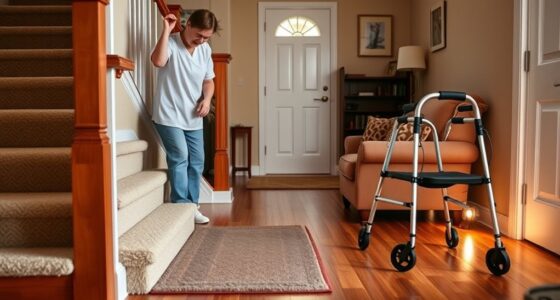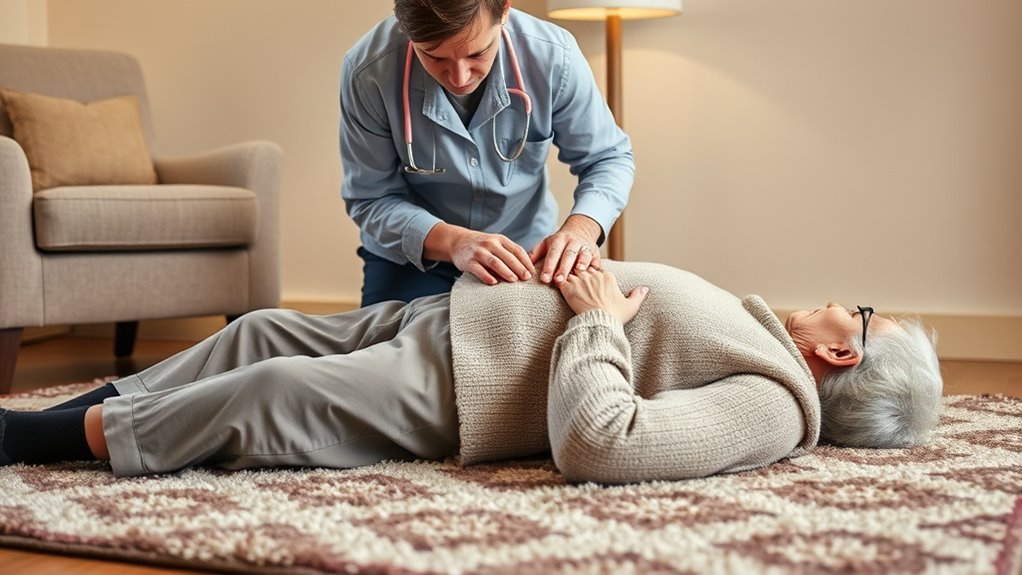

To safely lift a senior off the floor after a fall, approach with care by ensuring the environment is clear and well-lit. Communicate calmly to keep the person relaxed, then position yourself with your feet shoulder-width apart and bend at the hips and knees, not the back. Keep the senior close to your body and support their torso securely while lifting with your leg muscles. Moving slowly and smoothly helps prevent injury. To learn more about proper techniques, continue with essential safety steps.
Listen free for 30 days with Audible
Thousands of audiobooks and originals — cancel anytime.
As an affiliate, we earn on qualifying purchases.
Key Takeaways
- Assess the senior’s condition and call for medical help if needed before attempting to lift.
- Communicate clearly and calmly to reassure the senior during the lifting process.
- Position yourself with feet shoulder-width apart, bend hips and knees, and keep your back straight.
- Securely grasp the senior close to your body, engaging your leg muscles to lift smoothly.
- Support the senior fully before moving to a chair or bed, ensuring stability and comfort afterward.
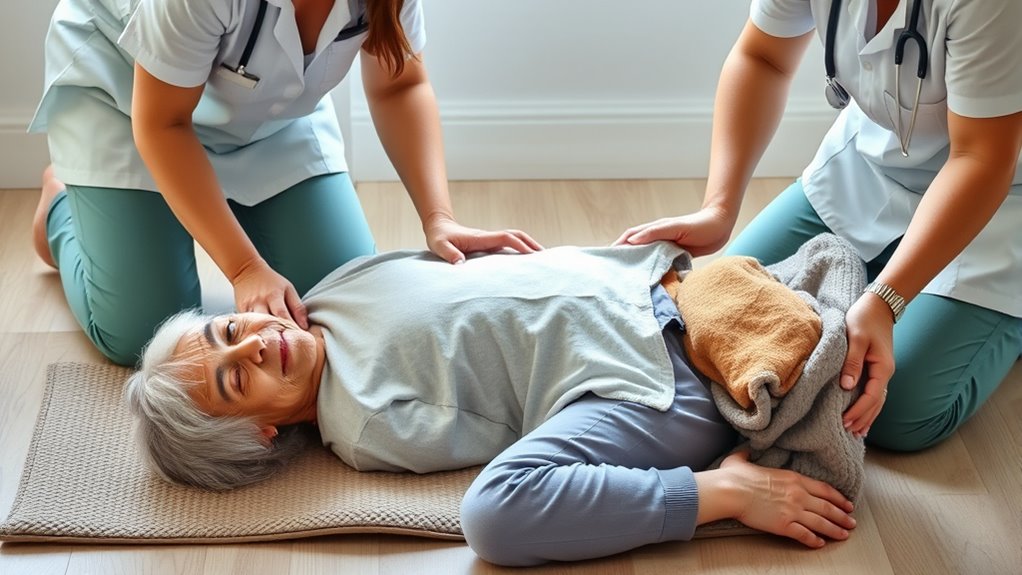
Lifting a senior safely requires careful planning and proper technique to prevent injuries for both the caregiver and the individual being moved. Your goal is to minimize strain on your body while ensuring the senior’s safety. To do this effectively, you need to pay close attention to proper body mechanics. Keep your back straight, bend at your hips and knees, and engage your core muscles. Avoid twisting your torso; instead, pivot your feet to face the direction you’re moving toward. This approach helps distribute the weight evenly and reduces the risk of back injury. When lifting a senior off the floor, make sure to get close to them, grasp firmly, and lift with your legs rather than your back. This technique not only protects you but also provides better control over the lift.
Use proper body mechanics—keep your back straight, bend hips and knees, and lift with your legs for safe senior lifting.
Before attempting to lift, consider fall prevention strategies. Check the environment for hazards like clutter, loose rugs, or slippery surfaces that could cause additional falls. Ensure the area is clear and well-lit. If the senior is conscious and able to assist, encourage them to help as much as possible by gripping your shoulders or waist. If they’re unresponsive or unable to assist, plan your lift carefully, possibly with additional help or assistive devices like a transfer belt or slide sheet. Always communicate clearly with the senior throughout the process to keep them calm and cooperative.
When you’re ready to lift, start by positioning yourself correctly. Place your feet shoulder-width apart for stability, and get as close to the senior as possible. Bend your knees and hips while keeping your back straight, and then grasp the person securely. Lift with your legs, not your back—this is the key to maintaining proper body mechanics. Keep the senior close to your body as you lift, which reduces strain on your spine and helps maintain balance. When moving them to a sitting or standing position, do so slowly and smoothly, avoiding jerky motions that could cause injury or panic. Additionally, being aware of proper body mechanics can significantly improve safety during the lift.
After lifting, continue to follow fall prevention strategies by ensuring the senior is supported properly before moving them to a chair or bed. Always check that they’re stable and comfortable before releasing your hold. Remember, safety is paramount—taking your time, using proper technique, and planning ahead can make all the difference when lifting a senior off the floor after a fall.
As an affiliate, we earn on qualifying purchases.
Frequently Asked Questions
What Are the Signs of Serious Injury After a Fall?
If you notice signs like severe pain, heavy bleeding, difficulty breathing, loss of consciousness, or numbness, stop and conduct a thorough injury assessment. These are signs of serious injury after a fall. Focus on fall prevention by keeping pathways clear and ensuring proper lighting. If signs are present, seek emergency help immediately. Always prioritize safety and avoid moving the senior if you suspect a serious injury.
When Should I Call Emergency Services Instead of Lifting?
Imagine a red flag waving fiercely—your signal to stop. If you notice severe bleeding, difficulty breathing, loss of consciousness, or the senior can’t move or speak, call emergency services immediately. When fall prevention fails, knowing the difference between safe lifting and urgent response is critical. Don’t attempt to lift if injuries seem serious; instead, prioritize calling emergency services to guarantee proper care and avoid further harm.
How Can I Prevent Falls in the First Place?
To prevent falls, focus on home safety by removing tripping hazards like loose rugs and clutter. Use fall prevention strategies such as installing grab bars in bathrooms, ensuring good lighting throughout the house, and encouraging regular exercise to improve strength and balance. Keep pathways clear, wear sturdy shoes, and review medications with a healthcare provider to minimize dizziness. These steps help create a safer environment and reduce fall risks.
Are There Specific Techniques for Seniors With Mobility Aids?
When assisting seniors with mobility aids, use fall prevention techniques like ensuring their aids are secure and within reach. Encourage proper positioning, such as keeping their feet flat and hips aligned. Support their body firmly, maintaining good posture, and avoid sudden movements. Communicate clearly throughout, and always assess their stability before helping them stand. These techniques reduce risk and promote safe transfers, especially for those relying on mobility aids.
What Equipment Can Assist in Safe Lifting?
You can use transfer devices and lifting aids to make the lifting process safer. Equipment like slide sheets, transfer belts, and hoists help reduce strain and prevent injury. These tools provide better leverage and control, ensuring you lift or assist your senior securely. Always check that the devices are in good condition and suitable for your senior’s mobility level. Using proper equipment minimizes risk and makes the process safer for both of you.
slide sheet for patient transfer
As an affiliate, we earn on qualifying purchases.
As an affiliate, we earn on qualifying purchases.
Conclusion
Remember, knowing how to lift a senior safely can turn a potentially chaotic situation into a manageable one. When you follow proper techniques, you’re not just helping them up—you’re saving the day like a superhero in disguise. Always stay calm, use your legs, and ask for help if needed. With a little care, you’ll be the hero they need, and together, you’ll make sure their fall doesn’t turn into a disaster of epic proportions.
elderly fall recovery assist device
As an affiliate, we earn on qualifying purchases.
As an affiliate, we earn on qualifying purchases.
As an affiliate, we earn on qualifying purchases.
Flea & tick season Picks
flea and tick prevention
As an affiliate, we earn on qualifying purchases.