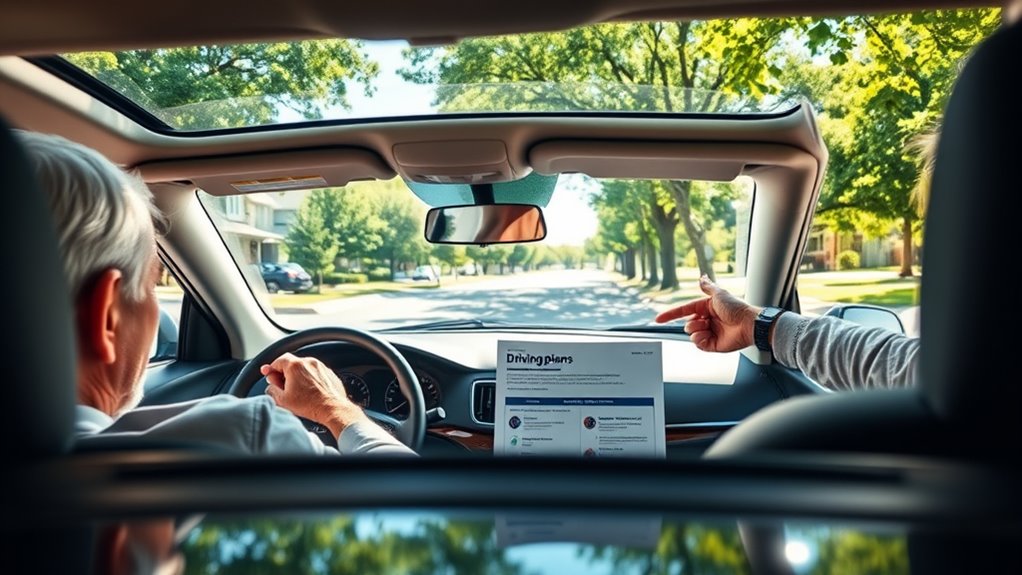

When seniors insist on driving, you should implement a thorough safety plan that includes vehicle modifications like larger mirrors or backup cameras, regular health check-ups, and driver refresher courses aimed at boosting confidence and updating skills. Encourage honest self-evaluation and seek feedback from trusted loved ones to identify when driving might become unsafe. Incorporating these steps helps maintain independence longer; explore these strategies further to guarantee safety every mile.
Key Takeaways
- Conduct regular self-assessments and seek feedback to monitor physical and cognitive driving abilities.
- Implement vehicle safety modifications like larger mirrors and backup cameras for added support.
- Encourage participation in driver refresher courses to stay current with traffic laws and enhance skills.
- Recognize signs of decline and consult professionals to determine when to limit or cease driving.
- Develop a comprehensive safety plan combining health checks, vehicle upgrades, and alternative transportation options.

Every driver has the power to make roads safer by creating a solid driving plan. When seniors insist on driving, it’s especially important to develop strategies that prioritize safety without compromising independence. One way to do this is by contemplating vehicle modifications that can enhance safety features. For example, installing larger mirrors, backup cameras, or adaptive controls can compensate for declining vision or slower reflexes. These modifications can make a significant difference by reducing blind spots, improving visibility, and making vehicle operation more manageable. Before making any adjustments, it’s wise to consult with a professional who can recommend suitable modifications tailored to your specific needs. Additionally, understanding transfer-switch fundamentals can help in preparing for emergencies or adapting to new safety equipment.
In addition to vehicle upgrades, enrolling in driver refresher courses can help seniors stay current with traffic laws and safe driving practices. These courses often address common age-related challenges such as slower reaction times, changes in perception, or difficulties with complex intersections. Attending these classes not only refreshes your knowledge but also boosts confidence behind the wheel. They often include practical exercises that simulate real-world driving scenarios, helping you identify potential hazards and learn new safety techniques. Many insurance companies offer discounts for completing refresher courses, making them a cost-effective way to reinforce safe driving habits.
Creating a thorough driving plan involves honestly evaluating your abilities and knowing when to seek help. Regular self-evaluations are essential; if you notice increased difficulty with vision, memory, or physical coordination, it’s time to consider alternative transportation options or additional safety measures. Engaging family members or trusted friends in your driving plan can provide valuable feedback and support. They can help you decide when vehicle modifications or refresher courses are necessary, and encourage you to take breaks or avoid driving in challenging conditions, such as heavy rain or at night.
Regular self-assessment and trusted support help maintain safe, independent driving as abilities change.
Furthermore, staying proactive about health is vital. Regular check-ups ensure any medical issues affecting driving are identified early. Combining these health checks with practical safety measures creates a well-rounded approach. Remember, the goal isn’t to eliminate independence but to prolong your ability to drive safely for as long as possible. With vehicle modifications, ongoing education, and honest self-assessment, you can develop a safer driving plan that adapts to your evolving needs. Taking these steps shows your commitment to safety—and helps protect everyone sharing the road with you.
Frequently Asked Questions
How Can Family Members Approach Seniors About Stopping Driving?
You can start family conversations by expressing concern with respect and empathy. Use respectful communication, emphasizing safety and love rather than blame. Share specific examples of driving issues, and listen carefully to their perspective. Encourage alternatives like public transport or community rides, showing you’re there to support. By remaining patient and understanding, you make it easier for seniors to contemplate stopping driving without feeling pressured or disrespected.
Are There Legal Requirements for Seniors to Limit Driving?
Legal considerations and age restrictions vary by state, but generally, seniors must meet certain health and vision standards to keep driving. You should check your local DMV or transportation authority’s rules, as some areas require regular renewals or vision tests after a certain age. While there isn’t an outright age restriction nationwide, these laws aim to guarantee safety. Stay informed and encourage your loved ones to adhere to these requirements for everyone’s safety.
What Alternatives Exist if Seniors Refuse to Stop Driving?
Imagine senior transportation as a sturdy bridge supporting elderly mobility. When seniors refuse to stop driving, explore alternatives like community shuttles, ride-sharing, or assisted transportation services. These options guarantee safe travel while honoring independence. You can also encourage family or caregiver rides, or promote senior-friendly programs. By providing reliable mobility solutions, you help seniors stay connected and active, without risking safety on the road.
How Do Medical Conditions Impact Seniors’ Driving Abilities?
Medical conditions can profoundly impact your driving abilities. Visual decline makes it harder to see obstacles, traffic signals, and pedestrians, increasing accident risk. Medication effects may cause drowsiness, dizziness, or slowed reactions, impairing your ability to respond quickly. It is crucial to regularly consult your healthcare provider about how your conditions influence your driving. Staying informed and adjusting your driving habits can help you stay safe on the road while managing your health.
What Technological Tools Can Help Monitor Senior Drivers?
Your car’s technology can be a superhero in disguise, saving lives daily. In vehicle alerts and driver monitoring systems track your driving in real-time, catching signs of fatigue or distraction before accidents happen. These tools send instant alerts if you veer out of lanes or slow unexpectedly, helping you stay safe and confident on the road. Embrace these innovations—they’re your trusted co-pilots in maintaining independence safely.
Conclusion
As you work on creating a safer driving plan for seniors, remember that nearly 90% of older adults want to stay independent through driving. By openly discussing concerns, adjusting driving habits, or exploring alternatives, you can help keep your loved ones safe while respecting their independence. Taking proactive steps now diminishes the risk of accidents and ensures everyone stays safe on the road. Your efforts make a real difference in protecting those you care about.