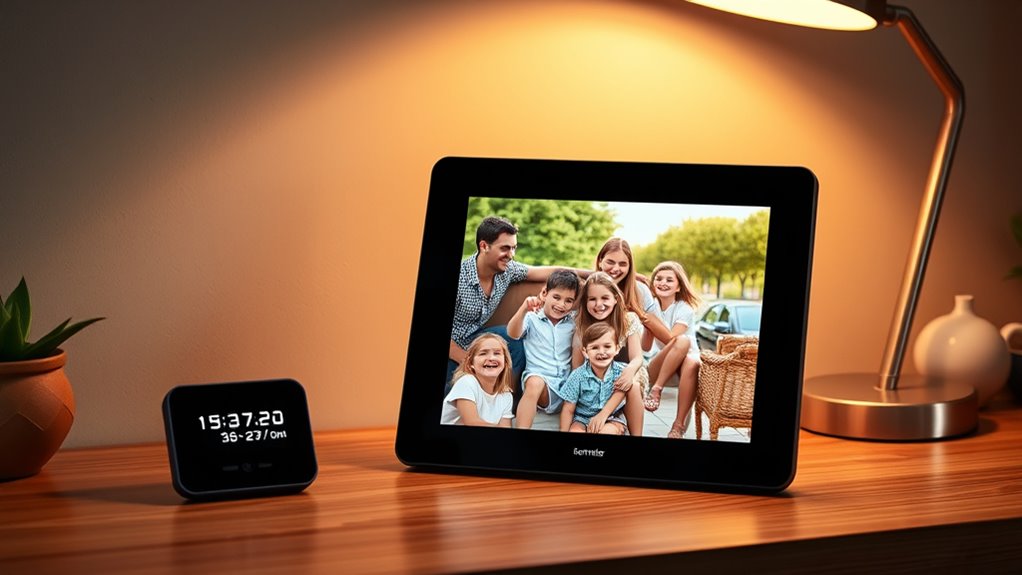

Technology like digital frames and reminder devices can substantially help you manage memory loss. Digital frames display familiar photos to reinforce recognition and trigger memories, while reminder devices alert you to appointments, medications, or routines, reducing forgetfulness. These tools support your independence, lessen frustration, and boost confidence. As technology continues to evolve, you’ll find even more personalized options tailored to your needs, making everyday life easier—keep exploring to discover how these innovations can make a difference for you.
Listen free for 30 days with Audible
Thousands of audiobooks and originals — cancel anytime.
As an affiliate, we earn on qualifying purchases.
Key Takeaways
- Digital photo frames serve as visual memory aids by displaying familiar images to trigger recall and reinforce recognition.
- Reminder devices, including alarms and smart assistants, help manage daily routines and prevent forgetfulness.
- Combining visual cues and reminders reduces frustration, enhances independence, and improves overall well-being for those with memory challenges.
- Advanced assistive technologies adapt to individual needs, supporting longer independent living and emotional security.
- Future innovations will focus on increased personalization, user-friendliness, and integration to further enhance memory management strategies.
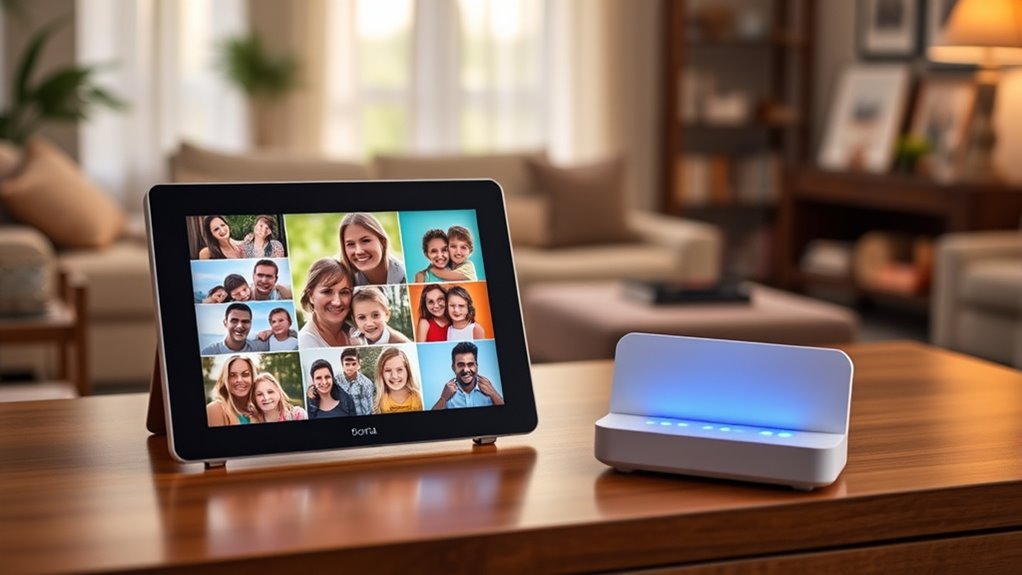
Have you ever wondered how technology is transforming the way we remember and store information? For many people, memory loss can be a daily challenge, making it hard to recall important moments or keep track of appointments. Thankfully, assistive tech has stepped in to bridge this gap, offering practical solutions that help you stay organized and connected. Digital frames and reminder devices are two powerful tools making a real difference in managing memory issues and maintaining independence.
Digital photo frames have evolved far beyond simple picture displays. Today’s smart frames can do much more—they can serve as visual memory aids by showcasing photos of loved ones, familiar places, or daily routines. When you glance at the frame, it triggers your memory, helping you recall specific events or people. Some advanced models even sync with your phone or cloud accounts, updating images automatically to keep your memories fresh and relevant. This constant visual reinforcement can be especially helpful if you’re experiencing memory loss, as it provides cues that stimulate your brain and reinforce recognition. Incorporating navigation and mapping features into these devices can further assist users in familiar environments, enhancing orientation and memory recall.
Reminder devices are another essential part of assistive tech. These gadgets range from simple alarms to sophisticated digital assistants that can notify you about appointments, medication times, or daily tasks. For example, a voice-activated device like a smart speaker can be programmed to remind you to take medication or attend a meeting, reducing the risk of forgetfulness. Many of these devices are customizable, allowing you to set specific alerts that suit your routines. They’re designed to be intuitive, so even if technology isn’t your forte, you can easily activate reminders and stay on top of your schedule. This proactive approach helps minimize the frustration and anxiety often associated with memory loss, empowering you to maintain independence longer.
Assistive tech not only fills memory gaps but also provides peace of mind for caregivers and loved ones. With digital frames displaying familiar images and reminder devices ensuring you don’t miss important tasks, you’re less likely to feel overwhelmed or isolated. These tools foster a sense of security, helping you stay connected to your daily life and routines. As technology continues to advance, so does its ability to adapt to individual needs, making it easier than ever to manage memory challenges effectively.
In short, digital frames and reminder devices are transforming how we handle memory loss. They’re simple yet powerful ways to keep memories alive and ensure you stay organized. By integrating these assistive tech tools into your daily routine, you can enhance your quality of life, maintain your independence, and feel more confident in managing your memories.
digital photo frame for memory loss
As an affiliate, we earn on qualifying purchases.
As an affiliate, we earn on qualifying purchases.
Frequently Asked Questions
How Secure Is Personal Data Stored on Digital Reminder Devices?
Your personal data on digital reminder devices is generally secure, but privacy concerns still exist. These devices often use data encryption to protect your information from unauthorized access, making it harder for hackers to compromise your data. However, you should regularly update software and review privacy settings. Stay cautious about sharing sensitive information, and choose devices with strong security measures to guarantee your data remains private.
Can Digital Frames Be Customized for Specific Memory Needs?
Yes, digital frames can be customized for specific memory needs. You have access to various personalization options, allowing you to upload photos, videos, and even audio cues that trigger memories. These features enhance memory by tailoring content to your unique experiences, making recall more effective. With adjustable display settings and interactive features, you can create a personalized visual memory aid that supports your memory enhancement goals.
Are There Affordable Options for Elderly Users With Limited Tech Skills?
A penny saved is a penny earned, and that’s true for tech too. You’ll find affordable options designed specifically for elderly users with limited tech skills, featuring simple interfaces and clear instructions. These devices help bridge tech skill barriers by making it easy to set reminders or enjoy cherished memories. Look for user-friendly digital frames and reminder devices that focus on ease of use, ensuring comfort and confidence in technology.
How Long Do Digital Memory Devices Typically Last Before Replacement?
Digital memory devices usually last between 2 to 5 years before replacement, depending on device battery life and storage capacity longevity. You should expect the battery to need recharging or replacing every couple of years, while storage capacity remains effective for several years if you manage files well. Regular updates and proper maintenance can extend your device’s lifespan, ensuring you keep enjoying its benefits for as long as possible.
What Are the Best Practices for Maintaining Device Privacy?
You should follow privacy protocols like updating passwords regularly and enabling two-factor authentication. Always use data encryption to protect your personal information stored on digital devices. Keep your device’s firmware current, and limit access to trusted users. Be cautious about sharing content and connecting to public Wi-Fi networks. These practices help ensure your device stays secure and your memories remain private.
reminder device for medication and appointments
As an affiliate, we earn on qualifying purchases.
As an affiliate, we earn on qualifying purchases.
Conclusion
Think of these digital frames and reminder devices as your personal memory gardeners, tending to your thoughts and moments so they never fade away. By embracing this technology, you’re planting seeds of connection and remembrance that blossom over time. Let these tools be your trusty compass, guiding you through life’s busy landscape with clarity and warmth. With them, your memories become a vibrant garden, always in bloom, forever alive in your heart.
smart digital photo frame with cloud sync
As an affiliate, we earn on qualifying purchases.
As an affiliate, we earn on qualifying purchases.
As an affiliate, we earn on qualifying purchases.
Fall Picks
fall essentials
As an affiliate, we earn on qualifying purchases.