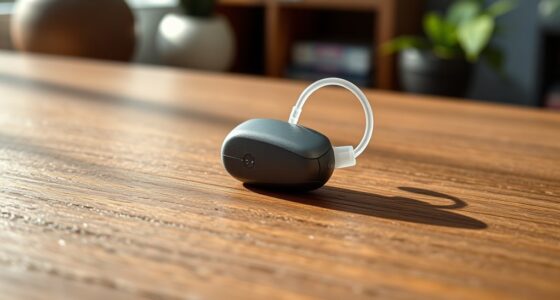

If you notice a senior struggling to follow conversations in noisy settings or frequently asking others to repeat themselves, it could be a sign of hearing loss. Turning up the TV or radio excessively and avoiding social events might also indicate issues. Additionally, if they notice a difference in hearing during routine activities, it’s time to think about help. Keep going; understanding these signs can make a big difference in improving their quality of life.
Key Takeaways
- Frequently asking others to repeat themselves in conversations, especially in noisy settings.
- Turning up TV or radio volume excessively beyond comfortable levels.
- Struggling to follow conversations during social gatherings or group chats.
- Avoiding social interactions or isolating oneself due to hearing difficulties.
- Noticing a decline in hearing ability during routine activities like meetings or watching TV.
Struggling to Follow Conversations in Noisy Settings

If your loved one has trouble following conversations in noisy places like restaurants or social gatherings, it could be a sign they need a hearing aid. Background noise challenges make it difficult for them to focus on what’s being said, causing frustration and withdrawal from social interactions. They might strain to hear or ask others to repeat themselves frequently. Some seniors avoid hearing aids because of hearing device stigma, fearing they’ll look old or less capable. This stigma can also lead to delayed help-seeking, which worsens communication difficulties. Recognizing these signs early allows for a better quality of life. Addressing background noise challenges with a hearing device can restore confidence and ease in social settings, helping your loved one stay connected with friends and family. Additionally, understanding simple strategies about hearing health can empower seniors and their families to make informed decisions about hearing loss management.
Frequently Asking Others to Repeat What They Said

When your loved one frequently asks people to repeat themselves, it’s often a clear sign they’re having trouble hearing. They might rely heavily on lip reading to fill in gaps or struggle to understand speech amid background noise. This behavior shows they’re missing parts of conversations and need others to repeat what was said. If they seem frustrated or embarrassed when asking for repeats, it’s a strong indicator their hearing isn’t sharp. You may notice they seem distracted or withdrawn during conversations because they’re trying to catch every word. Recognizing these signs early can help ensure they get timely support networks and appropriate treatment. Hearing aids, such as fake fireplaces that create a cozy atmosphere without noise interference, can help improve their listening environment. Addressing this early can improve their communication, reduce frustration, and help them stay engaged with loved ones. Being aware of age-related hearing decline can also guide you in seeking the right solutions at the right time.
Turning Up the TV or Radio Volume Excessively

Many seniors who struggle with hearing may find themselves turning up the volume on their TV or radio to levels that seem excessive. This is often a sign that their hearing isn’t keeping up with everyday sounds. They may also have trouble adjusting the volume control to a comfortable level or notice that their device isn’t compatible with hearing aids, making it hard to hear clearly. Additionally, they might experience frustration with cookie preferences, which can impact their access to certain features or information. Recognizing these signs can help prompt an early hearing assessment, which can prevent further hearing loss and improve quality of life. Understanding age-related hearing decline can help caregivers better support seniors experiencing these issues. Increasing volume beyond normal levels repeatedly can also cause damage to hearing, worsening the problem over time. If you notice these behaviors, consulting a professional can help determine if a hearing aid could improve your audio experience.
Avoiding Social Interactions or Isolating Themselves

Avoiding social interactions or withdrawing from conversations can be a clear sign that your hearing isn’t as sharp as it used to be. You might notice yourself avoiding group chats or feeling frustrated during conversations. This social withdrawal can lead to emotional distancing from friends and family. People often withdraw to escape the strain of trying to follow conversations or missing out on key parts. To visualize, think about this table:
| Situation | Behavior | Possible Sign |
|---|---|---|
| Attending a family dinner | Sitting quietly, not engaging | Social withdrawal |
| Phone conversations | Asking to repeat or avoid calls | Hearing difficulty, distancing |
| Watching TV with others | Turning volume up or silent | Struggling to follow speech |
| Group meetings | Appearing distracted or disinterested | Emotional distancing |
| Out with friends | Avoiding social events | Social withdrawal |
If these signs sound familiar, it might be time to think about a hearing check. Additionally, hearing loss can gradually impact overall quality of life, making early detection and intervention important. Recognizing these signs early can also help prevent feelings of social isolation, which can affect mental health and overall well-being. In some cases, hearing aids can significantly improve communication and reconnect individuals with their social circles. Regular hearing assessments can help identify issues before they lead to social withdrawal, ensuring timely support.
Noticing a Difference in Hearing Ability During Routine Activities

Noticing a difference in hearing ability during routine activities is a common sign that your hearing may be declining. You might find yourself asking others to repeat themselves or missing parts of conversations. This can happen during everyday tasks like watching TV, talking on the phone, or listening during meetings. Recognizing these changes early helps you seek appropriate solutions, such as exploring different types of hearing aids. Additionally, modern connected hearing devices can enhance your listening experience by offering seamless integration with other smart home technology. Regular maintenance of your hearing aids is essential to ensure they function well and last longer. Proper care and cleaning can prevent buildup and malfunctions, extending the lifespan of your devices. Being aware of hearing aid maintenance requirements can also help you avoid unnecessary repairs and replacements. It’s also important to understand how different hearing aid styles may require specific maintenance routines to optimize performance. Keep in mind:
- Different hearing aid styles require varying levels of hearing aid maintenance.
- Some types of hearing aids are more discreet, ideal for everyday use.
- Proper maintenance guarantees your hearing aids function well and last longer.
Addressing these signs promptly can improve your hearing experience and confidence in social settings.
Frequently Asked Questions
How Can I Distinguish Hearing Loss From Normal Aging?
You can distinguish hearing loss from normal age-related changes by paying attention to how you respond to conversations. If you notice persistent difficulty hearing, needing frequent repetitions, or turning up the TV volume higher than usual, it’s likely auditory decline. Age-related changes happen gradually, but sudden or worsening hearing issues suggest more significant loss. If these signs persist, consider consulting a healthcare professional for proper evaluation.
When Should I Schedule a Hearing Test for My Loved One?
You should schedule a hearing screening for your loved one as soon as you notice signs of hearing difficulty—don’t wait until conversations become a blur! Early detection can prevent issues from worsening. Use caregiver tips like observing their communication struggles and asking gentle questions. Regular hearing tests are key, so if anything seems off, book an appointment promptly. Acting now guarantees they stay connected and engaged with the world around them.
Are There Risks Associated With Delaying Hearing Aid Use?
Delaying hearing aid use can lead to long-term effects like worsened hearing loss and increased social isolation. When you don’t address hearing issues early, conversations become frustrating, and your loved one might withdraw from social activities. This isolation can impact mental health and cognitive function over time. So, it’s best to encourage prompt evaluation and treatment, preventing these serious consequences and improving quality of life.
What Are the Latest Advancements in Hearing Aid Technology?
Ever wonder how hearing aids keep up with today’s tech? The latest advancements include wireless connectivity, allowing you to stream calls and music directly to your devices, and rechargeable batteries, eliminating constant replacements. These innovations make hearing aids more convenient and discreet, enhancing your listening experience. With smarter features and improved comfort, you can stay connected and engaged in your daily life without hassle or worry.
How Can I Support Someone Hesitant to Try Hearing Aids?
You can support someone hesitant to try hearing aids by offering emotional support and understanding their concerns. Encourage their independence by highlighting how hearing aids can improve daily life and social interactions. Share success stories or suggest trying the devices together to build confidence. Your patience and reassurance can help them feel more comfortable, showing that you’re there every step of the way and that better hearing is within reach.
Conclusion
If you notice these signs, don’t ignore them—they’re like warning bells ringing loud and clear. Hearing loss can quietly chip away at your social life and independence if left unaddressed. Taking action now is like shining a light in a dark tunnel, guiding you back to clearer conversations and better connections. So, trust your instincts, and consider seeking help—because your hearing is too valuable to let slip away unnoticed.