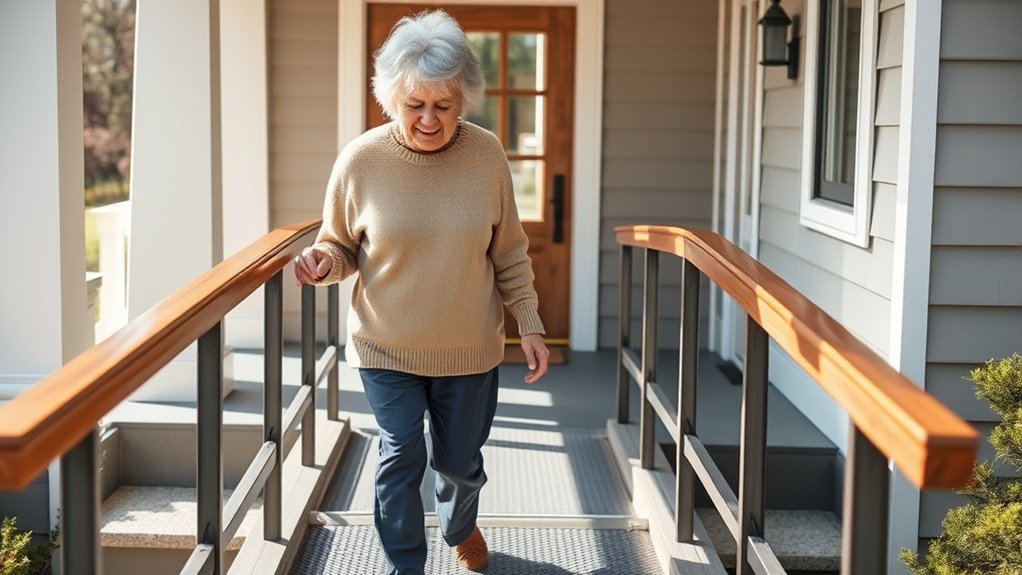

If stairs become a challenge, consider alternatives like installing a stairlift or a home elevator to move safely between floors. You can also create a main living area on the ground floor to reduce stair use, or add ramps with sturdy handrails outside your home. Using grab bars and non-slip treads can further improve safety. To discover more safe solutions tailored to your needs, explore effective options designed for comfortable, secure movement around your house.
Key Takeaways
- Install stairlifts or stair chairs to provide safe, motorized ascent and descent for seniors.
- Use portable or permanent grab bars and handrails for improved stability on existing stairs.
- Consider relocating bedrooms and frequently used areas to the ground floor to reduce stair reliance.
- Implement home modifications like non-slip treads and enhanced lighting to prevent falls on stairs.
- Explore alternative mobility devices such as canes or walkers to support safer movement around the home.

Climbing stairs is a common activity, but it can pose risks if not done carefully. As a senior, you might feel confident orienting yourself on your home’s stairs, but over time, even small missteps can lead to serious falls or injuries. To reduce these risks, consider making staircase modifications and using assistive devices. These adjustments not only enhance safety but also give you greater independence around your home.
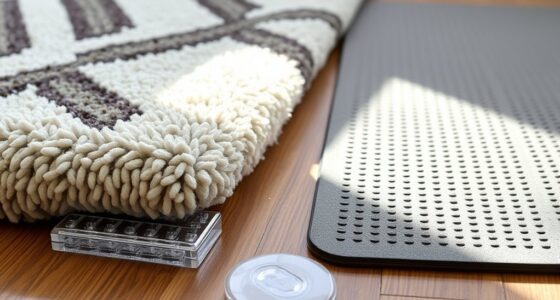
Staircase modifications are an effective way to create a safer environment. Installing sturdy handrails on both sides of the staircase provides support and helps you maintain balance. You might also want to add non-slip treads or adhesive strips to each step, which considerably reduce the chance of slipping. Improving lighting around the staircase guarantees you can see each step clearly, especially at night or in dimly lit conditions. If your staircase has a steep incline or narrow steps, consider installing a staircase lift or a stair chair. These modifications make climbing and descending much easier and safer, especially if mobility is limited. Additionally, understanding your load‑planning and ensuring the staircase can support any added modifications is crucial for safety and durability.
Assistive devices also play a vital role in stair safety. A well-fitted cane or walking stick can provide extra stability when you approach the stairs. For those with more significant mobility challenges, a stairlift can be a game-changer, allowing you to move between floors without putting strain on your joints or risking a fall. Portable handrails or grab bars are another option; they can be installed temporarily or permanently on the wall beside the staircase, giving you something to hold onto at all times. These devices are designed to support your weight and help you maintain your balance, reducing the likelihood of slips or falls.
It’s important to assess your individual needs and comfort level when considering staircase modifications and assistive devices. Consulting with an occupational therapist or home safety expert can help you determine the best options. They can recommend specific modifications tailored to your home layout and mobility needs, ensuring that the solutions fit seamlessly into your daily routine. Remember, safety comes first, but it shouldn’t come at the expense of independence. By investing in staircase modifications and assistive devices, you’re creating a safer environment that encourages confident movement and minimizes the risk of accidents.
In the end, taking proactive steps to modify your staircase and incorporate assistive devices can make a notable difference. Not only do these measures reduce hazards, but they also give you peace of mind, allowing you to move around your home more freely and securely. Climbing stairs may always carry some inherent risks, but with the right adaptations, you can continue to orient yourself around your home safely and comfortably.
Frequently Asked Questions
Are There Specific Exercises to Improve Stair Climbing Strength?
Yes, you can do exercises like balance training and leg strengthening routines to improve your stair climbing strength. Try standing on one foot or using resistance bands for leg exercises like squats and leg lifts. These activities enhance your stability and leg power, making stairs easier and safer to navigate. Regular practice helps build confidence and reduces the risk of falls, keeping you active and independent longer.
How Can I Tell if Stairs Are Safe for Seniors?
Stairs should feel like a gentle slope, not a treacherous mountain. To tell if they’re safe, check the stair material—non-slip surfaces are best—and verify good lighting conditions that eliminate shadows and dark spots. Look for sturdy handrails on both sides and even treads with consistent height and depth. If anything feels unstable or poorly lit, it’s better to avoid those stairs or have them inspected by a professional.
What Home Modifications Can Reduce Fall Risks?
You can reduce fall risks by installing grab bars near stairs and in bathrooms, providing steady support. Add slip-resistant treads to stairs and walkways to prevent slips, especially if surfaces are wet. Make certain good lighting in stairways and hallways, and keep pathways free of clutter. These modifications offer increased safety, helping you move confidently and reducing the chance of falls around your home.
Are There Assistive Devices That Help With Stairs?
You might be surprised, but assistive devices like stairlifts and handrails can dramatically improve your safety. Installing a sturdy handrail provides steady support, while stairlift options offer a seamless way to ascend and descend without risking a fall. These devices not only boost confidence but also keep you independent. Don’t wait—consider these solutions to make your home safer and your daily routine easier.
How Often Should Seniors Have Their Mobility Assessed?
You should have your mobility evaluated at least once a year to monitor fall risk and guarantee safety. Regular mobility assessments help identify any changes in strength, balance, or coordination that could increase fall risk. If you notice new difficulties or have experienced a fall, schedule an evaluation sooner. Staying proactive with these assessments keeps you informed about your mobility health and helps you take appropriate precautions.
Conclusion
Remember, your safety on stairs is the key to maintaining your independence and enjoying life fully. By exploring alternatives like ramps, elevators, or sturdy handrails, you can avoid the perils that transform a simple step into a treacherous mountain. Think of these options as your personal safety nets—more reliable than a superhero’s shield. Embrace these solutions, stay cautious, and keep your stride confident, turning everyday challenges into opportunities for safe, joyful movement.