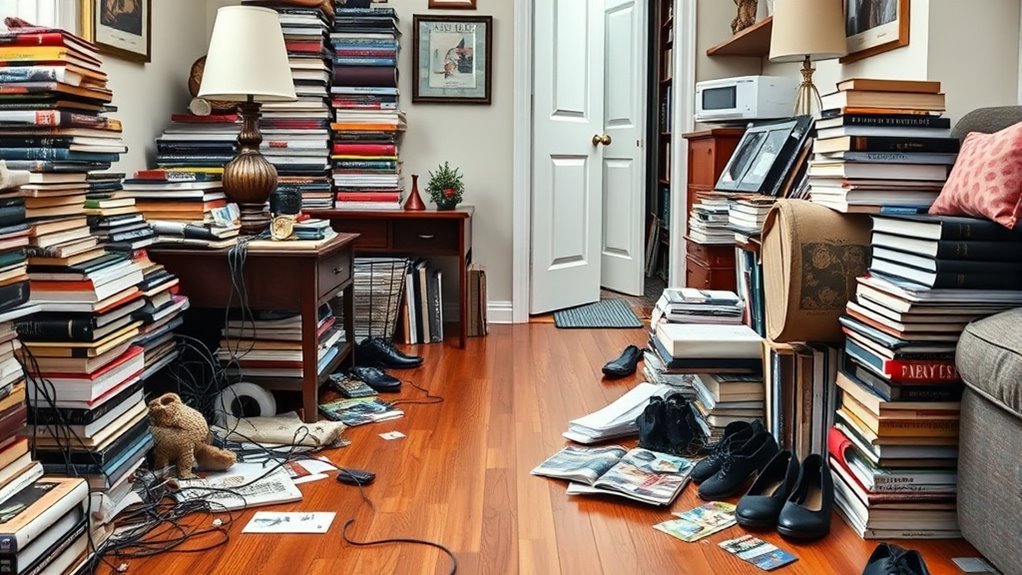

Cluttered spaces can lead to trips and falls because excess items block pathways and hide hazards, making it easy to stumble unnoticed. Piles on the floor, tight corners, and poorly lit areas increase the risk of accidents. When too much stuff accumulates, it becomes harder to navigate safely, especially in high-traffic zones like hallways and under furniture. Keep your home organized and clutter-free to reduce dangers—there’s more to learn about effective safety strategies below.
Key Takeaways
- Excess clutter creates obstacles and hidden hazards, increasing the risk of trips and falls.
- Piles of items block pathways and reduce visibility of potential dangers.
- Cluttered areas like corners and hallways are high-risk zones for accidents.
- Proper storage solutions keep walkways clear, reducing fall hazards.
- Regular decluttering and maintenance help maintain a safe, hazard-free environment.
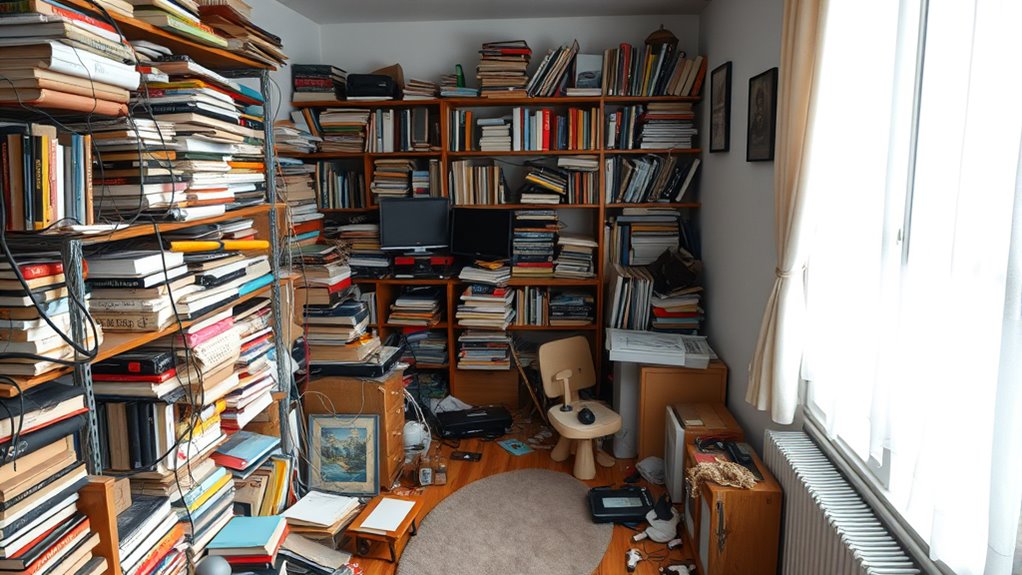
When clutter accumulates, it can pose serious safety risks in your home. Piles of unnecessary items can block pathways, hide hazards, and create dangerous obstacles. To minimize these risks, you need effective storage solutions that help organize your space and prevent clutter zones from forming. Clutter zones are areas where clutter tends to gather, like the corners of rooms, under tables, or along hallways. These spots become high-risk zones where falls are more likely to occur, especially if you’re not paying close attention or if lighting is poor.
The key to maintaining safety is to establish designated storage solutions for every item. Use shelves, bins, and cabinets to keep things off the floor and out of walkways. When you implement smart storage options, you make it easier to access what you need without creating a mess. For example, installing wall-mounted shelves in your kitchen or bathroom frees up valuable floor space and clears clutter zones. Similarly, clear plastic bins with labels can help you quickly locate seasonal decorations or seldom-used tools, reducing the chance of tripping over scattered items.
It’s also important to identify and address existing clutter zones. Take a walk through your home and pinpoint areas where clutter tends to collect. These might be the entryway, under the sink, or around your favorite chair. Once you recognize these zones, you can focus on decluttering them by removing items you no longer need or use. Reorganize what remains into appropriate storage solutions, keeping pathways clear and accessible. Remember, clutter zones aren’t just unsightly—they’re hazardous. Clearing them out reduces the risk of tripping, slipping, or falling. Incorporating organized storage techniques can further help maintain a safer environment by making clutter management easier and more intuitive.
Another effective strategy is to create a routine for tidying up. Spend just a few minutes each day putting things back in their designated storage solutions. This habit prevents clutter from building up into dangerous piles. When everything has a place, you’ll find it easier to navigate your home safely. Make sure pathways are well-lit and free of obstacles; good lighting can help you spot potential hazards before they cause an accident. Additionally, secure cords and rugs that might slip or trip you up.
Frequently Asked Questions
How Often Should I Update My Decluttering Efforts?
You should update your decluttering efforts every few months to maintain safe, organized spaces. Regularly review your storage organization and adjust your decluttering schedules based on changing needs or clutter buildup. Staying consistent helps prevent hazards like falls caused by excess clutter. Set reminders to reassess areas, especially high-traffic spots, so your home remains safe and clutter-free, reducing the risk of accidents over time.
Are There Specific Items That Pose More Fall Risks?
Imagine your home as a treasure chest, and certain items are hidden pitfalls. Items like loose rugs, cluttered cords, and poorly placed furniture become tripping hazards. These obstruct pathways and increase fall risks, especially in high-traffic areas. Regularly check for these dangers, keeping walkways clear and secure. Removing or securing these items helps protect you, transforming your space into a safe haven rather than a hidden trap.
How Can I Involve Family Members in Decluttering?
You can involve your family in decluttering by encouraging teamwork and making it a fun activity. Use decluttering tips like setting a timer for each room or creating donation piles together. Assign specific tasks based on everyone’s strengths, and celebrate small wins to keep motivation high. This approach fosters cooperation, reduces clutter faster, and guarantees everyone feels responsible for creating a safer, more organized home.
What Are Safe Storage Solutions for Clutter?
Ever wonder how to keep your home safe and tidy? Using smart storage solutions is key. Opt for storage organization options like clear bins, wall-mounted shelves, and under-bed containers to manage clutter effectively. These solutions keep items accessible yet out of the way, reducing trip hazards. By implementing these safe storage solutions, you can maintain clutter management and create a safer, more organized living space for everyone.
Can Decluttering Improve Overall Home Safety Beyond Fall Prevention?
Yes, decluttering improves overall home safety by enhancing storage organization and reducing hazards. When you clear clutter, you create clear pathways, making it easier to navigate and respond quickly during emergencies. It also helps you identify essential items for emergency preparedness, ensuring they’re accessible when needed. By maintaining a tidy space, you minimize risks of accidents, improve mental clarity, and foster a safer, more organized living environment.
Conclusion
Think of your home as a garden; when it’s overgrown with clutter, it’s harder to move freely and safely. Decluttering clears the path, making your space a smooth, inviting trail rather than a tangled maze. By removing excess belongings, you create a safer environment where falls are less likely. Just like tending a garden helps it flourish, tidying up helps your home stay safe and welcoming. Take control today, and watch safety blossom.