To guarantee fire safety for seniors, choose reliable smoke alarms like photoelectric or dual-sensor types, properly install them on ceilings or high walls in key areas, and test them monthly. Keep escape routes clear, well-lit, and marked with visible signs, practicing drills regularly. Consider additional devices like vibrating alerts for hearing impairments. Learning more about maintaining equipment and planning escapes will help keep you or your loved ones safer during emergencies.

Turn quiet afternoons into listening time
- Thousands of audiobooks, podcasts and originals
- Listen on your phone, tablet or Echo — also offline
- Cancel anytime
Key Takeaways
- Choose certified smoke alarms (ionization, photoelectric, dual-sensor) and install them on ceilings or high walls near bedrooms and common areas.
- Regularly test smoke alarms monthly, replace batteries annually, and clean units to ensure proper functionality.
- Develop clear, well-marked escape routes with visible signage, unobstructed pathways, and adequate lighting for safe evacuation.
- Conduct routine fire drills and practice escape plans regularly to build confidence and ensure preparedness.
- Install assistive devices like vibrating alerts or strobe lights for seniors with hearing impairments and keep emergency contacts accessible.
photoelectric smoke alarm for seniors
As an affiliate, we earn on qualifying purchases.
As an affiliate, we earn on qualifying purchases.
Choosing the Right Smoke Alarms for Senior Homes
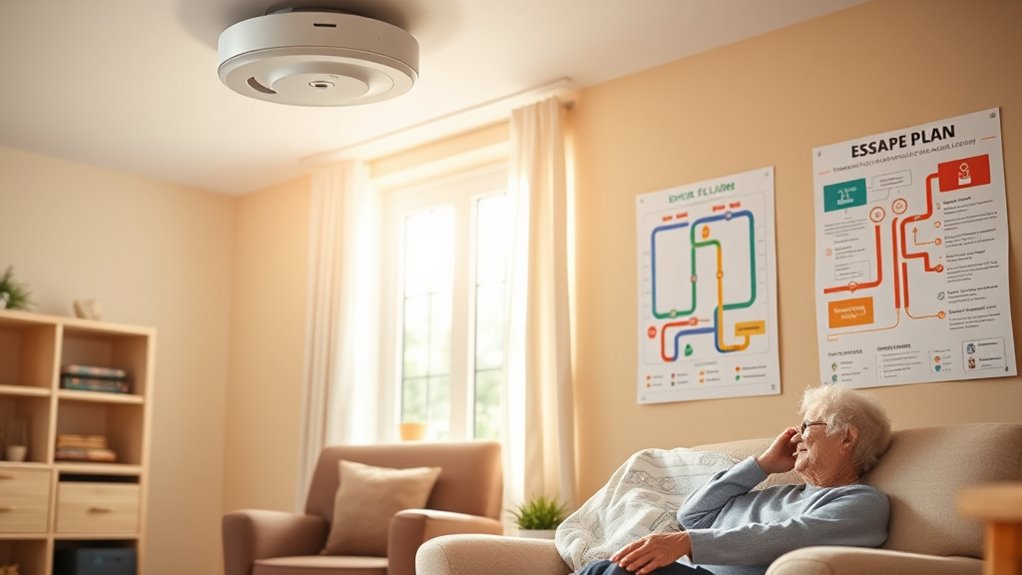
Choosing the right smoke alarms for senior homes is essential for ensuring quick detection of fires and keeping residents safe. You should consider various fire alarm types, such as ionization, photoelectric, and dual-sensor alarms, to match the specific needs of your facility. Each type detects different fire characteristics, so selecting the appropriate one enhances safety. Additionally, make sure the smoke detectors meet established standards, like UL 217 or NFPA codes, to guarantee reliability and effectiveness. Properly certified alarms provide peace of mind, knowing they will activate promptly when smoke is present. By choosing alarms that adhere to smoke detector standards and fit your environment, you can considerably reduce fire risks and protect your residents more effectively.
As an affiliate, we earn on qualifying purchases.
Proper Installation and Placement of Smoke Detectors
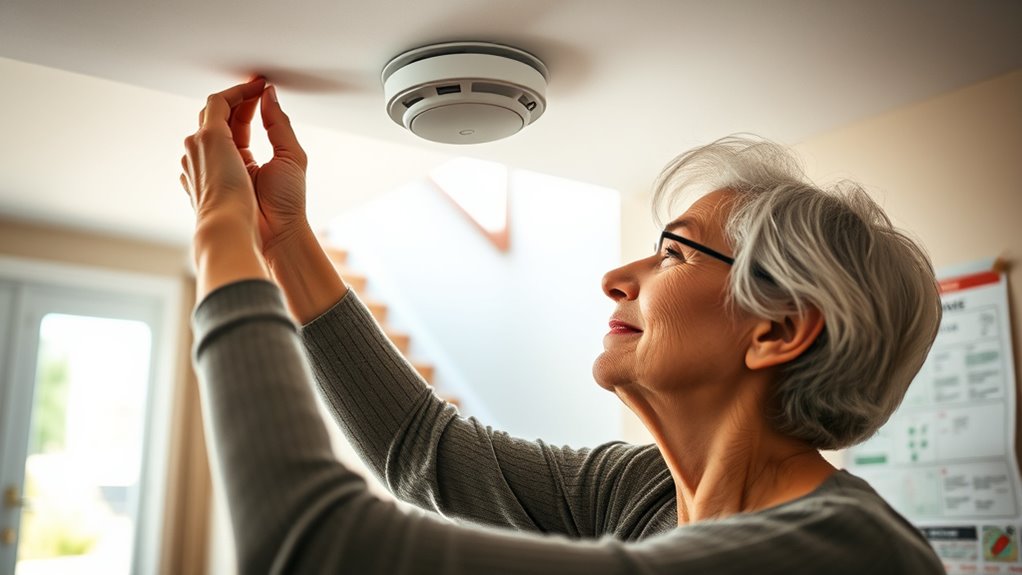
Proper installation and placement of smoke detectors are essential for guaranteeing they function effectively when needed. During home renovation, it’s important to position alarms correctly to maximize safety. Place detectors on the ceiling or high on the wall, away from vents or windows that might interfere with their operation. For seniors, install alarms in key areas like bedrooms, hallways, and near the kitchen. Keep emergency contact numbers nearby in case of activation. Proper placement reduces false alarms and ensures quick detection of smoke. Additionally, understanding smoke alarm maintenance can help ensure your detectors remain reliable over time. Regular testing and battery replacement are crucial for optimal performance. Knowledge of fire safety standards can further improve your home’s preparedness. For extra safety, consider integrating auditory alerts that are loud enough for seniors to hear easily. Ensuring effective smoke detection involves not only proper placement but also regular maintenance and testing. Here’s a quick guide:
| Location | Placement Tip | Reason |
|---|---|---|
| Bedrooms | Ceiling, center of room | Early warning during sleep |
| Hallways | Near each sleeping area | Quick detection at night |
| Kitchen | Outside cooking area | Minimize false alarms |
| Living Room | Ceiling, away from vents | Clear detection |
| Basement | Near stairs, ceiling | Prevents smoke buildup |
As an affiliate, we earn on qualifying purchases.
Regular Maintenance and Testing of Smoke Alarms
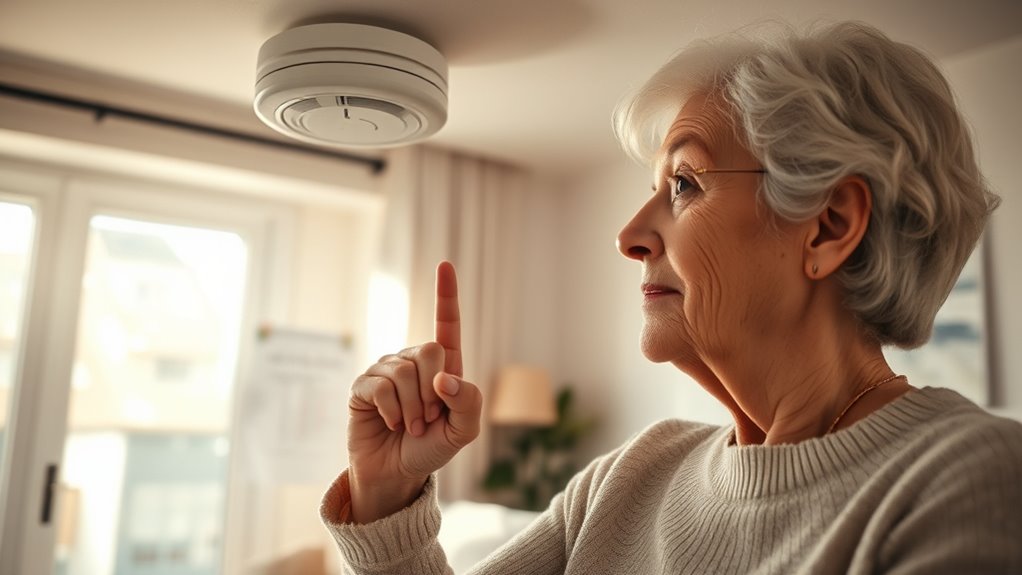
You should test your smoke alarms monthly to guarantee they work properly. Remember to replace the batteries at least once a year, or immediately if the alarm chirps. Regular checks help keep your home safe and your alarms ready to alert you in an emergency. Additionally, ensure that your smoke alarms are properly maintained to maximize their effectiveness. Regular maintenance, including cleaning the alarms and replacing outdated units, can help prevent malfunctions and ensure reliable performance. Incorporating essential oils for fire safety in your home, such as those with antimicrobial and calming properties, can also support a healthier environment and alertness. Using performance cookies data can also help identify potential issues with your alarm system’s reliability.
Battery Replacement Schedule
Regularly replacing the batteries in smoke alarms is vital to guaranteeing they function correctly when needed. A proper fire alarm maintenance routine involves changing smoke detector batteries at least once a year, even if the alarm doesn’t signal low battery. Many experts recommend using high-quality, long-lasting batteries to reduce the frequency of replacements. When replacing batteries, check the manufacturer’s instructions for specific guidance. Keep a schedule so you remember to update the batteries consistently, such as during daylight saving time changes or monthly reminders. This simple step helps prevent false alarms and ensures your smoke alarm will activate during a fire. Battery replacement schedule is a key part of your overall fire safety plan. Additionally, incorporating preventative maintenance practices can further enhance your safety measures. Performing regular alarm testing ensures your smoke detectors are working properly and can alert you effectively in an emergency, which is essential for fire safety for seniors.
Alarm Functionality Checks
To guarantee your smoke alarms will work when needed, it’s essential to test them frequently. Regular alarm testing ensures the device is functioning properly and can alert you in an emergency. Press the test button on your smoke alarm and listen for the loud alarm sound. If the alarm indicator lights are visible, check that they’re working as intended—these lights often blink or stay steady when the alarm is operational. If you don’t hear the alarm or see the indicator lights activate, replace the batteries or consider replacing the unit altogether. Remember, alarm testing should be part of your routine maintenance, ideally once a month. Proper alarm functionality checks give you peace of mind that your smoke alarm will perform when it’s most needed. Understanding alarm components can help you troubleshoot issues more effectively. Additionally, consulting your manufacturer’s instructions can provide specific guidance for your alarm model. Regular maintenance also supports your fire safety plan by ensuring all devices are ready to alert you in case of an emergency. Performing routine inspections of your alarms can further help identify potential issues early and prevent false alarms that could lead to complacency.
As an affiliate, we earn on qualifying purchases.
Developing Clear and Accessible Escape Routes
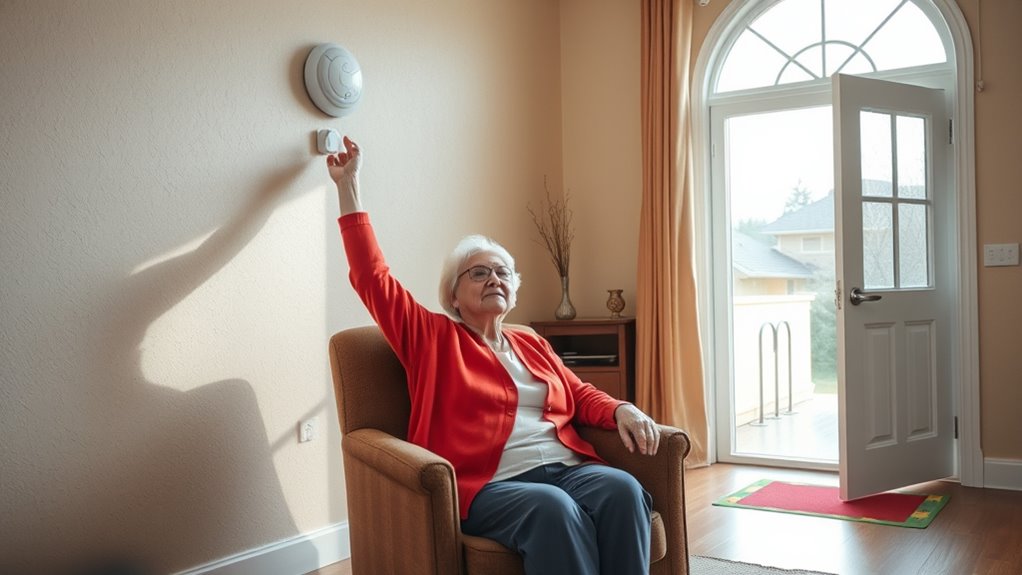
You need to mark your escape pathways clearly so you can find them quickly in an emergency. Keep these routes free of clutter and obstacles at all times. Making sure your escape routes are accessible and well-marked helps guarantee everyone’s safety. Incorporating visual markers such as glow-in-the-dark tape or reflective signs can enhance visibility during power outages or smoke-filled conditions. Additionally, understanding field-of-view considerations can help ensure that escape routes remain visible from various vantage points within your home. Properly designed escape routes should also include clear signage that remains visible under different lighting conditions, further aiding quick identification. Regularly reviewing and practicing your escape plan ensures these safety features remain effective when they are most needed. Considering automation and smart home integrations can also help alert you to blocked pathways or hazards, further enhancing your safety preparedness.
Mark Escape Pathways Clearly
Clear and accessible escape pathways are essential for ensuring seniors can evacuate quickly and safely during an emergency. To achieve this, mark escape routes clearly with visible fire safety signage, guiding you even in low visibility conditions. Use bright, reflective signs that indicate exits and pathways. Keep evacuation equipment like flashlights and alarms nearby, so you can navigate safely if power is out. Regularly check that signs remain unobstructed and visible. Proper signage plays a vital role in guiding occupants quickly and efficiently to safety during emergencies. Incorporate active listening techniques to better understand and address any obstacles or concerns related to evacuation routes. Clear markings help prevent confusion and delays, especially when time is critical. Properly marked routes give you confidence that you can find the safest way out, reducing panic and ensuring a smooth evacuation. Making escape pathways obvious and well-lit is a crucial step in fire safety for seniors.
Keep Routes Unobstructed
Keeping escape routes unobstructed guarantees seniors can evacuate quickly without unnecessary delays. Regular obstacle removal ensures hallways, stairwells, and doorways stay clear of clutter, reducing trip hazards during an emergency. Clear pathways are essential for safe and swift evacuation, especially if mobility is limited. To improve visibility, install adequate pathway lighting along escape routes. Proper lighting helps seniors see where they’re going, even in low-light conditions or if smoke reduces visibility. Keep furniture, rugs, and other objects away from exits and corridors. Regularly check for and remove any obstructions that might block a quick escape. By maintaining unobstructed routes and ensuring proper lighting, you create a safer environment that encourages confident and efficient evacuation in case of fire.
Creating a Fire Safety Routine and Practice Drills
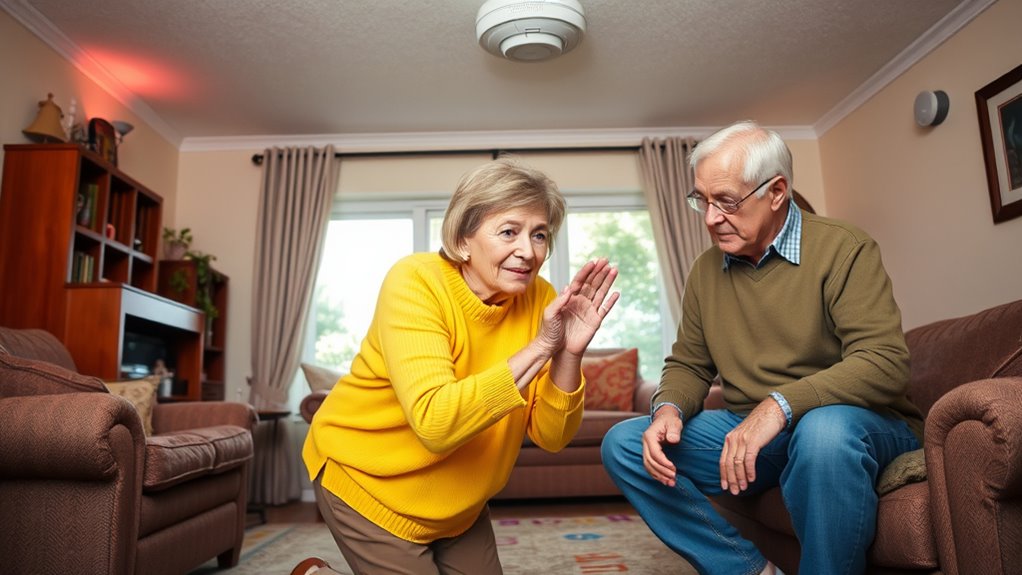
Establishing a fire safety routine and regularly practicing drills are essential steps in protecting yourself from fire emergencies. Consistent fire safety routines help you stay prepared, while emergency practice guarantees you know exactly what to do. Schedule weekly or monthly drills to reinforce your escape plan. Use the table below to organize your routine:
| Fire Safety Routines | Emergency Practice |
|---|---|
| Check smoke alarms weekly | Practice escape routes with a timer |
| Clear escape paths | Simulate different scenarios |
| Review fire safety tips | Practice with family or caregivers |
| Keep fire extinguishers accessible | Update escape plans regularly |
Additional Safety Devices and Assistance Options
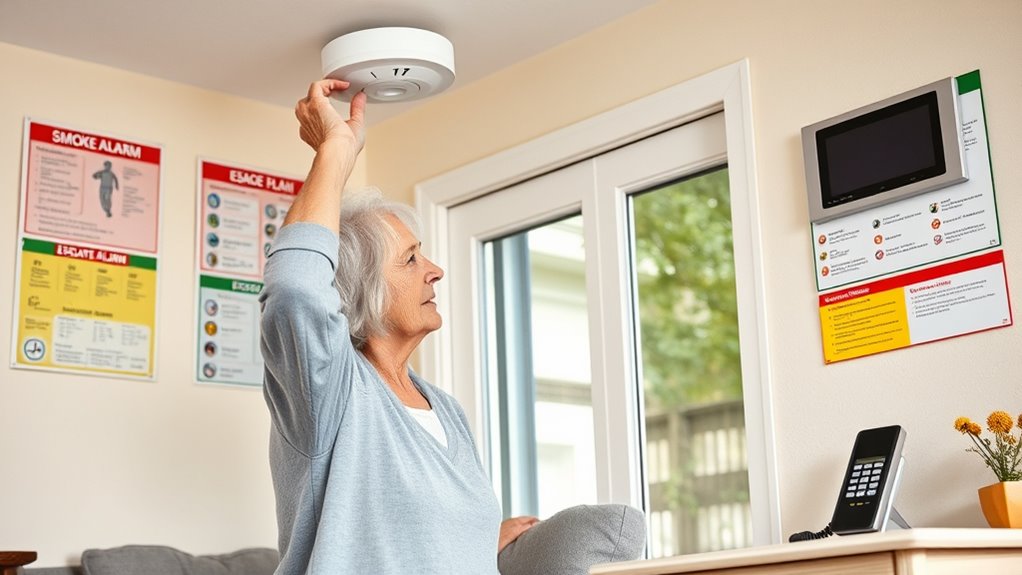
To enhance your fire safety, consider installing additional devices like smoke and carbon monoxide detectors that provide early alerts. These devices, often part of assistive technology, can be tailored to your needs, such as vibrating alerts or strobe lights, making them especially helpful if you have hearing impairments. Make certain your detectors are interconnected so that when one goes off, all activate simultaneously. Keep emergency contacts easily accessible, and ensure your phone is within reach at all times. Some alarm systems offer emergency assistance features, allowing you to quickly summon help if needed. Regularly test and maintain these safety devices to ensure they work properly. Incorporating these options strengthens your safety net and ensures timely alerts during an emergency.
Educating Seniors and Caregivers About Fire Safety
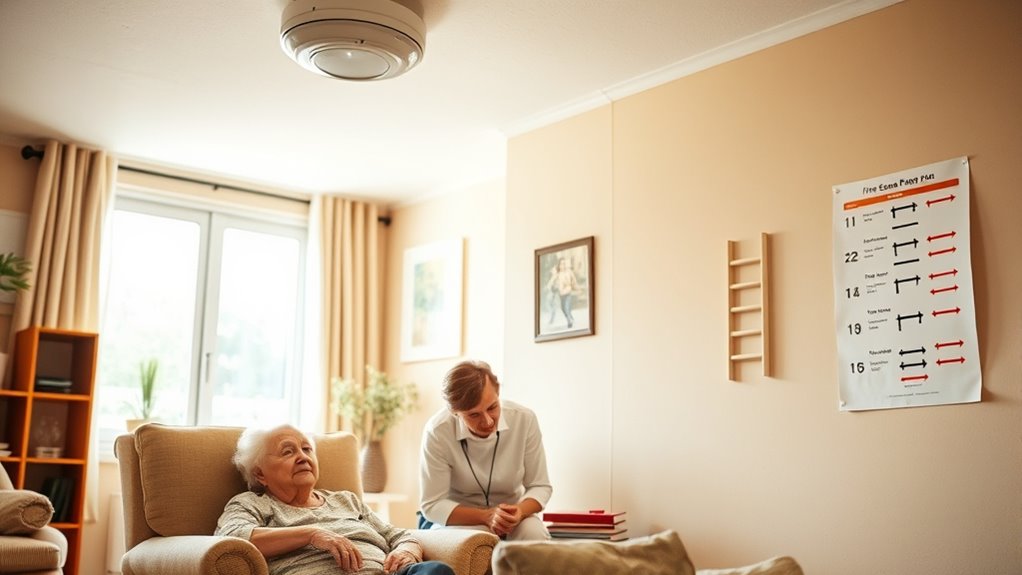
Educating seniors and caregivers about fire safety is essential for preventing emergencies and ensuring quick, effective responses when they occur. Staying informed about fire safety technology, like smart smoke alarms or emergency alerts, can make a significant difference. Building community awareness helps everyone recognize risks and support each other during a fire. To improve safety, consider these steps:
Educating seniors and caregivers about fire safety and technology enhances prevention and emergency response.
- Share information on the latest fire safety technology with seniors and caregivers
- Conduct regular fire safety drills tailored to seniors’ needs
- Promote community programs focused on fire prevention and response
- Encourage open communication about fire risks and safety plans
Frequently Asked Questions
How Often Should Smoke Alarms Be Replaced in Senior Homes?
You should replace smoke alarms in senior homes every 10 years to guarantee they function properly. Regularly check and replace batteries, ideally once a year, to maintain reliable alert signals. Proper alarm placement—near bedrooms and on every level—enhances safety. Keep up with battery maintenance and test alarms monthly. By doing so, you make certain your smoke alarms are always ready to alert you in case of a fire emergency.
What Are the Best Ways to Alert Seniors With Hearing Impairments?
To alert seniors with hearing impairments, you should use visual alerts like flashing lights and vibrating devices such as bed shakers or wearable alarms. Place visual alert devices near their beds and common areas to make certain they notice emergency signals. Make sure these devices are compatible with existing smoke alarms, and test them regularly. This combination guarantees quicker response times, keeping your loved ones safe during a fire emergency.
How Can I Ensure Escape Plans Are Understood and Remembered by Seniors?
You can guarantee seniors understand and remember escape plans by using clear visual aids like diagrams or color-coded routes. Rehearsal techniques, such as practicing the plan regularly, help reinforce memory and confidence. Make sessions interactive and simple, so they’re easy to follow. Repeating the practice and updating the plan as needed ensures it stays fresh in their minds, giving them confidence in an emergency.
Are There Specific Fire Safety Apps or Technology for Seniors?
Yes, there are smart home apps and technology designed for seniors that provide emergency alerts and enhance fire safety. You can install systems that automatically notify emergency services if a smoke alarm goes off, or set up smart alarms that send alerts directly to your phone. These tools help guarantee seniors stay aware of fire risks, even if they’re not nearby, giving you peace of mind and quick access to assistance when needed.
What Should Caregivers Do if a Senior Refuses to Follow Safety Protocols?
Think of yourself as a gentle navigator guiding a ship through fog. When a senior refuses safety protocols, use motivational interviewing to understand their fears and concerns. Practice caregiver persuasion by calmly sharing the importance of fire safety, emphasizing their independence and safety. Stay patient and empathetic, showing respect for their feelings, and gradually help them see safety measures as empowering tools rather than restrictions. Your calm persistence can make a difference.
Conclusion
By choosing the right smoke alarms, installing them properly, and maintaining them regularly, you create a safer environment. Developing clear escape routes, practicing fire drills, and utilizing additional safety devices ensure preparedness. Educating yourself and your loved ones about fire safety keeps everyone informed, alert, and ready. Remember, safety isn’t a one-time task but an ongoing commitment—an ongoing commitment to safeguard lives, preserve independence, and provide peace of mind in every moment.
Fall Picks
fall essentials
As an affiliate, we earn on qualifying purchases.