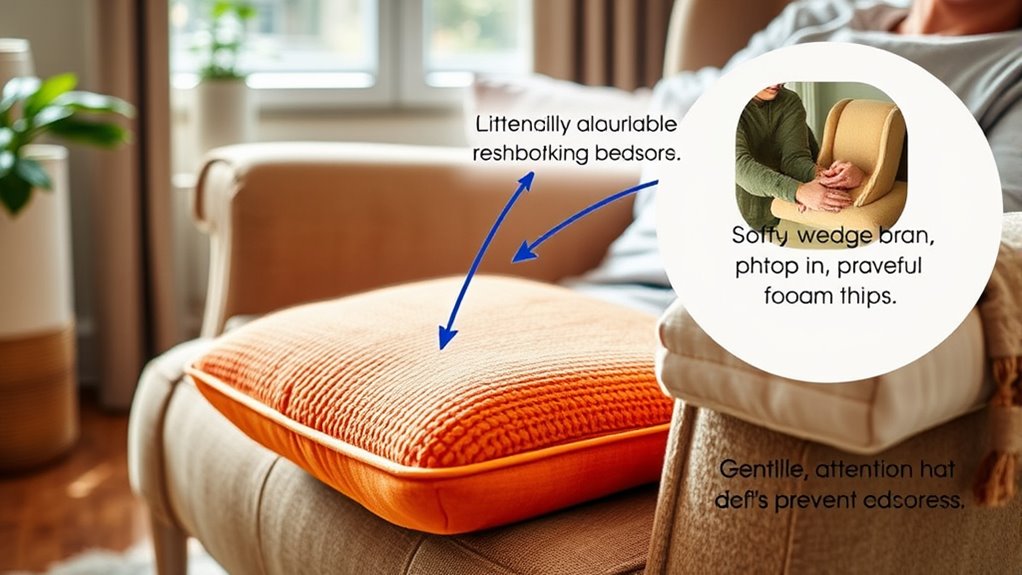

To prevent bedsores at home, use cushions and foam wedges to offload pressure from vulnerable areas like the hips, heels, and sacrum. Position yourself or your loved one at least every two hours, shifting weight to avoid prolonged pressure on the same spots. Proper body alignment and supportive cushions help distribute pressure evenly and keep the skin healthy. If you want to learn more effective strategies, keep exploring ways to protect skin and prevent ulcers.
Key Takeaways
- Use cushions and foam wedges to offload pressure from bony prominences like hips, sacrum, and heels.
- Reposition every 2 hours in bed and every 15-30 minutes in a wheelchair to prevent sustained pressure.
- Ensure proper body alignment to reduce shear and pressure on vulnerable areas.
- Keep skin clean, dry, and moisturized; use barrier creams to protect against moisture-related skin damage.
- Regularly assess skin for redness or tenderness and adjust cushions or position as needed.
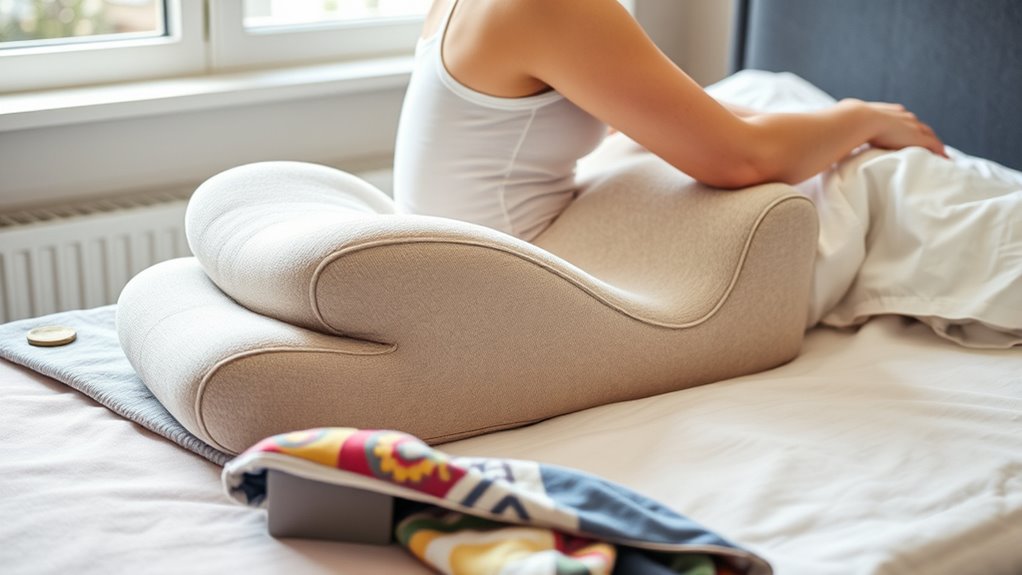
If you or a loved one spend a lot of time in bed or a wheelchair, preventing bedsores is essential for maintaining skin health. Bedsores, or pressure ulcers, develop when sustained pressure cuts off blood flow to certain areas of the skin, leading to tissue damage. To reduce this risk, pressure relief is fundamental. Regularly shifting position helps distribute pressure more evenly, preventing prolonged compression on any one spot. Using cushions, specialized mattresses, or foam wedges can make a significant difference. These tools help cushion bony prominences like the sacrum, hips, or heels, areas most prone to pressure buildup. Incorporating pressure relief strategies into daily routines isn’t just about comfort—it’s a proactive way to protect the skin. Ensuring proper pressure distribution is key to avoiding tissue damage and promoting healing when necessary.
Regular pressure relief and repositioning are key to preventing bedsores and maintaining skin health.
Along with pressure relief, skin assessment plays a crucial role. You should routinely check the skin for early signs of redness, warmth, or tenderness, especially over bony areas. Early detection allows you to address issues before they develop into full-blown ulcers. When performing skin assessments, look for changes in color, texture, or signs of moisture or irritation. Keep the skin clean and dry, as moisture from sweat or incontinence can weaken the skin’s protective barrier, making it more vulnerable to damage. Applying barrier creams or emollients can help maintain skin integrity.
Positioning is equally vital. Properly aligning the body reduces pressure points and promotes better circulation. Make sure your loved one is repositioned at least every two hours if they’re in bed, and every 15-30 minutes if in a wheelchair. When repositioning, avoid putting pressure on the same spots repeatedly. Use cushions or pads to offload pressure from vulnerable areas. For example, a cushion behind the lower back can prevent sliding and reduce friction, while heel protectors can prevent pressure on the heels. Always check that the body is aligned comfortably to prevent shearing forces—these happen when the skin stays in place while underlying tissues move, risking damage.
Frequently Asked Questions
How Often Should Cushions Be Replaced to Ensure Effectiveness?
You should replace cushions every 6 to 12 months to guarantee their effectiveness, considering cushion durability and replacement frequency. Over time, cushions can lose their shape, support, and protective qualities, which can increase the risk of bedsores. Regularly inspect your cushions for signs of wear, such as sagging or uneven surfaces. If you notice these issues, it’s time to replace them promptly to maintain proper pressure relief and comfort.
Are There Specific Cushion Materials Best for Preventing Bedsores?
Imagine a cushion that feels like a gentle, supportive hug—this is what high-quality foam offers. For preventing bedsores, look for cushions with durable foam that maintains its shape and resilience over time. Breathable fabric is equally essential, allowing air circulation to keep your skin dry and reduce moisture buildup. Together, these materials work tirelessly to provide comfort and protection, giving you peace of mind and better skin health.
Can Repositioning Schedules Be Customized for Different Health Conditions?
Yes, you can customize repositioning schedules based on different health conditions. Personalized care and adaptive strategies are key to effectively preventing bedsores. For example, if you have limited mobility or specific medical needs, your caregiver may adjust repositioning frequency and techniques to better suit your condition. Regular consultations with healthcare professionals help guarantee these schedules address your unique risks, promoting better skin integrity and comfort.
What Are Signs That a Cushion or Position Needs Adjustment?
If you notice skin redness or swelling that lingers, it’s a sign you need to adjust your cushion or position immediately. Pressure points might be screaming for relief, and neglecting this can turn redness into a painful sore. Keep an eye out for unusual warmth or skin discoloration. Regularly shifting your position or changing cushions helps prevent pressure points from turning into serious bedsores. Don’t ignore these warning signs!
How Can Caregivers Encourage Independent Repositioning Safely?
You can encourage independent repositioning safely by teaching your loved one how to use assistive devices like repositioning aids or bed blocks. Make sure they understand proper techniques through caregiver training, emphasizing slow movements and comfort. Regularly check their position, offer gentle reminders, and create a supportive environment. This approach boosts their confidence, reduces pressure points, and helps prevent bedsores while promoting autonomy and safety during repositioning.
Conclusion
By following these tips, you’re building a fortress around your skin, making bedsores less likely to take hold. Using cushions and changing positions regularly keeps pressure at bay like a vigilant guard. Remember, consistency is your best ally—small daily actions create a big difference. Stay proactive and attentive, because preventing bedsores is a journey you steer, not just a destination. Keep these habits in mind, and you’ll keep your skin safe and healthy, like a shield that never falters.