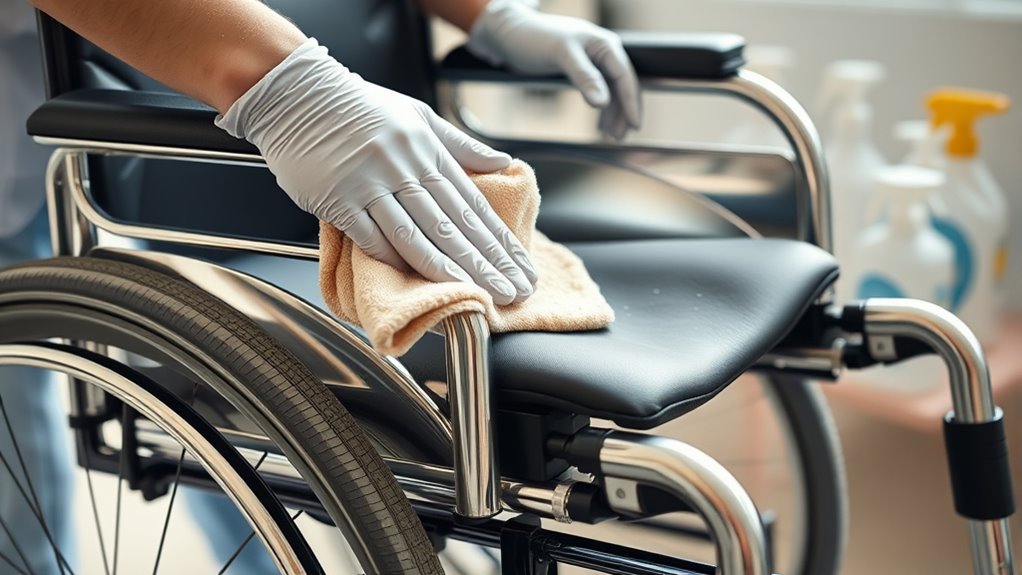

To clean and sanitize your mobility equipment, start by removing loose debris with a soft cloth or brush. Use mild soap, warm water, and approved disinfectants with at least 70% alcohol, ensuring you cover all surfaces, especially handles, armrests, and wheels. Allow disinfectants to sit for the recommended time, then wipe down with a damp cloth and dry thoroughly. Regular maintenance helps keep your equipment safe, hygienic, and in top condition—continue to learn more about proper routines.

Turn quiet afternoons into listening time
- Thousands of audiobooks, podcasts and originals
- Listen on your phone, tablet or Echo — also offline
- Cancel anytime
Key Takeaways
- Remove loose debris and wipe all surfaces with mild soap and warm water before disinfection.
- Use approved disinfectants with at least 70% alcohol, applying generously to handles, wheels, and armrests.
- Allow disinfectants to sit for the recommended contact time, then wipe with a damp cloth to remove residue.
- Dry all parts thoroughly with a soft towel and inspect for signs of wear or damage during each cleaning.
- Schedule regular cleaning and maintenance, including tightening bolts, checking tires, and lubricating moving parts.

Keeping your mobility equipment clean and sanitized is vital for maintaining your health and safety. Regular cleaning helps prevent the spread of germs and keeps your devices functioning properly. To achieve this, you need to understand effective disinfection techniques and establish consistent maintenance routines. These steps not only prolong the lifespan of your wheelchair or walker but also reduce the risk of infections, especially if you use your equipment daily.
Maintaining clean mobility equipment reduces infection risk and ensures proper functioning.
Start by gathering the right cleaning supplies. Mild soap, warm water, and disinfectant solutions approved for medical equipment are ideal. Avoid harsh chemicals that can damage your device’s surfaces. Before cleaning, remove any loose debris or dirt from your equipment using a soft brush or cloth. This will make the disinfection process more effective. When it’s time to disinfect, use a solution with at least 70% alcohol or a hospital-grade disinfectant. Apply it generously to all surfaces, paying close attention to handles, armrests, and wheels, where bacteria tend to accumulate. Let the disinfectant sit for the recommended contact time to guarantee germs are killed. Afterward, wipe down surfaces with a clean, damp cloth to remove any residue, then dry thoroughly with a soft towel.
Establishing maintenance routines is vital to keeping your mobility equipment in top shape. Set a schedule for regular cleaning—daily if you use your device frequently or weekly for less frequent use. Incorporate these tasks into your routine so they become habitual. Check your wheelchair or walker for signs of wear or damage during each cleaning session. Tighten loose bolts, inspect tires for proper inflation, and lubricate moving parts as needed. Regular maintenance prevents minor issues from turning into costly repairs and ensures your equipment remains safe to use.
Disinfection techniques also include paying attention to hidden or hard-to-reach areas. For example, wipe down underneath armrests and around any crevices where dirt and bacteria can hide. Using disinfectant wipes can make this easier and more thorough. Remember to wash your hands thoroughly after cleaning and disinfecting your equipment to avoid transferring germs elsewhere.
disinfectant wipes for mobility equipment
As an affiliate, we earn on qualifying purchases.
As an affiliate, we earn on qualifying purchases.
Frequently Asked Questions
How Often Should I Replace Worn-Out Mobility Equipment Parts?
You should replace worn-out mobility equipment parts as soon as you notice significant wear and tear, typically following a regular replacement schedule of every 6 to 12 months. Keep an eye on critical components like wheels, brakes, and cushions, and don’t wait until they break down. Regular inspections help prevent accidents and ensure your equipment functions safely and effectively. Prioritize timely replacements to maintain maximum mobility and safety.
Can I Use Bleach to Disinfect the Equipment Safely?
Ever wonder if bleach is safe for disinfecting your mobility equipment? You can use bleach, but you need to be cautious about disinfectant effectiveness and bleach safety. Dilute it properly—usually one part bleach to ten parts water—and avoid soaking the equipment. Be sure to rinse thoroughly and let it dry completely. This guarantees effective disinfection without damaging your wheelchair or walker, keeping you safe and healthy.
Are There Eco-Friendly Cleaning Options for Mobility Devices?
Yes, you can choose eco-friendly cleaning options for your mobility devices. Opt for biodegradable cleaners and natural disinfectants like vinegar or tea tree oil, which effectively sanitize without harmful chemicals. These options are safe for both the environment and your equipment. Regularly cleaning with these natural products helps keep your mobility devices hygienic while reducing your ecological footprint, ensuring you stay safe and eco-conscious.
How Do I Clean Hard-To-Reach Areas on Wheelchairs?
To clean difficult corners and hidden crevices on wheelchairs, use a soft-bristled brush or an old toothbrush to reach tight spots. Dampen a cloth with a gentle, eco-friendly cleaner and carefully scrub these areas. For stubborn dirt, use a cotton swab dipped in cleaner. Make sure to dry thoroughly afterward to prevent rust or mold. Regular cleaning keeps your wheelchair safe, hygienic, and well-maintained.
What Are the Signs That My Mobility Device Needs Professional Servicing?
Like a car showing warning lights, your mobility device needs professional servicing when you notice visual inspection reveals rust, cracks, or loose parts. Unusual odors, like a foul smell, also signal issues. If you experience difficulty in movement, squeaking sounds, or uneven wheels, it’s time to see a specialist. Regular checkups keep your device safe and functioning smoothly, ensuring you stay mobile and confident.
As an affiliate, we earn on qualifying purchases.
Conclusion
By regularly cleaning and sanitizing your mobility equipment, you’re not just maintaining its appearance—you’re protecting yourself from germs that can spread faster than wildfire. Make it a habit to wipe down your wheelchair or walker daily, ensuring it stays spotless and safe. Remember, a clean device isn’t just tidy; it’s a fortress against harmful bacteria. Stay diligent, stay healthy, and keep your mobility gear as fresh as a spring breeze—because your well-being deserves nothing less.
As an affiliate, we earn on qualifying purchases.
As an affiliate, we earn on qualifying purchases.
Fall Picks
fall essentials
As an affiliate, we earn on qualifying purchases.