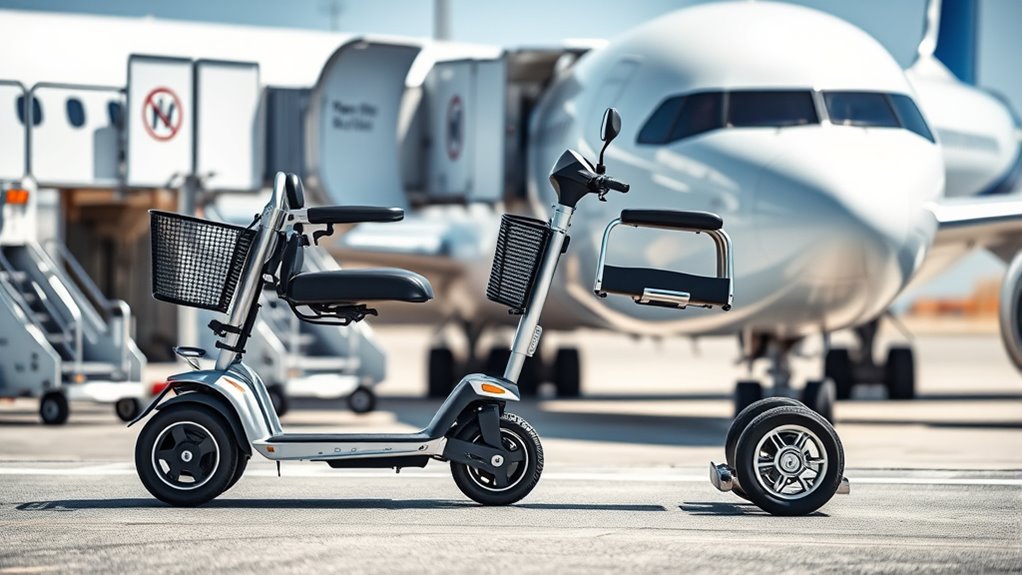

Yes, you can take your mobility scooter on an airplane, but you need to follow airline policies, guarantee the scooter is collapsible or foldable, and comply with battery regulations. Properly charge your scooter, disconnect batteries, and pack everything carefully to prevent damage or safety hazards. Each airline has different rules, so it’s important to confirm your specific airline’s guidelines. Keep reading to discover essential tips for a smooth travel experience with your scooter.
Key Takeaways
- Most portable, collapsible mobility scooters are allowed on airplanes, but size and weight restrictions vary by airline.
- Batteries must comply with airline regulations, typically lithium-ion batteries under 100Wh, and spare batteries carried in cabin luggage.
- Proper disassembly, secure packaging, and removal of accessories are essential for safe transport of scooters.
- Advance airline notification and assistance requests can facilitate smoother boarding and handling.
- Post-landing, inspect the scooter and batteries for damage, and ensure proper reassembly before use.
Understanding Airline Policies on Mobility Scooters
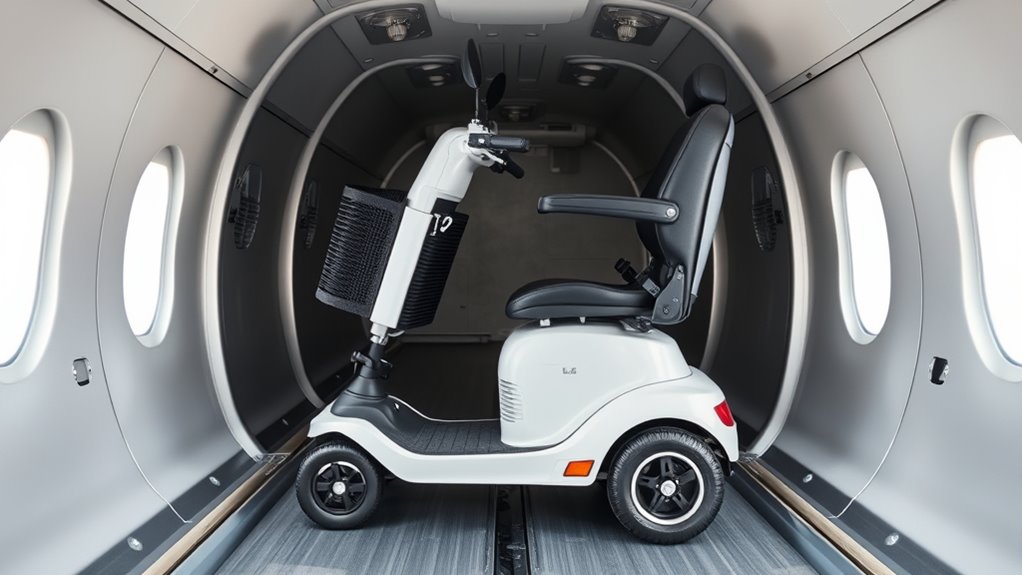
Understanding airline policies on mobility scooters is vital before you travel, as each airline has its own rules and procedures. Pricing considerations vary widely; some airlines charge extra fees for mobility devices, while others include them in your baggage allowance. It’s important to check these costs beforehand to avoid surprises at the airport. Airlines are increasingly focusing on accessibility improvements, allowing you to bring your scooter with minimal hassle. Many airlines require specific documentation, such as proof of size and weight, and may have restrictions on the scooter’s battery type. Familiarizing yourself with these policies ensures a smoother journey and helps you plan accordingly. Being proactive about understanding airline policies helps you navigate potential challenges and guarantees your mobility scooter’s safe and compliant travel. Additionally, reviewing popular mobility scooter styles can help you choose a device that meets airline specifications and your personal needs. Knowing the regulations for battery safety is crucial, as different airlines have varying restrictions on lithium-ion batteries used in mobility scooters. Consulting airline-specific guidelines can further streamline your travel preparations and prevent last-minute issues. Moreover, understanding insurance requirements can provide added peace of mind in case of loss or damage during transit.
Types of Scooters Allowed for Air Travel
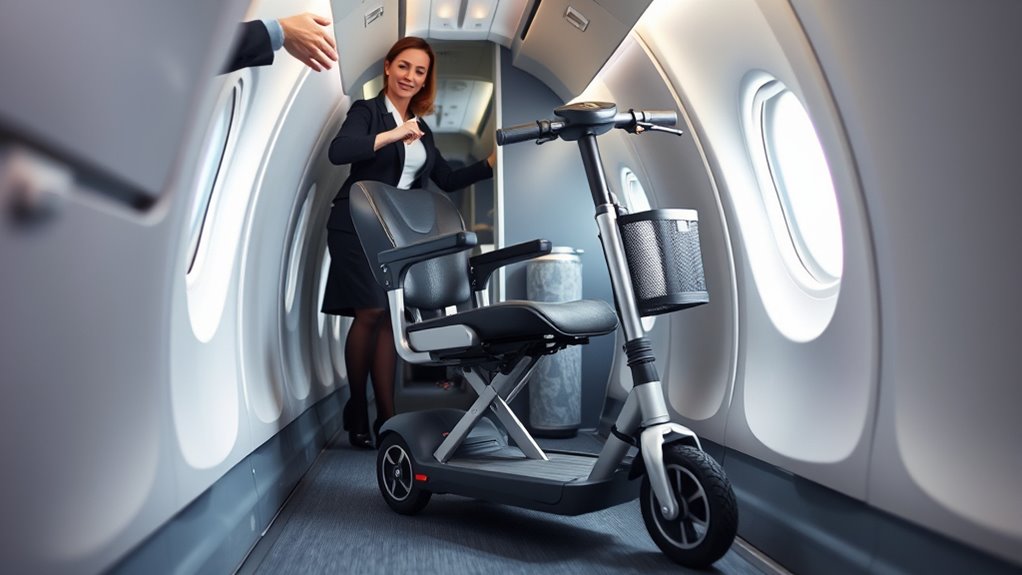
Not all mobility scooters are suitable for air travel, so it’s important to know which types airlines typically permit. Generally, airlines allow portable mobility scooter types that are lightweight and collapsible, making them easier to store in the aircraft’s storage compartments. These scooters usually fall into the category of travel or foldable scooters, which can be disassembled into smaller parts. Scooter size considerations are key; most airlines have maximum size and weight limits for mobility scooters, often around 30 inches in width and 50 pounds in weight. Larger, heavy-duty scooters or those with non-collapsible frames are usually not allowed onboard due to space and safety restrictions. Always check your airline’s specific policies before booking your flight. Additionally, understanding the different types of scooters can help ensure you select a model that complies with airline regulations. Being aware of airline policies on mobility scooters can streamline your travel preparations and prevent last-minute surprises. Furthermore, verifying battery restrictions is crucial, as many airlines have specific rules regarding lithium-ion batteries used in mobility devices.
Preparing Your Scooter for the Flight
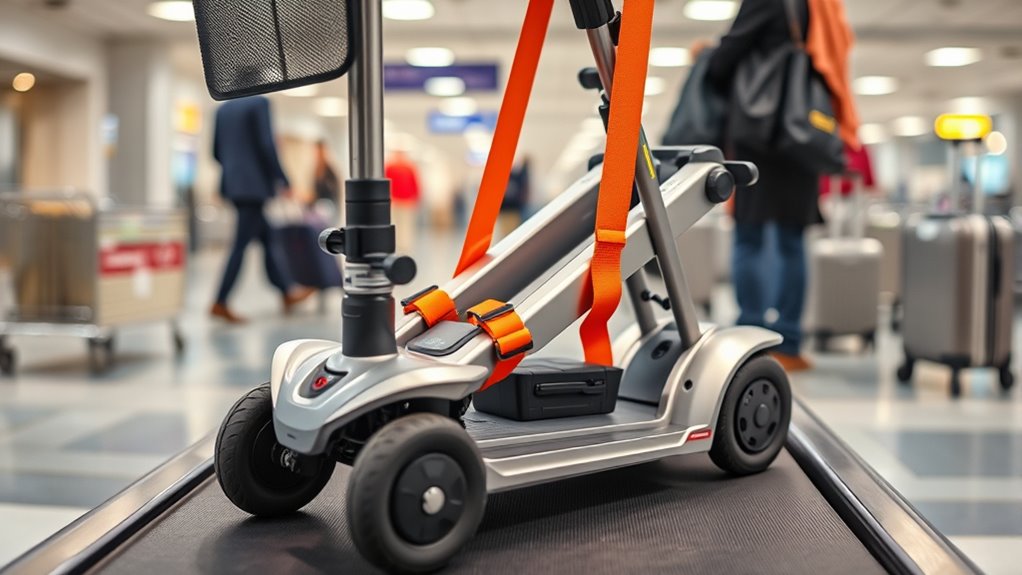
Before your flight, make sure to prepare your mobility scooter to guarantee a smooth travel experience. Check your scooter’s battery compatibility with airline regulations, ensuring it meets safety standards. Remove any loose or fragile parts and secure all moving components through proper scooter maintenance, such as tightening screws or inspecting tires. Clean the scooter thoroughly to prevent dirt or debris from causing issues during handling. If your scooter has a foldable design, fold it securely and store accessories properly. Document any maintenance performed and have your manual handy in case airport staff need details. These steps help avoid delays or damage, making your journey easier and more comfortable. Proper preparation ensures your scooter remains in top condition for the flight and is ready for your arrival. Additionally, understanding safety standards for batteries and equipment can help prevent complications during airport security checks. Being aware of battery handling procedures is essential, as batteries are a common point of concern during air travel.
Battery Regulations and Safety Guidelines
When flying with a mobility scooter, you need to follow specific battery regulations to make certain safety. Make sure your lithium batteries stay within the approved limits and are properly packaged to prevent damage. Additionally, conducting a safety inspection before your flight helps avoid potential hazards during travel. Being aware of net worth and endorsements can also help you better understand the importance of adhering to safety standards. Proper handling and following airline guidelines ensure a smoother travel experience, especially when dealing with battery safety regulations. Understanding high-performance features like high energy density and thermal management can further enhance safety compliance during air travel. Regularly reviewing air purifier maintenance dos and don’ts can also serve as a helpful reminder to maintain your equipment in optimal condition, ensuring safety during your journey. Furthermore, knowing the appropriate packaging requirements for batteries is essential to prevent accidents during transit.
Lithium Battery Limits
Liability concerns and safety risks have led airlines and regulatory agencies to impose strict limits on lithium batteries carried on airplanes. To guarantee battery safety, airlines restrict the size, quantity, and type of lithium batteries you can bring. Here are the key points to remember:
- Batteries must typically be under 100Wh for carry-on, with some allowances up to 160Wh.
- Spare batteries should be carried in your hand luggage, not checked baggage.
- Batteries over the limit often require airline approval before flying.
- Always keep batteries in their original packaging or protective cases to prevent short circuits.
- Proper management of lithium batteries is essential to battery safety and avoiding potential hazards during travel. Ensuring correct handling aligns with filtering and pump protection practices to maintain safe equipment operation. Additionally, staying informed about airline regulations can help prevent delays or issues at the airport. Being aware of these regulations helps mitigate fire hazards associated with lithium batteries. Furthermore, understanding the classification of batteries can assist travelers in complying with airline policies and ensuring safe transport.
Proper Battery Packaging
Proper battery packaging is essential to prevent accidents during air travel. Ensuring your batteries meet packaging requirements helps maintain battery safety and reduces the risk of short circuits or fires. Follow airline regulations and international standards, such as using sturdy, non-conductive materials to protect terminals and prevent accidental activation. Always disconnect batteries from your mobility scooter if possible, and store them in insulated, fire-resistant containers. Label the packaging clearly to indicate the presence of lithium or other hazardous batteries, and avoid using damaged or compromised batteries. Additionally, understanding safe handling practices is crucial for preventing mishaps during transport. Proper packaging can also involve appropriate storage techniques to avoid damage during transit. Using timeless design principles in packaging can help ensure that batteries are protected throughout their journey. By adhering to proper packaging requirements, you minimize safety hazards and ensure a smoother check-in process. Remember, responsible packaging is key to safeguarding yourself, airline staff, and fellow passengers.
Safety Inspection Procedures
Before boarding, it’s important to perform thorough safety inspection procedures to guarantee your mobility scooter’s batteries comply with regulations. This helps ensure proper mobility device maintenance and protects your insurance coverage. Here are key steps:
- Check that batteries are securely fastened and properly insulated.
- Verify batteries are in good condition, with no leaks or corrosion.
- Confirm the battery type matches airline regulations, typically lithium-ion.
- Ensure your mobility device is fully charged and functioning correctly.
- Familiarize yourself with thermal behavior considerations to prevent overheating during transit. Additionally, understanding battery safety standards can help you better prepare for compliance and safe handling.
Following these steps minimizes safety risks and prevents delays. Always review airline-specific guidelines for battery safety and packaging. Proper safety inspections safeguard your mobility device, safeguard your insurance coverage, and ensure smooth travel. Taking these precautions demonstrates responsible mobility device maintenance and enhances your travel experience.
Booking Assistance and Special Requests

When booking a flight with a mobility scooter, it’s important to notify the airline in advance to receive the assistance you need. Contact airline customer service during your airline ticketing process to specify your mobility requirements and any special requests. This helps ensure proper handling and seating arrangements, making your travel smoother. You should also inquire about available assistance at airports, such as wheelchair support or boarding help. Additionally, review your travel insurance to confirm it covers mobility aids and related services. Providing detailed information upfront allows the airline to prepare accordingly, reducing stress on travel day. Always confirm your requests a few days before departure to avoid last-minute surprises and ensure your mobility scooter and assistance needs are fully accommodated.
Packing and Disassembling Your Scooter
Disassembling your mobility scooter correctly is essential for safe and efficient transport on the airplane. Proper packing minimizes damage and guarantees compliance with airline policies. First, remove the battery and store it separately, as this is vital for scooter maintenance and safety. Second, fold or detach any removable parts, like the seat and wheels, to reduce size and prevent damage. Third, secure all loose components with protective padding or bubble wrap. Fourth, pack everything in a sturdy, labeled case designed for travel. Remember to check your travel insurance coverage; some policies require disassembly or specific packing methods for scooter transport. Following these steps makes flying with your scooter smoother and protects your investment during transit.
Navigating Airport Security With a Scooter
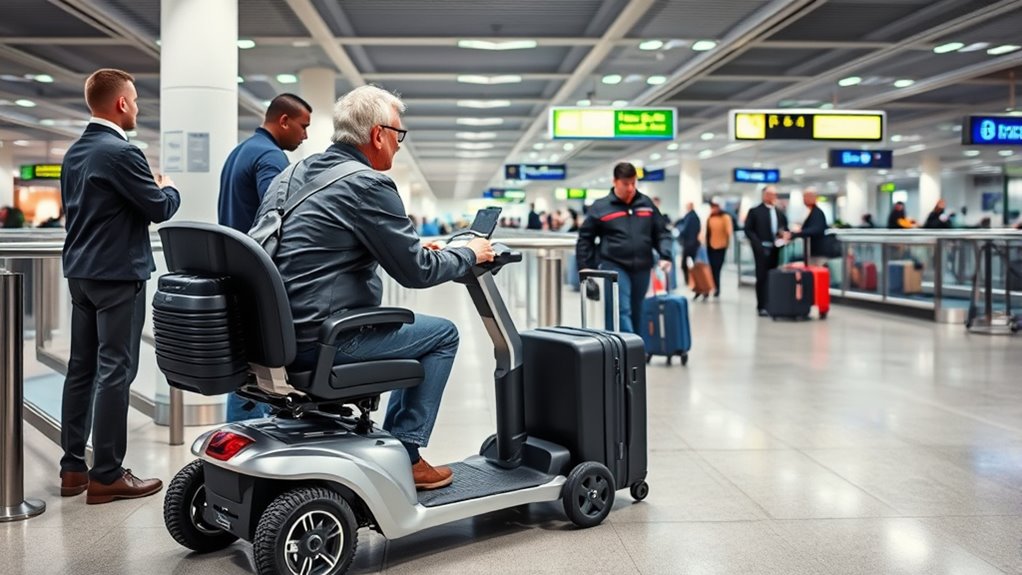
When you go through airport security with your scooter, TSA screening procedures are straightforward but require some preparation. You’ll need to understand battery restrictions and safety rules to avoid delays. Keep handy handling and storage tips to guarantee a smooth experience through security checkpoints.
TSA Screening Procedures
Traveling through airport security with a mobility scooter requires some preparation to guarantee a smooth process. TSA screening procedures are straightforward if you follow a few key steps:
- Inform TSA officers about your mobility device early, so they can assist with screening.
- Remove personal items from your airline baggage to keep your mobility device accessible.
- Be prepared to have your mobility device undergo a manual inspection or screening scan.
- Keep your mobility device’s documentation handy, showing it’s a legally approved mobility device.
Battery Restrictions and Safety
Because batteries in mobility scooters pose safety concerns, airports and airlines enforce strict restrictions on their size, type, and quantity. You must confirm your battery complies with airline restrictions, often requiring a lithium-ion battery with specific capacity limits. Before traveling, check if your scooter’s battery needs to be removed or if it can remain installed. If removal is necessary, follow proper battery disposal procedures, as damaged or improperly stored batteries can be hazardous. Always carry spare batteries in your carry-on luggage, not checked baggage, to facilitate security screening. Be prepared for security personnel to inspect and verify the battery’s safety features. Understanding these restrictions helps prevent delays and ensures a safe, smooth journey through airport security.
Handling and Storage Tips
Handling and storing your mobility scooter properly is key to a smooth security screening process. To guarantee easy passage through airport security, follow these tips:
- Prepare your scooter by reviewing your insurance coverage and confirming any required documentation.
- Perform scooter maintenance before travel—check tires, brakes, and battery connections to prevent issues.
- Disassemble or fold your scooter if possible, making it easier to transport and store in the security area.
- Keep accessories organized—remove personal items and secure loose parts to avoid delays.
Tips for a Comfortable and Stress-Free Journey
To guarantee a comfortable and stress-free journey with your mobility scooter on a plane, planning ahead is essential. Confirm your scooter is well-maintained to prevent any issues during travel. Check tire pressure, battery health, and brakes beforehand. Additionally, consider purchasing travel insurance that covers scooter-related damages or theft. When packing, use secure straps and protective covers to safeguard your scooter. Communicate with your airline about specific requirements and assistance options. Remember to arrive early for smoother check-in and boarding. Here’s a quick guide:
| Tip | Details |
|---|---|
| Scooter Maintenance | Perform a pre-trip check to avoid breakdowns |
| Travel Insurance | Protect against damages or loss |
| Early Arrival | Reduce stress and ensure proper handling |
| Communicate with Airline | Confirm scooter policies and assistance |
Recovering Your Scooter After Arrival

When you arrive, you’ll need to quickly locate your scooter in the storage area. Check that it’s been stored properly and is free of damage. Finally, test your device to make sure it’s functioning correctly before heading out.
Handling Scooter Storage
After your flight lands, retrieving your scooter from the storage area is usually straightforward, but knowing what to expect can make the process smoother. Be prepared to check for any possible damage and verify your scooter is functioning properly. Here’s what you should do:
- Inspect your scooter for any visible damage and perform quick scooter maintenance if needed.
- Gather your travel accessories, like chargers or additional batteries, to ensure everything is accounted for.
- Remove any stored items or loose parts that may have shifted during transit.
- Confirm the battery is still charged or plan for recharging before use.
Storing your scooter carefully and checking it afterward helps maintain its longevity and keeps your travels hassle-free.
Ensuring Device Functionality
Once your flight has landed and you’ve retrieved your scooter from storage, it’s essential to verify that it functions properly before heading out. Check the battery level and ensure the device maintenance is intact, especially after transportation. Turn on the scooter and test its controls, like steering, acceleration, and brakes, to confirm smooth operation. Inspect for any visible damage or loose parts that might have occurred during the flight. Confirm that the tires are properly inflated and that the charger is accessible if needed. Making sure your mobility assistance device is fully operational helps you avoid unnecessary delays or issues once you’re at your destination. Taking a few moments to verify the scooter’s functionality guarantees safe and reliable mobility assistance throughout your trip.
Additional Resources and Support for Travelers
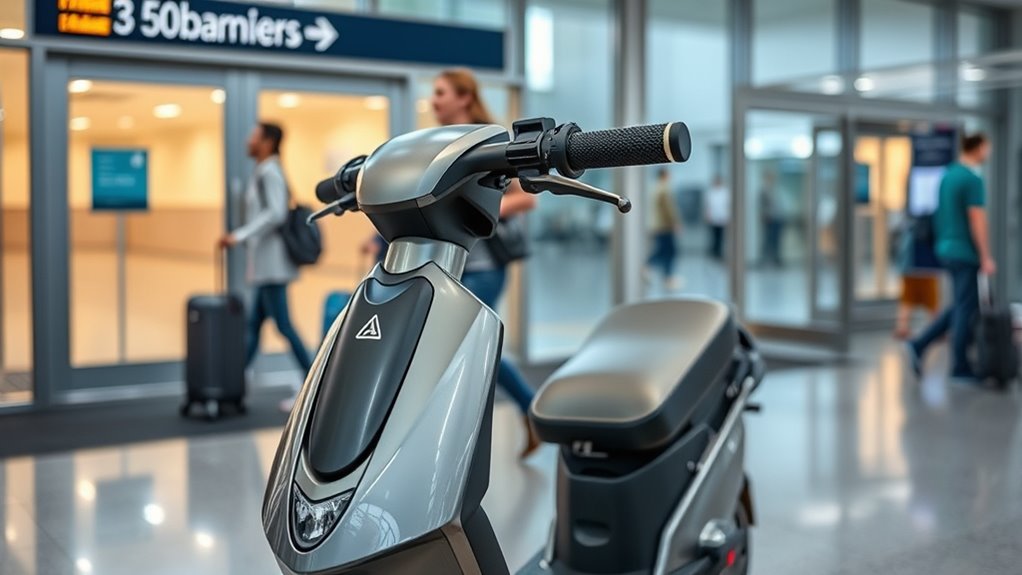
Managing the process of traveling with a mobility scooter can be complex, but there are many resources available to help you along the way. Accessible travel resources can simplify planning and guarantee a smoother journey. To get started, consider these options:
Traveling with a mobility scooter can be challenging, but accessible resources make it easier and stress-free.
- Contact your airline early to discuss policies and assistance options.
- Research travel insurance that covers mobility devices and related issues.
- Use online forums and support groups for tips and shared experiences.
- Visit organizations specializing in accessible travel for guides and advocacy.
These resources can provide vital support, helping you navigate regulations and guarantee your device is protected. By leveraging accessible travel resources and appropriate insurance, you’ll gain confidence and peace of mind for your trip.
Frequently Asked Questions
Can I Rent a Mobility Scooter at My Destination Airport?
Yes, you can rent a mobility scooter at your destination airport. Many airports offer specialized airport services that include mobility equipment rentals, making it easier for travelers with mobility needs. Before your trip, check the airport’s website or contact their customer service to confirm availability and reserve in advance. This way, you’ll have the mobility equipment you need upon arrival, ensuring a smooth and comfortable journey.
Are There Specific Insurance Requirements for Traveling With a Scooter?
Think of your scooter as a trusted ship steering unfamiliar waters. You’ll need specific insurance coverage to sail smoothly, ensuring liability protection if accidents happen. Many airlines and destinations require proof of insurance that covers damage or theft during travel. Check your policy or buy supplemental coverage if needed. This way, you protect yourself financially and keep your journey worry-free, just like a captain safeguarding their vessel.
How Early Should I Arrive for Scooter Check-In at the Airport?
You should arrive at least 2 hours before your flight if you’re traveling with a mobility scooter. This gives you enough time to check airline policies and confirm your scooter’s dimensions meet their requirements. Airlines often have specific procedures for scooter check-in, so arriving early guarantees smooth processing and avoids last-minute stress. Always double-check with your airline ahead of time to ensure you’re prepared for a hassle-free experience.
Can I Use My Own Scooter on Different Airlines During the Trip?
Your personal scooter is like a trusty sidekick, but airline compatibility varies. You can often use your own scooter on different airlines, but check each airline’s personal scooter policies beforehand. Some airlines may require you to fold or disassemble it, while others might have restrictions. Always review the airline’s policies and confirm arrangements in advance to guarantee smooth travels with your scooter across multiple carriers.
What Should I Do if My Scooter Gets Damaged During Transit?
If your scooter gets damaged during transit, you should immediately report the damage to the airline’s baggage service. Conduct a damage assessment to identify the extent of the harm. Then, follow the claim process outlined by the airline, providing all necessary documentation like photos and receipts. Promptly initiating the claim process helps make certain you receive compensation or repairs, making it easier to get your mobility restored quickly.
Conclusion
Traveling with your mobility scooter is like guiding a trusted companion through uncharted waters. With the right knowledge and preparation, you’ll navigate airport rules and security hurdles smoothly, turning potential storms into calm seas. Remember, your scooter isn’t just a device—it’s your trusty vessel to independence. So, set sail confidently, knowing that with each journey, you’re charting a course toward freedom and new adventures. Safe travels, and enjoy every mile ahead.