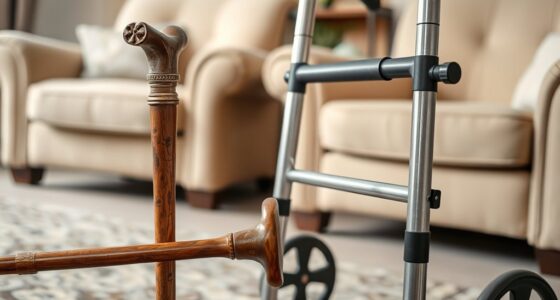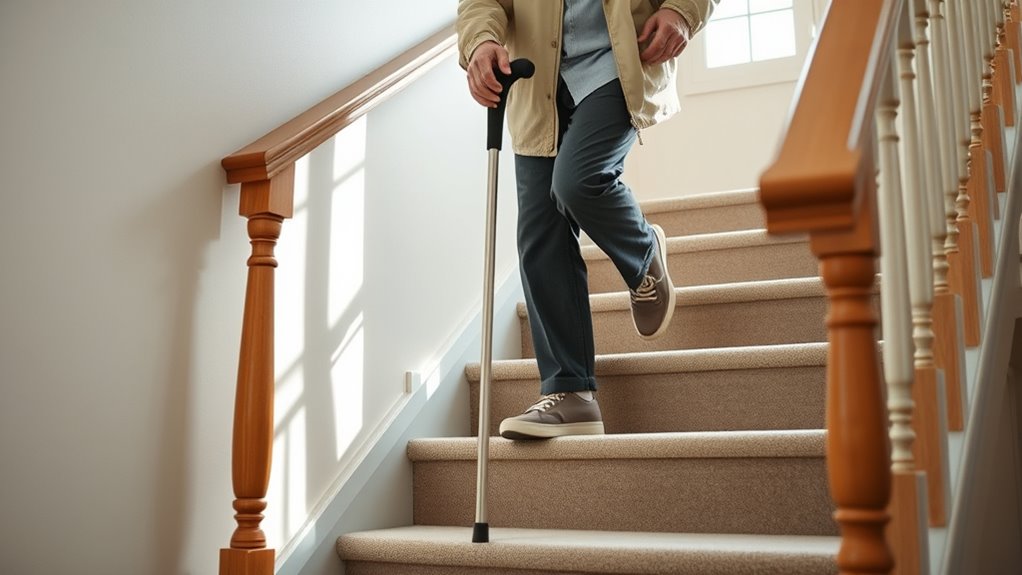

When using stairs with a cane or walker, start by checking your equipment and ensuring it’s in good condition. Hold the cane in your opposite hand and keep your walker close, supporting your weight as you step carefully one at a time. Use the handrail if available, lean slightly forward, and move slowly for stability. Following these steps helps stay safe; if you want detailed tips, keep exploring how to master stair navigation confidently.
Key Takeaways
- Verify your cane or walker is in good condition and properly positioned before starting.
- Hold the cane in the hand opposite the stairs and place it securely on the step before shifting weight.
- Use a walker close to your body, supporting your weight and supporting your ascent or descent slowly.
- When descending, lean slightly forward, place support device on the lower step before moving, and proceed carefully.
- Maintain a steady, controlled pace, focus on balance, and avoid rushing or sudden movements for safety.
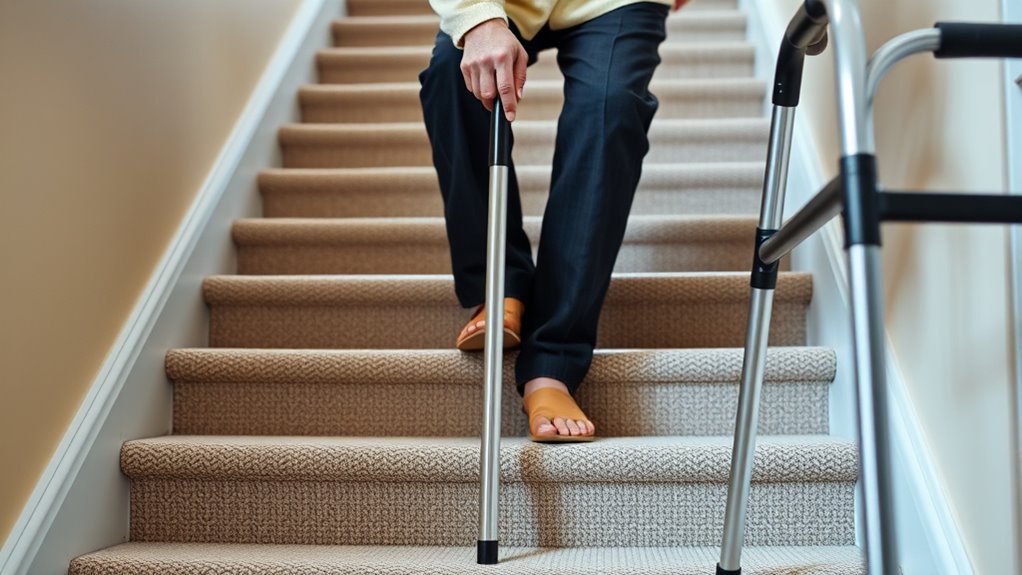
Climbing stairs while using a cane or walker can be challenging, but with proper techniques and caution, you can do it safely. The key is to focus on maintaining your balance and using effective stair grip strategies to prevent falls. Before starting, verify your cane or walker is in good condition and positioned correctly. When approaching the stairs, stand tall, and take a moment to assess the height and steepness. This helps you prepare mentally and physically for the task ahead.
Ensure your cane or walker is in good condition and positioned correctly before climbing stairs safely.
As you begin ascending, use your hand on the handrail if available. If you don’t have a handrail, rely on your cane or walker to support your movement. When using a cane, hold it firmly in the hand opposite the stairs, allowing your stronger side to support your weight. Place the cane securely on the step before shifting your weight onto it, ensuring you have a stable grip. When climbing, focus on balance techniques such as keeping your core engaged and your gaze forward. Avoid leaning too far forward or backward, as this can compromise stability. Instead, keep your body upright, and move slowly and deliberately, one step at a time.
With a walker, position it close to your body, making sure all four points are firmly on the ground before shifting your weight. Use the walker to help lift your body onto each step, placing your weight through the device rather than just your legs. When gripping the stairs, if you’re using the handrail, grasp it firmly with your free hand for added stability. If not, rely on the walker or cane, and avoid rushing. Moving slowly allows you to better control your balance and reduces the risk of slipping. Additionally, practicing stair safety skills can enhance your confidence and ability when navigating stairs.
Descending stairs requires extra caution. Use your handrail or, if unavailable, your cane or walker for support. When descending, keep your body slightly leaned forward, which helps keep your center of gravity over your legs. Place your cane or walker securely on the step below before shifting your weight onto it. Be mindful of your footing, ensuring each step is firm before moving to the next. Focus on maintaining consistent, controlled movements, and avoid rushing. If at any point you feel unsteady, pause and regain your balance before proceeding.
Frequently Asked Questions
Can I Use a Stairlift Instead of Stairs?
Yes, you can use a stairlift instead of stairs. Stairlift benefits include increased safety and independence, especially if stairs become challenging. Before installation, consider factors like stairway type, space availability, and power sources. A professional assessment can ensure proper installation and fit. Using a stairlift can help you maintain your mobility and avoid falls, making daily movement safer and more comfortable.
What Should I Do if I Feel Unsteady on Stairs?
If you feel unsteady on stairs, think of your balance as a fragile vase. Stop immediately and hold onto your cane or walker firmly. Perform gentle balance exercises daily to boost fall prevention. Take slow, deliberate steps and use handrails for extra support. If unsure, consider using a stairlift or asking someone for help. Your safety depends on staying cautious and strengthening your stability.
How Do I Choose the Right Type of Cane or Walker for Stairs?
You should choose a cane with the right height—your elbow should bend at about a 20-30 degree angle when holding it. For walkers, prioritize stability; look for one with a wide, sturdy base and non-slip tips. Test different options to guarantee they feel comfortable and secure. Properly fitting your cane or walker helps you confidently navigate stairs and reduces the risk of falls.
Are There Specific Exercises to Improve Stair Safety?
You can improve stair safety with balance training and strength exercises. Practice standing on one leg or using a balance board to boost stability. Incorporate leg lifts and squats to strengthen your muscles, making stair navigation easier. Regularly doing these exercises helps improve coordination, reduces fall risk, and builds confidence, so you can confidently climb and descend stairs with your cane or walker.
Should I Avoid Stairs Altogether if I Use a Cane or Walker?
Thinking about stairs with your cane or walker can feel like walking a tightrope over a canyon. You shouldn’t necessarily avoid stairs, but prioritize stair safety and assess your confidence. Use mobility aids properly, take it slow, and hold onto the handrail. If stairs seem risky, consider alternatives like ramps or elevators. Your safety is the priority, so listen to your body and don’t push beyond your comfort.
Conclusion
Walking stairs with a cane or walker might feel like climbing a steep hill, but with the right techniques, you can do it safely and confidently. Always take your time, keep your device close, and stay focused on each step. Remember, practice makes perfect—think of it as building a sturdy bridge over a challenging gap. With patience and caution, you’ll find yourself moving smoothly and securely, just like a steady stream flowing down a gentle slope.