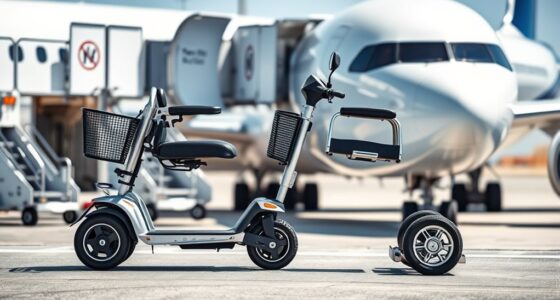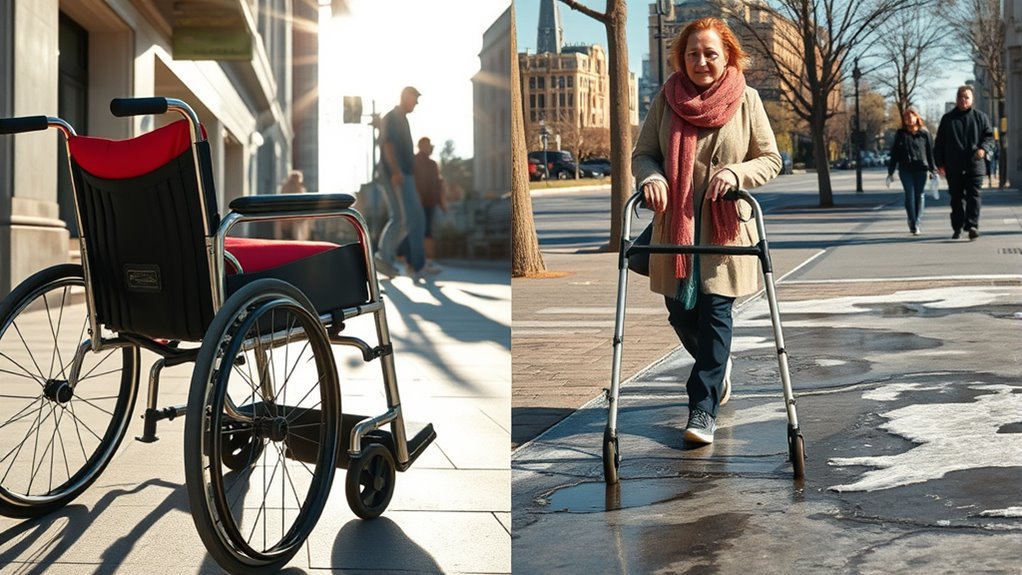

Extreme heat in summer can make metal parts on your mobility aids hot, increasing the risk of burns or discomfort. Hot pavement might also become slippery or uneven, posing stability challenges. During cold winters, ice and snow can cause slips, while metal components may stiffen, affecting performance. To stay safe and comfortable, you’ll need to adapt by protecting your device and planning your outings wisely. Discover more tips to stay safe across seasons as you continue.
Key Takeaways
- Extreme heat can cause metal parts on mobility aids to become uncomfortably hot, risking burns and discomfort.
- Cold temperatures may make components stiff or less responsive, affecting device performance.
- Snow and ice create slipping hazards and can block pathways, increasing fall risk.
- Heat and sun exposure can lead to dehydration and heat-related health issues during outdoor use.
- Proper maintenance and weather-resistant accessories help protect mobility aids from weather-related damage.

Weather conditions can profoundly impact your ability to move safely and comfortably, especially if you rely on mobility aids. Hot summers and cold winters present unique climate challenges that demand seasonal adaptations to keep you safe and independent. When temperatures soar, the heat can make using your mobility device more difficult. Metal parts on wheelchairs or walkers can become uncomfortably hot to touch, increasing the risk of burns or discomfort. Additionally, heat can cause surfaces like pavement and sidewalks to become slippery or uneven, which can compromise your stability. During these times, it’s imperative to stay hydrated, wear lightweight clothing, and plan your outings during cooler parts of the day, such as early mornings or late evenings. Using sun protection, like hats and sunscreen, also becomes an indispensable part of your seasonal adaptations to combat the heat effectively. Being aware of the air quality during hot weather can also help you decide the best times to be outdoors, especially if you have respiratory sensitivities.
Cold winters pose their own set of climate challenges. Freezing temperatures can affect the functionality of your mobility aids. Ice and snow create hazardous conditions, making it harder to navigate safely. Snow buildup can block pathways, while ice increases the risk of slipping and falling. Metal components on mobility devices may become stiff or less responsive in colder weather, reducing maneuverability. To adapt, you might need to equip your wheelchair or walker with winter tires or ice grips to improve traction. Dressing appropriately in layered, insulated clothing and wearing waterproof shoes helps you stay warm and dry. Covering or protecting parts of your mobility aids from snow and moisture can prevent corrosion or damage. Moreover, planning routes that are cleared of snow or ice becomes a critical seasonal adaptation to maintain safe mobility during winter months. Regularly inspecting your devices for weather-related wear and tear can help maintain optimal performance.
Both extremes in weather demand proactive measures to guarantee your safety and comfort. For hot summers, it’s about managing exposure to heat and sun, while for cold winters, it’s about preventing slips and maintaining device functionality. Regularly checking your mobility aids for damage caused by weather conditions and adjusting your routines accordingly can make a significant difference. Incorporating weather-resistant accessories or protective covers for your devices can also extend their lifespan and reliability. Understanding how climate challenges affect your mobility allows you to make informed decisions and take appropriate seasonal adaptations, ensuring you stay as independent and safe as possible regardless of the weather outside.
mobility aid weather protection accessories
As an affiliate, we earn on qualifying purchases.
As an affiliate, we earn on qualifying purchases.
Frequently Asked Questions
How Do Humidity Levels Impact Mobility Aid Performance?
Humidity effects can considerably impact your mobility aid performance by increasing moisture impact on its components. When humidity levels are high, moisture can accumulate in parts like wheels or joints, causing rust or slipping. This makes your aid less stable and harder to maneuver. To prevent issues, regularly check and dry your mobility aid, especially in humid conditions, ensuring it stays in ideal condition and functions smoothly when you need it most.
Are There Specific Materials Better Suited for Hot or Cold Weather?
You should choose weather-resistant materials for hot and cold conditions, as they safeguard against moisture and temperature changes. For hot weather, thermal comfort fabrics that wick away sweat and stay cool are ideal. In cold weather, insulating materials that retain heat and block wind keep you warm. By selecting the right materials designed for specific climates, you ensure better comfort, safety, and durability for your mobility aids in any weather.
How Can Users Prevent Mobility Aid Corrosion in Winter?
To prevent corrosion during winter, you should regularly inspect your mobility aid for signs of rust or damage. Clean it with a damp cloth to remove salt and grime, then dry thoroughly. Apply corrosion prevention sprays or lubricants on metal parts to protect against moisture. For winter maintenance, store your aid in a dry place when not in use, and consider using covers to shield it from snow and ice, ensuring longevity and safe use.
What Adjustments Are Recommended for Mobility Aids During Heatwaves?
During heatwaves, you should adjust your mobility aid by keeping it shaded and protected from direct sunlight to prevent damage. Use hydration strategies to stay hydrated and avoid overheating. Apply sun protection, like sunscreen and UV-resistant covers, to safeguard your skin and equipment. These steps make sure your mobility aid remains functional and safe, while also helping you stay comfortable and protected from the intense heat.
Do Weather Conditions Affect Battery Life in Electric Mobility Devices?
Weather conditions do affect the battery life of your electric mobility device. Hot and cold temperatures can reduce battery efficiency, leading to quicker power drain. During extreme heat, batteries may overheat and lose capacity, while cold weather slows chemical reactions, decreasing power preservation. To maximize battery life, keep your device stored in moderate temperatures and avoid exposing it to extreme weather, ensuring your mobility aid stays reliable whenever you need it.
As an affiliate, we earn on qualifying purchases.
Conclusion
Weather influences your mobility aids, shaping how you move through hot summers and cold winters. It challenges your independence, tests your resilience, and demands your adaptability. By understanding these effects, you can prepare better, stay safer, and maintain your confidence year-round. Embrace the seasons, respect the challenges, and empower yourself to navigate each day with strength and awareness. After all, your mobility is a journey—weather or not—so stay proactive, stay resilient, and keep moving forward.
As an affiliate, we earn on qualifying purchases.
sun protection for mobility devices
As an affiliate, we earn on qualifying purchases.
As an affiliate, we earn on qualifying purchases.