A gait belt is a safety device you use to support and guide someone during mobility. You should apply one when assisting a patient with walking, transfers, or if they have balance issues or a history of falls. Proper use helps prevent falls, ensures safety, and boosts confidence. It provides a secure grip point for you while helping the person move more comfortably. Want to discover how to use it effectively? Continue to find out more.
Key Takeaways
- A gait belt is a safety device worn around a patient’s waist to assist with mobility and prevent falls.
- Caregivers should use a gait belt when helping patients with balance issues, weakness, or recovering from injury.
- It is ideal during transfers, walking assistance, or when moving patients in healthcare settings.
- Proper application and communication ensure patient safety and comfort during use.
- Gait belts are essential tools for fall prevention and safe mobility support in caregiving.
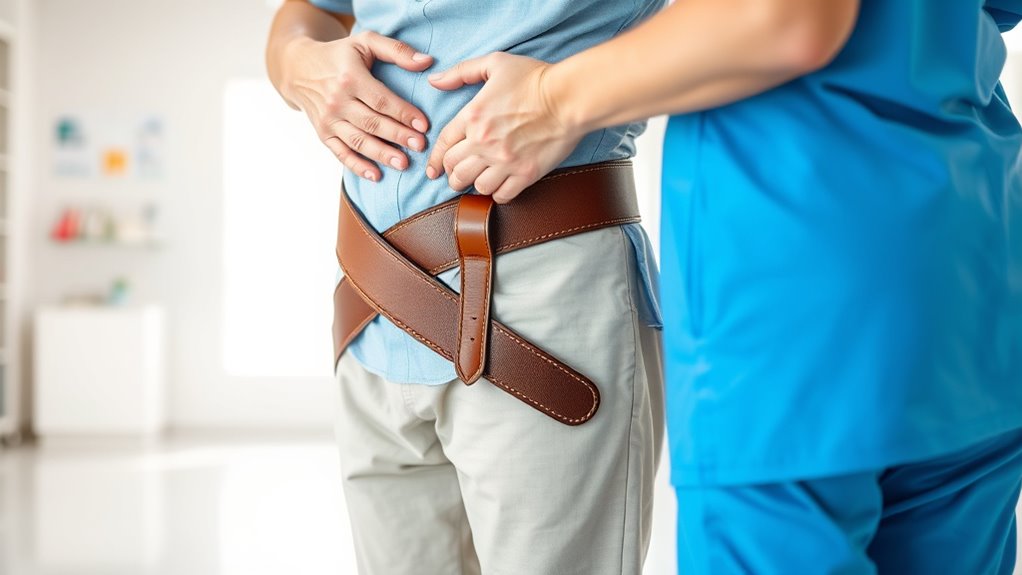
Have you ever wondered why gait belts are essential for patient safety during mobility assistance? Gait belts are simple yet effective tools that help caregivers support individuals who need help walking or moving from one place to another. They provide a secure grip point, allowing you to stabilize your patient and reduce the risk of falls. When used correctly, gait belts are a vital part of fall prevention strategies, ensuring that your patient remains steady and confident as they move. They’re particularly useful when assisting patients with balance issues, weakness, or recovering from injury or surgery. By maintaining control, you help your patient avoid sudden slips or falls, which can lead to serious injuries or setbacks in their recovery. Proper gait belt placement is crucial to maximize safety and comfort for your patient. Knowing when to use a gait belt is crucial. You should always consider employing one whenever your patient requires assistance with mobility, especially if they have a history of falls or limited strength. It’s especially important during transfers from bed to wheelchair, wheelchair to toilet, or when helping someone walk down a hallway. Using a gait belt offers a firm point of contact, enabling you to guide and support the patient smoothly. This not only enhances safety but also boosts the patient’s confidence, making the process less intimidating for them. Remember, the goal is to promote independence while minimizing risk, and a gait belt is a simple yet powerful tool to achieve that balance. Proper technique and attentive communication can make a significant difference in ensuring safe and effective assistance. Ultimately, understanding when and how to use a gait belt is fundamental to providing safe, effective care. It’s a straightforward tool that plays a significant role in fall prevention, helping your patient move confidently and securely. Your attentive approach and proper technique can make all the difference in preventing injuries and encouraging independence during mobility tasks.
Frequently Asked Questions
Can Gait Belts Be Used for Patients With Osteoporosis?
You should avoid using gait belts with patients who have osteoporosis unless your healthcare provider advises otherwise. Osteoporosis precautions suggest that even gentle pulling can cause fractures, so alternatives like transfer belts or specialized lift equipment might be safer. Always check with medical professionals to determine appropriate mobility aids, ensuring you don’t compromise the patient’s safety while assisting them. Your goal is to support without risking injury.
Are Gait Belts Suitable for Children or Only Adults?
You might worry gait belts aren’t suitable for children, but they’re actually used for pediatric mobility and child safety. Gait belts can help caregivers support kids during transfers or walking practice, ensuring stability and reducing injury risks. When properly fitted and used with care, gait belts are a helpful tool for promoting independence and safety in children, just as they are for adults.
How Do You Clean and Disinfect Gait Belts Properly?
You should clean and disinfect gait belts after each use to guarantee safety. Follow proper cleaning protocols by washing the belt with warm, soapy water first, then disinfect using appropriate methods like wiping with a solution containing at least 70% alcohol or hospital-grade disinfectants. Make sure to let the belt air dry completely before storing it. This process helps prevent the spread of germs and maintains hygiene.
What Are Alternative Assistive Devices if Gait Belts Aren’T Appropriate?
If a gait belt isn’t suitable, you might consider other assistive technology to support patient mobility. Options like transfer belts with padded handles, sliding sheets, or gait trainers can provide safer, more comfortable assistance. These devices help maintain stability and reduce fall risk, ensuring you can help your patient move confidently. Choosing the right assistive device depends on individual needs, but always prioritize safety and comfort in your approach.
Can Gait Belts Be Used During Transfers to Wheelchairs?
Yes, you can use gait belts during transfers to wheelchairs to enhance transfer safety and guarantee patient stability. Secure the belt snugly around the patient’s waist, then use it to support and guide them as you move them carefully. This reduces the risk of falls or injuries, making transfers safer for both you and the patient. Always communicate clearly and assess the patient’s comfort before and during the transfer.
Conclusion
A gait belt isn’t just a tool—it’s your safety net in providing confident, secure support. When used correctly, it transforms uncertain moments into steady steps forward, ensuring both you and your loved ones stay safe. Remember, in the dance of caregiving, a gait belt is the steady hand that guides with trust and care. So, don’t wait until it’s too late—embrace this simple device and step into each day with confidence.