
TL;DR
A Korean study presented at the American Heart Association meeting found that an AI model using smartwatch ECGs could distinguish reduced left ventricular function in a clinical study, but results varied between Apple and Samsung watches and across repeat readings. Researchers say the findings do not yet establish smartwatch screening as reliable for real-world use.
A Korean study presented at the American Heart Association annual meeting found that an AI model analyzing smartwatch ECGs produced inconsistent results when screening for reduced left ventricular ejection fraction, both between watch brands and across repeated home readings. The findings suggest the technology is not yet dependable enough to use as a stand-alone screening tool.

Give the gift of listening to someone you love
- Choose a 1-, 3-, 6- or 12-month membership
- They pick the audiobooks they love
- Easy to send by email
Researchers studied 2,211 patients at Incheon Sejong Hospital who had a clinical reason for echocardiography and recorded ECGs using both Apple and Samsung Galaxy watches. The team applied the same prespecified AI-model cutoff to each device. The study defined left ventricular systolic dysfunction (LVSD) as an ejection fraction of 40% or less, measured by echocardiography within 14 days of the ECG.
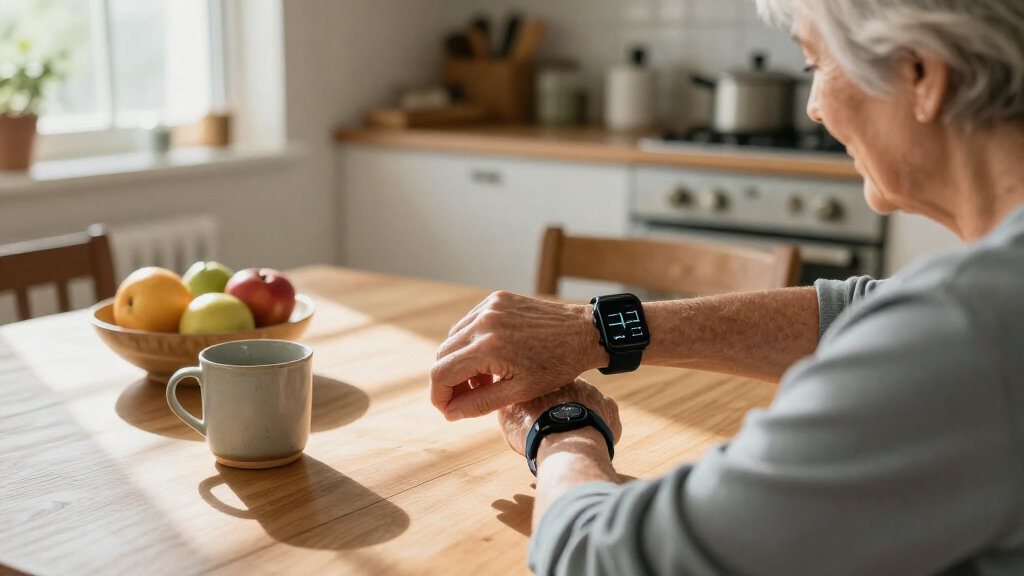
Overall discrimination was strong by the study’s area-under-the-curve measure: 0.907 for Apple Watch and 0.895 for Galaxy Watch. But at the shared cutoff, 9% of participants had conflicting results: 158 were classified as positive only by Apple Watch, while 42 were positive only by Galaxy Watch. Apple Watch scores also tended to be higher, according to presenting researcher Hak Seung Lee, MD.
A separate home-monitoring group included 146 patients who recorded at least two ECGs daily. In this smaller cohort, 49.3% had both positive and negative results during the same week using the same watch, a Galaxy device in most cases. Averaging readings over a week did not resolve the issue cleanly: stricter rules reduced false positives but also missed more cases of LVSD.
Why Conflicting Readings Matter
The results matter because smartwatch ECG screening could potentially help identify people with reduced heart function earlier, including people who have not yet been diagnosed. But inconsistent classifications can create problems in both directions: false positives may lead to extra testing and add pressure to healthcare services, while false negatives could provide unwarranted reassurance or delay assessment.
Jessica Golbus, MD, MS, of the University of Michigan, said health systems need to balance the need to identify people with LVSD against the burden of follow-up from false alarms. She also emphasized that screening only helps if people with concerning results can be connected to clinical care and treatments. The study did not show that smartwatch screening improves outcomes or that acting on its readings benefits patients.
Products Worth Considering

OMRON Complete 2-in-1 Upper Arm Blood Pressure Monitor with EKG
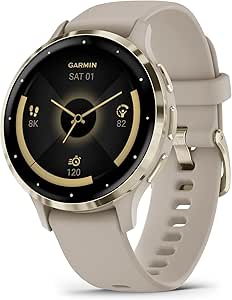
Garmin Venu 3S GPS Fitness Smartwatch, 41 mm, French Gray

Withings ScanWatch Light Hybrid Smartwatch – White
As an affiliate, we earn on qualifying purchases.
How the Watch Test Was Evaluated
Interest in smartwatch-based detection grew after a 2022 study reported good accuracy for an AI model using a smartwatch’s single-lead ECG to detect LVSD. The current study tested a model called AiTiALVSD-1L. According to Lee, it was pretrained on nearly 3 million unlabeled ECGs and then fine-tuned using about 360,000 clinical lead I ECGs.
The cutoff used in the study was selected in a separate Galaxy Watch tuning set to achieve 98% specificity, then applied to both watch brands. The main comparison group was not a general-population screening sample: 6.6% had known LVSD and 31% had known heart failure. In the home-reading group, 33.6% had LVSD and 55.5% had known heart failure. These details limit how directly the results can be applied to people without known heart disease.
“A single negative home recording is not reassuring on its own, and mixed results should prompt further evaluation.”
— Hak Seung Lee, MD, presenting researcher
Limits on Real-World Reliability
The study was conducted at one hospital, and the researchers did not test screening performance in asymptomatic people without heart failure. It is not yet clear whether the results would be similar in broader populations or across different ages, racial and ethnic groups, and ranges of ejection fraction. The reported study findings also do not establish which device-specific cutoffs or repeat-reading rules would be suitable for clinical use.
The results are about test performance, not proof that smartwatch screening changes diagnosis rates, treatment decisions, or health outcomes. The available report does not specify a timeline for further validation or describe a planned trial measuring clinical outcomes.
Further Validation Before Routine Use
Researchers will need to test the model in larger, more diverse groups and determine how performance varies by device and patient characteristics. Lee said the work needs device-specific cutoffs and further fine-tuning. Future studies also need to establish how clinicians should respond to a positive result, a negative result, or conflicting recordings.
Golbus said research should examine whether smartwatch findings connect patients to appropriate care and whether that pathway leads to better clinical outcomes. Until those questions are answered, the study supports further investigation rather than routine smartwatch screening for reduced ejection fraction.
Key Questions
Did the study show that smartwatches can reliably diagnose reduced ejection fraction?
No. The model showed good overall discrimination in the studied patients, but results differed between devices and repeated readings. The study did not establish smartwatch ECGs as a reliable stand-alone diagnostic test.
How often did the Apple and Samsung watch results disagree?
At the study’s shared cutoff, 9% of the 2,211 participants had discordant results: 158 were positive only on Apple Watch and 42 only on Galaxy Watch.
What did repeated home readings show?
Among 146 patients recording at least two ECGs per day, 49.3% had both positive and negative readings within the same week on the same watch.
Can one negative smartwatch reading rule out LVSD?
The study’s presenter, Hak Seung Lee, said a single negative home recording is not reassuring on its own. The study does not support using one reading to rule out reduced heart function.
What needs to happen before this approach is used routinely?
Researchers need to validate performance in broader patient groups, refine device-specific thresholds, and study whether screening results lead to appropriate care and better clinical outcomes.
Source: medpagetoday.com