
TL;DR
Yoga teacher Cheryl McColgan recommends tree pose, eagle pose and warrior three as single-leg exercises that can train balance and stability. She advises beginners to start with tree pose, use a fixed gaze and hold a wall or chair for support if needed.
Yoga teacher Cheryl McColgan recommends tree pose, eagle pose and warrior three for people looking to practice balance and stability. In guidance published by Fit&Well, she said the single-leg poses challenge the body’s position-sensing ability and strengthen muscles around the ankle, knee and hip; beginners can use a wall or chair for support.

Turn quiet afternoons into listening time
- Thousands of audiobooks, podcasts and originals
- Listen on your phone, tablet or Echo — also offline
- Cancel anytime
McColgan, founder of Heal, Nourish, Grow, describes proprioception as the body’s ability to sense its movements and position. She said yoga can train that sense while building muscular strength and endurance, particularly in poses that require balancing on one leg. Her recommendations are practical exercise guidance, not a claim that the poses prevent falls or guarantee improved balance for every person.
For tree pose, stand with weight on one foot and place the other foot against the standing leg’s ankle, calf or inner thigh. Do not press the foot against the knee. Hold the hands in prayer position or raise them overhead if comfortable; a wall or chair can provide support. McColgan suggests holding for three to 10 breaths, then changing sides.
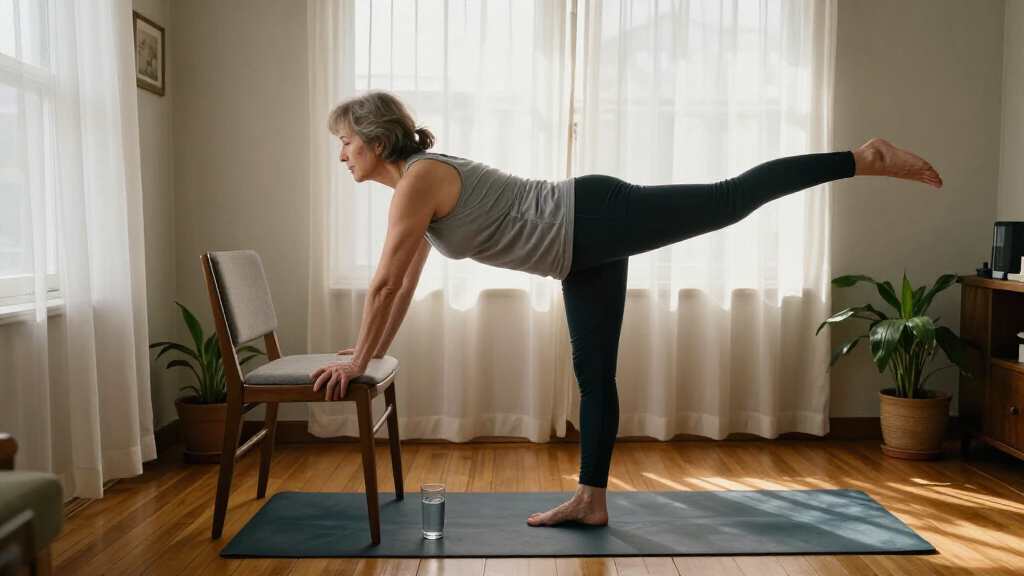
In eagle pose, bend both knees slightly, balance on one foot and cross the other thigh over it. If possible, hook the lifted foot behind the standing calf; if not, keep the toes on the floor. Cross the arms in front and bring the palms together if comfortable. The third option, warrior three, involves hinging forward from the hips while extending the other leg behind. Keep the standing knee slightly bent, and place the hands in prayer, alongside the torso or extended forward. The suggested hold for both poses is also three to 10 breaths on each side.
How the Poses Challenge Balance
The three poses give readers a graded set of balance challenges: tree pose offers a relatively simple starting position, while eagle pose adds a leg wrap and warrior three asks the practitioner to hinge forward as the other leg lifts. That progression can help people choose a version that matches their current ability, rather than treating every pose as an all-or-nothing test.
McColgan links the poses to work by the ankle, knee and hip muscles and to proprioception. These are explanations from the yoga teacher, not evidence in the supplied report that any one pose produces a particular health outcome. For readers, the usable takeaway is that balance practice can be adapted: focus on a stable visual point, keep a hand near support and reduce the pose to a manageable position when needed.
The advice also offers a simple entry point for people who do not feel ready for a full pose. McColgan suggests standing on one leg while brushing your teeth as a way to begin practicing balance. The report does not specify how often to do this or measure the amount of improvement, so it should be understood as a suggested practice, not a timed program or guaranteed result.
Products Worth Considering

Philips Sonicare ProtectiveClean 5300 Rechargeable Electric Toothbrush with 3 Brush Heads, Black

Bowflex SelectTech 840 Adjustable Kettlebell

Oral-B iO3 Rechargeable Electric Toothbrush with 3 Cleaning Modes, Pressure Sensor, 2 Brush Heads and Travel Case, White
As an affiliate, we earn on qualifying purchases.
A Beginner-to-Advanced Pose Sequence
Fit&Well’s report presents the poses in a progression recommended by McColgan: tree first, then eagle, then warrior three. The sequence moves from placing one foot against the standing leg to more complex leg positioning and a forward hinge. Readers do not have to use the fullest version of any pose; the report includes alternatives such as keeping the toes on the floor in eagle pose or holding a support.
For all three positions, McColgan recommends fixing the eyes on one point to help maintain steadiness. The source describes breath counts rather than seconds: each pose is held for three to 10 breaths before switching sides. It does not give a weekly schedule, a required number of repetitions or a clinical assessment of balance.
“One of my favorite things about yoga is that it trains proprioception—your body’s ability to sense its own movements and position—so it can definitely help with balance and stability.”
— Cheryl McColgan, yoga teacher and founder of Heal, Nourish, Grow
What the Guidance Does Not Establish
The Fit&Well report gives a yoga teacher’s recommendations but does not cite a study comparing these three poses with other balance exercises. It also provides no measured results, such as how much balance might change or how long practice would take. The extent of benefit for any individual is therefore not established by this source.
The guidance does not set out screening criteria, discuss injuries or medical conditions, or explain how to modify every pose for different mobility needs. It also does not claim that the poses prevent falls or replace professional advice. People who are unsure whether a movement is suitable for them can ask a qualified health or yoga professional for guidance.
How to Start Practicing Safely
McColgan’s suggested starting point is tree pose, followed by eagle and then warrior three as the practitioner is comfortable. Use a fixed gaze and keep a sturdy wall or chair within reach; take the foot placement or arm position that allows steady, controlled practice. The source recommends three to 10 breaths per side, but does not prescribe how often to repeat the sequence.
The next step for readers is to choose a supported version and change sides, rather than forcing a deeper pose. The report offers no formal training plan or follow-up evidence about outcomes, so any progress should be judged individually. If balance practice feels unsafe or a pose causes pain, stop and seek advice from a qualified professional.
Key Questions
Which yoga pose should a beginner try first?
Yoga teacher Cheryl McColgan recommends tree pose as the starting point, then suggests progressing to eagle and warrior three when comfortable. A wall or chair can provide support.
How long should each pose be held?
The report suggests holding each position for three to 10 breaths before switching sides. It does not give a specific number of repetitions or a weekly schedule.
What if I cannot do the full eagle pose?
In McColgan’s instructions, the lifted foot can remain on the floor if wrapping it behind the standing calf is not possible. The pose can also be practiced with support nearby.
Do these poses guarantee better balance or prevent falls?
No such guarantee is made in the report. McColgan says the poses can train proprioception and work muscles used for stability, but the source provides no measured outcomes or fall-prevention evidence.
Source: rss