The best portable AED defibrillator for most buyers in this lineup is the Philips HeartStart OnSite Ready-Pack M5066A-R01, which pairs an established device format with a ready-to-store kit. The OnSite Slim Carry Case is a better fit when compact storage matters, while the HeartStart Home model with Training Pads Cartridge suits households that want a dedicated practice option. The main tradeoffs are not simply device size: buyers also need to weigh included accessories, training needs, storage conditions, and ongoing readiness checks. Several listings share the OnSite platform, so package contents and intended setting may matter more than the product title. Read on for the full comparison and guidance on matching an AED setup to your location and users.

Give the gift of listening to someone you love
- Choose a 1-, 3-, 6- or 12-month membership
- They pick the audiobooks they love
- Easy to send by email
Complete the kit


Key Takeaways
- The Philips HeartStart OnSite Ready-Pack M5066A-R01 leads for general-purpose readiness because its package is framed as a ready-to-store kit, while buyers should still verify exactly which consumables and accessories are included.
- The OnSite Slim Carry Case and Standard Carry Case represent a practical storage tradeoff: compactness can help in tight spaces, while a roomier case may better suit a fixed workplace station or additional supplies.
- The HeartStart Home model’s Training Pads Cartridge gives it a distinct household-training angle, but training pads are not a substitute for the treatment pads needed for an emergency.
- Business and Value packages appear under similar OnSite product names, including a duplicate Business Package listing; comparing each listing’s included contents is more useful than assuming the labels indicate different devices.
- The two generically named portable AED listings are less specific about model identity in the supplied product names, so buyers should confirm regulatory status, included accessories, support, and replacement-part availability before choosing them.
| Philips HeartStart OnSite AED Defibrillator Ready-Pack M5066A-R01 |  | Best Overall | Model: M5066A-R01 | Brand: Philips Healthcare | Device type: Automated external defibrillator (AED) | VIEW LATEST PRICE | See Our Full Breakdown |
| Philips HeartStart OnSite AED Defibrillator with Slim Carry Case | 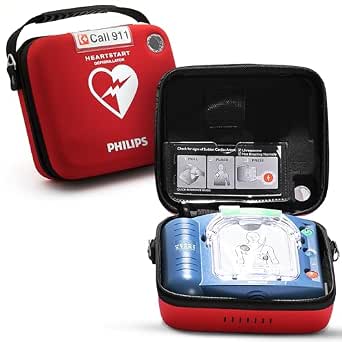 | Best Lightweight Carry Pick | Model: M5066A-CO2 | Manufacturer: Philips Healthcare | Item weight: 5.4 pounds | VIEW LATEST PRICE | See Our Full Breakdown |
| Philips HeartStart Home AED Defibrillator with Training Pads Cartridge |  | Best for Home Practice | Model: M5068A-C02 | AED warranty: 8 years | Battery warranty: 4 years | VIEW LATEST PRICE | See Our Full Breakdown |
| Philips HeartStart OnSite AED Defibrillator with Standard Carry Case | 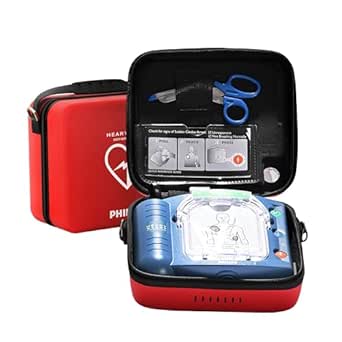 | Best for a Simple Carry Setup | Model: M5066A-C01 | Manufacturer: Philips Healthcare | Item weight: 5.6 pounds | VIEW LATEST PRICE | See Our Full Breakdown |
| Philips HeartStart OnSite AED Defibrillator Business Package |  | Best for Fixed Workplace Installation | Model: M5066A-C02BPB | Manufacturer: Philips Healthcare | Product dimensions: 20.75 x 15.62 x 21.5 inches | VIEW LATEST PRICE | See Our Full Breakdown |
| Portable Automatic External Defibrillator for Home and Emergency Use |  | Best for Flexible Placement | Device type: Automatic external defibrillator (AED) | Intended settings: Home and public environments | Cleaning: Gently wipe with a damp, lint-free cloth; do not soak or submerge | VIEW LATEST PRICE | See Our Full Breakdown |
| Philips HeartStart OnSite AED Defibrillator Business Package | | Best for Public-Site Readiness | Model: M5066A-R01BPB | Dimensions: 20.75 x 15.63 x 21.5 inches | Weight: 6.1 pounds | VIEW LATEST PRICE | See Our Full Breakdown |
| Philips HeartStart OnSite AED Defibrillator Value Package | 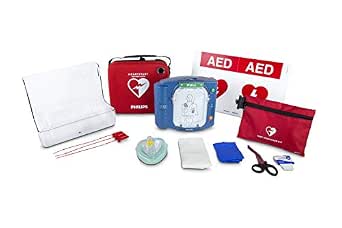 | Best for Wall-Mounted Value | Model: M5066A-C02VPB | Dimensions: 20.75 x 15 x 10 inches | Weight: 8.9 pounds | VIEW LATEST PRICE | See Our Full Breakdown |
| Portable Automatic External Defibrillator (AED) for Home, Gym, Office, and School |  | Best for Visual Readiness Checks | Device type: Automatic external defibrillator (AED) | Intended locations: Home, workplace, gym, office, school, and public or commercial spaces | Status indicators: Visual device status and readiness indicators | VIEW LATEST PRICE | See Our Full Breakdown |
| Philips HeartStart OnSite AED Ready Pack |  | Best for a Lighter Complete Kit | Model: M5066A-R01VPB | Dimensions: 20 x 15 x 10 inches | Weight: 6.1 pounds | VIEW LATEST PRICE | See Our Full Breakdown |
| portable AED defibrillator | Model | Battery | Included accessories | AED warranty |
|---|---|---|---|---|
| Philips HeartStart OnSite AED | M5066A-R01 | 1 CR123A battery, included | Carry case, pre-installed battery and Adult SMART Pads Cartridge, spare SMART Pads Cartridge, setup and reference guides, maintenance booklet, and owner’s manual | 8 years |
| Philips HeartStart OnSite AED | M5066A-CO2 | 1 CR123A battery, included | — | — |
| Philips HeartStart Home AED De | M5068A-C02 | — | Pre-installed battery, SMART Pads Cartridge, slim carry case, training pads, guides, and training DVD | 8 years |
| Philips HeartStart OnSite AED | M5066A-C01 | 1 CR123A battery, included | Standard carry case, pre-installed Adult SMART Pads Cartridge, setup and reference guides, maintenance booklet, and owner’s manual | 8 years |
| Philips HeartStart OnSite AED | M5066A-C02BPB | 1 CR123A battery, included | Carry case, wall sign, Fast Response Kit, and basic cabinet | 8 years |
| Portable Automatic External De | — | — | — | — |
| Philips HeartStart OnSite AED | M5066A-R01BPB | 1 CR123A battery, included | Carry case, spare Adult SMART Pads Cartridge, fast response kit, basic cabinet, wall sign, quick guides, maintenance booklet, and owner’s manual | 8 years |
| Philips HeartStart OnSite AED | M5066A-C02VPB | 1 CR123A battery, included | Carry case, Fast Response Kit, wall mount, wall sign, quick setup guide, maintenance booklet, reference guide, and owner’s manual | 8 years |
| Portable Automatic External De | — | — | — | — |
| Philips HeartStart OnSite AED | M5066A-R01VPB | 1 CR123A battery, included | Standard carry case, spare Adult SMART Pads Cartridge, fast response kit, wall mount, wall sign, quick setup guide, maintenance booklet, quick reference guide, and owner’s manual | — |
More Details on Our Top Picks
Philips HeartStart OnSite AED Defibrillator Ready-Pack M5066A-R01
The Ready-Pack is my strongest all-around pick for buyers who want a portable AED with key readiness items together. It pairs the OnSite’s step-by-step voice prompts and CPR guidance with a carry case, installed adult pads, and a spare pads cartridge, so it has more backup supplies than the standard-case M5066A-C01. Daily, weekly, and monthly self-tests check the device automatically, while Quick Shock can deliver therapy within eight seconds after analysis. At 6.1 pounds, it is portable, though heavier than the 5.4-pound slim-case OnSite. Its main tradeoff is that the spare cartridge is not a substitute for keeping track of expiration dates, and training pads are sold separately. I’d choose it over the Home AED when spare pads matter more than included practice supplies.
Pros:- Includes a carry case, installed adult SMART Pads, and a spare pads cartridge.
- Voice prompts and CPR guidance help guide a rescuer through use.
- Automatic daily, weekly, and monthly self-tests reduce routine manual checking.
- Quick Shock can deliver a shock within eight seconds.
Cons:- At 6.1 pounds, it is heavier than the slim-case OnSite model.
- Training pads for trainer use are sold separately.
- Pads and batteries require replacement according to their expiration or service dates.
Best for: Homes, small workplaces, or community spaces seeking an OnSite AED with a carry case and spare adult pads cartridge included.
Not ideal for: Buyers prioritizing the lightest carry setup or an included training cartridge; the slim-case OnSite weighs less, while the Home AED includes training pads.
- Model:M5066A-R01
- Brand:Philips Healthcare
- Device type:Automated external defibrillator (AED)
- Item weight:6.1 pounds
- Package dimensions:10.5 x 9.5 x 5.75 inches
- Battery:1 CR123A battery, included
- AED warranty:8 years
- Included accessories:Carry case, pre-installed battery and Adult SMART Pads Cartridge, spare SMART Pads Cartridge, setup and reference guides, maintenance booklet, and owner’s manual
Our verdict“Choose the Ready-Pack for a portable OnSite AED that includes a spare pads cartridge, unless lower carry weight or practice supplies matter more.”
Philips HeartStart OnSite AED Defibrillator with Slim Carry Case
For buyers who expect to move an AED between rooms or locations, this is the lightest listed OnSite option at 5.4 pounds. Its slim carry case, included battery, and pre-installed adult SMART Pads keep the setup straightforward, while prompts adapt to the rescuer’s pace. Philips describes the unit as suitable for public settings and use on wet or metal surfaces, a practical distinction for locations where conditions may vary. Compared with the Ready-Pack, it is lighter but does not include a spare pads cartridge. It also offers less included practice equipment than the HeartStart Home AED, which comes with training pads. Buyers should note that adult or child training cartridges are sold separately; this is a carry-focused choice, not a ready-made training bundle.
Pros:- Lightest stated device weight among these OnSite models at 5.4 pounds.
- Slim carry case and pre-installed adult SMART Pads are included.
- Voice prompts provide paced CPR guidance.
- Designed for use on wet or metal surfaces.
Cons:- No spare pads cartridge is listed as included.
- Adult and infant/child training pad cartridges are sold separately.
- The supplied configuration is focused on adult use rather than bundled practice options.
Best for: Organizations that need to carry an AED between sites or store it in a compact case and want adult pads installed.
Not ideal for: Buyers wanting spare pads or training supplies included; the Ready-Pack includes a spare cartridge, and the Home AED includes training pads.
- Model:M5066A-CO2
- Manufacturer:Philips Healthcare
- Item weight:5.4 pounds
- Package dimensions:12.44 x 11.02 x 7.52 inches
- Battery:1 CR123A battery, included
- Included components:AED, battery, adult SMART Pads cartridge, and setup
- Surface use:Designed for use on wet or metal surfaces
- Guidance:Voice prompts and step-by-step CPR guidance that adapt to the user’s pace
Our verdict“Pick this model when lighter carrying matters more than spare pads or included training equipment.”
Philips HeartStart Home AED Defibrillator with Training Pads Cartridge
The HeartStart Home stands apart because it includes a training pads cartridge, giving household members a way to practice with the device in trainer mode. Its real-time CPR instructions and step-by-step prompts are designed for users without prior training, and SMART Analysis assesses the heart rhythm before a shock is delivered. Like the Ready-Pack, it offers daily, weekly, and monthly self-tests and a stated shock delivery time within eight seconds. The Ready-Pack is the better fit if a spare emergency pads cartridge is the priority; this Home configuration instead puts more emphasis on practice, with training pads and a training DVD listed among the accessories. It still requires routine pad and battery replacement, and infant/child training pads are sold separately.
Pros:- Includes a training pads cartridge for practice in trainer mode.
- Step-by-step voice prompts and CPR guidance are designed for users without prior training.
- Daily, weekly, and monthly self-tests run automatically.
- Shock delivery is listed as within eight seconds.
Cons:- Pads and batteries need replacement according to their expiration dates.
- Infant/child training pads are sold separately.
- The included training cartridge does not replace a spare emergency-use pads cartridge.
Best for: Households that want an AED for emergency readiness and a training cartridge to practice the operating steps.
Not ideal for: Buyers whose main priority is an included spare emergency pads cartridge; the Ready-Pack lists one, while this model emphasizes training supplies.
- Model:M5068A-C02
- AED warranty:8 years
- Battery warranty:4 years
- Shock delivery time:Within 8 seconds
- Self-test frequency:Daily, weekly, and monthly
- Included accessories:Pre-installed battery, SMART Pads Cartridge, slim carry case, training pads, guides, and training DVD
- Guidance:Real-time CPR instructions and step-by-step voice prompts
- Analysis:SMART Analysis technology assesses heart rhythm
Our verdict“Choose the HeartStart Home if household practice is a priority; choose the Ready-Pack instead for a listed spare emergency pads cartridge.”
Philips HeartStart OnSite AED Defibrillator with Standard Carry Case
This version suits buyers who want the OnSite AED and a standard case without paying for a bundle of extra supplies or training gear. It includes a battery and pre-installed adult SMART Pads, and its daily, weekly, and monthly self-tests reduce the need for manual device checks. The case has space for a spare battery and pads cartridge, which makes future restocking easier to organize, but neither spare is included. That makes it less complete on arrival than the Ready-Pack, which supplies an extra pads cartridge, and less practice-ready than the HeartStart Home with its training cartridge. At 5.6 pounds, it sits between the slim-case model and the Ready-Pack in listed weight. The Quick Shock feature is stated to deliver a shock within eight seconds; training pads remain a separate purchase.
Pros:- Includes a standard carry case, battery, and pre-installed adult SMART Pads.
- Case has space for a spare battery and pads cartridge.
- Automatic daily, weekly, and monthly self-tests.
- Quick Shock can deliver a shock within eight seconds.
Cons:- Spare battery and spare pads cartridge are not included.
- Training pads for trainer use are sold separately.
- Heavier than the slim-case OnSite model at 5.6 pounds.
Best for: Buyers who want a standard carry case and installed adult pads, and prefer to choose spare supplies separately.
Not ideal for: Organizations that need spare pads immediately or want training equipment in the package; the Ready-Pack includes spare pads and the Home AED includes training pads.
- Model:M5066A-C01
- Manufacturer:Philips Healthcare
- Item weight:5.6 pounds
- Package dimensions:10.5 x 9.5 x 5.75 inches
- Battery:1 CR123A battery, included
- Included accessories:Standard carry case, pre-installed Adult SMART Pads Cartridge, setup and reference guides, maintenance booklet, and owner’s manual
- AED warranty:8 years
- Battery warranty:4 years
Our verdict“Choose this standard-case package if you want a straightforward carry setup and are comfortable sourcing spare supplies separately.”
Philips HeartStart OnSite AED Defibrillator Business Package
The Business Package is the most installation-ready choice here, bundling the portable OnSite AED with a basic cabinet, wall sign, and Fast Response Kit. That makes it a better match for an office or shared facility setting up a clearly marked AED point than for someone seeking the lightest unit to carry. Its prompts adapt to the rescuer’s pace, and daily, weekly, and monthly self-tests help with routine readiness checks. Compared with the standard-case OnSite, this package adds mounting and response accessories; compared with the Ready-Pack, it does not list a spare pads cartridge. The package weighs 21 pounds and has much larger listed dimensions, reflecting the cabinet and accessories rather than a compact carry-only setup. Training pads are sold separately, and accessory coverage is listed at one year.
Pros:- Includes a basic cabinet and wall sign for a fixed AED location.
- Fast Response Kit is included with the package.
- Voice prompts provide CPR guidance and adapt to the user’s pace.
- Automatic daily, weekly, and monthly self-tests.
Cons:- At 21 pounds with large package dimensions, it is less suited to frequent carrying.
- Training pads are sold separately.
- Included accessories have a one-year warranty, shorter than the AED warranty.
Best for: Workplaces, schools, or shared facilities that need a cabinet, wall sign, and response kit alongside an AED.
Not ideal for: Traveling responders or buyers who need a compact carry package; the Ready-Pack is a more portable option and includes spare adult pads.
- Model:M5066A-C02BPB
- Manufacturer:Philips Healthcare
- Product dimensions:20.75 x 15.62 x 21.5 inches
- Item weight:21 pounds
- Battery:1 CR123A battery, included
- AED warranty:8 years
- Battery warranty:4 years
- Included accessories:Carry case, wall sign, Fast Response Kit, and basic cabinet
- Accessories warranty:1 year
Our verdict“Choose the Business Package for a fixed workplace AED station, not for a lightweight portable setup.”
Portable Automatic External Defibrillator for Home and Emergency Use
I’d put this AED on the shortlist for buyers who need a portable unit for a home or a small public venue but don’t need a bundled cabinet or spare pads. Its stated use covers settings from residences to restaurants, offices, gyms, and airports, giving it broader placement flexibility than the Philips HeartStart OnSite Value Package, whose supplied wall mount and sign suit a more fixed installation. The product information is spare, though: it doesn’t specify voice prompts, self-tests, warranty, battery, or included accessories. That makes it harder to compare readiness and ongoing upkeep with the Philips packages. I also wouldn’t treat the cleaning guidance as a minor detail: the unit must not be used after fluid exposure, and damaged or worn parts need repair before use.
Pros:- Intended for both home and a range of public environments
- Portable design suits placement where a fixed installation is not practical
- Provides specific cleaning instructions
- Calls for a pre-use check for wear or damage
Cons:- Product information does not specify prompts, self-tests, warranty, or included accessories
- Must not be used after exposure to fluid
- Worn or damaged parts require repair before the unit is used
Best for: Homeowners or managers of small venues who need a portable AED for varied locations and can verify its maintenance and support details before purchase
Not ideal for: Organizations seeking a fully documented package with included spare pads, regular self-tests, or a cabinet and wall signage
- Device type:Automatic external defibrillator (AED)
- Intended settings:Home and public environments
- Cleaning:Gently wipe with a damp, lint-free cloth; do not soak or submerge
- Pre-use inspection:Check for signs of wear or damage before each use
- Fluid exposure:Do not use if exposed to fluid
- Repair guidance:Damaged or worn parts require repair before use
Our verdict“Choose it for flexible home or venue placement if you can confirm the missing support and readiness details before buying.”
Philips HeartStart OnSite AED Defibrillator Business Package
I’d rank this Philips package for workplaces that need more than the AED itself: it combines step-by-step voice prompts and CPR guidance with a cabinet, wall sign, carry case, spare pads, and response kit. Compared with the Philips HeartStart OnSite Value Package, the Business Package adds a spare Adult SMART Pads Cartridge and cabinet, which helps a site set up a visible, dedicated response point. Its daily, weekly, and monthly self-tests also reduce the need for staff to perform manual checks. The tradeoff is that the package’s 6.1-pound device is not the lightest option in this group, and the listed dimensions are substantial. Training pads are not included, and the CR123A battery still needs replacement when depleted. I’d favor it for a staffed venue over a household seeking a minimal carry kit.
Pros:- Voice prompts and CPR guidance support responders without defibrillator experience
- Includes cabinet, wall sign, carry case, spare pads, and a response kit
- Daily, weekly, and monthly self-tests help monitor readiness
- Eight-year AED warranty
Cons:- Training pads for trainer use are sold separately
- The package dimensions and 6.1-pound weight make it less suited to compact storage
- Battery replacement is required when the included battery is depleted
Best for: Businesses, gyms, and community venues that want a wall-ready AED station with spare pads and clear voice-led response guidance
Not ideal for: Buyers who want a compact grab-and-go setup or need training pads included for practice sessions
- Model:M5066A-R01BPB
- Dimensions:20.75 x 15.63 x 21.5 inches
- Weight:6.1 pounds
- Battery:1 CR123A battery, included
- Included accessories:Carry case, spare Adult SMART Pads Cartridge, fast response kit, basic cabinet, wall sign, quick guides, maintenance booklet, and owner’s manual
- AED warranty:8 years
- Battery warranty:4 years
- Self-test schedule:Daily, weekly, and monthly
Our verdict“Pick this package for a public site that wants a complete, visible AED station rather than a stripped-down portable kit.”
Philips HeartStart OnSite AED Defibrillator Value Package
The Value Package makes the most sense when the AED will live in one known spot: it includes a wall mount and sign, along with a carry case and Fast Response Kit. Its voice prompts and CPR guidance bring the same sort of responder support found in the Philips HeartStart OnSite Business Package, but the Business Package adds a cabinet and spare pads—useful extras for organizations building a more complete station. The Value Package instead arrives with pre-installed Adult SMART Pads and automatic daily, weekly, and monthly self-tests. At 8.9 pounds, it is heavier than the 6.1-pound Philips HeartStart OnSite Ready Pack, so I’d treat the carry case as part of its portability rather than expect effortless transport. Training conversion also requires separately purchased pads.
Pros:- Includes wall mount and wall sign for a defined AED location
- Step-by-step prompts and CPR guidance assist responders
- Pre-installed Adult SMART Pads and automatic self-tests support readiness
- Includes a carry case and Fast Response Kit
Cons:- At 8.9 pounds, it is heavier than the Philips HeartStart OnSite Ready Pack
- Training conversion requires separately sold training pads
- Does not list a spare Adult SMART Pads Cartridge among the included accessories
Best for: Small offices, schools, or community spaces that need a wall-mounted AED setup with a carry case for occasional relocation
Not ideal for: Buyers prioritizing a lighter carry option, a spare pads cartridge, or included equipment for training
- Model:M5066A-C02VPB
- Dimensions:20.75 x 15 x 10 inches
- Weight:8.9 pounds
- Battery:1 CR123A battery, included
- Included accessories:Carry case, Fast Response Kit, wall mount, wall sign, quick setup guide, maintenance booklet, reference guide, and owner’s manual
- AED warranty:8 years
- Self-test schedule:Daily, weekly, and monthly
- Training conversion:Requires separately sold Adult or Infant/Child Training Pads Cartridge
Our verdict“Choose this package for a fixed, wall-mounted location where its included sign and mount matter more than low carry weight.”
Portable Automatic External Defibrillator (AED) for Home, Gym, Office, and School
This AED’s clearest distinction is its visual status and readiness indicators, which give staff a visible check without relying on the more detailed self-test schedule listed for the Philips HeartStart OnSite Value Package. Its stated placements span homes, gyms, offices, schools, and commercial spaces, making it a flexible candidate for a site that wants a portable unit with a status display. The supplied product details do not identify voice prompts, CPR guidance, battery, included pads, or warranty, so I would not assume it offers the same responder support or package completeness as the Philips models. Storage and maintenance also demand attention: it should stay in a dry, well-ventilated place, away from high heat, humidity, and direct sunlight, and requires regular inspection under its manual.
Pros:- Visual indicators show device status and readiness
- Intended for homes, workplaces, schools, gyms, and public or commercial locations
- Portable design allows placement across a range of settings
Cons:- Requires regular inspection and maintenance according to the manual
- Must be stored away from high temperatures, high humidity, and direct sunlight
- Product details do not specify voice prompts, battery, accessories, or warranty
Best for: Schools, offices, and gyms that want visible readiness status and have a staff member responsible for regular checks
Not ideal for: Buyers who need documented voice guidance, a specified self-test schedule, or a clearly listed battery and accessory package
- Device type:Automatic external defibrillator (AED)
- Intended locations:Home, workplace, gym, office, school, and public or commercial spaces
- Status indicators:Visual device status and readiness indicators
- Storage:Dry, well-ventilated environment; avoid high temperatures, high humidity, and direct sunlight
- Maintenance:Regular inspection and basic maintenance according to the instruction manual
- Portability:Portable design
Our verdict“Consider it for a monitored workplace that values visible status indicators, but verify its support and accessory details before choosing it over a Philips package.”
Philips HeartStart OnSite AED Ready Pack
I’d choose the Ready Pack when portability and a well-equipped kit need to coexist. It weighs 6.1 pounds and includes a carry case, pre-installed Adult SMART Pads, spare pads, a fast response kit, and wall-mounting materials. That combination is more travel-friendly than the 8.9-pound Philips HeartStart OnSite Value Package, while still providing a wall sign and mount for a home or workplace installation. Voice prompts, CPR guidance, SMART Analysis, Quick Shock, and regular self-tests add operational detail missing from the less-specified portable AEDs in this lineup. The tradeoff is its adult-focused setup: the included pads are Adult SMART Pads, and an Infant/Child Training Pads Cartridge is sold separately. I’d also compare package contents carefully with the Business Package, which includes a cabinet.
Pros:- At 6.1 pounds, it is lighter than the Philips HeartStart OnSite Value Package
- Includes pre-installed and spare Adult SMART Pads plus a carry case
- Voice prompts, CPR guidance, SMART Analysis, and Quick Shock support response
- Daily, weekly, and monthly self-tests and an eight-year AED warranty
Cons:- Included pads are designed for adult use
- Infant/Child Training Pads Cartridge is sold separately
- Does not include the cabinet supplied with the Philips HeartStart OnSite Business Package
Best for: Households or small workplaces that want a carryable AED with spare adult pads, voice guidance, and a path to wall mounting
Not ideal for: Sites needing child-specific pads included, training pads in the box, or a cabinet as part of the installation
- Model:M5066A-R01VPB
- Dimensions:20 x 15 x 10 inches
- Weight:6.1 pounds
- Battery:1 CR123A battery, included
- Included accessories:Standard carry case, spare Adult SMART Pads Cartridge, fast response kit, wall mount, wall sign, quick setup guide, maintenance booklet, quick reference guide, and owner’s manual
- Features:Step-by-step voice prompts, CPR guidance, SMART Analysis, and Quick Shock
- Self-test schedule:Daily, weekly, and monthly
- Warranty:8 years for AED; 4 years for battery; pads covered until expiration; 1 year for other accessories
Our verdict“Pick the Ready Pack for a portable, adult-focused kit with useful response accessories, unless you need child-specific or training pads included.”

How We Picked
I ranked these options around the needs implied by portable emergency readiness: clear device identity, practical storage, ease of use for intended responders, and the usefulness of the supplied package. I gave more weight to listings that identify the Philips HeartStart OnSite platform and make a concrete distinction through a Ready-Pack, carry case, training cartridge, or business-oriented bundle. A package label alone does not establish what is included, so I treat unclear or overlapping listings cautiously rather than assuming they provide extra value.
The order favors versatile, clearly identified setups first, then options suited to more specific settings or storage preferences. The lineup includes several closely related OnSite listings, so their differences are often about configuration rather than a fundamentally different AED. The generic portable AED listings remain in the comparison for buyers who are open to alternatives, but their product names provide less detail for judging fit. I did not treat any listing as a substitute for checking local requirements, training, device labeling, consumable dates, and manufacturer support.
Factors to Consider When Choosing Best Portable AED Defibrillators
Choosing a portable AED means planning for the people who may use it and the conditions where it will be stored, not just comparing device names. These broader checks can help prevent a purchase that looks suitable online but is difficult to maintain or access when needed.
Match the AED Setup to the People and Location
Start by identifying who is likely to reach the AED first, rather than choosing solely by whether it is labeled for home or business use. A household, school, gym, and workplace can have different responder populations, access patterns, and training plans. Check the device instructions and local rules for who may use it and what training is advised. A portable unit stored behind a locked door may be less useful than a slightly less compact setup placed where people can find it quickly. For shared sites, decide who checks the device and who can access it outside normal hours. This planning matters more than choosing a package with a broad-sounding name.
Compare Package Contents, Not Just Package Names
Terms such as Ready-Pack, Business Package, and Value Package do not tell you enough by themselves to compare bundles. Confirm whether the listing includes the AED, carry case, batteries, treatment pads, training materials, or other supplies, and check the quantities and expiration dates where applicable. A low-detail listing can create a false sense that essential items are included. Training pads are intended for practice and should not be mistaken for treatment pads used during an emergency. For repeat listings with similar titles, compare the exact model identifier and the seller’s itemized contents. A written checklist makes the differences easier to spot.
Plan for Readiness and Replacement Parts
An AED purchase creates an ongoing maintenance task, even when the device is designed for straightforward storage. Before buying, find out how the unit indicates readiness, how often the owner should inspect it, and where compatible batteries and pads can be obtained. Track replacement dates in a shared calendar or a site maintenance log instead of relying on memory. Ask who is responsible for checking the device when staff or household routines change. A package that suits your budget today may be a poor fit if its consumables are hard to source later. Read the manufacturer’s instructions for storage and maintenance rather than relying on general assumptions.
Choose Storage for Access, Protection, and Portability
A slim case can save space in a home cabinet, vehicle, or crowded station, but compact storage is only helpful if the AED remains visible and easy to retrieve. A larger case may accommodate useful supplies, yet it can be awkward to carry or place in a narrow area. Consider how far the AED may need to travel, whether it will be mounted or kept in a designated cabinet, and whether the environment meets the manufacturer’s storage guidance. Avoid storing the device where temperature, moisture, or access conditions may conflict with its instructions. Mark the storage location clearly and make sure the intended users know how to reach it. The best case is the one that protects the equipment without hiding it.
Check Training, Local Requirements, and Site Planning
Buying an AED does not automatically create a complete emergency response plan. Confirm applicable local requirements for registration, signage, maintenance, and responder training before selecting a model or package. Decide how people will learn the device’s prompts and how practice sessions will be kept separate from emergency supplies. For organizations, assign responsibility for training records and for reporting a device that has been moved or used. Households can make a simple plan for where the AED is stored and who will call emergency services. These steps reduce confusion that a feature list cannot address.
Frequently Asked Questions
Are the Philips HeartStart OnSite listings different AEDs or different packages?
The supplied names point to several configurations of the HeartStart OnSite, including Ready-Pack, carry-case, business, and value listings. That does not establish that the underlying device or included supplies are identical across sellers. Compare the exact model number, package inventory, and any stated accessories before choosing between them. The lineup also repeats a Business Package title, so check whether those listings have different contents or are duplicate offers. When the details remain unclear, ask the seller for an itemized list before ordering.
Can I use the Training Pads Cartridge in an emergency?
No: training pads are designed for practice and should not be treated as emergency treatment pads. The Home model’s training cartridge can support familiarization, but it does not remove the need for compatible treatment pads that are within their usable dates. Check the product instructions to see which cartridge or pad type is installed and what must be kept separately. Store practice supplies so they cannot be confused with emergency supplies. If you are unsure what a package includes, verify the contents with the seller or manufacturer.
Should I choose a slim case or a standard carry case?
Choose based on the storage location and how the AED will be reached, rather than case size alone. A slim case may work well where space is limited, but confirm that it holds the equipment and supplies you need without making retrieval awkward. A standard case may offer more room, though a larger package can be harder to carry or place in a compact cabinet. Think through whether the AED will stay in one location or be moved between rooms or sites. In either case, keep it accessible and follow the manufacturer’s storage guidance.
What should I verify before buying one of the generically named portable AEDs?
Ask for the exact manufacturer and model, along with documentation showing the device is appropriate for sale and use in your location. Confirm what is included, including treatment pads, batteries, case, and any training supplies, rather than relying on a broad product title. Check where replacement consumables can be sourced and how the device indicates its readiness status. Review the manufacturer’s instructions, warranty and support information, and storage requirements. If these details are not available, the better-known OnSite listings may be easier to evaluate from the information provided here.
Is a ready-to-store kit enough for a home or workplace AED plan?
A ready-to-store package can simplify setup, but it does not replace a plan for access, training, and ongoing checks. Confirm that the kit includes the specific supplies needed for emergency use and that their dates are acceptable. Choose a visible location, tell likely responders where the AED is, and assign someone to monitor readiness and replacements. Workplaces should also check local rules and establish a response procedure suited to the site. A complete plan turns a stored device into equipment people can locate and maintain.
Conclusion
For a broadly useful pick, I would start with the Philips HeartStart OnSite Ready-Pack M5066A-R01, then verify the exact kit contents before purchase. Buyers seeking the best value should compare the OnSite Value Package against the Ready-Pack item by item, since the product names alone do not settle which bundle offers the more useful supplies. For a premium-style setup, the Business Package may suit an organization that needs a workplace-oriented bundle, provided its contents match the site’s plan. The best choice for beginners is the HeartStart Home model with Training Pads Cartridge for guided practice, paired with separate emergency treatment supplies and appropriate training. For tight storage, choose the Slim Carry Case; for buyers considering a generic alternative, confirm identity, support, and consumables before committing. The right option is the one your intended users can access, maintain, and use according to its instructions.