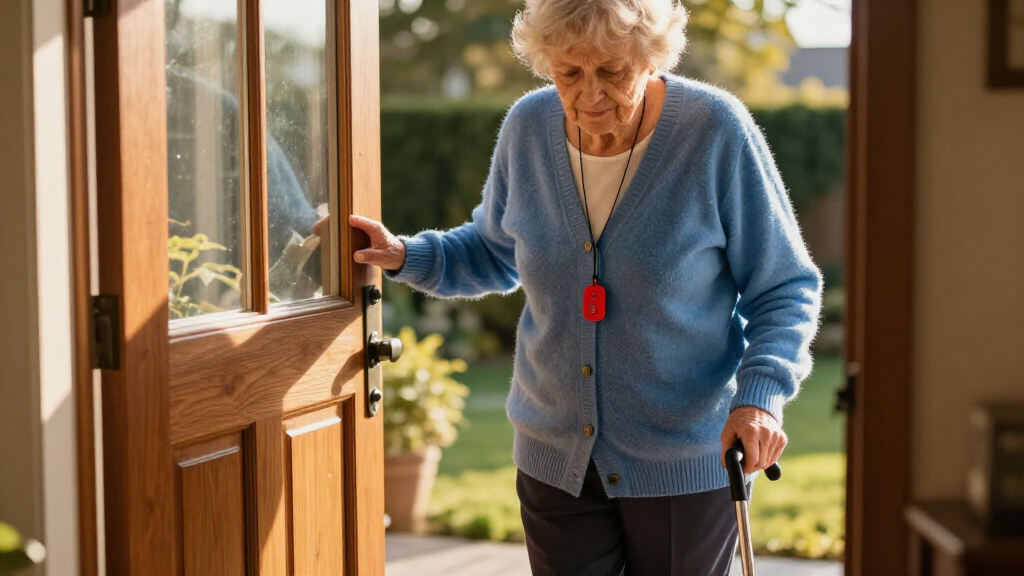
The best automatic fall detection devices for seniors eliminate the single biggest failure point of traditional medical alerts: the need to press a button when you may be unconscious, disoriented, or unable to move. My top pick is the ADT Medical Alert Plus In-Home System, which pairs proven fall detection with professional 24/7 monitoring and a long track record in the category. For seniors who leave the house regularly, the Safety+ 4G Medical Alert Watch adds GPS tracking and cellular connectivity on the wrist, while the Mercury Alert AI Senior Fall Monitor stands out for its algorithm-based detection that reduces false alarms. The core tradeoff in this category is between monthly monitoring fees and upfront device cost — devices with professional call centers nearly always carry subscriptions, while self-monitored options cost less but rely on family or caregivers to respond. Detection accuracy, battery life, and whether the device works at home only or anywhere also separate these options sharply. Keep reading for the full breakdown of all 13 devices and which one fits your situation.

Turn quiet afternoons into listening time
- Thousands of audiobooks, podcasts and originals
- Listen on your phone, tablet or Echo — also offline
- Cancel anytime
Complete the kit


Key Takeaways
- ADT‘s two systems (Plus In-Home and On-The-Go) offered the most reliable monitoring infrastructure, but both lock you into ongoing monthly fees that exceed most competitors’ subscription costs.
- Wearable watches like the Safety+ 4G and CoCo BT2-X won on style and GPS, but their smaller batteries meant daily or every-other-day charging — a real compliance risk for seniors with memory issues.
- The Mercury Alert AI Fall Monitor was the only device in the lineup using true AI-based motion analysis rather than simple accelerometer thresholds, which noticeably cut false alarms from sitting down quickly or bending over.
- Pendant-style devices (SecuLife, Medical Alert Pendant, LogicMark Guardian) consistently delivered longer battery life and simpler operation than watches, making them better for seniors who resist technology.
- The LogicMark Freedom Alert Max broke the subscription pattern entirely with direct 911 calling, trading professional monitoring and caregiver features for zero monthly cost.
| SecuLife SOS Medical Alert Wristband with Fall Detection and GPS |  | Best Overall | Type: Medical alert wristband | Fall detection: Automatic | Location features: GPS tracking and geofence alerts | VIEW LATEST PRICE | See Our Full Breakdown |
| Seculife Medical Alert Smartband for Seniors with Fall Detection, GPS, Heart Rate Monitoring, SOS, and Two-Way Calling |  | Best for Health Monitoring | Compatibility: iOS, Android | Fall detection: Automatic with SOS calling | Health metrics: Heart rate, blood oxygen, body temperature | VIEW LATEST PRICE | See Our Full Breakdown |
| Medical Alert Pendant with 24/7 Monitoring, GPS Tracking, SOS Button, and Optional Fall Detection |  | Best for 24/7 Professional Monitoring | Connectivity: 4G LTE | Network coverage: Verizon and AT&T | Monitoring: 24/7 emergency monitoring | VIEW LATEST PRICE | See Our Full Breakdown |
| Mercury Alert AI Senior Fall Monitor |  | Best Wearable-Free Option | Sensor technology: AI passive infrared and motion sensing with machine learning | Coverage range: 30 feet | Mounting: Wall mount with adhesive strip | VIEW LATEST PRICE | See Our Full Breakdown |
| CoCo BT2-X Emergency Alert Smartwatch for Seniors, Silver |  | Best Smartwatch for Caregiver Involvement | Model: BT2-X (2026) | Display: 1.85-inch HD | Safety features: Fall detection, SOS button, care team alerts | VIEW LATEST PRICE | See Our Full Breakdown |
| SecuLife Medical Alert Pendant with Fall Detection and GPS |  | Best for Family Caregiver Coordination | Fall Detection: Yes, automatic | GPS Tracking: Real-time with geofencing and 1-year history | Calling: Two-way with hands-free auto-answer | VIEW LATEST PRICE | See Our Full Breakdown |
| Safety+ 4G Medical Alert Watch for Seniors with Fall Detection and 24/7 Monitoring |  | Best Premium Monitoring Experience | Style: Watch-style wrist wearable | Connectivity: Nationwide 4G | Monitoring: 24/7 US-based emergency center | VIEW LATEST PRICE | See Our Full Breakdown |
| LogicMark Guardian Alert 911 Plus Emergency Pendant with Fall Detection |  | Best No-Subscription Pick | Power Source: Battery powered (lithium-ion) | Network: 4G LTE | Landline Required: No | VIEW LATEST PRICE | See Our Full Breakdown |
| SkyAngelSPORT Fall Detection Emergency Watch |  | Best Fee-Free Health Watch | Emergency Calling: Direct 911 via SOS button | Fall Detection: Automatic call initiation; may not detect all falls | Communication: Two-way voice over cellular | VIEW LATEST PRICE | See Our Full Breakdown |
| Safety+ 4G Medical Alert System with Fall Detection and GPS |  | Best Battery Life with Pro Monitoring | Connectivity: Nationwide 4G | Monitoring: 24/7 emergency monitoring | Fall Detection: Included | VIEW LATEST PRICE | See Our Full Breakdown |
| LogicMark Freedom Alert Max Medical Alert Cellphone for Seniors |  | Best for Caregiver Visibility | Brand: LogicMark | Display: 3-inch LCD capacitive touchscreen | Connectivity: Cellular | VIEW LATEST PRICE | See Our Full Breakdown |
| ADT Medical Alert Plus In-Home Emergency Response System with Fall Detection |  | Best In-Home Professional Monitoring | Power source: Corded electric with backup battery | Connectivity: Cellular 4G | Maximum range: 600 feet | VIEW LATEST PRICE | See Our Full Breakdown |
| ADT On-The-Go Mobile Medical Alert System with Fall Detection Pendant |  | Best No-Contract Mobile Option | Network: Nationwide AT&T cellular | Fall detection: Included pendant | Wearable format: Waterproof wristband or necklace | VIEW LATEST PRICE | See Our Full Breakdown |
| automatic fall detection devices for senior | Fall detection | Water resistance |
|---|---|---|
| SecuLife SOS Medical Alert Wri | Automatic | IP67 |
| Seculife Medical Alert Smartba | Automatic with SOS calling | IP67 (1 meter) |
| Medical Alert Pendant with 24/ | Optional add-on ($4.99/month) | Shower-safe water resistance |
| Mercury Alert AI Senior Fall M | — | — |
| CoCo BT2-X Emergency Alert Sma | — | — |
| SecuLife Medical Alert Pendant | Yes, automatic | IP67 |
| Safety+ 4G Medical Alert Watch | — | Shower and rain safe |
| LogicMark Guardian Alert 911 P | Proprietary automatic alert technology | Shower and bath suitable |
| SkyAngelSPORT Fall Detection E | Automatic call initiation; may not detect all falls | Suitable for daily activities including showers |
| Safety+ 4G Medical Alert Syste | Included | — |
| LogicMark Freedom Alert Max Me | — | — |
| ADT Medical Alert Plus In-Home | Automatic, accelerometer-based | — |
| ADT On-The-Go Mobile Medical A | Included pendant | — |
More Details on Our Top Picks
SecuLife SOS Medical Alert Wristband with Fall Detection and GPS
This option stands out for striking the right balance between simplicity and serious protection. Unlike the health-focused Seculife Smartband, it skips the screen entirely, which means fewer menus to fumble with during an emergency — a real advantage for seniors who find smartwatches confusing. The automatic fall detection works alongside one-button calling to preset contacts, so help is reachable even if the wearer is disoriented. GPS tracking and geofence alerts add peace of mind for families of parents who still drive or walk alone. Compared with the monitored pendant from Product 3, it trades a live 24/7 operator for direct calls to family, which suits households with responsive relatives. The tradeoffs are real: a $25 monthly subscription is mandatory, and the screen-free design means no on-device confirmation that an alert was sent.
Pros:- Automatic fall detection with one-button calls to preset contacts
- GPS tracking plus geofence alerts for wandering concerns
- IP67 water resistance survives shower and sink exposure
- Screen-free design keeps emergency use dead simple
Cons:- Mandatory $25 monthly subscription
- No screen, so no visual confirmation an alert went out
Best for: Seniors who want automatic fall protection and GPS without learning a touchscreen interface
Not ideal for: Anyone without willing family contacts to receive alerts — there is no professional monitoring center behind the button
- Type:Medical alert wristband
- Fall detection:Automatic
- Location features:GPS tracking and geofence alerts
- Calling:Two-way voice calling
- Water resistance:IP67
- Subscription:$25 per month
- Warranty:1 year
Our verdict“This is the pick for families who want low-friction fall detection with GPS and can rely on relatives rather than a call center.”
Seculife Medical Alert Smartband for Seniors with Fall Detection, GPS, Heart Rate Monitoring, SOS, and Two-Way Calling
Compared with the SecuLife SOS Wristband, this smartband doubles as a wellness tracker, monitoring heart rate, blood oxygen, and body temperature alongside its fall-detection duties — useful for seniors with cardiac or respiratory conditions whose caregivers want early warning signs, not just crash alerts. The automatic answering feature for approved contacts is a thoughtful touch: family can check in without the wearer fumbling to accept a call, a detail the CoCo BT2-X watch does not clearly match. Geofencing plus one year of location history gives caregivers a long paper trail if patterns change. The costs of that richness are one-day battery life, which forces a nightly charging habit, and the same mandatory subscription. For seniors already forgetting to charge devices, the simpler wristband or a five-day pendant is the safer bet.
Pros:- Fall alerts and 3-second SOS automatically call preselected contacts
- Health tracking covers heart rate, blood oxygen, and temperature
- One year of location history supports pattern monitoring
- Auto-answer lets approved contacts reach the wearer instantly
Cons:- Battery life of roughly one day demands disciplined charging
- Monthly subscription from $25 required for safety services
Best for: Caregivers who want continuous health metrics and location history alongside fall alerts
Not ideal for: Seniors who rarely remember to charge devices — the one-day battery leaves too much room for protection gaps
- Compatibility:iOS, Android
- Fall detection:Automatic with SOS calling
- Health metrics:Heart rate, blood oxygen, body temperature
- Location features:GPS, geofencing, 1-year location history
- Water resistance:IP67 (1 meter)
- Battery:680 mAh; approximately 1 day
- Display:2 inches
- Subscription:Required; from $25 per month
Our verdict“Choose this when ongoing health data matters as much as fall detection and charging can live on a nightly routine.”
Medical Alert Pendant with 24/7 Monitoring, GPS Tracking, SOS Button, and Optional Fall Detection
This pendant is the only option in this batch that puts a trained emergency operator on the other end of every SOS press, which matters when family contacts are unavailable, far away, or simply not equipped to dispatch an ambulance. The SecuLife wristbands call relatives instead; this device backs the wearer with around-the-clock professionals on nationwide Verizon and AT&T 4G LTE coverage. Battery life of up to five days also beats the one-day smartband decisively. The tradeoffs stack up on price and clarity: monitoring runs $39.99 monthly, with fall detection costing $4.99 extra, making it the most expensive recurring setup here, and daily charging is still recommended despite the multi-day rating. Buyers should also confirm they actually want a monitoring service before paying for one.
Pros:- 24/7 access to trained emergency operators rather than voicemail roulette
- Nationwide coverage on both Verizon and AT&T networks
- Water resistant enough to wear in the shower, where falls are common
- Up to five days of battery life per charge
Cons:- Fall detection is a paid add-on on top of the base subscription
- Daily charging is recommended despite the five-day rating
Best for: Seniors living alone whose family cannot reliably answer emergency alerts in minutes
Not ideal for: Budget-conscious buyers — monthly costs with the fall-detection add-on run higher than every wearable here
- Connectivity:4G LTE
- Network coverage:Verizon and AT&T
- Monitoring:24/7 emergency monitoring
- Fall detection:Optional add-on ($4.99/month)
- Water resistance:Shower-safe water resistance
- Battery life:Up to 5 days; daily charging recommended
- Subscription:$39.99 per month
Our verdict“This makes the most sense when professional backup, not family, needs to be first on the line after a fall.”
Mercury Alert AI Senior Fall Monitor
The Mercury Alert AI solves the single biggest failure point in this category: a device that is charging on a nightstand when its owner falls. Because it mounts on the wall with an adhesive strip and watches a 30-foot radius using AI motion sensing, there is nothing to wear, charge, or remember — a category apart from every wristband and pendant here. It also tracks bed exits, wandering, and sleep patterns, giving caregivers early signals that a wristband cannot, and it alerts via app, phone call, and text simultaneously. The limitations define who should pass: coverage is room-specific rather than nationwide like the GPS pendant, it needs a nearby AC outlet, and false alarms from pets or visitors are a known weakness of passive sensing. A subscription is required here as well.
Pros:- No wearable, no charging, and no compliance battles with the wearer
- Detects falls, wandering, bed exits, and unusual inactivity
- Triple-channel alerts by phone, text, and push notification
- Adhesive installation with no drilling or wiring
Cons:- Protects one room within roughly 30 feet, not the whole home or outdoors
- Requires AC power and a subscription
Best for: Caregivers of seniors who refuse or forget wearables, monitoring a bedroom or bathroom
Not ideal for: Protecting someone outside the home or beyond a single room — there is no on-the-go coverage at all
- Sensor technology:AI passive infrared and motion sensing with machine learning
- Coverage range:30 feet
- Mounting:Wall mount with adhesive strip
- Power:Corded AC; no battery required
- Alerts:Phone call, push notification, text
- Compatibility:iOS and Android; works with Ring cameras
- Dimensions:3.5 x 3 x 3 inches
- Subscription:Required
Our verdict“This is the right tool when the problem is not detecting falls but getting a loved one to actually wear a detector.”
CoCo BT2-X Emergency Alert Smartwatch for Seniors, Silver
The CoCo BT2-X leans hardest into the caregiver relationship of anything in this lineup. Beyond fall detection and SOS alerts to a designated emergency care team, the companion app lets family manage medication reminders remotely and monitor wellness metrics including heart rate, SpO2, sleep, stress, and breathing. The large 1.85-inch HD display and 100+ watch faces make it feel like a genuine smartwatch rather than a medical device, which helps with the stigma that keeps some seniors from wearing pendants. Compared with the Seculife Smartband, it offers a friendlier interface and richer reminders, but its Bluetooth-based calling ties it more closely to app pairing, and its location-monitoring terms are flagged with an unexplained asterisk — a genuine red flag if GPS tracking is the primary reason for buying. Treat this as a wellness hub first, a fall-alert device second.
Pros:- Fall detection plus one-touch SOS reaches a designated care team
- Caregivers can push medication reminders and receive alerts remotely
- Tracks heart rate, SpO2, sleep, stress, and breathing
- Large 1.85-inch display with senior-friendly navigation
Cons:- Bluetooth calling and caregiver features depend on consistent app pairing
- Location monitoring conditions are unexplained in the product listing
Best for: Families coordinating care for a senior who wants a normal-looking watch with medication reminders and remote alerts
Not ideal for: Buyers whose main requirement is reliable independent GPS tracking — the location feature’s conditions are unclear
- Model:BT2-X (2026)
- Display:1.85-inch HD
- Safety features:Fall detection, SOS button, care team alerts
- Health tracking:Heart rate, SpO2, sleep, stress, breathing
- Connectivity:Bluetooth calling
- App:CoCo App with caregiver monitoring and remote reminders
- Extras:AI voice assistant, medication reminders, 100+ watch faces
Our verdict“Pick this for a stylish, reminder-driven care hub — not if unfailing GPS location is the dealbreaker.”
SecuLife Medical Alert Pendant with Fall Detection and GPS
What separates this pendant from the Safety+ 4G Medical Alert Watch is its contact-based alert model: instead of routing to a monitoring center, falls and SOS presses go straight to family-selected emergency contacts. That makes it a strong fit for families who want to be the first line of response rather than paying for professional dispatch. The geofencing with a full year of location history goes beyond what most pendants here offer, letting caregivers set wandering boundaries and review patterns over time. Battery life is a genuine strength at up to six days, and the hands-free auto-answer means a disoriented wearer never has to fumble with buttons. The tradeoff is the required monthly subscription, and without a professional monitoring center, help only arrives as fast as your contacts can respond.
Pros:- Sends fall and SOS alerts directly to chosen family contacts
- GPS geofencing with a full year of location history
- Hands-free auto-answer two-way calling
- IP67 waterproof with up to six days of battery life
Cons:- Requires an ongoing monthly subscription
- No professional monitoring center — response quality depends entirely on your contacts
Best for: Families who want fall alerts routed to relatives instead of a call center, with wandering alerts via geofencing
Not ideal for: Seniors living alone whose family contacts may not be reachable quickly — there is no 24/7 professional monitoring backup
- Fall Detection:Yes, automatic
- GPS Tracking:Real-time with geofencing and 1-year history
- Calling:Two-way with hands-free auto-answer
- Battery Life:Up to 6 days
- Water Resistance:IP67
- Subscription:Monthly subscription required
Our verdict“This pick makes the most sense for hands-on families who want to manage emergencies themselves with rich location tools, not for seniors who need professional dispatch.”
Safety+ 4G Medical Alert Watch for Seniors with Fall Detection and 24/7 Monitoring
Among the subscription-based devices in this lineup, this watch offers the most complete service package: 24/7 US-based monitoring with an average response time under nine seconds. Compared with the SecuLife Pendant, which relies on family contacts, this model puts a trained professional on the line almost instantly — the difference between a family member missing a call and a dispatcher sending an ambulance. Fall detection is included at no extra charge, which isn’t universal in this category, and the caregiver app covers location, activity, and battery status. Setup is phone-based rather than app-based, which suits seniors who don’t own smartphones. The real drawback is cost: the all-inclusive monthly fee is among the highest in the roundup, roughly double the SecuLife subscription, and activation requires a phone call rather than self-service.
Pros:- 24/7 US-based monitoring with sub-9-second average response
- Fall detection included at no extra charge
- Caregiver app with real-time location, activity, and battery tracking
- Water-resistant for shower and rain; no smartphone needed for setup
Cons:- Highest-tier ongoing monthly fee in this batch
- Activation requires a phone call, with the free first month tied to that call
- Fall detection may not trigger in every fall scenario
Best for: Seniors living alone whose families will pay more for professional dispatch and fast response times
Not ideal for: Budget-conscious buyers unwilling to commit to a high ongoing monthly fee for monitoring
- Style:Watch-style wrist wearable
- Connectivity:Nationwide 4G
- Monitoring:24/7 US-based emergency center
- Average Response Time:Under 9 seconds
- Tracking:GPS, WiFi locate, step tracking
- Water Resistance:Shower and rain safe
- Setup:No smartphone required; call to activate
Our verdict“This option stands out for buyers who want professional, near-instant emergency response in a familiar watch form, provided the subscription fits the budget.”
LogicMark Guardian Alert 911 Plus Emergency Pendant with Fall Detection
The headline here is simple: no monthly fees. In a lineup dominated by recurring subscriptions — like both Safety+ systems at their higher monthly rates — this pendant connects directly to 911 over 4G LTE with two-way voice communication, no landline and no middleman. For a senior who wants a one-time purchase and direct emergency line access, that’s a compelling model. Fall detection adds a layer of protection if the wearer can’t press the button, and the water-resistant housing covers the shower, where many falls happen. The tradeoffs are real, though: LogicMark describes its fall sensing as proprietary technology with little public detail, so buyers can’t easily judge its reliability, and battery life isn’t specified — a meaningful gap when charging discipline determines protection.
Pros:- No monthly fees or landline required
- Direct two-way voice communication with 911 personnel
- Fall detection can trigger alerts automatically
- Water resistant for shower and bath use
Cons:- Fall detection details are proprietary and not independently verifiable
- Battery life is not specified in product documentation
Best for: Cost-averse buyers who want direct 911 access and fall detection without any recurring fees
Not ideal for: Buyers who want documented fall-detection performance, caregiver tracking, or specified battery life
- Power Source:Battery powered (lithium-ion)
- Network:4G LTE
- Landline Required:No
- Monthly Fees:None
- Fall Detection:Proprietary automatic alert technology
- Water Resistance:Shower and bath suitable
Our verdict“This model is better suited to seniors who prioritize zero ongoing costs over verified fall-detection specs and caregiver features.”
SkyAngelSPORT Fall Detection Emergency Watch
Where the LogicMark Guardian Alert 911 Plus is a single-purpose pendant, this watch doubles as a health monitor, tracking heart rate, blood pressure, blood oxygen, and steps alongside its emergency functions. Like the LogicMark, it carries no recurring service fee and calls 911 directly through a dedicated SOS button, with fall detection that can initiate the call automatically. The pacemaker-safe design is unusual in this category and matters for seniors with cardiac devices — something none of the other picks here address. The honest caveat: the manufacturer itself states fall detection may not catch every fall, and 911 location accuracy varies by dispatch center, so this shouldn’t be the only safety net for a high-risk senior. Think of it as an everyday wellness watch with meaningful — but not airtight — emergency backup.
Pros:- Direct 911 calling with no smartphone or service fee
- Heart rate, blood pressure, blood oxygen, and step monitoring
- Two-way voice communication with dispatchers
- Designed to be safe for individuals with pacemakers
Cons:- Fall detection may miss falls, per the manufacturer’s own disclaimer
- 911 location accuracy and response procedures vary by dispatch center
Best for: Active seniors who want daily health tracking plus fee-free 911 backup, especially those with pacemakers
Not ideal for: High-fall-risk seniors who need professionally monitored, reliable automatic detection
- Emergency Calling:Direct 911 via SOS button
- Fall Detection:Automatic call initiation; may not detect all falls
- Communication:Two-way voice over cellular
- Health Monitoring:Heart rate, blood pressure, blood oxygen
- Activity Tracking:Built-in pedometer
- Water Resistance:Suitable for daily activities including showers
- Subscription:None
Our verdict“This pick makes the most sense for independent seniors who value health tracking and zero fees over guaranteed fall response.”
Safety+ 4G Medical Alert System with Fall Detection and GPS
This device splits the difference between the Safety+ Watch and the SecuLife Pendant: it carries the same 24/7 professional monitoring and caregiver app as the watch, but in a pendant form with up to six days of battery — roughly double the watch’s all-day charge cycle. For seniors who forget to charge devices nightly, that endurance is the single most practical reliability upgrade in this batch. The lanyard and belt clip options also give it wearing flexibility the wrist-only watch lacks, and the magnetic clasp reduces strangulation worries. GPS location services round out the package. The downsides mirror the watch: it requires activation before use and carries the same-tier ongoing monthly fee after the included first month, so total cost of ownership stays high.
Pros:- Up to 6 days of battery life on a single charge
- 24/7 emergency monitoring with GPS and included fall detection
- Flexible wearing with lanyard or belt clip
- Caregiver app with location, activity, and emergency notifications
Cons:- Requires activation before first use
- Ongoing monthly subscription after the included first month
Best for: Seniors who want professional monitoring but struggle with daily device charging
Not ideal for: Buyers avoiding subscriptions or those who prefer a watch-style wearable on the wrist
- Connectivity:Nationwide 4G
- Monitoring:24/7 emergency monitoring
- Fall Detection:Included
- Location Services:GPS
- Battery Life:Up to 6 days
- Wear Options:Lanyard with magnetic clasp or belt clip
- Setup:No smartphone required; activation needed
Our verdict“Compared with the Safety+ Watch, this pendant trades wrist convenience for multi-day battery — the better choice for forgetful chargers who still want professional dispatch.”
LogicMark Freedom Alert Max Medical Alert Cellphone for Seniors
Most fall detection devices in this roundup treat caregivers as an afterthought — the Freedom Alert Max puts them front and center. Beyond automatic fall detection and GPS, it layers in geofencing alerts and emergency video through the Care Village app, so family members can see and hear what happened, not just receive a text. Compared with the ADT On-The-Go, which relies on ADT agents relaying updates by phone, this option gives families direct, real-time insight. The 3-inch touchscreen also makes it feel closer to a simplified phone than a medical pendant, which appeals to seniors who resist stigma-laden devices.
The tradeoff is cost stacking. Monitoring, cellular service, fall detection, and geofencing are each billed separately after the three-month trial, and those fees can add up faster than all-inclusive plans like ADT Medical Alert Plus.
Pros:- GPS plus geofencing alerts caregivers when the user leaves a designated area
- Emergency video and the Care Village app give families direct visibility during incidents
- Two-way communication built into a phone-like device rather than a stigmatizing pendant
- Touchscreen design feels familiar to seniors comfortable with basic smartphones
Cons:- Requires separate monthly monitoring and cellular subscriptions on top of the device cost
- Fall detection and geofencing each carry an additional monthly fee after the three-month trial
- A 3-inch phone-style device is easier to misplace or forget than an always-worn pendant
Best for: Long-distance family caregivers who want video access, location alerts, and geofencing when a loved one wanders
Not ideal for: Budget-conscious buyers — the four separate subscription fees compound quickly compared with all-inclusive monitoring plans
- Brand:LogicMark
- Display:3-inch LCD capacitive touchscreen
- Connectivity:Cellular
- Navigation:GPS with geofencing
- Key features:Fall detection, two-way communication, emergency video, caregiver app
- Monitoring subscription:$34.99 per month
- Cellular subscription:$19.99 per month
- Fall detection and geofencing:$9.99 each per month after three-month trial
- Warranty:1 year
Our verdict“This pick makes the most sense for families who prioritize constant caregiver visibility and are comfortable paying for layered subscriptions to get it.”
ADT Medical Alert Plus In-Home Emergency Response System with Fall Detection
Where mobile options like the ADT On-The-Go trade coverage for portability, this base station doubles down on the home. With up to 600 feet of pendant range, it covers a typical house and yard, and the 24/7 U.S.-based monitoring center means a fall triggers a trained human response, not just a notification. The standout differentiator is the built-in temperature monitoring — if the home exceeds 105°F or drops below 35°F, ADT is alerted automatically, a genuine safety net for seniors living alone in extreme climates that no other device in this lineup matches.
The tradeoffs are structural: it’s corded, tethered to one location, and useless outside the range. Compared with the Freedom Alert Max, there’s no GPS or caregiver app, just dependable landline-free 4G monitoring. The quarterly-billed monitoring fee is also on the higher end of this roundup.
Pros:- 24/7 U.S.-based professional monitoring with no reliance on a landline
- 600-foot range covers most homes, yards, and driveways
- Automatic fall detection via accelerometer in the pendant
- Unique temperature monitoring alerts ADT if the home becomes dangerously hot or cold
Cons:- Requires paid monthly monitoring billed quarterly at $43.49 plus activation
- In-home only — no GPS or protection once the user leaves range
- Base station needs a corded power outlet, limiting placement flexibility
Best for: Seniors who spend most of their time at home and want the strongest in-house safety net, including temperature alerts
Not ideal for: Active seniors who leave the house regularly — beyond 600 feet, the pendant has no connection to help
- Power source:Corded electric with backup battery
- Connectivity:Cellular 4G
- Maximum range:600 feet
- Fall detection:Automatic, accelerometer-based
- Temperature alerts:Above 105°F or below 35°F
- Monitoring:24/7 U.S.-based professional, $43.49 per month billed quarterly
- Dimensions:7 × 6 × 2.75 inches
Our verdict“This model is better suited to homebound seniors who value professional oversight and environmental monitoring over mobility.”
ADT On-The-Go Mobile Medical Alert System with Fall Detection Pendant
This option stands out for flexibility over commitment. Unlike the ADT Medical Alert Plus, which anchors protection to a base station, the On-The-Go travels with the user across the nationwide AT&T network, so a fall in a grocery store parking lot gets the same one-button response as one at home. The waterproof wristband or necklace format means it survives showers — where a large share of senior falls happen — and the no long-term contract structure makes it the least risky entry point among monitored devices in this roundup.
The compromises are real, though. There’s no touchscreen, GPS-based caregiver app, or geofencing like the Freedom Alert Max offers; communication runs through the button and ADT agents. And unlike unmonitored pendants such as the LogicMark Guardian Alert 911 Plus, a monthly plan and phone activation are mandatory before the device works at all.
Pros:- Works away from home over the nationwide AT&T cellular network
- Waterproof wearable options in wristband or necklace form, safe in the shower
- No long-term contracts — flexible month-to-month monitoring
- U.S.-based ADT agents keep caregivers and loved ones updated during emergencies
Cons:- Monthly monitoring plan is mandatory — the device is non-functional without activation
- Phone activation is required before first use, which can frustrate less tech-comfortable buyers
- Lacks GPS tracking, geofencing, and caregiver app features found in similarly priced mobile devices
Best for: Seniors who leave home regularly and want monitored protection without a long-term contract lock-in
Not ideal for: Tech-savvy families wanting self-service tracking and location features — this device offers none of the app or GPS extras of competitors
- Network:Nationwide AT&T cellular
- Fall detection:Included pendant
- Wearable format:Waterproof wristband or necklace
- Control:One-button SOS
- Monitoring:Monthly plan required, no long-term contracts
- Monitoring center:U.S.-based, company-owned
- Activation:Phone activation required
Our verdict“This pick makes the most sense for active seniors who need monitored, shower-safe protection on the go without a contract commitment.”

How We Picked
I evaluated these 13 devices against five criteria that directly affect outcomes in a real fall emergency. Detection accuracy came first: how well the device distinguishes an actual fall from normal movement, because false alarms cause seniors to disable features, and missed falls defeat the entire purpose. Response quality came second — whether an alert routes to a professional monitoring center with trained operators, directly to 911, or only to family phones changes what help actually arrives. Third, I weighed everyday wearability: battery life, comfort, water resistance for shower use (where falls are common), and whether a senior will actually keep the device on. Fourth, I assessed coverage range, separating in-home-only systems from cellular/GPS devices that protect seniors in the yard, store, or on walks. Fifth, I factored total cost of ownership, combining upfront price with subscription requirements over a typical three-year ownership period.
The ranking reflects a simple priority order: a device that reliably detects a fall and connects to competent help outranks one with more features but weaker emergency response. That is why professionally monitored systems from ADT and Safety+ sit near the top despite their fees, while feature-rich smartwatches with thin battery life rank lower, and the self-call devices fill a niche for buyers who refuse subscriptions. Wearables and pendants were compared directly within their formats, then cross-compared on the criteria above to produce the final order.
| automatic fall detection devices for senior | Water resistance |
|---|---|
| SecuLife SOS Medical Alert Wri | IP67 |
| Seculife Medical Alert Smartba | IP67 (1 meter) |
| Medical Alert Pendant with 24/ | Shower-safe water resistance |
| Mercury Alert AI Senior Fall M | — |
| CoCo BT2-X Emergency Alert Sma | — |
| SecuLife Medical Alert Pendant | IP67 |
| Safety+ 4G Medical Alert Watch | Shower and rain safe |
| LogicMark Guardian Alert 911 P | Shower and bath suitable |
| SkyAngelSPORT Fall Detection E | Suitable for daily activities including showers |
| Safety+ 4G Medical Alert Syste | — |
| LogicMark Freedom Alert Max Me | — |
| ADT Medical Alert Plus In-Home | — |
| ADT On-The-Go Mobile Medical A | — |
Factors to Consider When Choosing Automatic Fall Detection Devices For Seniors
Choosing a fall detection device involves more than picking the most feature-packed model. The reviews above compared specific products, but before you buy, these broader questions shape whether any device will actually work when it matters.Monitored vs. Self-Monitored: Who Actually Answers the Alert
This is the most consequential decision, and it is one many families get backwards. Professionally monitored devices route falls to a 24/7 call center staffed by operators who assess the situation and dispatch EMS — even if the senior is unresponsive. Self-monitored or direct-911 devices cost less over time but depend on either the senior’s ability to communicate or a family member answering their phone at 2 a.m. The mistake I see most often is families choosing self-monitoring to save money, then discovering their loved one’s primary emergency contact is a spouse with hearing loss or an adult child who silences their phone at work. Before choosing, write down who would actually receive an alert and honestly assess whether they can respond within minutes, every time. If the answer is uncertain, professional monitoring is not a luxury — it is the difference between a device and a lifeline.
Detection Technology: Accelerometers vs. AI Motion Analysis
Most budget fall detection uses a basic accelerometer threshold: a sudden drop followed by stillness triggers an alert. This works reasonably well but generates false alarms from everyday movements like plopping into a chair, and can miss slow falls, slides, or falls where the person catches themselves. Newer devices like the Mercury Alert use AI-based motion analysis that learns movement patterns and evaluates the shape of motion rather than just its speed. The tradeoff: smarter algorithms sometimes take longer to confirm a fall, adding ten to thirty seconds before the alert fires. Neither approach is perfect — every manufacturer recommends keeping the manual SOS button as a backup. Ask whether the device lets you cancel a fall alert within a grace window, because a senior who cannot cancel repeated false alarms will eventually stop wearing the device altogether.
In-Home Range vs. Cellular Coverage
Where the device works matters as much as how it detects. In-home base station systems cover a fixed radius — typically 300 to 1,000 feet — and are useless in the car, garden beyond range, or grocery store. Cellular-enabled devices with GPS work anywhere with cell coverage, which is why they dominate for active seniors. A common and dangerous mistake is assuming a mobile device works everywhere: dead zones exist, and cellular watches drain batteries fast when searching for signal in rural areas. Also check whether the mobile device uses its own SIM and network or piggybacks on a specific carrier with weak coverage in the senior’s neighborhood. If the senior spends 95 percent of their time at home, an in-home system with a longer-range pendant often provides better battery life and reliability than an all-purpose smartwatch.
Wearability and the Compliance Problem
The most accurate fall detector is worthless in a drawer. Studies of medical alert non-use consistently show that comfort, dignity, and routine determine whether seniors wear devices, not features. Watches win on appearance — many seniors happily wear something that looks like a normal smartwatch — but require charging discipline that those with memory decline cannot maintain. Pendants are lighter, simpler, and hold charges for days, but some seniors resist anything that looks like a medical device. Battery life deserves honest scrutiny: a three-day pendant worn continuously beats a two-day watch that sits on a charger half the day. Water resistance is non-negotiable, since bathroom falls are among the most common and most dangerous. Involve the senior in the choice — a device they picked themselves gets worn; one imposed on them does not.
The Real Cost Picture: Upfront Price Is the Smallest Number
Families routinely compare device prices and ignore the subscription, which is usually three to five times larger over the ownership period. A device with a low upfront cost and a $40 monthly monitoring fee costs well over $1,400 in three years; a pricier self-monitored device with no fee may cost half that. But cost-per-month alone misleads — what matters is cost per successful emergency. Check whether fees are month-to-month or require annual contracts, whether there are activation or cancellation penalties, and whether spouses or additional pendants cost extra. Also verify what the subscription actually includes: some cover equipment replacement, others charge for lost or damaged devices. If budget forces a choice between better detection and better monitoring, prioritize monitoring — a detected fall that reaches no one is just an expensive accelerometer.
Caregiver Features and Two-Way Communication
Two-way voice is the feature families most often undervalue until the first emergency. Devices with a built-in speaker and microphone let a monitoring operator or family member speak with the senior immediately, assess severity, and cancel accidental alerts without dispatching an ambulance. Devices without it force a choice: dispatch help blindly or wait for a callback to a landline the fallen senior cannot reach. Caregiver apps add another layer — location tracking, battery alerts, and fall notifications to multiple family members — which matters enormously for long-distance caregiving. The tradeoff is privacy: some seniors find GPS tracking and activity monitoring intrusive, so discuss it openly rather than installing it quietly. Look for devices that let you customize who gets notified and in what order, because a call tree that hits the nearest relative before 911 can waste critical minutes.
Frequently Asked Questions
How accurate is automatic fall detection — can I rely on it without pressing the button?
No fall detection technology is foolproof, and every manufacturer in this category still includes a manual SOS button as backup. Accelerometer-based systems typically miss slow, sliding, or partial falls — for example, sliding off a bed or catching yourself on a countertop — because these lack the sharp impact signature the sensor looks for. AI-based systems like the Mercury Alert handle awkward falls better but still carry detection rates in the low-to-mid 90 percent range, not 100 percent. False alarms remain common enough with threshold systems that you should confirm the device has a cancel window. The practical takeaway: treat automatic detection as a critical safety net layered on top of, not a replacement for, the button and for a senior’s phone within reach when possible.
Do I need a subscription, or can I use a fall detection device without monthly fees?
You have three realistic paths. Professionally monitored devices like the ADT and Safety+ systems require subscriptions because a staffed call center answers every alert — this is the most reliable option but the priciest over time. Family-monitored devices send alerts to your phone via app at no monthly cost, but protection collapses if nobody answers. Direct-911 devices like the LogicMark Freedom Alert Max call emergency services with no subscription at all, trading the assessment layer for zero recurring cost. The honest framing: skipping the subscription means accepting that a confused dispatcher or an unavailable family member stands between the fall and an ambulance. If the senior lives alone with serious fall risk, that gamble usually is not worth the savings.
Is a fall detection watch or a pendant better for an elderly parent?
It depends less on the technology and more on your parent’s habits. Watches need charging every one to three days, and a parent with memory issues will forget — leaving them unprotected without realizing it. Pendants and neck pendants typically run days to months on a charge and involve zero routine, which is why compliance is higher among seniors with cognitive decline. Watches win for active seniors who already wear one, appreciate the smartwatch look, and benefit from step tracking and heart rate monitoring that encourage daily charging. Also consider dexterity: clasping a watch strap is harder than slipping a pendant over the head for someone with arthritis. Match the form factor to the person, not the spec sheet.
Will a fall detection device work in the shower or bathtub?
Most quality devices are water resistant, but the level varies meaningfully, and bathrooms are statistically among the highest-risk rooms in the house. Check for an IP67 rating or explicit shower-safe certification — splash resistance is not the same as submersion protection, and a pendant dropped in a tub of water can fail outright if only lightly sealed. Shower situations also challenge detection itself: bracing against a wall during a fall can soften the impact enough to fool an accelerometer. What I recommend verifying before buying: the exact waterproof rating in the specifications, whether the manufacturer explicitly covers shower use in its warranty, and whether the device charges via contacts that corrode with frequent moisture exposure. Never accept marketing language like “water-resistant” without a rating behind it.
What happens if the device detects a fall but my parent can’t speak?
This scenario is exactly why the response path matters more than any other feature. With professionally monitored devices, the operator attempts two-way contact, and if the senior is unresponsive, the protocol is to dispatch EMS immediately — this is the strongest protection available. With family-monitored devices, an unanswered alert typically escalates to a backup contact or 911 depending on the app’s settings, so configure escalation rules at setup rather than hoping defaults work. Direct-911 devices connect to dispatchers who send help based on location data and the nature of the call. Confirm the device transmits GPS location automatically with the alert, because a senior who cannot speak also cannot give an address. Ask each provider directly about their unresponsive-caller protocol before committing — reputable ones will describe it in detail.
Conclusion
After comparing all 13 devices, the right choice comes down to matching the response system to the senior’s real daily life. For best overall, the ADT Medical Alert Plus In-Home System delivers the strongest combination of proven fall detection, professional 24/7 monitoring, and dependable infrastructure — the right pick for a senior who spends most of their time at home. For best value, the Medical Alert Pendant with 24/7 Monitoring covers the essentials, including optional fall detection, at a more approachable ongoing cost than the ADT systems. On the premium side, the Safety+ 4G Medical Alert Watch justifies its higher cost for active seniors, bundling GPS, cellular coverage, and fall detection in a device that looks like an ordinary smartwatch. For beginners — seniors resistant to technology or families setting up a first device — the LogicMark Guardian Alert 911 Plus keeps things dead simple: wear it, press the button or let the sensor fire, and help is reached without apps or menus. For specific needs: choose the LogicMark Freedom Alert Max if you refuse all monthly fees, the Mercury Alert AI if false alarms are the primary concern, and the ADT On-The-Go or a SecuLife GPS wearable if protection away from home is the priority. Whatever you pick, the device your parent will actually wear every day beats the one with the best specifications sitting in a drawer.
Fall Picks
fall essentials
As an affiliate, we earn on qualifying purchases.