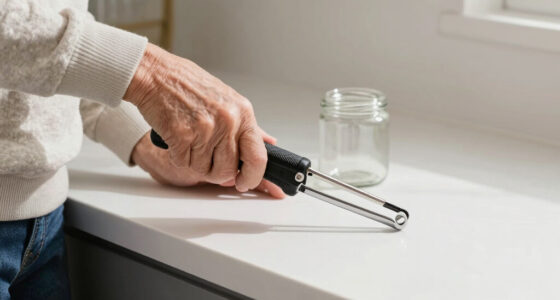

The best assistive technology devices match a person’s specific access need, whether that means communicating, reading, writing, moving safely, or using a computer. My best overall pick is the OrCam Read AI Assistive Reader for people who need help accessing printed text, while the AbleNet Jelly Bean Assistive Switch is a simpler choice for switch access and the GlassOuse V1.4 Wearable Bluetooth Head Mouse serves users who need hands-free computer control. The main tradeoffs are specialized function versus flexibility, and simpler operation versus more setup or features. No single device suits every disability, environment, or access method. Read on for how these 14 options differ and which buyer each one fits best.

Turn quiet afternoons into listening time
- Thousands of audiobooks, podcasts and originals
- Listen on your phone, tablet or Echo — also offline
- Cancel anytime
Complete the kit


Key Takeaways
- Different needs call for different device types: the roundup spans AAC buttons, reading pens, switches, writing aids, a car handle, and a wearable head mouse, so a device from one group is rarely a substitute for one from another.
- Reading support ranges from portable scanning to a dedicated reader: the OrCam Read is the specialist option, while the Scanmarker Pro and other reading pens are more portable but depend on scanning text with the pen.
- Switch size and activation style separate the AbleNet choices: Big Red offers a 5-inch activation surface, while Big Buddy and Jelly Bean suit buyers comparing other switch formats and setups.
- Communication buttons vary in scale: Joyreal’s device has 37 talking buttons and 8 programmable buttons, while recording tiles and multi-packs favor simpler, recorded messages.
- Low-tech aids can be the more practical choice: a writing grip or car handle may address a specific daily task without the setup involved in electronic readers or computer access devices.
| Joyreal AAC Communication Device with 37 Talking Buttons and 8 Programmable Buttons | 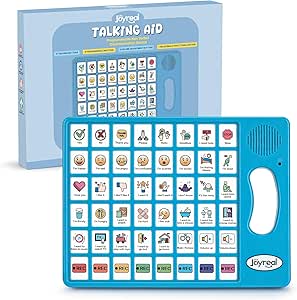 | Best for Everyday AAC Needs | Pre-installed talking buttons: 37 | Programmable buttons: 8 | Voice options: Male and female | VIEW LATEST PRICE | See Our Full Breakdown |
| Scan Translator Pen with Text-to-Speech, Note-Taking, and Recording |  | Best for Multilingual Printed Text | Model: S65pro | Online languages: 142 | Offline languages: 10 | VIEW LATEST PRICE | See Our Full Breakdown |
| Vive Car Handle Assist for Elderly, Scratch-Resistant Auto Grab Bar |  | Best for Vehicle Transfers | Material: Strong composite | Maximum supported weight: 300 lbs | Grip: Cushioned, nonslip overlay | VIEW LATEST PRICE | See Our Full Breakdown |
| AbleNet Big Buddy Button Red Adaptive Switch |  | Best Large-Surface Adaptive Switch | Brand and model: AbleNet 56100 | Button diameter: 5 inches | Connector: 3.5 mm plug | VIEW LATEST PRICE | See Our Full Breakdown |
| Scanmarker Pro Reading and Translation Pen |  | Best for Reading Support and Vocabulary | Model: Scanmarker Pro | Scanner type: Text | Connection type: Bluetooth | VIEW LATEST PRICE | See Our Full Breakdown |
| Ergonomic Assistive Writing and Drawing Device for Adults with Arthritis, Black |  | Best for Assisted Handwriting | Use: Writing and drawing | Design: Symmetrical, ambidextrous | Material: ABS | VIEW LATEST PRICE | See Our Full Breakdown |
| AbleNet Big Red Assistive Switch with 5-Inch Activation Surface |  | Best Large-Target Adaptive Switch | Brand: AbleNet | Model: 10033500 | Activation surface: 5 inches | VIEW LATEST PRICE | See Our Full Breakdown |
| Talking Products Voice Recording Tiles, Pack of 6 |  | Best for Multisensory Learning | Brand: Talking Products | Model: TTH-80-PK6 | Pack quantity: 6 | VIEW LATEST PRICE | See Our Full Breakdown |
| 4-Pack Portable AAC Communication Devices with Voice Recording Buttons |  | Best Portable AAC Button Set | Quantity: 4 buttons | Maximum recording time: 30 seconds per button | Power: 2 AAA batteries per button | VIEW LATEST PRICE | See Our Full Breakdown |
| Multilingual Translation and Reading Pen with Text-to-Speech |  | Best for Multilingual Reading Support | Model: S65pro | Online translation languages: 142 | Offline translation languages: 10 | VIEW LATEST PRICE | See Our Full Breakdown |
| GlassOuse V1.4 Wearable Bluetooth Head Mouse |  | Best for Hands-Free Cursor Control | Connectivity: Bluetooth 4.0, wireless | Movement detection: Optical | Buttons: 3 | VIEW LATEST PRICE | See Our Full Breakdown |
| Assistive Writing and Drawing Device for Limited Hand Mobility, Black |  | Best for Everyday Handwriting Support | Material: Plastic | Size: 13.3 × 6 × 5 cm | Weight: 80 g | VIEW LATEST PRICE | See Our Full Breakdown |
| OrCam Read AI Assistive Reader with Smart Reading |  | Best for Offline Text-to-Speech Reading | Display technology: Electronic ink | Connectivity: Bluetooth | Screen size: 6 inches | VIEW LATEST PRICE | See Our Full Breakdown |
| AbleNet Jelly Bean Assistive Switch |  | Best for Compact Switch Access | Activation surface: 2.5 in (6.4 cm) | Dimensions: 5.5 × 8.5 × 2.3 in | Weight: 6.6 oz | VIEW LATEST PRICE | See Our Full Breakdown |
More Details on Our Top Picks
Joyreal AAC Communication Device with 37 Talking Buttons and 8 Programmable Buttons
The Joyreal is a straightforward choice for people who benefit from pressing a picture to communicate common needs. Its 37 preloaded talking buttons provide a ready-made vocabulary, while eight recordable buttons let a caregiver add personal words or instructions. Compared with the AbleNet Big Buddy Button, which acts as a single external switch for compatible devices, this unit offers direct access to multiple spoken messages without another system. Male and female voice options and adjustable volume add flexibility across settings, and the included bag makes it easier to carry between home and appointments. The tradeoff is that personalization stops at eight recordings, and the device relies on three AAA batteries. It suits a focused set of everyday messages better than users who need a large, expanding vocabulary.
Pros:- 37 picture-based talking buttons cover common needs and instructions.
- Eight recordable buttons allow personalized messages.
- Male and female voice options with adjustable volume.
- Lightweight design and included storage bag support travel.
Cons:- Personalized recordings are limited to eight buttons.
- Requires three AAA batteries, which need replacement.
Best for: People with speech difficulties and caregivers seeking a portable, picture-based device for a consistent set of daily requests and instructions.
Not ideal for: Users who need extensive custom vocabulary or a device that avoids replaceable batteries; only eight buttons can be personalized.
- Pre-installed talking buttons:37
- Programmable buttons:8
- Voice options:Male and female
- Volume:Adjustable
- Power:3 AAA batteries
- Included accessory:Storage bag
Our verdict“Choose the Joyreal for portable, picture-based access to common spoken messages, but skip it if you need a broad custom vocabulary.”
Scan Translator Pen with Text-to-Speech, Note-Taking, and Recording
This scan pen brings text-to-speech and translation into a compact handheld tool, making it a fit for readers who can scan printed material themselves but benefit from spoken output or language support. It handles 142 languages online and 10 offline, and adds photo translation, note-taking, and voice recording. That breadth makes it more translation-oriented than the Scanmarker Pro, whose stated offline translation covers five languages and whose listing emphasizes reading aloud and word definitions. The S65pro is light at 2.47 ounces and connects by Bluetooth, though buyers should check whether its supported workflow and connectivity suit their needs. It is not suitable for blind users, and Japanese recognition is limited to horizontal text. Its many functions may also be more than someone seeking only basic text playback needs.
Pros:- Combines scanned-text playback with translation.
- Supports 142 languages online and 10 offline.
- Adds photo translation, note-taking, and voice recording.
- Lightweight 2.47-ounce design with Bluetooth connectivity.
Cons:- Not suitable for blind users because scanning requires visually guided use.
- Japanese text recognition supports horizontal text only.
- Online language support may depend on internet access.
Best for: Students, travelers, and multilingual readers with sufficient vision and hand control to scan printed text who want translation alongside text-to-speech.
Not ideal for: Blind users, people who need Japanese vertical-text recognition, or anyone seeking a dedicated reading aid without translation and note-taking functions.
- Model:S65pro
- Online languages:142
- Offline languages:10
- Dimensions:5.5 x 1.5 x 0.4 inches
- Weight:2.47 ounces
- Battery:1 included lithium polymer battery
- Connectivity:Bluetooth
Our verdict“Pick this pen for handheld scanning across languages, but choose a different reading aid if you need access without sight or Japanese vertical-text support.”
Vive Car Handle Assist for Elderly, Scratch-Resistant Auto Grab Bar
The Vive Car Handle Assist addresses a specific mobility task: gaining a steady handhold when getting into or out of a vehicle. It slots into a compatible U-shaped door latch and offers a cushioned, nonslip grip, giving users a support point that travels with the car. Unlike the AbleNet Big Buddy Button, which helps users activate connected technology, the Vive is a physical transfer aid rather than an electronic access device. Its compact form stores in a glove box or door compartment, and the listed maximum supported weight is 300 pounds. That limit and latch fit matter: it cannot help if the vehicle lacks a compatible anchor, and it is not a substitute for a broader mobility or transfer system. I would favor it for occasional car transfers, not as general-purpose support around the home.
Pros:- Creates a stable handhold for vehicle entry and exit.
- Cushioned, nonslip grip is designed for a secure grasp.
- Compact enough to store in a glove box or door compartment.
- Lightweight, scratch-resistant composite construction.
Cons:- Requires a compatible U-shaped vehicle door latch.
- Maximum supported weight is 300 pounds.
- Provides no support for walking or transfers outside the vehicle.
Best for: Older adults and people with reduced strength or balance who need a portable handhold for entering and exiting a compatible vehicle.
Not ideal for: People whose vehicle lacks a compatible U-shaped door latch, those above the 300-pound support limit, or users needing support beyond car transfers.
- Material:Strong composite
- Maximum supported weight:300 lbs
- Grip:Cushioned, nonslip overlay
- Compatibility:Most compact and midsized cars, trucks, and SUVs with a compatible U-shaped door latch
- Storage:Glove box or door compartment
- Warranty:60-day Vive guarantee
Our verdict“Choose the Vive for a portable handhold during car transfers if your vehicle’s latch is compatible and your needs stay within its weight limit.”
AbleNet Big Buddy Button Red Adaptive Switch
The Big Buddy Button is built around one clear advantage: a five-inch activation surface that gives users with limited dexterity or visual impairments a larger target than a small switch. Auditory and tactile feedback confirms a press, which can help users know an action registered. Through its 3.5 mm plug, it can trigger compatible AAC devices, computers, environmental controls, or adaptive toys; threaded inserts also allow mounting to suit a user’s reach. Unlike the Joyreal AAC device, it does not supply a bank of spoken messages on its own—it depends on a compatible connected device and setup. That makes it more flexible as an access switch, but less ready to use for communication out of the box. Its plastic construction may also be unsuitable for some demanding mounting environments.
Pros:- Five-inch button provides a large activation target.
- Auditory and tactile feedback confirms activation.
- Works with a range of devices that accept a 3.5 mm input.
- Built-in threaded inserts support flexible mounting.
Cons:- Requires compatible equipment with a suitable 3.5 mm input.
- Does not provide spoken messages without a connected device.
- Plastic construction may not fit every mounting environment.
Best for: People with limited dexterity or visual impairments who need a large, feedback-equipped switch for compatible AAC equipment, toys, or environmental controls.
Not ideal for: Buyers seeking a standalone communication device or users whose equipment lacks a compatible 3.5 mm input.
- Brand and model:AbleNet 56100
- Button diameter:5 inches
- Connector:3.5 mm plug
- Contact type:Normally open
- Operating voltage:12 volts
- Feedback:Auditory and tactile
- Mounting:Two built-in threaded inserts
- Dimensions and weight:8.9 x 5.59 x 1.1 inches; 2.4 ounces
Our verdict“Choose the Big Buddy Button when a large, mountable switch can improve access to compatible equipment; skip it if you need a standalone communication aid.”
Scanmarker Pro Reading and Translation Pen
The Scanmarker Pro pairs spoken reading with on-screen word highlighting, dictionary definitions, and translations, making it a more reading-focused pick than the S65pro scan translator pen. It can support readers who want to follow printed text while hearing it, or language learners who need quick word help. Its online translation spans over 100 languages, while offline support is listed for English, Spanish, French, German, and Italian. The standalone design also records notes and memos and connects to earbuds. A key limitation is that it does not scan to other devices, so it is not the right pick for someone who needs extracted text sent elsewhere. At 0.23 kg, it is portable but heavier than the S65pro’s stated 2.47 ounces, and its offline language set is narrow by comparison.
Pros:- Reads scanned text aloud and highlights words on screen.
- Provides dictionary definitions and word translations.
- Offers online translation in over 100 languages.
- Includes note and memo recording with Bluetooth earbud connectivity.
Cons:- Does not scan text to other devices.
- Offline translation is limited to five listed languages.
- At 0.23 kg, it is heavier than the S65pro listed in this roundup.
Best for: Readers and language learners who want printed text spoken aloud with word highlighting, dictionary help, and a small set of offline languages.
Not ideal for: Users who need scanned text sent to another device or broad offline translation beyond the five listed languages.
- Model:Scanmarker Pro
- Scanner type:Text
- Connection type:Bluetooth
- Resolution:600
- Weight:0.23 kg
- Online translation:Over 100 languages
- Offline translation:English, Spanish, French, German, and Italian
- Warranty:1 year
Our verdict“Choose the Scanmarker Pro for spoken reading and vocabulary support in a standalone pen, but skip it if exporting scanned text or wider offline translation is a priority.”
Ergonomic Assistive Writing and Drawing Device for Adults with Arthritis, Black
This ambidextrous writing aid is designed to give people with limited hand mobility a different way to hold a pen for writing or drawing. Its wide, weighted base aims to add stability and control, while its mouse-shaped form avoids the finger pinch required by a conventional pen grip. Compared with the Talking Products Voice Recording Tiles, which support communication through recorded audio, this device keeps the task focused on making marks on paper. It also needs no setup or extra accessories, so it is simpler than electronic options in this roundup. The tradeoff is its size: the broad base takes up more room than a standard grip, and 3D-printed ABS may show layer lines. It is a physical aid, not a substitute for speech or switch access.
Pros:- Symmetrical shape works with either hand
- Wide, weighted base is designed to support stability and control
- Needs no setup or additional accessories
- ABS construction is described as environmentally friendly
Cons:- Large base takes up more space than a standard pen grip
- 3D-printed surface may have visible layer lines
Best for: Adults with arthritis or limited hand mobility who want a simple aid for writing or drawing with either hand
Not ideal for: People who need speech-based communication or a compact pen grip, since this device is bulky and only supports writing and drawing
- Use:Writing and drawing
- Design:Symmetrical, ambidextrous
- Material:ABS
- Manufacturing:3D printed
- Weight:2.7 ounces
- Color:Black
Our verdict“Choose this for a straightforward, no-setup writing aid if a broader grip is more useful than a compact pen attachment.”
AbleNet Big Red Assistive Switch with 5-Inch Activation Surface
The 5-inch activation surface makes the Big Red a strong choice for users who find smaller buttons difficult to locate or press. A press produces both tactile and auditory feedback, helping users know the switch has registered. Four interchangeable tops and a clear symbol holder let caregivers match the button’s appearance to a task or communication cue. Unlike the 4-Pack Portable AAC Communication Devices with Voice Recording Buttons, this is a switch for controlling compatible toys or appliances, not a standalone recorder that speaks a custom message. That distinction matters: buyers need a switch-accessible device and a compatible connection. The Big Red is also larger than a portable communication button, so it suits a stable tabletop or surface setup better than frequent carrying. Its stated sales region is limited to the United States.
Pros:- Large 5-inch activation surface offers a broad press target
- Tactile and auditory feedback confirms activation
- Four interchangeable tops support visual customization
- Clear snap-on symbol holder can display a task cue
Cons:- Requires a compatible switch-accessible toy or appliance
- Sales are limited to the United States
- Larger size is less suited to portable use than the four-button AAC set
Best for: Users who need a large, easy-to-target switch to operate compatible switch-accessible toys or appliances at home or in a care setting
Not ideal for: People seeking a standalone voice-recording communication button, or buyers outside the United States
- Brand:AbleNet
- Model:10033500
- Activation surface:5 inches
- Operation mode:Manual
- Feedback:Tactile and auditory
- Included tops:Red, blue, yellow, and green
- Symbol holder:Clear snap-on holder
- Dimensions:6.8 × 7 × 3 inches
- Warranty:Two years
Our verdict“Pick the Big Red when a user needs a large, feedback-rich switch for compatible equipment rather than a self-contained communication button.”
Talking Products Voice Recording Tiles, Pack of 6
These six color-coded recording tiles let users associate a short spoken message with a matching image, word, or symbol under each clear cover. With up to 80 seconds per tile, they allow longer prompts than the 4-Pack Portable AAC Communication Devices with Voice Recording Buttons, which record up to 30 seconds each. The built-in microphone and 3.5 mm audio input offer two ways to create recordings, making the tiles useful for classroom activities, routines, or accessible learning tasks. They retain recordings when batteries are replaced or depleted, which helps avoid rebuilding a set of messages after a power change. Their tradeoffs are practical: each tile requires three AAA batteries, and six tiles with a stated combined weight of 600 g are less pocket-friendly than a small portable button. These are best for planned, visual-audio activities rather than quick carry-around communication.
Pros:- Six distinct colors help separate messages or activities
- Records up to 80 seconds on each tile
- Clear covers accommodate pictures, symbols, numbers, or words
- 3.5 mm audio input supports recording from an external device
Cons:- Requires three AAA batteries
- Recording time is limited to 80 seconds per tile
- The six-tile set is less portable than the four-button AAC device
Best for: Teachers, therapists, and families building visual-and-audio learning activities with picture or word prompts
Not ideal for: Users who need pocket-sized communication buttons or longer recordings than the 80-second limit
- Brand:Talking Products
- Model:TTH-80-PK6
- Pack quantity:6
- Colors:Red, yellow, green, blue, black, and white
- Recording time:Up to 80 seconds
- Audio input:3.5 mm
- Batteries:3 AAA batteries required
- Weight:600 g
- Warranty:12 months
Our verdict“Choose these tiles for structured learning and visual prompts when longer recordings matter more than pocketable size.”
4-Pack Portable AAC Communication Devices with Voice Recording Buttons
This set offers four compact, customizable voice buttons for short messages used at home, school, therapy, or in the community. Each button records up to 30 seconds and plays the message through its built-in speaker, giving users a direct alternative to typing or repeating a phrase aloud. Compared with the Talking Products Voice Recording Tiles, these buttons are more portable and simpler as individual message devices, while the tiles provide longer recordings, six colors, and space for picture or word labels. The shorter recording limit makes these buttons a better fit for concise requests or familiar prompts than extended instructions. Battery planning is another tradeoff: every button needs two AAA batteries, and none are included. Buyers should also check whether the physical button format suits the user’s access needs before choosing this set over a larger switch such as the AbleNet Big Red.
Pros:- Four buttons allow separate messages for different situations
- Recording content can be customized
- Built-in speakers play messages aloud
- Compact design suits use across home, school, and therapy settings
Cons:- Each button records for no more than 30 seconds
- Two AAA batteries are needed per button
- Batteries are not included
Best for: Families and therapy teams who need several portable, short-message buttons for everyday communication practice
Not ideal for: Users who need longer spoken messages, visual symbol covers, or a single large activation target
- Quantity:4 buttons
- Maximum recording time:30 seconds per button
- Power:2 AAA batteries per button
- Batteries included:No
- Speaker:Built-in
Our verdict“Choose this set for portable, short recorded messages, but pick the Talking Products tiles if longer clips and picture labels matter more.”
Multilingual Translation and Reading Pen with Text-to-Speech
This scanning pen combines text-to-speech and translation, with online support for 142 languages and offline support for 10. It can read scanned text aloud, show highlighted words, and extract text from documents or images—useful for readers who need spoken text or language support while working with printed material. Compared with the Scan Translator Pen with Text-to-Speech, Note-Taking, and Recording in this roundup, this model’s stated language coverage is a clear point of comparison, though the supplied details do not establish which device handles scanning more accurately. Its limits deserve close attention: some functions require Bluetooth, Japanese text recognition supports horizontal text only, and the product is expressly not suitable for blind users. The screen-based interaction and scanning workflow also make it a different kind of aid from tactile switches or recorded-message buttons.
Pros:- Online translation supports 142 languages
- Offline translation supports 10 languages
- Reads scanned text aloud and highlights words on screen
- Can scan and extract text from documents or images
Cons:- Not suitable for blind users
- Some functions require Bluetooth connectivity
- Japanese text recognition supports horizontal text only
Best for: Readers and multilingual learners who can use a screen and want scanned text read aloud or translated
Not ideal for: Blind users, people who need full functionality without Bluetooth, or readers working with vertical Japanese text
- Model:S65pro
- Online translation languages:142
- Offline translation languages:10
- Dimensions:5.13 × 2.48 × 0.47 inches
- Weight:2.56 ounces
- Battery:1 included lithium polymer battery
- Connectivity:Bluetooth
- Japanese text recognition:Horizontal text only
Our verdict“Choose this pen for screen-based reading and multilingual support if Bluetooth access is available and the user is not blind.”
GlassOuse V1.4 Wearable Bluetooth Head Mouse
The GlassOuse V1.4 is the most direct fit here for people who need to operate a cursor without relying on hand movement. Its optical tracking responds to slight head movements, and Bluetooth support lets it work with compatible phones, computers, tablets, and smart TVs. Compared with the AbleNet Jelly Bean Assistive Switch, which provides a physical button for switch-accessible tasks, GlassOuse offers cursor movement but depends on separate dwell-click software or a compatible switch for clicking. That makes setup and the user’s preferred clicking method part of the decision. The V1.4 is described as having improved sensitivity and longer battery life, though its 120-day warranty is limited. It suits users seeking broad device compatibility, but it is not a complete hands-free input system on its own.
Pros:- Uses slight head movements to control a cursor without hand operation
- Works with compatible smartphones, computers, tablets, and smart TVs
- Supports dwell-click software and external switches through a 3.5 mm connection
- V1.4 is described as offering improved sensitivity and longer battery life
Cons:- Clicking requires separate dwell software or a compatible switch
- A 120-day warranty is relatively limited
- Bluetooth compatibility and setup may vary by device
Best for: People with limited hand movement who can make controlled head movements and want cursor access across several Bluetooth-compatible devices
Not ideal for: Buyers who need an all-in-one device with built-in clicking, or users who cannot reliably control head movement
- Connectivity:Bluetooth 4.0, wireless
- Movement detection:Optical
- Buttons:3
- Compatible devices:Smartphones, computers, tablets, and smart TVs
- Switch connection:3.5 mm plug
- Wireless range:10 meters
- Weight:0.21 kg
- Warranty:120 days
Our verdict“Choose GlassOuse if head movement is more accessible than hand control and you can pair it with a suitable clicking method.”
Assistive Writing and Drawing Device for Limited Hand Mobility, Black
This ambidextrous writing aid is a simple, task-specific choice for people who can move a pen but need help holding it comfortably. At 80 g, it is light to handle, and its ergonomic grip is intended to reduce strain during writing or drawing. Unlike the GlassOuse V1.4, which supports digital cursor control, this device keeps the task on paper and does not depend on Bluetooth, software, or charging. Its narrower purpose is also its main limitation: it holds a writing instrument, but the product details do not specify adjustment options or fit ranges. The listed dimensions may not suit every hand or movement pattern, so buyers should check fit needs before choosing it. It is a practical option for analog writing, not a substitute for digital access or broader hand support.
Pros:- Designed for use with either the left or right hand
- Ergonomic grip is intended to reduce strain and fatigue
- Supports both writing and drawing
- Lightweight at 80 g
Cons:- The stated dimensions may not fit every hand or preferred grip
- Provides no digital input or reading features
- Only one device is included, with no listed adjustment range
Best for: Adults with limited hand mobility who can guide a pen and want a lightweight aid for paper writing or drawing with either hand
Not ideal for: People who need adjustable sizing, digital text access, or support for tasks beyond holding a writing instrument
- Material:Plastic
- Size:13.3 × 6 × 5 cm
- Weight:80 g
- Hand orientation:Ambidextrous
- Grip type:Ergonomic
- Color:Black
- Line size:0.5 mm
- Package includes:1 assistive writing and drawing device
Our verdict“Pick this writing aid if your main goal is holding a pen more comfortably for paper-based tasks and the listed size fits your hand.”
OrCam Read AI Assistive Reader with Smart Reading
The OrCam Read is the lineup’s most focused option for turning printed or on-screen text into spoken audio. Its camera-based reading, full-page capture, text selection, and speed-reading functions make it more reading-oriented than the Scanmarker Pro Reading and Translation Pen, which is a pen-style alternative for scanning text. OrCam’s stated ability to work without internet access and in low light can help readers who need spoken output away from a network connection. Audio comes through its built-in speaker or wired or Bluetooth headphones. The tradeoff is that it still requires the user to control the device with their hands and to hear the output, with or without a hearing device. The listed compatibility and file-format details are limited, so buyers should verify that their intended reading material and setup are supported.
Pros:- Reads printed and digital text aloud
- Works without an internet connection and in low light
- Includes smart text selection, speed reading, and full-page capture
- Audio can play through the speaker or wired and Bluetooth headphones
Cons:- Requires hand control to aim or operate the device
- Spoken output requires hearing, with or without a hearing device
- The supplied product details do not establish broad language or file-format support
Best for: Readers with visual access challenges who can handle a button-operated device and want printed or digital text read aloud offline
Not ideal for: People who cannot control hand movements, cannot hear spoken output, or need a device confirmed to support specific languages and file types beyond those listed
- Display technology:Electronic ink
- Connectivity:Bluetooth
- Screen size:6 inches
- Native resolution:1024 × 768
- File formats:EPUB, MOBI
- Battery:Rechargeable
- Controls:Buttons
- Language:English
Our verdict“Choose OrCam Read if spoken access to printed and screen text is your priority and you can operate the reader and hear its audio.”
AbleNet Jelly Bean Assistive Switch
The AbleNet Jelly Bean is a straightforward physical switch for users who can reliably reach a smaller activation target. Its 2.5-inch surface is more compact than the AbleNet Big Red Assistive Switch, so it may suit a desk or setup where a larger button would take up too much space. The removable colored tops and clear snap cap allow the switch to be visually distinguished or paired with a symbol, which can make its purpose easier to identify. The key tradeoff is also clear: a smaller target demands more precise movement than a large-button switch, so it may frustrate users with less controlled reach. The provided details say it is compatible with assistive technology devices but do not specify connection type or included cabling; confirm those requirements against the intended device before buying.
Pros:- 2.5-inch activation surface offers a smaller footprint than large-button switches
- Removable tops are available in four colors
- Clear snap cap can display a symbol
- Designed for use with assistive technology devices
Cons:- Smaller activation area may be difficult for users with limited targeting control
- Connection type and cabling are not specified in the supplied details
- Its dimensions may take up more space than the activation surface alone suggests
Best for: Users who can press a 2.5-inch target and need a compact, visually identifiable switch for a compatible assistive technology setup
Not ideal for: People who need a large or easy-to-hit target, or buyers who require confirmed connection details before selecting a switch
- Activation surface:2.5 in (6.4 cm)
- Dimensions:5.5 × 8.5 × 2.3 in
- Weight:6.6 oz
- Available colors:Red, blue, yellow, green
- Included accessory:Clear snap cap for symbols
- Compatibility:Assistive technology devices
Our verdict“Choose the Jelly Bean if a smaller press target suits the user’s reach and its connection matches the intended assistive device.”

How We Picked
I ranked these devices by how directly they address a defined access need, how understandable their operation appears from the product design, and how much flexibility they offer for different tasks. I also weighed the practical fit: whether a device is portable, depends on scanning or setup, supports repeated use, or targets one specific activity. Since communication, reading, mobility, writing, and computer access are not interchangeable needs, I compared products within those use cases rather than treating them as substitutes.
The order gives priority to devices with a clear, useful role and a meaningful advantage for their intended user. The OrCam Read leads for dedicated text access; the other high placements recognize distinct needs such as switch access and hands-free computer control. Simpler options rank well when their focused design may be easier to adopt, while overlapping reading pens and writing aids sit lower because buyers need to choose between similar functions based on personal handling and task fit. I also account for tradeoffs: a specialized device may be less useful outside its main purpose, and a feature-rich choice may require more setup or practice.
Factors to Consider When Choosing Best Assistive Technology Devices
Before choosing from the best assistive technology devices, start with the activity that is hardest to do and the conditions where help is needed. The right choice depends on the person’s movement, vision, hearing, language, fatigue, and comfort—not just the device’s feature list. These factors can help narrow the field before comparing individual models.
Match the device to one clearly defined task
Write down the exact task that causes difficulty, such as reading a printed letter, calling for help, selecting a computer command, or getting into a vehicle. A device built for that task is often easier to adopt than a multifunction product with controls the user will not need. Avoid buying a communication aid when the main barrier is computer access, or a reading pen when the user needs spoken communication. If the person has several access needs, rank them by frequency and impact rather than expecting one purchase to solve all of them. An occupational therapist, speech-language pathologist, or low-vision specialist can help identify which task to address first. This step also gives caregivers a clearer way to judge whether a device is helping.
Check the access method against the user’s abilities
Consider what the person must see, hear, touch, hold, or activate to use the device. A small button or pen may be hard to manage for someone with limited dexterity, while a large switch can require space and a suitable mounting position. Speech output may not be useful in a noisy setting or if the user cannot comfortably hear it. For head-controlled computer access, check posture, range of movement, and the intended computer or device setup before purchase. The common mistake is to focus on the device’s stated purpose without checking whether its controls match the user’s actual movements. Whenever possible, arrange a demonstration or trial with the person who will use it.
Plan for the setting, not just the device
Think through where the device will be used: at home, in a classroom, in a vehicle, or while traveling. A portable reading tool may be easier to carry but still need a steady hand and clear text to scan. A recorded-message button can work well in a familiar routine but may be less adaptable when messages change often. For vehicle aids, check that the handle is compatible with the intended car and does not interfere with safe entry or exit. Also consider storage, cleaning, charging or batteries where applicable, and who will help with setup. A device that stays at home because it is inconvenient to transport may not solve an everyday access problem.
Choose communication tools around how messages change
For AAC, decide whether the user needs a few dependable recorded phrases or a broader set of selectable messages. A small collection of voice-recording tiles can suit repeated prompts in a fixed routine, while a button device with more choices may support a wider set of requests. Ask who will record or update messages and how often vocabulary is likely to change. The number of buttons alone does not tell you whether the layout is understandable or reachable for the user. Leave room for the person’s preferred words, language, and communication style rather than designing only around caregiver convenience. If communication needs are evolving, consult an AAC professional before settling on a limited format.
Balance specialization with flexibility
A device designed for one job may be easier to understand and more dependable for that job, while a versatile tool can cover more situations but bring extra steps. Paying more may make sense when a feature directly removes a recurring barrier, such as accessing printed text or controlling a computer without hands. It may not make sense when a low-tech grip or single-message button already handles the task comfortably. Compare the time needed to learn, maintain, and set up a device with how often the user will benefit from it. A frequent-use tool deserves more attention to durability, repair options, and ongoing support than an occasional aid. Resist choosing by the longest feature list; choose by the amount of useful access it provides in the user’s daily routine.
Frequently Asked Questions
How do I choose between a reading pen and a dedicated reading device?
Start with the material the user needs to read and how they can handle a scanning tool. Reading pens are compact and can suit someone who can guide the pen across a line of printed text; they may be less convenient for long passages, irregular layouts, or a hand that tires quickly. A dedicated reader such as the OrCam Read is aimed more directly at accessing printed text without relying on the same pen-scanning motion. Check which languages, text types, and reading environments matter before choosing. If possible, test the device with the user’s actual documents rather than relying on a short demonstration.
Should I buy one AAC device with many buttons or several simple recording buttons?
Choose based on how many messages the user needs in each setting and how often those messages change. A multi-button communication device can put more choices in one place, but only helps if the user can distinguish and reach its controls. Separate recording buttons can be easier to place around a routine or shared among locations, though they may offer less flexibility as communication needs grow. Consider who will record messages, whether the user can make independent selections, and how the buttons will be labeled. If the user needs broader communication than a set of fixed phrases, seek AAC guidance before treating simple recorded buttons as a complete communication system.
Are adaptive switches interchangeable, or does the activation surface matter?
They are not automatically interchangeable: the user’s movement, activation force, mounting needs, and connected equipment all affect fit. A larger surface may be easier to target when precision is limited, but it can take up more room and may not suit every mounting arrangement. A smaller switch may fit a compact setup yet demand more accurate movement. Confirm that the switch can connect to the intended device or toy and that its activation method matches the user’s abilities. A therapist or assistive technology specialist can help assess positioning and compatibility before purchase.
Can a mobility aid like a car handle replace help getting into a vehicle?
A vehicle grab handle may provide a handhold for some people, but it does not replace an individualized assessment of safe transfers. The user needs enough grip or arm control to use it, and the handle must fit the vehicle and be positioned appropriately. It may not be suitable for someone whose balance, strength, or transfer needs require a different support method. Ask a clinician or mobility specialist to assess the person’s movement and the vehicle setup. Do not use a handle in a way that interferes with seat belts, doors, or safe vehicle operation.
What should I check before buying a head mouse or other computer access device?
Check the intended computer and operating system, how the device connects, and whether the user can maintain the movement or posture needed for control. A wearable head mouse can offer an alternative to hand-operated input, but it may require configuration and practice before everyday tasks feel manageable. Also check how the user will select, type, or activate items beyond moving a pointer; one access device may not cover every computer task. Consider fatigue, positioning, and whether a mounting or seating adjustment is needed. A trial with the user’s own computer and typical applications can reveal setup barriers that a product description cannot.
Conclusion
My best overall choice for dedicated printed-text access is the OrCam Read, while the best premium-style specialist option in this lineup is also the OrCam Read for buyers who prioritize a purpose-built reader over a pen format. For a lower-complexity starting point, the best for beginners may be a single AbleNet switch or a voice-recording tile, depending on whether the need is device activation or spoken messages. The best value by function is a focused low-tech aid when it directly solves the task, such as a writing device for limited hand mobility or a car handle for an assessed transfer need. Choose the GlassOuse V1.4 for hands-free computer access, Joyreal for a larger set of talking-button choices, and a reading pen if portability and pen-based scanning suit the user. The right pick is the one that fits the person’s access method, setting, and daily routine—not the one with the broadest feature list.