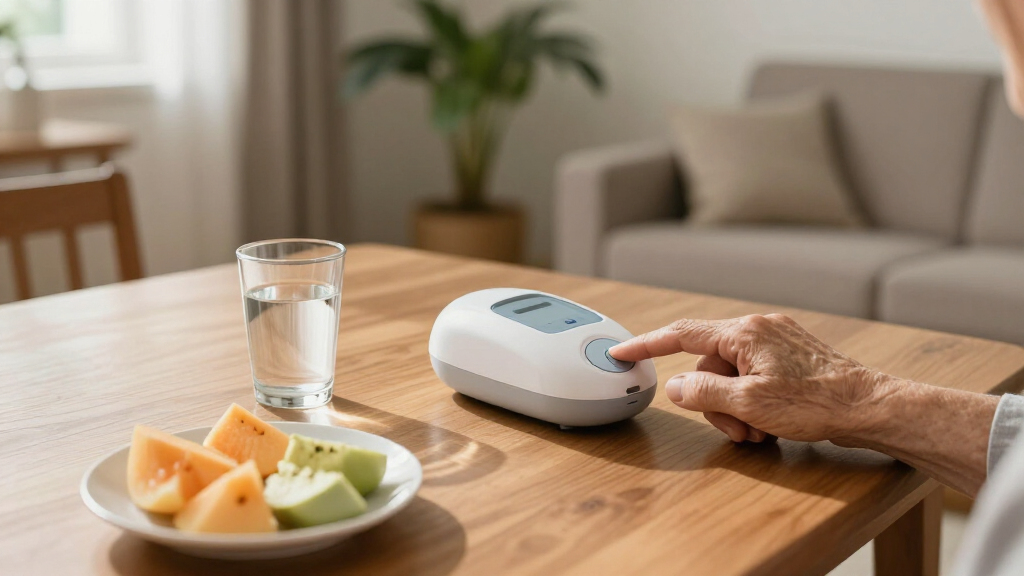

Automatic pill dispensers solve one specific problem: making sure the right pills are available at the right time, without relying on memory or a caregiver standing nearby. After comparing 14 models, the Betife 28-Day Smart Bluetooth Pill Box stands out as the best overall pick thanks to its app connectivity, locking lid, and true 28-day capacity in a manageable size. The EziMedPil 28-Day Locked Dispenser with Frosted Privacy Lid is the strongest choice for dementia care, where tamper resistance and medication privacy matter most, while the Windtrace with Alarm offers the simplest setup for buyers who want nothing to do with apps. The main tradeoff in this category is between smart features and simplicity — connected models demand a smartphone and occasional troubleshooting, while alarm-only units work out of the box but offer no remote oversight for family caregivers. Capacity is the second big decision: 28-day and 42-day models reduce refill frequency but make mistakes costlier if loading goes wrong. Keep reading for the full breakdown of all 14 dispensers and which one fits your situation.

Turn quiet afternoons into listening time
- Thousands of audiobooks, podcasts and originals
- Listen on your phone, tablet or Echo — also offline
- Cancel anytime
Complete the kit


Key Takeaways
- The lineup splits cleanly into three tiers: app-connected dispensers (Betife and the 42-Day LCD model), locked alarm-based units (EziMedPil and LiveFine locking models), and budget timer-only dispensers — and price does not always track with tier.
- A locking lid was the single feature that separated dementia-care-capable models from general-purpose ones; five of the 14 units lock, and four of my top five rankings include that feature.
- The three LiveFine/Live Fine variants (locked frosted, clear lid, locking lid) are nearly identical internally, so buyers should choose based on lid style and current price rather than assuming the newest model is better.
- The 42-Day LCD dispenser trades bulk for refill convenience — it holds 50% more medication than standard 28-day models but is the least portable option here and best suited to a fixed bedside or kitchen spot.
- The no-app 28-day model with desiccant is the only unit in the roundup that addresses humidity, a real advantage for buyers in humid climates or steamy bathrooms where pills degrade faster.
| Med-Q Electronic Pill Dispenser with Alarm for Dementia and Elderly |  | Best for Dementia Care | Compartment Layout: 7-day AM/PM | Number of Compartments: 14 | Capacity per Compartment: Up to 23 aspirin (325 mg) | VIEW LATEST PRICE | See Our Full Breakdown |
| Betife Automatic Pill Dispenser, 28-Day Smart Bluetooth Pill Box |  | Best Smart Pick | Capacity: 28 days | Connectivity: Bluetooth | App: Pillcalendar | VIEW LATEST PRICE | See Our Full Breakdown |
| EziMedPil 28-Day Locked Automatic Pill Dispenser with Frosted Privacy Lid |  | Best Privacy and Safety Design | Capacity: 28 compartments, 672 pills total | Pill Capacity per Compartment: 24 tablets | Dosage Rings: 6 | VIEW LATEST PRICE | See Our Full Breakdown |
| Daviky Daily Pill Dispenser, Large Capacity 14-Day Pill Organizer Box |  | Best Budget Manual Option | Capacity: 14 compartments | Dispensing: Press-button design | Labels: Color-coordinated AM/PM and rainbow weekly | VIEW LATEST PRICE | See Our Full Breakdown |
| Live Fine Automatic Locking Pill Dispenser, 28 Day, Frosted Lid |  | Best Overall | Capacity: 28 days | Lockable Cover: Yes | Lid: Frosted | VIEW LATEST PRICE | See Our Full Breakdown |
| 42-Day Automatic Pill Dispenser with App & LCD Display, Digital Lock, Sound & Light Alerts |  | Best for Remote Caregivers | Tray Capacity: 14 pills per tray | Number of Trays: 3 (expandable) | Dosing Schedule: Once, twice, or three times daily | VIEW LATEST PRICE | See Our Full Breakdown |
| Live Fine Automatic Pill Dispenser, 28-Day Medication Organizer with Clear Lid |  | Best for Complex Medication Schedules | Capacity: 28 days | Pills per Slot: Up to 18 | Display: Jumbo LCD | VIEW LATEST PRICE | See Our Full Breakdown |
| 28-Day Automatic Pill Dispenser with Alarm and Desiccant, No App |  | Best No-Tech Pick for Humid Homes | Capacity: 28 large compartments | Compartment Size: Ca tablets (0.79″) ×16, vitamins (0.31″) ×14, capsules (0.75″) ×13 | Moisture Protection: Water-resistant lid with dual desiccant slots | VIEW LATEST PRICE | See Our Full Breakdown |
| Windtrace Automatic Pill Dispenser for Elderly with Alarm |  | Best Budget-Friendly Starter Option | Number of Compartments: 28 | Dosage Times: 6 per day | Alarm Type: Loud alarm and flashing light | VIEW LATEST PRICE | See Our Full Breakdown |
| Windtrace Automatic Pill Dispenser for Elderly with Alarm |  | Best Battery-Included Value | Compartments: 28 large compartments | Alarm: Loud alarm with flashing blue light | Display: LCD | VIEW LATEST PRICE | See Our Full Breakdown |
| LiveFine Automatic Pill Dispenser for Elderly, 28-Day Supply, Locking Lid |  | Best for High-Volume Medication Loads | Capacity: 28-day supply | Pill Slots: 18 pills per slot | Dosage Rings: 9 interchangeable rings | VIEW LATEST PRICE | See Our Full Breakdown |
| LiveFine Automatic Pill Dispenser for Elderly, 28-Day Supply, Clear Lid | 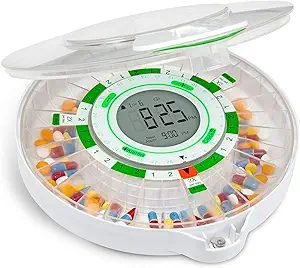 | Best Value for Caregiver Monitoring | Capacity: 28-day supply | Reminders: Audio and visual, 3 volume levels, 3 beeping patterns | Security: Lockable cover with manual key | VIEW LATEST PRICE | See Our Full Breakdown |
| Betife 2nd Gen Automatic Pill Dispenser for Elderly with Alarm |  | Most Senior-Friendly Design | Controls: 6 buttons with oversized icons | Setup Guidance: Spoken quick-start instructions | Seal: Under 2mm tray-to-cover seal | VIEW LATEST PRICE | See Our Full Breakdown |
| 28-Day Automatic Pill Dispenser with App & LCD Display |  | Best for Long-Distance Caregivers | Tray Capacity: 2 trays, 14 slots each (28-day total) | Display: LCD | Connectivity: App and on-device setup | VIEW LATEST PRICE | See Our Full Breakdown |
| automatic pill dispenser | Display | Capacity |
|---|---|---|
| Med-Q Electronic Pill Dispense | — | — |
| Betife Automatic Pill Dispense | LCD screen | 28 days |
| EziMedPil 28-Day Locked Automa | High-brightness LCD | 28 compartments, 672 pills total |
| Daviky Daily Pill Dispenser | — | 14 compartments |
| Live Fine Automatic Locking Pi | Jumbo LCD | 28 days |
| 42-Day Automatic Pill Dispense | LCD | — |
| Live Fine Automatic Pill Dispe | Jumbo LCD | 28 days |
| 28-Day Automatic Pill Dispense | — | 28 large compartments |
| Windtrace Automatic Pill Dispe | LCD | — |
| Windtrace Automatic Pill Dispe | LCD | — |
| LiveFine Automatic Pill Dispen | Jumbo LCD | 28-day supply |
| LiveFine Automatic Pill Dispen | Jumbo LCD | 28-day supply |
| Betife 2nd Gen Automatic Pill | XL LCD screen | — |
| 28-Day Automatic Pill Dispense | LCD | — |
More Details on Our Top Picks
Med-Q Electronic Pill Dispenser with Alarm for Dementia and Elderly
What sets the Med-Q apart from every locked carousel in this roundup is its escalating alarm that grows louder over five minutes — a genuine lifesaver when the user is in another room or hard of hearing. Combined with flashing compartment lights, it targets the specific failure mode of dementia care: forgetting a dose entirely, or taking it twice. The braille-marked, removable trays are a thoughtful touch that the Betife and EziMedPil dispensers lack. The tradeoff is capacity — at 14 compartments versus the 28-day carousels elsewhere in this list, a caregiver refills it weekly rather than monthly. For families managing memory loss, that weekly refill is a small price for reminders this persistent.
Pros:- Alarm volume escalates over five minutes so it’s audible across rooms
- Flashing lights plus braille-marked trays give visual and tactile cues
- Removable compartments simplify weekly filling and cleaning
- Roughly 14 months of battery life with low-battery alerts
Cons:- Only 14 compartments, so refills are weekly instead of monthly
- No locking mechanism for controlling access to medication
- No caregiver alerts or app connectivity if a dose is missed
Best for: Caregivers of seniors with dementia or memory loss who need aggressive multi-sensory reminders
Not ideal for: Anyone wanting month-long autonomy between refills or app-based remote monitoring
- Compartment Layout:7-day AM/PM
- Number of Compartments:14
- Capacity per Compartment:Up to 23 aspirin (325 mg)
- Alarm:Loud, increasing over 5 minutes
- Batteries:2 AA, approx. 14 months lifespan
- Water Resistance:Water-resistant (not submersible)
- Dimensions:8.75 x 4.5 x 1 inches
- Weight:11 ounces
Our verdict“Choose this if missed and doubled doses from memory loss are the primary problem — not medication volume.”
Betife Automatic Pill Dispenser, 28-Day Smart Bluetooth Pill Box
This is the most tech-forward option in the lineup. Where the Live Fine and EziMedPil models only beep and flash at the user, the Betife’s Bluetooth app lets a caregiver schedule doses, confirm adherence, and get notified remotely — a meaningful difference for adult children managing a parent’s medications from another city. The fingerprint lock adds a layer of security that keyed mechanical locks can’t match, since there’s no key to lose or hide. The catch is the setup burden: full functionality depends on a smartphone and the Pillcalendar app, which makes it a poor match for the technophobic seniors who do fine with the Med-Q’s simple flashing trays. It’s a caregiver’s tool first and the user’s device second.
Pros:- App control enables remote scheduling and dose confirmation
- Fingerprint lock prevents unauthorized access without a physical key
- Up to 6 daily alarms handle complex regimens
- Manual operation fallback works without the app
Cons:- Full feature set requires smartphone pairing and app setup
- More expensive than non-connected 28-day dispensers like the Live Fine
- Bluetooth range limits remote monitoring to when the user is nearby or via relayed data
Best for: Remote caregivers who want app-based scheduling, adherence tracking, and keyless security
Not ideal for: Seniors who are uncomfortable with smartphones or app setup
- Capacity:28 days
- Connectivity:Bluetooth
- App:Pillcalendar
- Alarm Settings:Up to 6 daily alarms
- Security:Fingerprint and mechanical lock
- Display:LCD screen
- Buttons:6 physical buttons
Our verdict“Worth the premium if a caregiver needs remote visibility into medication adherence — skip it if the user manages setup alone.”
EziMedPil 28-Day Locked Automatic Pill Dispenser with Frosted Privacy Lid
The frosted lid is the detail that earns this model its place. Unlike the Live Fine’s clear-lid variants elsewhere in this roundup, the privacy lid keeps medication hidden — a real concern in shared living spaces, assisted facilities, or homes with visitors, and it also removes visual temptation for confusion-prone users. The lockable design gives caregivers control over access, matching the security of the Betife but without any app dependency. Thoughtful extras like the included magnifying glass and anti-slip grips show it was designed for elderly hands specifically. At 672 total pills across 28 compartments, refills are a monthly affair. It’s bulkier than the Med-Q’s slim tray format, and pill size is constrained by compartment dimensions, so large supplements may not fit.
Pros:- Frosted lid hides medication contents for privacy in shared spaces
- Lockable design prevents unsupervised or accidental access
- 672-pill total capacity means monthly refills
- Magnifying glass and anti-slip grips aid low-vision and arthritic users
Cons:- Bulkier than slim tray-style organizers like the Med-Q
- Compartment size limits large pills and supplements
- Battery replacement is a recurring maintenance task
Best for: Seniors in shared households or care facilities where medication privacy and locked access matter
Not ideal for: Frequent travelers or anyone taking oversized supplement capsules that won’t fit compartments
- Capacity:28 compartments, 672 pills total
- Pill Capacity per Compartment:24 tablets
- Dosage Rings:6
- Power Source:4 AA batteries
- Display:High-brightness LCD
- Alarm Settings:Up to 6 daily alarms
- Time Format:12-hour or 24-hour
- Additional Features:Lockable frosted lid, magnifying glass, anti-slip grips
Our verdict“The pick when privacy and physical access control matter more than smart features.”
Daviky Daily Pill Dispenser, Large Capacity 14-Day Pill Organizer Box
Honesty first: this isn’t automatic — there’s no alarm or timer, which is exactly why it costs a fraction of the Med-Q or Live Fine. What it does offer is a press-button dispensing design that’s easier on arthritic hands than prying open tiny lids, plus tabletop or wall-mounted placement so it can live at eye level where a dose won’t be overlooked. The color-coordinated AM/PM and rainbow weekly labels do the organizing work that digital displays do elsewhere. Compared with the Med-Q, you give up reminders entirely; compared with everything else here, you give up a lot of money. For a regimented person who never forgets a dose but hates fumbling with blister packs, it’s the right trade.
Pros:- Press-button dispensing is arthritis-friendly with no lids to pry
- Wall-mount or tabletop placement keeps it visible
- Color-coded AM/PM and weekly labels reduce mix-ups
- Includes pill cups, hooks, and stickers for customization
Cons:- No alarms, timers, or any automatic reminders
- Requires manual filling and labeling effort
- Oversized for people taking only one or two medications
Best for: Budget-conscious buyers who remember their doses but want organized, easy dispensing
Not ideal for: Anyone whose core problem is forgetting doses — there are no alarms or alerts
- Capacity:14 compartments
- Dispensing:Press-button design
- Labels:Color-coordinated AM/PM and rainbow weekly
- Accessories:Pill cups, hooks, stickers
- Mounting Options:Tabletop or wall-mounted
- Power Source:None (manual)
Our verdict“A cheap, effective organizer for disciplined users — not a solution for missed doses.”
Live Fine Automatic Locking Pill Dispenser, 28 Day, Frosted Lid
This model hits the broadest sweet spot in the roundup: 28-day capacity, a locking cover, adjustable audio and visual alerts, and a jumbo LCD that seniors can actually read. Where the EziMedPil offers similar security, the Live Fine edges ahead on dosing flexibility with up to 9 doses per day versus 6 — a genuine advantage for insulin-adjacent regimens or antibiotics paired with meal-time reminders. Unlike the Betife, there’s no app to install or phone to pair; everything runs from on-device programming, which most caregivers can handle in one sitting. The frosted lid borrows the privacy advantage of the EziMedPil too. The cost of that simplicity is remote monitoring — if you need to confirm doses from afar, you need the Betife instead.
Pros:- Supports up to 9 doses per day — the most flexible schedule in this batch
- Locking frosted cover combines security and privacy
- Jumbo LCD and simple programming suit low-vision and arthritis sufferers
- 28-day capacity means monthly refills
Cons:- Initial programming has a learning curve for non-technical users
- No remote monitoring or caregiver notifications
- Capsule and pill sizes must fit the carousel compartments
Best for: Seniors and caregivers who want maximum dosing flexibility and locked security without any app setup
Not ideal for: Remote caregivers who need adherence notifications when they can’t be present
- Capacity:28 days
- Lockable Cover:Yes
- Lid:Frosted
- Display:Jumbo LCD
- Alerts:Adjustable audio and visual
- Doses per Day:Up to 9
Our verdict“The default choice for most households — flexible, secure, and app-free unless remote monitoring changes your math.”
42-Day Automatic Pill Dispenser with App & LCD Display, Digital Lock, Sound & Light Alerts
Among the dispensers in this lineup, this is the only one that lets a caregiver program and adjust schedules remotely via app, which changes the equation entirely for families managing medication from another city. The expandable 3-tray design stretches capacity to roughly six weeks, compared with the 28 days offered by the Live Fine and both Windtrace models — meaning fewer refill sessions for caregivers. Compared with the 28-Day App & LCD Display model elsewhere in this roundup, this one adds a digital lock with remote unlock, so a relative can grant access if a dose needs adjusting. The tradeoff is real, though: without a smartphone, the remote features vanish, and the unit is clearly built for home use only, not assisted living facilities.
Pros:- Remote app-based setup and schedule changes from anywhere
- 42-day total capacity means far fewer refills than 28-day rivals
- Digital lock with remote unlock adds a layer of control
- Sealed lid with desiccant keeps medications dry in humid climates
Cons:- Remote features are useless without a paired smartphone
- Not suitable for institutional or facility use
- Smaller per-tray capacity means pills must be split across trays for complex regimens
Best for: Long-distance caregivers who need to manage a parent’s medication schedule remotely and want maximum time between refills
Not ideal for: Buyers without a smartphone or anyone needing a dispenser approved for institutional or assisted living settings
- Tray Capacity:14 pills per tray
- Number of Trays:3 (expandable)
- Dosing Schedule:Once, twice, or three times daily
- Connectivity:App & on-device setup
- Display:LCD
- Alerts:Sound, light, LED, voice
- Lock:Digital lock with remote unlock
- Storage:Sealed lid with desiccant
Our verdict“Buy this if you’re managing a loved one’s medications from afar and want app control plus the longest refill interval in this batch; skip it if no smartphone is involved.”
Live Fine Automatic Pill Dispenser, 28-Day Medication Organizer with Clear Lid
Where the Windtrace models cap out at six dosage times per day, the Live Fine allows up to nine daily reminders, which matters if a regimen includes morning, midday, evening, and bedtime doses plus supplements. The jumbo LCD is easier to read than the smaller displays on competitors, and the clear lid lets a caregiver confirm at a glance whether a dose was taken — something the frosted-lid Live Fine variant deliberately hides for privacy. Each slot holds up to 18 pills, comfortably more than the compartment sizes quoted on the desiccant-equipped 28-day model. The downsides are familiar for this category: it’s bulky for travel, battery details aren’t clearly specified, and when 28 days run out, refilling is entirely manual.
Pros:- Up to 9 daily reminder times beats the 6-dose limit on Windtrace models
- Up to 18 pills per slot handles large multi-pill regimens
- Lockable cover prevents tampering or early dosing
- Accessible design works well for arthritis and limited dexterity
Cons:- Bulky size makes it impractical for travel
- Battery type and life not clearly documented
- Manual monthly refills with no automation or app alerts
Best for: Seniors or caregivers juggling five or more daily doses who need the most flexible reminder schedule and easy visual verification
Not ideal for: Frequent travelers or anyone wanting app-based monitoring — it’s a standalone unit with no connectivity
- Capacity:28 days
- Pills per Slot:Up to 18
- Display:Jumbo LCD
- Reminders:Up to 9 times a day
- Lockable:Yes
- Material:Clear lid, durable plastic
Our verdict“This pick makes the most sense for complicated multi-dose regimens that outgrow six-times-a-day dispensers, as long as it stays parked on the countertop.”
28-Day Automatic Pill Dispenser with Alarm and Desiccant, No App
Most dispensers in this roundup quietly ignore moisture, but this one tackles it head-on with a water-resistant lid and dual desiccant chambers — a genuine advantage if medications sit in a humid bathroom or southern-climate kitchen. Its one-button dispensing with a hygienic slide-door tray is simpler to operate than the Windtrace models’ programming menus, making it a better fit for seniors who get flustered by settings. And unlike the 42-Day App model, there’s no app, phone, or pairing required — it works out of the box. The compartment sizing is specific (roughly 13–16 pills depending on type), so very large regimens may not fit, and the manufacturer warns that gummy capsules stick. It’s also explicitly not built for assisted living facilities.
Pros:- Dual desiccant chambers actively protect pills from moisture damage
- One-button dispensing is among the simplest in this lineup
- No app or smartphone required — fully standalone operation
- Hygienic slide-door tray reduces spilled pills and mess
Cons:- Gummy capsules stick and are not recommended
- Manual operation may be difficult for users with very limited strength
- Not suitable for assisted living or institutional settings
Best for: Seniors in humid climates who want a phone-free, one-button dispenser that keeps pills dry for a full month
Not ideal for: Anyone with gummy or softgel medications, or very weak hands that may struggle with the manual slide-door mechanism
- Capacity:28 large compartments
- Compartment Size:Ca tablets (0.79″) ×16, vitamins (0.31″) ×14, capsules (0.75″) ×13
- Moisture Protection:Water-resistant lid with dual desiccant slots
- Power:Manual operation, no app required
- Alert Options:Sound, light, or sound + light
- Dispensing:One-button with slide-door tray
Our verdict“Choose this if humidity and tech-aversion are your two biggest concerns; it trades smart features for straightforward, moisture-safe reliability.”
Windtrace Automatic Pill Dispenser for Elderly with Alarm
As an entry point into automatic dispensing, this Windtrace covers the fundamentals — 28 compartments, six dosage times, a loud alarm, and a flashing light — at a price that undercuts app-connected models like the Betife Bluetooth dispenser elsewhere in this roundup. The food-grade plastic tray is removable, which makes monthly refills and cleaning less of a chore than fixed-tray designs. Its straightforward programming suits seniors who would be intimidated by the 42-Day App model’s smartphone pairing. That said, you’re accepting the category’s basic limitations: a hard cap of six dosing times per day (versus nine on the Live Fine), four AA batteries you must supply yourself, and a footprint that crowds small nightstands. There’s no lock here either, so determined early-dosers aren’t stopped.
Pros:- Simple programming curve ideal for seniors new to dispensers
- Removable 28-compartment tray simplifies refills and cleaning
- Loud alarm plus flashing light covers both hearing and vision needs
- Affordable entry point compared with app-connected rivals
Cons:- Four AA batteries not included
- Limited to 6 dosing times per day
- Bulky footprint and no locking mechanism
Best for: First-time buyers testing whether an automatic dispenser helps, without paying for app features or locks
Not ideal for: Anyone needing dose restriction — the lack of a locking lid means pills are accessible at all times
- Number of Compartments:28
- Dosage Times:6 per day
- Alarm Type:Loud alarm and flashing light
- Display:LCD
- Batteries:4 AA (not included)
- Material:Food-grade plastic
Our verdict“A sensible low-commitment starter dispenser for straightforward regimens; step up to a locking model if unauthorized dosing is a concern.”
Windtrace Automatic Pill Dispenser for Elderly with Alarm
This second Windtrace looks nearly identical to its sibling (B0BL2BJ24F) — same 28 compartments, same six dosage rings, same loud alarm with flashing blue light — but it arrives with batteries included, which sounds minor until you realize the other model ships without them. The flashing blue light is more visible than the standard red flash on some competitors, a real benefit for hearing-impaired users who rely on visual cues. Like the sibling, it’s easy to program and built from the same durable design language. The tradeoffs mirror the family: you’re still capped at six dosing times per day, it lacks the digital lock found on the 42-Day App model and the Live Fine, and it’s too bulky to toss in a suitcase. If a lock matters, neither Windtrace belongs on your shortlist.
Pros:- Batteries included — works immediately without a shopping trip
- Highly visible flashing blue alert suits hearing-impaired users
- Multiple dosage rings allow flexible schedule customization
- Familiar, senior-friendly programming
Cons:- Six dosing times per day maximum
- No locking lid to prevent unauthorized access
- Bulky form factor unsuitable for travel
Best for: Buyers who want a ready-to-run dispenser straight out of the box, especially caregivers gifting one to a hearing-impaired parent
Not ideal for: Multi-dose regimens beyond six times daily, or situations requiring a lock to prevent dose-doubling
- Compartments:28 large compartments
- Alarm:Loud alarm with flashing blue light
- Display:LCD
- Power:4 AA batteries (included)
- Dosage Rings:6 different times
- Tray:Removable, easy-open lid
Our verdict“Pick this over the identical sibling Windtrace for the included batteries and brighter blue alert; look elsewhere entirely if you need a lock or more than six daily doses.”
LiveFine Automatic Pill Dispenser for Elderly, 28-Day Supply, Locking Lid
What sets this LiveFine apart from the rest of the roundup is raw capacity per slot: up to 18 pills can sit in each compartment, which matters if a regimen includes multiple large tablets, supplements, or capsules alongside prescriptions. Compared with the Betife 2nd Gen model, which caps out at 6 medication slots, this one gives caregivers far more room to work with before a refill day arrives. The locking lid with manual key adds a layer of security that dementia households will appreciate, and the jumbo LCD keeps the schedule visible at a glance.
The tradeoff is simplicity. A three-button interface is manageable, but users with limited dexterity or vision may still struggle with the key and the setup process, where something like the Med-Q with its simpler alarm cycle could be easier to live with.
Pros:- Fits up to 18 pills per slot for heavy regimens
- Locking lid prevents unauthorized or confused access
- Full month between refills reduces caregiver workload
- Jumbo LCD and audio-visual alerts are easy to notice
Cons:- Battery-powered with no backup, so missed replacements mean missed alerts
- Manual key can be misplaced or fiddly for weak hands
- No remote monitoring for off-site caregivers
Best for: Seniors or caregivers managing large daily regimens with many pills per dose who only want to refill once a month
Not ideal for: Very elderly users with limited dexterity — the manual key and button setup can be frustrating without caregiver help
- Capacity:28-day supply
- Pill Slots:18 pills per slot
- Dosage Rings:9 interchangeable rings
- Display:Jumbo LCD
- Alerts:Audio and visual
- Power:Battery-operated
- Security:Lockable lid with manual key
- Setup:3-button interface
Our verdict“This is the pick when pill volume, not tech features, is the deciding factor — a month of large doses behind a lock for a very reasonable price.”
LiveFine Automatic Pill Dispenser for Elderly, 28-Day Supply, Clear Lid
This clear-lid LiveFine solves a problem the frosted-lid version in this roundup deliberately creates: visibility. A caregiver walking past can confirm at a distance whether doses were taken, without unlocking anything — a small design choice that makes daily supervision far less hands-on. Compared with the 42-Day App model, you lose remote monitoring, but you also lose the requirement that someone in the household manage a smartphone app, which many seniors simply won’t do.
The adjustable alerts — three volume levels and three beeping patterns — give it more flexibility than single-tone competitors, so hearing-impaired users or heavy sleepers can be accommodated. The clear tradeoff: like its locking-lid sibling, it depends on a physical key that can go missing, and the 28-day ceiling means a monthly refill commitment.
Pros:- Clear lid allows instant visual dose verification
- Three volume levels and beep patterns for hearing needs
- Nine dosage rings support complex multi-dose schedules
- Straightforward button setup with no app dependency
Cons:- Physical key can be lost, locking out the entire tray
- Electronics may intimidate seniors unfamiliar with devices
- Refill required every 28 days with no expandability
Best for: Caregivers who want at-a-glance visual verification of doses without paying for app connectivity
Not ideal for: Buyers wanting remote oversight from another city — there’s no app or notification system for off-site family
- Capacity:28-day supply
- Reminders:Audio and visual, 3 volume levels, 3 beeping patterns
- Security:Lockable cover with manual key
- Display:Jumbo LCD
- Dosage Rings:9 interchangeable rings
- Setup:Simple button controls
Our verdict“The smart middle ground for family caregivers — supervision-friendly visibility and flexible alerts at a non-smart price.”
Betife 2nd Gen Automatic Pill Dispenser for Elderly with Alarm
Betife’s second-generation model is built around a simple premise: the best dispenser is the one a senior can operate without help. The spoken quick-start instructions and oversized 6-button console remove the two biggest adoption barriers in this category, and no other product in this lineup offers guided voice setup. Compared with the LiveFine clear-lid model, which relies on written instructions and small buttons, this design is markedly better for someone managing their own medication with shaky confidence.
The 5000+ cycle durability rating and tight tray-to-cover seal also suggest it will survive years of daily use where cheaper units wear out. The catch is capacity: 6 slots can’t handle elaborate multi-medication regimens the way the 18-pills-per-slot LiveFine can, and its physical bulk makes it a poor travel companion.
Pros:- Spoken quick-start video removes setup confusion entirely
- Oversized icons and buttons suit low vision and dexterity
- 5000+ cycle rating promises long-term durability
- Tight sub-2mm seal keeps pills protected from moisture
Cons:- Only 6 medication slots limits complex regimens
- Large footprint unsuitable for travel or cramped nightstands
Best for: Seniors living independently who need foolproof setup and operation without caregiver assistance
Not ideal for: People with 7+ daily medications — the 6-slot limit forces compromises — and anyone needing a portable option
- Controls:6 buttons with oversized icons
- Setup Guidance:Spoken quick-start instructions
- Seal:Under 2mm tray-to-cover seal
- Durability:5000+ cycles
- Display:XL LCD screen
- Alerts:Built-in alarm
- Security:Lock system prevents unauthorized access
Our verdict“If independent operation is the priority — not capacity or connectivity — this is the most forgiving machine here for a senior acting alone.”
28-Day Automatic Pill Dispenser with App & LCD Display
This is the only product in this batch that puts a smartphone app at the center of the experience, and that changes who it’s for. An adult child three states away can adjust schedules, toggle the lock, and check whether Mom took her 8 a.m. dose — capabilities neither LiveFine model offers. The voice prompts and melody alerts keep the device itself senior-friendly even though the brains live in the app, and the sealed lid with desiccant addresses humidity, a real concern in southern climates where gel capsules can degrade.
The tradeoffs are real. Unlike the 42-Day App dispenser elsewhere in this roundup, capacity stops at 28 days across two 14-slot trays, and the app requirement means it’s a poor fit for seniors without a tech-willing family member. Betife’s Bluetooth model covers similar ground, but this one’s app-based locking gives caregivers firmer control.
Pros:- Full remote schedule management and dose monitoring via app
- Expandable dual-tray design adds dosing flexibility
- Desiccant-sealed storage protects moisture-sensitive medications
- Voice prompts make on-device use approachable for seniors
Cons:- App control is effectively mandatory, excluding non-tech households
- Home use only — not rated for institutional settings
- 28-day ceiling trails larger app-enabled competitors
Best for: Remote family caregivers who want to manage schedules and verify doses from their phone
Not ideal for: Assisted living facilities and seniors without smartphone support in the family — it’s designed for private home use only
- Tray Capacity:2 trays, 14 slots each (28-day total)
- Display:LCD
- Connectivity:App and on-device setup
- Alerts:Sound, light, and melody alerts
- Storage:Sealed lid with desiccant
- Locking:Lock/unlock via app or device
- Voice Prompts:Yes
Our verdict“The clear choice when the caregiver isn’t in the house — remote control and monitoring in exchange for a smartphone dependency.”

How We Picked
I evaluated each dispenser against five buyer-relevant criteria. Dispensing reliability came first: how consistently the rotating tray releases the correct cup, and how the unit handles a missed dose (repeated alarms versus a single alert). Capacity and refill practicality came second — a 28-day or 42-day tray only helps if a family member can load it quickly and correctly, so I favored models with clearly labeled compartments and trays that are easy to fill for arthritic hands. Alarm flexibility was third, covering volume, the number of daily alarms, and whether sound is paired with a flashing light for users with hearing loss.
The fourth criterion was security and oversight: whether the lid locks to prevent double-dosing or tampering, and whether the dispenser offers app notifications so remote caregivers know a dose was taken. Finally, I weighed value and power practicality — battery life, the cost of replacement batteries, and whether the price is justified against simpler alternatives. I ranked locked and connected models higher for high-need users, and simple alarm models higher for independent adults, because the best dispenser is the one that matches the user’s actual risk level rather than the one with the longest spec sheet.
| automatic pill dispenser | Display |
|---|---|
| Med-Q Electronic Pill Dispense | — |
| Betife Automatic Pill Dispense | LCD screen |
| EziMedPil 28-Day Locked Automa | High-brightness LCD |
| Daviky Daily Pill Dispenser | — |
| Live Fine Automatic Locking Pi | Jumbo LCD |
| 42-Day Automatic Pill Dispense | LCD |
| Live Fine Automatic Pill Dispe | Jumbo LCD |
| 28-Day Automatic Pill Dispense | — |
| Windtrace Automatic Pill Dispe | LCD |
| Windtrace Automatic Pill Dispe | LCD |
| LiveFine Automatic Pill Dispen | Jumbo LCD |
| LiveFine Automatic Pill Dispen | Jumbo LCD |
| Betife 2nd Gen Automatic Pill | XL LCD screen |
| 28-Day Automatic Pill Dispense | LCD |
Factors to Consider When Choosing Automatic Pill Dispensers
Before choosing a dispenser, it helps to understand what actually drives satisfaction — and regret — in this category. The reviews above compare specific models; this guide covers the decisions that come before model selection, where most buyers either overspend or underspec.Match the Locking Mechanism to the User’s Risk Level
The most common mistake I see is buying a locking dispenser for someone who doesn’t need one, or worse, buying an open-lid model for someone with memory impairment. A locked dispenser is a safety device, not a convenience — it exists to prevent double-dosing, pill hoarding, and tampering, which are genuine risks with dementia and cognitive decline. But locks add friction: someone has to hold the key, and that someone is usually a visiting family member, which means missed access if plans change. Independent adults managing blood pressure or cholesterol typically do fine with an unlocked timer model and often abandon locked units out of frustration. A useful rule: if the person has ever forgotten taking a dose and taken it again, lock. If not, don’t pay for the feature.
App Connectivity Helps Caregivers More Than Users
Bluetooth and app features are marketed as smart convenience, but their real value is remote oversight for family caregivers. The person taking the pills rarely benefits from an app — they benefit from the alarm. The app tells an adult child across town whether Mom took her 8 a.m. dose, which changes the caregiving equation entirely. That said, app-connected dispensers assume reliable smartphones, comfort with pairing, and occasional troubleshooting when Bluetooth drops. If the caregiver in the equation is not tech-comfortable, a locked alarm-based model with a loud buzzer accomplishes nearly the same goal. Pay for connectivity only when someone will actually check it.
Capacity Versus Refill Frequency: Do the Math With Your Schedule
A 28-day tray sounds ideal until you ask who loads it. If a family member visits monthly, 28-day capacity aligns perfectly. If visits are every two weeks, a 14-day tray is easier to fill correctly and mistakes are caught sooner — a misloaded 42-day dispenser wastes six weeks of medication before anyone notices. Larger trays also demand more upfront sorting time, often 30–45 minutes, and an error in week one propagates for a month. Smaller-capacity units like the Daviky 14-day model shift work from monthly marathons to quick biweekly sessions. Choose capacity based on the loader’s schedule and attention span, not the biggest number on the box.
Alarm Design Matters More Than Alarm Count
Every dispenser here offers multiple daily alarms, but the differences that matter are volume, duration, and redundancy. Older adults with age-related hearing loss often miss single soft beeps, especially with hearing aids out at night. Look for alarms that persist for 30 minutes or repeat until dismissed, and pair sound with a flashing light. Also check where the speaker sits: units with speakers on the bottom get muffled on soft surfaces. One overlooked factor is alarm fatigue — a unit that beeps for every minor event trains users to ignore it. The best models reserve serious alerts for actual doses and keep everything else silent.
Power Source and Failure Behavior
Most of these dispensers run on AA batteries, and battery life ranges from three months to a year depending on motor and alarm usage. The spec that almost nobody checks is what happens when batteries die mid-cycle: better units retain their programming and compartment position, while cheaper ones reset and can serve the wrong cup. If the dispenser lives somewhere with outlets nearby, some models accept an adapter, which removes battery anxiety entirely. For battery-only units, set a recurring calendar reminder to replace batteries before they run down — a dead dispenser is more dangerous than no dispenser because it creates false confidence that doses are being managed.
Pill Size, Humidity, and Placement Realities
Compartment dimensions vary more than buyers expect, and large calcium supplements, fish oil capsules, or bulky generics may not fit one dose per cup — forcing awkward splits across compartments that defeat the automation. Measure your largest pill before buying. Placement matters too: bathroom shelving exposes electronics and pills to humidity, which is why the desiccant-equipped model earns its niche. Kitchens and bedside tables are the standard spots, but consider whether the rotating tray can be heard and reached from where the person actually sits during dose times. A dispenser that works perfectly in the kitchen is useless if the user never goes there before noon.
Frequently Asked Questions
Can an automatic dispenser actually work for someone with dementia?
Yes, but only with specific features. Dementia care demands a locking lid so the person cannot access future doses, an alarm that persists rather than beeping once, and ideally a covered or frosted tray, since visible pills can prompt impulsive overdosing. The EziMedPil frosted-lid model and the LiveFine locking variants are built around exactly these concerns. That said, no dispenser replaces supervision in mid-to-late stage dementia — if the person cannot remember what the alarm means even with prompting, a caregiver or medication administration service is the right answer. Dispensers shine in early-stage cognitive decline and mild memory impairment, where a reliable cue is all that’s missing.
Is a Bluetooth app-connected dispenser worth the extra cost?
It depends entirely on whether a caregiver will monitor the app. The Betife and the 42-Day LCD models send dose reminders and status updates to a phone, which is invaluable for an adult child managing a parent’s medications from another city — you learn about missed doses in real time instead of at the next visit. If the primary user lives alone and manages their own medications without oversight, the app features mostly go unused, and a simpler alarm model at half the price does the same job. One caveat: app models require initial pairing and occasional reconnection, so if the user is not smartphone-friendly, someone else needs to handle setup and troubleshoot connectivity issues remotely.
What happens if a dose is missed — does the dispenser keep the pills?
Behavior varies by model, and it’s a real differentiator worth checking before buying. Most units here continue sounding the alarm for a set period, often 30 minutes to an hour, and then stop while keeping the dose in the cup so it’s available late. Some models advance to the next cup at the next scheduled time, which means the missed dose gets skipped entirely — safe from double-dosing but potentially leaving medication uncounted. App-connected models notify a caregiver of the miss, which is their strongest practical advantage. For users who dose at irregular times, look for a unit that holds the missed cup accessible rather than locking it out, and confirm that taking a late dose does not confuse the rotation.
How often do I need to refill, and how long does loading take?
Refill intervals match tray capacity: 28-day models need loading monthly, the Daviky every two weeks, and the 42-day unit roughly every six weeks. Expect to spend 30–45 minutes on a full 28-day load, including sorting pills by day and time slot and double-checking the rotation start point — the most common loading error is starting the tray on the wrong day, which misaligns every subsequent dose. Many families build a loading ritual with a pill-counting mat and the weekly organizer as a reference. If loading feels burdensome, a pharmacy blister-pack service paired with a simple alarm may serve better than a high-capacity dispenser nobody enjoys filling.
Are the nearly identical LiveFine models actually different, and which should I buy?
The three LiveFine/Live Fine units in this roundup share the same rotating 28-day mechanism and alarm system; the practical differences are the lid. The frosted locking lid suits privacy and dementia safety, the clear locking lid lets caregivers visually verify remaining doses without opening it, and the clear non-locking version is the cheapest and fine for independent users. Because the internals match, buy whichever lid configuration fits your situation at the lowest current price — sales rotate between the three constantly. The same logic applies to the two Windtrace models, which differ mainly in alarm volume and packaging rather than function.
Conclusion
For most buyers, the Betife 28-Day Smart Bluetooth Pill Box is the best overall choice — it combines genuine 28-day capacity, a locking lid, and app oversight at a mid-range price, covering safety and remote monitoring in one unit. Best value goes to the Windtrace with Alarm: for buyers who just need a reliable timer and rotating tray, it delivers the core function at a price that leaves room for a backup unit. On the premium end, the 42-Day Dispenser with App and LCD Display earns its cost through extended capacity, a digital lock, and the longest refill interval in the lineup — worth it for caregiver setups built around monthly-or-less visits.
For beginners and tech-averse users, the LiveFine with clear locking lid offers a no-app, no-pairing setup that works within minutes of unboxing while still preventing double-dosing. For specific needs: choose the EziMedPil frosted-lid model for dementia care where privacy and tamper resistance are priorities, the Daviky 14-day organizer for biweekly loaders who prefer short refill sessions, and the no-app desiccant model for humid climates or bathroom placement. Whatever you pick, match the lock and connectivity level to the actual user — the safest dispenser is the one that fits the person, not the spec sheet.