
The best AI hearing aids in this roundup balance speech clarity, comfortable fit, simple controls, and useful support—not just a high channel count. I rank the Jabra Enhance Select M2 as the best overall for its self-fitting approach, while the ELEHEAR Beyond Pro models stand out for buyers prioritizing AI speech processing and Bluetooth features. The METIKO Elclear is a fit for shoppers drawn to detailed app controls, though more settings can mean more setup. The main tradeoffs are how much help you want with fitting, whether you need streaming, and how much hands-on maintenance you will accept. Read on for the full comparison, buying advice, and picks for different listening needs.

Give the gift of listening to someone you love
- Choose a 1-, 3-, 6- or 12-month membership
- They pick the audiobooks they love
- Easy to send by email
Complete the kit

Key Takeaways
Self-fitting support changes the experience. Jabra Enhance Select M2 is the roundup’s best overall pick for buyers who want guided setup, while several other options rely more heavily on app adjustments or manual controls.
AI labels do not make every device equivalent. ELEHEAR Beyond models, Yeasound RIC700 and RIC800, and METIKO Elclear emphasize noise or speech processing, but buyers should weigh those claims alongside fit, controls, and support.
More channels and settings mean more choices, not automatically better hearing. The METIKO Elclear’s 64-channel design may appeal to detail-oriented users, while a simpler device can be easier to manage day to day.
Bluetooth needs vary. Yeasound RIC700 specifies iOS streaming, while other Bluetooth-equipped options may suit broader phone-based use; check device compatibility before choosing.
Form factor and controls divide the field. The RIC-style Yeasound models differ from in-ear choices such as ZAVYVAZ GM-922 and Audien Atom One, and Cearvol’s touchscreen case offers a distinct control approach that may not suit every user.
| ELEHEAR Beyond Rechargeable OTC Hearing Aids with AI Noise Cancellation |  | Best for Customizable Everyday Listening | Amplification: 50 dB | Noise reduction: Up to 24 dB | Listening modes: 4 | VIEW LATEST PRICE | See Our Full Breakdown |
| ZAVYVAZ GM-922 Rechargeable OTC Hearing Aids, 32-Channel, In-Ear |  | Best for Simple, Phone-Free Use | Model: GM-922 | Fit: In-ear; either ear | Processing: 32-channel digital | VIEW LATEST PRICE | See Our Full Breakdown |
| ELEHEAR Beyond Pro Bluetooth Hearing Aids for Seniors |  | Best for Bluetooth and Translation Features | Design: Receiver-in-Canal (RIC) | Sound processing: VocClear 2.0 | Connectivity: Bluetooth | VIEW LATEST PRICE | See Our Full Breakdown |
| ELEHEAR Beyond OTC Hearing Aids with AI Speech Enhancement |  | Best for AI Speech-Focused Adjustments | Technology: VocClear AI | Maximum gain: Up to 50 dB | Noise attenuation: 24 dB | VIEW LATEST PRICE | See Our Full Breakdown |
| Rechargeable OTC Hearing Aids with Noise Reduction, 16-Channel DSP, and Two Listening Modes | 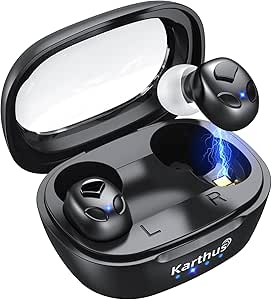 | Best for Long Use Between Charges | Type: Over-the-counter hearing aids | Design: Behind-the-ear | Processing: 16-channel digital DSP | VIEW LATEST PRICE | See Our Full Breakdown |
| Yeasound RIC700 OTC Hearing Aids with AI Noise Reduction and iOS Bluetooth Streaming |  | Best for Long Hearing-Time Battery Life | Type: OTC hearing aids | Fit: In-ear | Audio frequency: Up to 8000 Hz | VIEW LATEST PRICE | See Our Full Breakdown |
| VUIWX OTC Rechargeable Hearing Aids with Bluetooth and Button Controls |  | Best for Hands-On Listening Adjustments | Model: HAD2181 | Fit: Listed as behind-the-ear; product information also describes an in-ear style | Intended hearing loss: Mild to moderate | VIEW LATEST PRICE | See Our Full Breakdown |
| Yeasound RIC800 Bluetooth Hearing Aids with AI Noise Reduction |  | Best for Cross-Platform Bluetooth Streaming | Fit: Receiver-in-canal (RIC) | Bluetooth compatibility: iOS 14+ and Android 10+ | Noise reduction modes: Adaptive, General, Noisy, Music, Outdoors | VIEW LATEST PRICE | See Our Full Breakdown |
| METIKO Elclear 64-Channel Rechargeable OTC Hearing Aids with AI Noise Reduction and App Control |  | Best for App-Based Sound Fine-Tuning | Design: Receiver-in-canal (RIC) | Channels: 64 | Noise reduction: AI noise reduction | VIEW LATEST PRICE | See Our Full Breakdown |
| Jabra Enhance Select M2 Swift Self-Fitting Hearing Aids, Silver |  | Best Premium Self-Fitting Pick | Setup: Self-fitting via app | Weight: 2.12 g per hearing aid | Battery life: Over 24 hours per charge | VIEW LATEST PRICE | See Our Full Breakdown |
| Cearvol Wave OTC Hearing Aids for Adults with Touchscreen Charging Case, Starlight |  | Best for Hands-On Controls | Product type: OTC hearing aids | Intended user: Adults 18+ with perceived mild to moderate-severe hearing loss | Maximum gain: Up to 40 dB | VIEW LATEST PRICE | See Our Full Breakdown |
| ELEHEAR Beyond 2 Pro OTC Rechargeable Hearing Aids with Bluetooth |  | Best for Professional Fine-Tuning | Fit: Behind-the-ear, receiver-in-canal | Intended use: Adults with perceived mild to moderate hearing loss | Bluetooth: 5.3 | VIEW LATEST PRICE | See Our Full Breakdown |
| Oction Rechargeable Hearing Aids with Charging Case |  | Best for Long Wear Between Charges | Model: GM-321T | Fit type: Behind-the-ear | Intended hearing loss: Mild to moderate | VIEW LATEST PRICE | See Our Full Breakdown |
| Audien Atom One OTC Hearing Aids |  | Best for Simple, App-Free Adjustments | Fit type: In-ear | Intended users: Seniors and adults with mild to moderate hearing loss | Control type: Analog dials for volume and frequency | VIEW LATEST PRICE | See Our Full Breakdown |
| ELEHEAR Beyond 2 Pro Bluetooth OTC Hearing Aids | 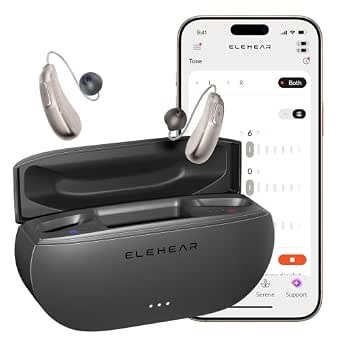 | Best for a Lightweight Streaming Setup | Fit: Behind-the-ear | Bluetooth: 5.3 | Compatibility: iPhone with iOS 15 or later; Android 8.0 or later | VIEW LATEST PRICE | See Our Full Breakdown |
| AI hearing aid | Battery life |
|---|---|
| ELEHEAR Beyond Rechargeable OT | Up to 20 hours per charge; up to 100 hours with charging case |
| ZAVYVAZ GM-922 Rechargeable OT | 18–20 hours per charge |
| ELEHEAR Beyond Pro Bluetooth H | — |
| ELEHEAR Beyond OTC Hearing Aid | Up to 20 hours per charge; up to 100 hours with charging case |
| Rechargeable OTC Hearing Aids | — |
| Yeasound RIC700 OTC Hearing Ai | Up to 279 hours hearing support; up to 162 hours Bluetooth streaming |
| VUIWX OTC Rechargeable Hearing | Up to 16 hours per charge in specs; description also states up to 12 hours |
| Yeasound RIC800 Bluetooth Hear | Up to 23 hours hearing mode; up to 12 hours streaming |
| METIKO Elclear 64-Channel Rech | — |
| Jabra Enhance Select M2 Swift | Over 24 hours per charge |
| Cearvol Wave OTC Hearing Aids | Up to 28 hours with charging case |
| ELEHEAR Beyond 2 Pro OTC Recha | Up to 20 hours per charge |
| Oction Rechargeable Hearing Ai | — |
| Audien Atom One OTC Hearing Ai | Up to 24 hours |
| ELEHEAR Beyond 2 Pro Bluetooth | Up to 20 hours per charge |
More Details on Our Top Picks
ELEHEAR Beyond Rechargeable OTC Hearing Aids with AI Noise Cancellation
I’d choose the ELEHEAR Beyond for listeners who want more control over how everyday sounds come through without moving to a Bluetooth-focused model. Its app adjusts volume, frequency, directionality, and environment settings, while four listening modes offer more ways to adapt than the two modes on the rechargeable 16-channel DSP hearing aids in this lineup. The set also includes nine dome sizes, which gives buyers more options for finding a secure, comfortable fit.
The tradeoff is that the customization depends on a compatible app, and the stated 50 dB amplification is intended for mild to moderate hearing loss, not severe loss. Battery life is a strength: the aids run up to 20 hours per charge, with the case offering up to 100 hours of total use. I’d pick the Beyond for adjustable daily listening, but choose the ELEHEAR Beyond Pro if Bluetooth and translation are priorities.
Pros:- App adjusts volume, frequency, directionality, and environment settings.
- Four listening modes allow more scene choices than the two-mode DSP option in this roundup.
- Up to 20 hours per charge and up to 100 hours of total use with the case.
- Nine dome sizes offer a broad range of fit options.
Cons:- Access to sound customization requires a compatible app.
- Designed for mild to moderate hearing loss, so it may not provide enough support for severe loss.
Best for: Adults with mild to moderate hearing loss who want app-based control over sound settings and several dome-fit options.
Not ideal for: People who do not want to use a compatible smartphone app, or those with severe hearing loss who may need prescription devices.
- Amplification:50 dB
- Noise reduction:Up to 24 dB
- Listening modes:4
- Battery life:Up to 20 hours per charge; up to 100 hours with charging case
- Quick charge:15 minutes provides up to 6 hours of runtime
- Dome sizes:9
- Hearing loss range:Mild to moderate
- Controls:App-based volume, frequency, directionality, and environment settings
Our verdict“Choose the ELEHEAR Beyond if you want rechargeable aids with detailed app controls and multiple fit options, and can manage settings through a phone.”
ZAVYVAZ GM-922 Rechargeable OTC Hearing Aids, 32-Channel, In-Ear
The ZAVYVAZ GM-922 is the straightforward pick for someone who wants rechargeable, in-ear aids without app setup or Bluetooth pairing. Its button controls and automatic on/off keep day-to-day operation simple, while 32-channel digital processing, noise reduction, and feedback control provide more sound processing detail than the 16-channel DSP model in this roundup. The in-ear design also avoids the behind-the-ear profile of the ELEHEAR Beyond.
That simplicity comes with firm limits. These aids do not connect to phones or TVs, so they cannot serve as a wireless listening accessory, and there are no app-based sound adjustments like those on the ELEHEAR Beyond. Runtime is up to 18–20 hours per charge, with 100+ hours of charging-case backup. I’d favor the ZAVYVAZ for buyers who want physical controls and minimal setup, but skip it if streaming or fine-tuning from a phone matters.
Pros:- 32-channel processing includes noise reduction and feedback control.
- Button controls and automatic on/off avoid dependence on a companion app.
- Rechargeable aids provide up to 18–20 hours per charge.
- Includes seven silicone ear domes and a charging case with 100+ hours of backup.
Cons:- No Bluetooth connection to phones, TVs, or other devices.
- Offers less app-based sound customization than the ELEHEAR Beyond models.
- Designed for mild to moderate hearing loss.
Best for: Adults with mild to moderate hearing loss who prefer in-ear aids, physical controls, and a phone-free setup.
Not ideal for: People who want Bluetooth streaming, phone or TV connectivity, or app-based sound adjustments.
- Model:GM-922
- Fit:In-ear; either ear
- Processing:32-channel digital
- Intended hearing loss:Mild to moderate
- Battery life:18–20 hours per charge
- Charging time:2 hours
- Charging case backup:100+ hours
- Connectivity:No Bluetooth
- Controls:Button control; automatic on/off
Our verdict“Pick the ZAVYVAZ GM-922 if you want rechargeable in-ear aids with physical controls and do not need wireless connectivity.”
ELEHEAR Beyond Pro Bluetooth Hearing Aids for Seniors
The ELEHEAR Beyond Pro is the most feature-oriented choice here for buyers who want hearing support alongside Bluetooth and app-based extras. Its VocClear 2.0 processing, speech and music modes, and app adjustments give it a broader connected feature set than the ZAVYVAZ GM-922, which has no Bluetooth or phone connection. The RIC design and multiple dome sizes offer fit choices, while the app supports real-time translation in 20 languages for users who expect to make use of that tool.
Those extras also add reliance on a phone: translation requires the app and voice input, and the product’s full feature set is less appealing to buyers who want simple button-only operation. Runtime reaches up to 20 hours per charge, with four additional charges from the case; a 15-minute quick charge is listed for up to six hours of use. Compared with the ELEHEAR Beyond, this is the better fit for connected features, but it asks more of the wearer’s phone habits.
Pros:- Bluetooth connectivity and iOS and Android app compatibility.
- Speech and music modes with app-based sound adjustments.
- Real-time translation support for 20 languages through the app.
- Up to 20 hours per charge, plus four additional charges from the case.
Cons:- Translation depends on the app and voice input.
- Battery runtime varies with use, and the six-hour quick-charge figure is an upper limit.
- Connected features may be unnecessary for buyers who want simpler, phone-free aids.
Best for: Smartphone users with mild to moderate hearing loss who want Bluetooth, speech and music modes, and app-based translation.
Not ideal for: People who prefer phone-free controls or who would not use Bluetooth and app features.
- Design:Receiver-in-Canal (RIC)
- Sound processing:VocClear 2.0
- Connectivity:Bluetooth
- High-frequency detail:Up to 8500 Hz
- Latency:8 ms
- Translation:20 languages
- App compatibility:iOS and Android
- Runtime:Up to 20 hours per charge
- Charging case:Provides 4 additional charges
Our verdict“Choose the Beyond Pro if Bluetooth and app-based translation are useful to you; choose the ZAVYVAZ GM-922 for simpler phone-free operation.”
ELEHEAR Beyond OTC Hearing Aids with AI Speech Enhancement
I’d put the ELEHEAR Beyond OTC on the list for buyers whose main goal is making speech easier to follow, rather than adding translation as a headline feature. Its VocClear AI speech enhancement, noise attenuation, and feedback control are paired with app options for speech enhancement, telephone speech, sound relief, and translation. Compared with the ELEHEAR Beyond Pro, it emphasizes speech-focused adjustments and also lists an ElePro Audiologist Remote Care Service.
The RIC design, multiple dome sizes, and automatic power on/off simplify routine wear, and the case supports up to 100 hours of total use. Still, its app features require a compatible iOS or Android device, and the stated 50 dB maximum gain targets mild to moderate hearing loss. I’d choose this model over the Beyond Pro when speech tools and remote care are the priority; buyers seeking a simpler setup may prefer the ZAVYVAZ, though it lacks Bluetooth and app features.
Pros:- VocClear AI speech enhancement works alongside noise attenuation and feedback control.
- App includes speech, telephone speech, sound relief, and translation features.
- Up to 20 hours per charge and up to 100 hours with the case.
- Multiple dome sizes and automatic power on/off support everyday wear.
Cons:- Designed for mild to moderate hearing loss and may not meet severe-loss needs.
- Customizable features require a compatible iOS or Android device.
- Its connected feature set may be more involved than the phone-free ZAVYVAZ GM-922.
Best for: Smartphone users with mild to moderate hearing loss who prioritize speech enhancement, adjustable listening, and access to remote audiologist care.
Not ideal for: People with severe hearing loss or buyers who want to avoid a smartphone app for customization.
- Technology:VocClear AI
- Maximum gain:Up to 50 dB
- Noise attenuation:24 dB
- Intended hearing loss:Mild to moderate
- Connectivity:Bluetooth
- App compatibility:iOS and Android
- Battery life:Up to 20 hours per charge; up to 100 hours with charging case
- Design:Receiver-in-the-canal
- Care service:ElePro Audiologist Remote Care Service
Our verdict“Choose this ELEHEAR Beyond if speech-focused app controls and remote care matter more than a phone-free, button-controlled experience.”
Rechargeable OTC Hearing Aids with Noise Reduction, 16-Channel DSP, and Two Listening Modes
These 16-channel DSP hearing aids stand out for buyers who value long stretches between charges over a large menu of adjustments. A full two-hour charge provides over 24 hours of use, and the charging case adds up to 80 hours. That per-charge runtime is longer than the up-to-20-hour figure listed for the ELEHEAR Beyond models, which may suit wearers who would rather charge less often.
The simpler feature set is the tradeoff. You get Quiet Mode and Noise Mode, plus noise reduction and feedback suppression, rather than the app controls, Bluetooth, and speech-focused options offered by ELEHEAR Beyond OTC. Its behind-the-ear design is compact and lightweight, but buyers seeking in-ear wear or extensive customization should look elsewhere. I’d treat this as a practical choice for basic everyday listening, not the most adaptable AI-oriented option in the group.
Pros:- Over 24 hours of use from a full two-hour charge.
- Charging case adds up to 80 hours of battery life.
- Noise reduction and feedback suppression address competing sound and whistling.
- Two clearly defined modes let users switch between quiet and noisier settings.
Cons:- Only two listening modes are described, fewer than the four offered by the ELEHEAR Beyond.
- No Bluetooth or app-based sound adjustments are listed.
- Behind-the-ear design may not suit buyers who prefer in-ear aids.
Best for: Adults who want a simple behind-the-ear OTC option with long listed runtime between charges and two straightforward listening modes.
Not ideal for: Buyers who want Bluetooth, app-based adjustments, more than two listening modes, or a compact in-ear design.
- Type:Over-the-counter hearing aids
- Design:Behind-the-ear
- Processing:16-channel digital DSP
- Listening modes:Quiet Mode; Noise Mode
- Charging time:2 hours
- Use per charge:Over 24 hours
- Additional case battery life:Up to 80 hours
- Intended users:Adults 18 and older
Our verdict“Pick these aids if long runtime and simple mode switching matter more than Bluetooth or the richer app customization of ELEHEAR Beyond OTC.”
Yeasound RIC700 OTC Hearing Aids with AI Noise Reduction and iOS Bluetooth Streaming
The Yeasound RIC700 stands out for its unusually long stated hearing-support battery life: up to 279 hours, with up to 162 hours of Bluetooth streaming. That makes it a different proposition from the Yeasound RIC800, which lists up to 23 hours in hearing mode and 12 hours while streaming. The RIC700 pairs AI noise reduction and feedback control with app and button controls, so users can adjust programs without relying on the app for every change. Its tradeoff is narrower connectivity: Bluetooth support is specified for iOS devices, unlike the RIC800’s listed iOS and Android compatibility. Buyers should also expect to adjust gain after setup to match their hearing needs. I’d shortlist it for long stretches between charges, but not for Android users seeking streaming.
Pros:- Lists up to 279 hours of hearing support between charges.
- AI noise reduction and feedback control are designed to help clarify speech.
- Offers both physical buttons and iYeasound app controls.
- Compact, lightweight design with an IPX8 water-resistance rating.
Cons:- Bluetooth compatibility is specified for iOS devices only.
- Gain needs adjustment after first use to suit the user’s hearing condition.
Best for: iPhone users who prioritize extended stated battery life and want both physical controls and app-based adjustments.
Not ideal for: Android users who want Bluetooth calls or music streaming, and buyers who prefer a hearing aid that needs little initial gain adjustment.
- Type:OTC hearing aids
- Fit:In-ear
- Audio frequency:Up to 8000 Hz
- Processing latency:5.3 ms
- Bluetooth compatibility:iOS devices
- Controls:Buttons and iYeasound app
- Battery life:Up to 279 hours hearing support; up to 162 hours Bluetooth streaming
- Water resistance:IPX8
Our verdict“Choose the RIC700 if you use iOS and want exceptionally long stated hearing-support runtime, but pick the RIC800 for broader phone compatibility.”
VUIWX OTC Rechargeable Hearing Aids with Bluetooth and Button Controls
The VUIWX HAD2181 puts quick physical adjustment ahead of a phone-centered setup. Its independent left and right volume controls and five listening modes give users direct ways to respond to different surroundings, while a color display makes remaining power easy to check. Compared with the METIKO Elclear, which uses an app for program and ambient adjustments, this model is better suited to someone who wants buttons rather than menu-based control. Its 50-channel processing and AI noise reduction target speech clarity, though the product information gives conflicting battery figures: up to 16 hours in one spec and up to 12 hours elsewhere. Fit details also conflict, listing behind-the-ear while describing an in-ear style. Those uncertainties make it a less dependable choice than the clearly specified RIC800.
Pros:- Five listening modes cover general, indoor, outdoor, movie, and smart settings.
- Physical controls provide independent left and right volume adjustment.
- Color display shows hearing aid and case battery levels.
- Includes three sizes of soft silicone ear domes.
Cons:- Battery life is inconsistent across the product information, which lists both 12 and 16 hours per charge.
- The stated behind-the-ear fit conflicts with an in-ear description.
- At approximately 4.3 g per aid, it is heavier than the 0.088 oz Yeasound RIC models.
Best for: Adults with mild to moderate hearing loss who want separate left/right button controls, several listening modes, and visible battery status.
Not ideal for: Buyers who need reliable, clearly stated runtime or want unambiguous guidance about whether the fit is behind-the-ear or in-ear.
- Model:HAD2181
- Fit:Listed as behind-the-ear; product information also describes an in-ear style
- Intended hearing loss:Mild to moderate
- Listening modes:General, Indoor, Outdoor, Movie, Smart
- Audio processing:50-channel WDRC and 50-channel EQ
- Controls:Physical buttons; independent left and right volume
- Battery life:Up to 16 hours per charge in specs; description also states up to 12 hours
- Charging case:Approximately 2.5 additional charges
Our verdict“Pick the VUIWX if hands-on controls and multiple modes matter most, but skip it if fit certainty and consistent battery specifications are priorities.”
Yeasound RIC800 Bluetooth Hearing Aids with AI Noise Reduction
The Yeasound RIC800 is the more flexible streaming pick in this group: it lists Bluetooth calls and music for iOS 14+ and Android 10+, while the RIC700 specifies iOS compatibility. Its five modes—adaptive, general, noisy, music, and outdoors—let users tailor listening without giving up a small receiver-in-canal form. The AI noise reduction and speech enhancement are intended to make conversation easier to follow, while the case supplies three additional full charges. The main compromise is runtime during active streaming: up to 12 hours, compared with 23 hours in hearing mode. That is far below the RIC700’s stated hearing-support runtime, though the RIC800 provides broader phone support and wireless charging. I’d favor it for compatible-device streaming, not for maximum time between charges.
Pros:- Bluetooth calls and music are listed for iOS 14+ and Android 10+.
- Five listening modes include adaptive, noisy, music, and outdoors settings.
- Wireless charging case provides three additional full charges.
- Compact 0.088 oz earpieces with an IPX8 water-resistance rating.
Cons:- Streaming runtime is listed at up to 12 hours, substantially less than hearing-mode runtime.
- Bluetooth use requires iOS 14+ or Android 10+.
- Its 23-hour hearing-mode runtime is much shorter than the RIC700’s stated 279 hours.
Best for: iPhone and newer Android users who want a discreet RIC aid with calls, music streaming, and several listening modes.
Not ideal for: People who stream for much of the day or need compatibility with older phones outside the listed operating-system versions.
- Fit:Receiver-in-canal (RIC)
- Bluetooth compatibility:iOS 14+ and Android 10+
- Noise reduction modes:Adaptive, General, Noisy, Music, Outdoors
- Processing delay:5.3 ms
- Frequency response:Up to 8000 Hz
- Battery life:Up to 23 hours hearing mode; up to 12 hours streaming
- Charging:Wireless charging; case provides three additional full charges
- Water resistance:IPX8
Our verdict“Choose the RIC800 for cross-platform calls and media in a compact RIC design, but choose the RIC700 if long stated hearing-support runtime comes first.”
METIKO Elclear 64-Channel Rechargeable OTC Hearing Aids with AI Noise Reduction and App Control
The METIKO Elclear is the app-focused choice for buyers who want control over more than basic volume. Its app adjusts programs, sampling rate, and ambient settings, while 64-channel processing and AI noise reduction are designed to shape speech and suppress unwanted sound. Compared with the VUIWX HAD2181, which emphasizes physical buttons and five preset modes, the Elclear offers more app-based personalization but less direct control on the device. It also differs from the streaming-capable Yeasound RIC800: the Elclear app does not support calls or audio playback. A USB-C case adds convenience, with up to 20 hours of use per charge and up to 80 hours of additional charging. This is a sound-adjustment pick, not a phone-audio replacement.
Pros:- 64-channel processing pairs with AI noise reduction for speech-focused sound shaping.
- App adjusts volume, programs, sampling rate, and ambient settings.
- USB-C charging case provides up to 80 hours of additional charging.
- Up to 20 hours of use per charge.
Cons:- The app does not support receiving calls or playing audio.
- A full charge takes 2 hours.
- More dependent on app adjustments than the button-controlled VUIWX.
Best for: Smartphone users who want detailed app adjustments to listening programs and ambient sound, without needing calls or music through their hearing aids.
Not ideal for: People who want Bluetooth calls or media streaming, or who prefer making adjustments with physical controls instead of an app.
- Design:Receiver-in-canal (RIC)
- Channels:64
- Noise reduction:AI noise reduction
- App control:Volume, programs, sampling rate, and ambient settings
- Connectivity limitation:App does not support calls or audio playback
- Use time per charge:Up to 20 hours
- Charging:USB-C charging case; 2-hour charging time
- Charging case capacity:Up to 80 hours
Our verdict“Choose the Elclear for app-based sound customization and long case-supported use, but look to the RIC800 if streaming is part of your hearing-aid routine.”
Jabra Enhance Select M2 Swift Self-Fitting Hearing Aids, Silver
The Jabra Enhance Select M2 Swift is the strongest fit here for buyers who want a guided self-fitting setup and broad connected-device support. Its app-based personalization and adaptive listening are designed to adjust sound as surroundings change, while Bluetooth supports calls and media on compatible Apple and Android devices. That makes it a more complete connected option than the METIKO Elclear, whose app does not handle calls or audio playback. The Jabra also lists IP68 water and dust resistance, over 24 hours of listening per charge, and a portable charger rated for up to 96 hours of on-the-go power. The tradeoff is dependence on the app for fitting and personalization; buyers wanting physical-button adjustments may prefer the VUIWX. Streaming and calls also require a compatible phone.
Pros:- Self-fitting through the app supports personalized sound settings and presets.
- Adaptive listening adjusts volume to changing environments.
- Supports hands-free calls and audio streaming with compatible Apple and Android devices.
- Over 24 hours of listening per charge, with a portable charger rated for up to 96 hours of on-the-go power.
Cons:- Self-fitting and personalization are managed through the app.
- Calls and streaming require a compatible Apple or Android device.
- Bluetooth features and app setup may be less suitable for users who prefer the VUIWX’s physical controls.
Best for: Adults who want app-guided self-fitting, adaptive listening, and calls or media streaming across compatible Apple and Android devices.
Not ideal for: Buyers who avoid smartphone-based setup, need streaming without a compatible phone, or prefer physical controls for fitting and sound changes.
- Setup:Self-fitting via app
- Weight:2.12 g per hearing aid
- Battery life:Over 24 hours per charge
- Portable charger capacity:Up to 96 hours of on-the-go power
- Connectivity:Bluetooth, Bluetooth LE Audio, Auracast
- Compatibility:Apple and Android devices
- Water and dust resistance:IP68
- Protection:1-year warranty and 1-year loss and damage protection
Our verdict“Choose the Jabra for app-guided self-fitting and connected listening across compatible phones, but choose a button-led model if you want less app dependence.”
Cearvol Wave OTC Hearing Aids for Adults with Touchscreen Charging Case, Starlight
The touchscreen charging case gives the Cearvol Wave a different appeal from the app-first ELEHEAR Beyond 2 Pro: common settings are available on the case, while the app adds personalized adjustment using an online hearing test or an imported audiogram. That mix suits buyers who want streaming and hearing customization but would rather not reach for a phone every time they change a setting. Bluetooth dual-device connection, speech enhancement, and AUX-IN support add flexibility for calls, media, and wired audio sources. The tradeoff is that fine-tuning still depends on the companion app, and its stated up to 28 hours with the case is less per-charge endurance than the Oction model’s claimed 40 hours. IPX5 protects against splashes and sweat, not immersion.
Pros:- Touchscreen case provides access to key settings without opening the app.
- App personalization supports an online hearing test or audiogram import, with adjustments for each ear.
- Bluetooth supports calls, media, and connection to two compatible devices.
- IPX5 protection, multiple ear tips, remote microphone support, and AUX-IN add everyday flexibility.
Cons:- Personalized setup and detailed adjustments rely on the companion app.
- IPX5 is for sweat, splashes, and light rain, not submersion.
- Up to 28 hours is stated for use with the case, not a long single-charge runtime.
Best for: Adults who want personalized app settings and Bluetooth streaming, but also value changing key settings directly on a touchscreen case.
Not ideal for: People who want long per-charge runtime, dislike companion apps for setup, or need hearing aids suitable for swimming or submersion.
- Product type:OTC hearing aids
- Intended user:Adults 18+ with perceived mild to moderate-severe hearing loss
- Maximum gain:Up to 40 dB
- Noise reduction:Up to 20 dB
- Battery life:Up to 28 hours with charging case
- Quick charging:15 minutes for up to 3 hours of listening
- Water resistance:IPX5
- Connectivity and audio input:Bluetooth with dual-device connection; 3.5 mm AUX-IN
- Personalization:App-based online test or audiogram import; adjustable volume, EQ, noise control, and listening modes
Our verdict“Choose the Cearvol Wave if case-based touchscreen controls and flexible personalization matter more than the Oction’s longer claimed per-charge runtime.”
ELEHEAR Beyond 2 Pro OTC Rechargeable Hearing Aids with Bluetooth
The Beyond 2 Pro is the clearest fit here for buyers who want app-controlled hearing adjustments backed by access to a licensed hearing professional. Its speech enhancement, noise reduction, and feedback suppression target the everyday challenge of following conversation amid competing sound, while Bluetooth 5.3 adds calls and media streaming. Compared with the Cearvol Wave, it lacks touchscreen case controls and AUX-IN, but it offers an IP67 water-and-dust rating rather than IPX5. Its behind-the-ear receiver-in-canal design weighs 4.3 g per aid and is intended for mild to moderate hearing loss. The main limitation is reliance on the ELEHEAR app; it is not an Apple MFi hearing aid, and optional live video fine-tuning is available only in 27 U.S. states.
Pros:- Speech enhancement, noise reduction, and feedback suppression support listening in busier settings.
- Bluetooth 5.3 streams calls and media from compatible iOS and Android devices.
- IP67 water-and-dust resistance and a 4.3 g aid weight suit daily wear and light activity.
- Remote hearing adjustments are reviewed by a licensed hearing professional.
Cons:- Hearing adjustments are made through the ELEHEAR app rather than direct case controls.
- It is not an Apple MFi hearing aid.
- Optional live video fine-tuning is limited to 27 U.S. states.
Best for: Adults with mild to moderate hearing loss who want Bluetooth streaming, a water-and-dust-resistant BTE/RIC design, and the option of professional-reviewed adjustments.
Not ideal for: People seeking direct controls on the charging case, Apple MFi connectivity, or access to live video fine-tuning outside supported states.
- Fit:Behind-the-ear, receiver-in-canal
- Intended use:Adults with perceived mild to moderate hearing loss
- Bluetooth:5.3
- Compatibility:iPhone with iOS 15 or later; Android 8.0 or later
- Water and dust resistance:IP67
- Weight per hearing aid:4.3 g
- Battery life:Up to 20 hours per charge
- Charging case:Provides 4 additional charges
- Recharge time:About 1.5 hours
Our verdict“Pick the Beyond 2 Pro if professional-reviewed app adjustments and IP67 protection outweigh the Cearvol Wave’s more direct case controls.”
Oction Rechargeable Hearing Aids with Charging Case
The Oction GM-321T makes its case through long stated battery life and simple physical operation, not app-based AI tools. Each aid is rated for up to 40 hours per charge, and the case adds five to six more charges, a substantial contrast with the ELEHEAR Beyond 2 Pro’s up-to-20-hour per-charge claim. Two buttons and voice alerts keep everyday operation straightforward for buyers who do not want to manage settings in an app. Its 32-channel DSP, up to 50 dB gain, and 24 dB noise attenuation provide the technical foundation, while four dome sizes help with fit. The tradeoff is a narrower use case: it is specified for mild to moderate hearing loss and does not offer the personalized app settings or Bluetooth streaming found on the Cearvol Wave.
Pros:- Up to 40 hours of use per charge, with five to six additional case charges.
- Two-button controls and voice alerts avoid dependence on an app for basic operation.
- 32-channel DSP, up to 50 dB maximum gain, and 24 dB noise attenuation.
- Four dome sizes and UV cleaning in the charging case support fit and care.
Cons:- Designed for mild to moderate hearing loss, limiting its fit for buyers outside that range.
- Button-based controls do not provide the app personalization available with the Cearvol Wave.
- No Bluetooth streaming or phone connectivity is specified.
Best for: Adults with mild to moderate hearing loss who prioritize fewer charging interruptions, physical controls, and a case with UV cleaning.
Not ideal for: Buyers who want Bluetooth calls or music, app-based personalization, or features tailored to hearing loss beyond the stated mild-to-moderate range.
- Model:GM-321T
- Fit type:Behind-the-ear
- Intended hearing loss:Mild to moderate
- DSP channels:32
- Maximum gain:50 dB
- Noise attenuation:24 dB
- Use per charge:Up to 40 hours
- Total use with case:Up to 280 hours
- Controls and care:Two buttons, voice alerts, and UV cleaning while charging
Our verdict“Choose Oction over the ELEHEAR Beyond 2 Pro if long stated runtime and simple buttons matter more than Bluetooth and app-based adjustments.”
Audien Atom One OTC Hearing Aids
The Audien Atom One is the most straightforward option in this group for buyers who prefer physical volume and frequency dials over app menus. Its compact in-ear fit and rechargeable battery make it a simpler alternative to the Bluetooth-equipped Cearvol Wave, but that simplicity also means fewer tools for tailoring sound to changing environments. The product is designed for adults with mild to moderate hearing loss and includes three dome sizes, expert-guided setup, and a removal tool. With up to 24 hours of use per charge and a roughly three-hour recharge, it can cover a day of wear, though the Oction offers a much longer stated runtime. No noise control is listed, so buyers who need help managing background sound or want streaming should look elsewhere.
Pros:- Analog volume and frequency dials provide direct adjustments without an app.
- Rechargeable battery offers up to 24 hours of use.
- In-ear design includes small, medium, and large silicone dome sizes.
- Package includes expert-guided setup, cleaning supplies, and a removal tool.
Cons:- No noise-control feature is listed.
- Physical dials offer less flexible adjustment than the app-based personalization on the Cearvol Wave.
- About three hours of charging is longer than the ELEHEAR Beyond 2 Pro’s stated recharge time.
Best for: Adults with mild to moderate hearing loss who want a compact in-ear aid and prefer manual controls over smartphone-based setup.
Not ideal for: People who need noise control, Bluetooth streaming, app-based sound personalization, or longer stated runtime between charges.
- Fit type:In-ear
- Intended users:Seniors and adults with mild to moderate hearing loss
- Control type:Analog dials for volume and frequency
- Battery:Rechargeable lithium-ion
- Battery life:Up to 24 hours
- Charging time:About 3 hours
- Charging connector:USB-C
- Included ear dome sizes:Small, medium, and large
- Warranty:1 year
Our verdict“Choose the Atom One if manual, app-free controls are your priority, but choose the Cearvol Wave if streaming and more detailed personalization matter.”
ELEHEAR Beyond 2 Pro Bluetooth OTC Hearing Aids
This Beyond 2 Pro listing brings speech enhancement, feedback suppression, and Bluetooth 5.3 streaming into a rechargeable behind-the-ear package for compatible iOS and Android devices. Like the other ELEHEAR Beyond 2 Pro in this roundup, it offers up to 20 hours per charge, four additional charges from the case, and IP67 water-and-dust resistance. The supplied details also list a 3.84-ounce weight, so buyers should check whether that refers to the pair or another package measurement before comparing it with the other model’s per-aid weight of 4.3 g. Compared with the Cearvol Wave, this version lists receiver wires and wax guards among its included items, but its hearing adjustments remain app-based. It is not Apple MFi, and live professional fine-tuning is optional and limited by state availability.
Pros:- Bluetooth 5.3 supports calls and media streaming on compatible devices.
- Speech enhancement and feedback suppression are designed for changing listening environments.
- Up to 20 hours per charge with four additional charges from the case.
- IP67 rating and included dome styles, receiver wires, wax guards, and cleaning tool.
Cons:- Hearing adjustments are made through the ELEHEAR app.
- It is not an Apple MFi hearing aid.
- The listed 3.84-ounce weight is not identified as a per-aid measurement, complicating comparisons.
Best for: Bluetooth users with compatible iOS or Android phones who want a rechargeable BTE aid with multiple dome styles and included maintenance accessories.
Not ideal for: Buyers who need Apple MFi connectivity, direct on-device adjustments, or clearly specified per-aid weight for comparing fit and portability.
- Fit:Behind-the-ear
- Bluetooth:5.3
- Compatibility:iPhone with iOS 15 or later; Android 8.0 or later
- Water and dust resistance:IP67
- Battery life:Up to 20 hours per charge
- Charging case:Provides 4 additional charges
- Recharge time:About 1.5 hours
- Listed weight:3.84 ounces; measurement basis not specified
- Included items:Charging case, USB-C to USB-A cable, dome styles, receiver wires, wax guards, cleaning tool, and guide
Our verdict“Pick this Beyond 2 Pro listing for Bluetooth streaming and its included care accessories, but verify the weight details if fit and portability are key.”

How We Picked
I compared these 15 options on the factors that shape everyday use: stated speech and noise processing, self-fitting or app support, listening controls, Bluetooth and streaming details, rechargeable design, and the likely effort required for cleaning and upkeep. I also looked at how clearly each product communicates its intended use, since a feature is only useful when buyers can understand its limits and set it up correctly. Product names and feature claims are not proof of clinical performance, so I treated AI terminology as a point of comparison rather than a guarantee of better speech understanding.
The ranking favors a balanced experience over a single headline specification. Jabra Enhance Select M2 leads for its self-fitting focus; ELEHEAR’s Beyond Pro options follow for buyers who place more weight on AI-oriented processing and connectivity. METIKO Elclear earns a place for its extensive channel and app-control proposition, while simpler or less clearly differentiated models rank lower when the available product details provide fewer decision-making advantages. Fit, hearing needs, phone compatibility, return terms, and access to professional care can change which pick is right for an individual.
Factors to Consider When Choosing Best AI Hearing Aids
AI hearing aids can differ as much in setup and support as they do in sound processing. I would start with your listening situations and comfort needs, then check whether the device’s fitting method and connectivity match your routines.
Match AI Processing to the Listening Problem
AI noise reduction and speech enhancement are intended to help separate voices from competing sound, but that does not mean every noisy setting will become easy to hear. Think about where you struggle most: conversation at home, restaurants, outdoor noise, or following a single speaker in a group. A feature name alone cannot tell you how a device will handle your hearing profile or preferred sound. Avoid choosing solely by channel count or an AI label, since neither guarantees a comfortable fit or clear speech. If possible, favor options with adjustable programs or a clear fitting process so you can refine settings for different situations. Persistent difficulty understanding speech deserves a hearing assessment rather than repeated app adjustments.
Choose a Fitting Process You Can Manage
Self-fitting devices put more responsibility on you to select settings, follow instructions, and judge whether the result is comfortable. That can be a practical route for mild-to-moderate hearing needs when you are comfortable using a phone or controls. If small text, app menus, or repeated adjustments are frustrating, simpler physical controls or guided setup may matter more than extra sound options. A common mistake is assuming that a quick initial setup is the same as a well-matched fitting. Allow time to adapt, and check what support is available if the sound is sharp, muffled, or unbalanced. Buyers with complex hearing needs should ask a hearing professional whether an OTC device is appropriate.
Check Phone and Streaming Compatibility Before Buying
Bluetooth can mean different things across hearing aids: some models focus on audio streaming, while others use a phone app mainly for adjustments. Confirm compatibility with your exact phone model and operating system, especially when a product specifies support for only one mobile platform. Also decide whether calls and media should stream to both ears or whether you mainly need discreet control changes. Streaming features may add convenience but can bring extra charging demands and more settings to learn. Do not assume every Bluetooth hearing aid works like a standard headset. If phone-free operation matters, verify that the device still offers useful controls without an app.
Treat Fit and Comfort as a Daily-Use Requirement
Behind-the-ear, receiver-in-canal, and in-ear designs sit differently and can affect comfort, handling, and visibility. A compact in-ear style may appeal to someone seeking a low-profile fit, while a RIC design may be easier for another person to insert or adjust. Neither shape is universally best; ear anatomy, dexterity, and sensitivity all matter. Check what sizes of domes or tips are included and whether replacements are available. A poor seal can affect sound and comfort, so avoid forcing a fit that causes soreness or persistent feedback. Look at return and adjustment policies before purchase, since fit often takes more than one attempt to judge.
Plan for Charging, Cleaning, and Ongoing Support
Rechargeable models reduce the need to handle tiny disposable batteries, but they still require a dependable charging routine and a clean charging connection. Earwax and moisture can affect performance, so check how the receiver, openings, and case are meant to be maintained. Touchscreen or app-based controls may be convenient, yet they can add steps if you prefer a simple button. Before buying, find out how to get replacement domes, filters, or other wear parts and what support is available for troubleshooting. A device that is easy to maintain often serves better than one with more features that you rarely use. Keep the charger and cleaning tools somewhere you can access consistently.
Spend for Support and Fit, Not a Specification Race
Paying more makes sense when the added cost brings a fitting process, support, compatibility, or comfort feature you will use regularly. It makes less sense to choose a device just because it lists more channels or several modes. Compare the return window, warranty terms, support access, and availability of replacement parts alongside the feature list. Buyers new to hearing aids may benefit more from clear setup guidance than a large number of manual adjustments. For experienced users, additional customization can be worthwhile if they know what changes help. Decide which two or three benefits matter most before comparing models, so secondary features do not distract from your main need.
Frequently Asked Questions
Do AI hearing aids work well for every type of hearing loss?
No. OTC hearing aids are intended for adults with perceived mild-to-moderate hearing loss, and AI processing cannot correct every cause or degree of hearing difficulty. A device may reduce some background sound or emphasize speech, but results depend on the person, fit, and listening environment. Sudden hearing changes, pain, drainage, dizziness, or trouble hearing in one ear call for medical advice rather than an OTC purchase. If you already have a diagnosis or more complex needs, ask an audiologist whether self-fitting devices are suitable. A hearing test can help you avoid buying a product that does not match your needs.
Is a higher channel count a reliable way to choose between hearing aids?
Not by itself. Channel count describes how a device divides and adjusts parts of the sound range, but it does not show how well the fitting matches your hearing or how comfortable the sound will be. A product with many channels can offer more adjustment options, yet those controls may add setup work. The METIKO Elclear’s 64-channel claim may interest users who want detailed app control, while someone seeking easier daily operation may prefer a less involved approach. Compare fitting guidance, comfort, and support alongside technical specifications. Treat channel count as one clue, not a ranking of real-world clarity.
Should I choose a Bluetooth model if I mainly want help with conversation?
Not necessarily. Bluetooth is most useful if you plan to stream calls or media, or want to adjust settings from a compatible phone. It does not by itself mean a hearing aid will make face-to-face conversation clearer. For that goal, pay closer attention to fitting options, speech-focused processing, comfort, and whether the device has settings suited to your common environments. Check the product’s phone compatibility, since support can vary by model and operating system. If you do not stream audio, a simpler device with controls you can use easily may be a better match.
What should I do if my new hearing aids sound harsh or unnatural?
Give yourself time to adapt, but do not ignore discomfort or a poor fit. Follow the maker’s setup guidance and make small adjustments rather than changing several sound settings at once. Check that the domes or tips sit correctly and that the devices are clean, since fit and blocked openings can affect sound. If the problem continues, contact the manufacturer’s support team or a hearing professional instead of pushing the volume higher. Confirm the return period before purchase so you know your options if the sound remains unsuitable. Pain, sudden changes in hearing, or persistent feedback warrant professional advice.
How can I tell whether an OTC hearing aid is a better choice than professional care?
An OTC device may suit an adult who suspects mild-to-moderate hearing loss and is comfortable handling setup and follow-up adjustments. Professional care is a stronger route when hearing loss is severe, symptoms are unusual, one ear is much worse, or you need help identifying the cause. A hearing professional can assess your hearing and discuss options that self-fitting products may not provide. Do not use a product description or AI feature claim as a substitute for a hearing evaluation. If you choose OTC, check the support, return policy, and fitting instructions before committing. Seek medical advice for sudden hearing loss or ear symptoms.
Conclusion
For the strongest balance of guided setup and everyday usability, I would start with the Jabra Enhance Select M2 as the best overall pick. Buyers who want AI-oriented speech and noise processing with Bluetooth should compare the ELEHEAR Beyond Pro models, while the METIKO Elclear is the best premium-style fit for shoppers who value extensive channel and app adjustments. For value, look first at straightforward rechargeable options such as Oction or the 16-channel two-mode model, but verify fitting support and return terms before choosing. Beginners may prefer Jabra’s self-fitting approach; listeners seeking iOS streaming should examine the Yeasound RIC700; and shoppers prioritizing a compact in-ear design can compare the ZAVYVAZ GM-922 with Audien Atom One. Choose the option whose fit, controls, and support match your routine—not the one with the longest feature list.