
I compared 15 smart senior home devices across medical alerts, monitoring cameras, call buttons, and smart speakers to find the options that genuinely improve safety and independence. The JubileeTV Remote Care System stands out as the best overall pick because it combines video calling, medication reminders, and remote monitoring into one easy-to-use hub. For seniors who need fall detection while out and about, the SOS Wristband with Fall Detection sends alerts directly to family without a call center, while the Amazon Echo Dot (5th Gen) proves that a simple smart speaker can offer hands-free help and social connection. The main tradeoffs come down to monthly fees versus one-time costs, call center reliance versus family-only alerts, and how much setup complexity your loved one can handle. Read on for the full breakdown of all 15 devices and which one fits your caregiving situation.

Turn quiet afternoons into listening time
- Thousands of audiobooks, podcasts and originals
- Listen on your phone, tablet or Echo — also offline
- Cancel anytime
Complete the kit


Key Takeaways
- Direct-to-family alert systems are eliminating call centers and monthly fees, but they require a tech-savvy family member to set up and respond.
- Wrist-worn fall detectors tend to trigger more false alarms than pendant-style devices, making the latter a better choice for seniors with active lifestyles.
- All-in-one hubs like JubileeTV reduce device clutter and simplify daily use, but they cost more upfront than single-purpose devices.
- Simple one-button call buttons are often the most reliable for seniors with cognitive decline, as they avoid complex menus and voice commands.
- Video calling is becoming a standard feature in senior monitoring cameras, but ease of use varies widely; the best designs let seniors answer with a single tap.
| JubileeTV Remote Care System for Seniors |  | Best for TV-Based Family Check-Ins | Brand: Caavo | Model: JubileeTV (Centro) | Connectivity: Bluetooth, infrared, and Wi-Fi | VIEW LATEST PRICE | See Our Full Breakdown |
| Amazon Echo Dot (5th Gen) Smart Speaker, Charcoal |  | Best for Everyday Voice Assistance | Generation: 5th Gen | Dimensions: 3.9 × 3.9 × 3.5 inches | Weight: 10.7 oz (304 g) | VIEW LATEST PRICE | See Our Full Breakdown |
| iHealth Track Smart Upper Arm Blood Pressure Monitor with Wide-Range Cuff |  | Best for At-Home Blood Pressure Tracking | Measurement standards: Meets ESH 2010 performance standards | On-device memory: Up to 99 readings | App memory: Unlimited readings | VIEW LATEST PRICE | See Our Full Breakdown |
| EverNary Wi-Fi Bed and Motion Sensor Alarm System for Caregivers |  | Best for Bed-Exit and Room-Movement Alerts | Model: AMZ01 | Connectivity: 2.4 GHz Wi-Fi | Sensor-to-hub range: Up to 330 feet in open areas; about 30–150 feet indoors | VIEW LATEST PRICE | See Our Full Breakdown |
| App-Controlled Medical Alert System for Seniors with Waterproof Wristband |  | Best for Simple Button-Based Home Alerts | Brand and model: PRNBRH CF106 | Included items: 2 panic buttons, 1 wristband remote, and 1 receiver | Wi-Fi: 2.4 GHz only | VIEW LATEST PRICE | See Our Full Breakdown |
| SOS Wristband for Seniors with Fall Detection |  | Best Screen-Free Fall Detection Wristband | SOS and fall detection: Automatic and manual | GPS tracking and geofencing: Real-time with 1-year history | Two-way calling: Hands-free with auto-answer | VIEW LATEST PRICE | See Our Full Breakdown |
| JoneR WiFi Caregiver Call Button with Voice and Two-Way Calls |  | Best No-Subscription Home Call Button | Power source: Corded electric | Compatible devices: Smartphone, tablet | Control methods: App, push button, remote, voice | VIEW LATEST PRICE | See Our Full Breakdown |
| STECHRO Wireless Caregiver Pager with 1 Call Button and 1 Receiver |  | Best Long-Range Wireless Pager | Brand: STECHRO | Included: 1 receiver and 1 call button | Power source: Battery powered | VIEW LATEST PRICE | See Our Full Breakdown |
| Seculife Medical Alert Smartband for Seniors |  | Best Smartband with Health Tracking | Color: White | Water resistance: IP67 (1 meter) | GPS: Built-in with geofencing and 1-year location history | VIEW LATEST PRICE | See Our Full Breakdown |
| Smart Caregiver Wireless Floor Mat Alarm and Pager System | 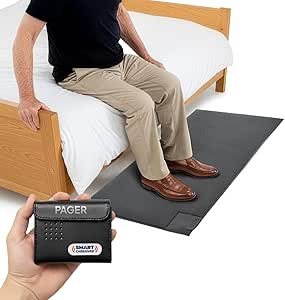 | Best Bedside and Exit Monitoring Mat | Mat dimensions: 24 × 48 inches | Mat thickness: 0.5 inches | Wireless range: Up to 300 feet | VIEW LATEST PRICE | See Our Full Breakdown |
| Medical Alert Pendant for Seniors, Alerts Go Direct to Family, No Call Center, Auto Fall Detection, GPS Tracking, 2-Way Calling, Water Resistant Necklace |  | Best for On-the-Go Safety with GPS | Connectivity: 4G LTE cellular | Battery: 1000 mAh, up to 6 days | Water resistance: IP67 | VIEW LATEST PRICE | See Our Full Breakdown |
| WiFi Caregiver Call Button – Calls Phone, 2 Buttons, 1 Wrist Device, 1 Receiver |  | Best for Simple In-Home Notifications | Product dimensions: 4.8 x 4.1 x 3.6 inches | Item weight: 10.2 ounces | Battery: 12V (included) | VIEW LATEST PRICE | See Our Full Breakdown |
| Nomo Smart Care Medical Alert System with Fall Detection |  | Best Whole-Home Coverage | Included components: Smart Hub, 2 Satellites, wearable Tags | Connectivity: Wireless Wi‑Fi | Power source: AC power with battery backup | VIEW LATEST PRICE | See Our Full Breakdown |
| Life Alert System No Monthly Fee – Caregiver Pager Call Button for Elderly, Medical Alert with App, Panic Button Alarm, 2.4GHz WiFi Receiver, Necklace & Bracelet |  | Best No-Monthly-Fee Pager | Maximum range: 656 feet (200 m) open area | Frequency: 433 MHz signal | Receiver frequency: 2.4 GHz Wi‑Fi | VIEW LATEST PRICE | See Our Full Breakdown |
| SYMYNELEC Elderly Monitoring Camera with Screen and One-Touch Video Calling |  | Best for Video Check-Ins | Screen size: 2.8 inches | Video resolution: 1080p | PTZ: Yes | VIEW LATEST PRICE | See Our Full Breakdown |
More Details on Our Top Picks
JubileeTV Remote Care System for Seniors
JubileeTV makes the television a family check-in point, combining video calls, one-way audio and video, remote TV control, and on-screen reminders. That makes it a different kind of choice from the Amazon Echo Dot (5th Gen): the Echo Dot is a compact voice assistant for everyday requests, while JubileeTV centers on staying connected through a loved one’s existing TV. The backlit voice remote and remote-finder feature can also help when small controls are hard to see or misplace.
The tradeoff is setup and ongoing access: it needs HDMI, Wi-Fi, a compatible TV device, and an active membership. Its TV-based approach may suit someone who already spends time watching television, but it is less useful for a person who wants a wearable emergency button or a simple alert receiver like the PRNBRH App-Controlled Medical Alert System. It is available in the U.S. only.
Pros:- Combines video calls and one-way video and audio check-ins through the TV
- Lets family members control TV settings remotely
- Displays reminders, notes, photos, and videos on the television
- Includes a backlit voice remote with a remote-finder feature
Cons:- Requires an active membership after setup
- Needs HDMI, Wi-Fi, and a compatible existing TV device
- Available only in the U.S.
Best for: Families who want scheduled reminders and easy video check-ins delivered through a senior’s existing television
Not ideal for: People who want a standalone emergency call button, lack reliable Wi-Fi or an HDMI-compatible TV setup, or do not want an ongoing membership
- Brand:Caavo
- Model:JubileeTV (Centro)
- Connectivity:Bluetooth, infrared, and Wi-Fi
- Maximum supported devices:4
- Maximum range:10 meters
- Remote buttons:34
- Remote power:2 AAA alkaline batteries
- Dimensions:16.5 × 9 × 3 inches
Our verdict“Choose JubileeTV if family connection and reminders through the television matter more than a wearable emergency alert.”
Amazon Echo Dot (5th Gen) Smart Speaker, Charcoal
The Echo Dot is the most flexible everyday helper in this group: voice requests can start music, audiobooks, podcasts, timers, and compatible smart-home routines without requiring a senior to find a phone. Its compact size and Bluetooth playback give it a simpler role than JubileeTV, which focuses on family video check-ins and remote television control. The Echo Dot’s motion and temperature sensors add useful context for routines, while Matter support helps it work with compatible smart-home devices.
It is not a dedicated monitoring or emergency alert system, so I would not choose it as a substitute for the EverNary Wi-Fi Bed and Motion Sensor Alarm System when caregivers need alerts about movement. Some skills and services may also involve extra fees, and eero network extension only works with a compatible eero setup. Its mono speaker is practical for spoken audio, not a room-filling stereo system.
Pros:- Voice assistance supports hands-free timers and everyday requests
- Plays music, audiobooks, and podcasts, including Bluetooth audio
- Controls compatible smart-home devices and routines
- Includes motion and indoor temperature sensors
Cons:- Does not provide dedicated caregiver monitoring or an emergency alert button
- eero Built-in requires a compatible eero router, account linking, and app setup
- Some skills and services may require subscriptions or fees
Best for: Seniors who want hands-free access to audio, timers, voice assistance, and compatible smart-home routines
Not ideal for: Caregivers who need dedicated bed-exit alerts or a direct emergency call button rather than a general-purpose smart speaker
- Generation:5th Gen
- Dimensions:3.9 × 3.9 × 3.5 inches
- Weight:10.7 oz (304 g)
- Speaker:1.6-inch full-range driver; mono playback
- Wi-Fi:Dual-band 802.11a/b/g/n/ac, 2.4 and 5 GHz
- Smart-home compatibility:Wi-Fi, Bluetooth Low Energy Mesh, and Matter
- eero Built-in coverage:Up to 1,000 sq. ft. with a compatible eero network
- Warranty:90-day limited warranty
Our verdict“Pick the Echo Dot for voice-led daily convenience, but choose a dedicated sensor or alert system for caregiver safety monitoring.”
iHealth Track Smart Upper Arm Blood Pressure Monitor with Wide-Range Cuff
The iHealth Track focuses on a specific health task: measuring blood pressure with two-button operation and a large, color-coded backlit display. That makes it more direct for routine readings than the Amazon Echo Dot (5th Gen), which can assist with general voice requests but does not measure blood pressure. The monitor stores up to 99 readings on the device, and Bluetooth app syncing provides a longer record for people who want to track changes over time. Its cuff fits upper arms from 8.7 to 16.5 inches, so it covers a broad range of users.
The app is optional for using the on-device memory, but a compatible smartphone is needed for app-based tracking. The rhythm-disturbance alert is a notification, not a diagnosis or replacement for clinical advice. Compared with the PRNBRH App-Controlled Medical Alert System, this is a tool for health measurements, not summoning help. First-time users should follow the instructions carefully for consistent readings.
Pros:- Large, backlit color-coded display supports easier reading
- Stores up to 99 measurements on the monitor
- Bluetooth app provides additional tracking on compatible phones
- Wide-range cuff fits upper arms 8.7–16.5 inches in circumference
Cons:- App-based tracking requires a compatible iOS or Android smartphone
- First-time setup and measurement technique call for careful instruction reading
- Heart-rhythm alerts do not provide a diagnosis
Best for: Seniors or caregivers who need a straightforward upper-arm monitor and want readings saved on the device or in a phone app
Not ideal for: People seeking emergency assistance, a wrist-based monitor, or app-based tracking without a compatible smartphone
- Measurement standards:Meets ESH 2010 performance standards
- On-device memory:Up to 99 readings
- App memory:Unlimited readings
- Cuff size:8.7–16.5 inches (22–42 cm) upper-arm circumference
- Connectivity:Bluetooth 4.0 or later
- App compatibility:iOS 12.0 or later; Android 9.0 or later
- Power:4 AAA batteries included
- Warranty:12 months
Our verdict“Choose the iHealth Track for accessible blood pressure readings and records, not as a substitute for a caregiver alert device.”
EverNary Wi-Fi Bed and Motion Sensor Alarm System for Caregivers
EverNary is the most targeted choice here for monitoring movement: its sensors can be placed near a bed or doorway and send smartphone alerts when motion is detected. That gives caregivers a different kind of awareness than the iHealth Track, which records health measurements but does not notify someone when a person gets up. The included two sensors and expandable hub system can support monitoring in more than one location, and the stated sensor-to-hub range reaches up to 330 feet in open areas.
Indoor range is listed at roughly 30–150 feet, so placement and walls can affect coverage. The system also depends on 2.4 GHz Wi-Fi and app setup; only one phone connects directly to the hub, while other caregivers use device sharing. Unlike the PRNBRH App-Controlled Medical Alert System, it detects movement rather than letting the person request help with a button. It suits passive alerts, not two-way communication.
Pros:- Can send smartphone alerts for detected movement
- Includes two sensors for bed or doorway placement
- Supports sharing alerts with additional caregivers
- Expandable to connect multiple transmitters and hubs
Cons:- Works only with 2.4 GHz Wi-Fi
- Only one phone connects directly to the hub; additional phones use device sharing
- Indoor sensor range can be shorter than the open-area maximum
Best for: Caregivers who want phone alerts when a senior gets out of bed or moves through a monitored doorway
Not ideal for: Households that need a person-activated call button, support for 5 GHz Wi-Fi, or dependable coverage without checking sensor placement
- Model:AMZ01
- Connectivity:2.4 GHz Wi-Fi
- Sensor-to-hub range:Up to 330 feet in open areas; about 30–150 feet indoors
- Included components:2 motion sensors and 1 Wi-Fi receiver
- Expandable capacity:Up to 20 transmitters per hub and up to 20 hubs per transmitter
- Power:Battery powered; 4 AAA batteries
- Sensor dimensions:3.9 × 0.8 × 3.9 inches
- Mounting type:Door mount
Our verdict“Choose EverNary for passive bed-exit and room-movement notifications, not for a senior to call for help.”
App-Controlled Medical Alert System for Seniors with Waterproof Wristband
This PRNBRH system pairs physical call buttons with a receiver and phone notifications, giving a senior more than one way to trigger an alert. The included waterproof wristband remote is useful around the shower, while the receiver’s 110 dB alarm can alert people nearby. Compared with the EverNary Bed and Motion Sensor Alarm System, this device responds when someone presses a button rather than reporting movement automatically; that makes it better for a person able to call for help, but less suited to monitoring unnoticed bed exits.
Basic use has no monthly fee, though extra SMS notifications require a subscription. The 300-foot wireless range offers room to move around the home, but walls and layout may affect real coverage. Wi-Fi is limited to 2.4 GHz, and the waterproof claim applies only to the wristband remote, not the receiver or other buttons. This is a home alert system, not a full medical-alert service with stated fall detection or two-way voice communication.
Pros:- Includes two panic buttons, a wristband remote, and a receiver
- Waterproof wristband remote can be worn in the shower
- Receiver alarm reaches a stated 110 dB
- Basic use provides receiver alarms and app notifications without a monthly fee
Cons:- Extra SMS notifications require a subscription
- Supports only 2.4 GHz Wi-Fi
- Water resistance applies only to the wristband remote
Best for: Seniors who can press a call button and want a waterproof wristband, an audible home receiver, and app notifications
Not ideal for: People who need automatic fall detection, two-way voice calls, waterproofing for the whole system, or 5 GHz Wi-Fi support
- Brand and model:PRNBRH CF106
- Included items:2 panic buttons, 1 wristband remote, and 1 receiver
- Wi-Fi:2.4 GHz only
- Maximum wireless range:300 feet
- Alarm volume:110 dB
- Water resistance:Wristband remote only
- Control method:App
- Batteries:2 A batteries included
Our verdict“Pick this system for straightforward, person-activated alerts at home, provided a button press is practical and app notifications meet your needs.”
SOS Wristband for Seniors with Fall Detection
This wristband keeps things refreshingly simple: no screen, just a large SOS button and automatic fall detection that pings family directly without a call center. Compared with the Seculife Medical Alert Smartband, which adds a 2-inch display and heart rate monitoring, this model trades those extras for a lighter, more discreet design that some seniors find less intimidating. The one-button layout and hands-free two-way calling make it easy to use, and the IP67 rating survives handwashing and rain. The tradeoff is the same monthly subscription and a battery that lasts about a day, so you’ll want to charge it nightly. For families who want a no-fuss wearable that prioritizes emergency contact over health stats, this is the pick.
Pros:- One-button SOS and automatic fall detection
- Direct alerts to family with no call center
- Screen-free, lightweight design
- IP67 water resistance
Cons:- Requires a monthly subscription
- Battery life is about one day, needing frequent charging
Best for: Seniors who dislike screens and want a simple, discreet wristband for fall detection and direct family alerts.
Not ideal for: Caregivers who need heart rate monitoring or a display for health data — the Seculife Smartband covers that better.
- SOS and fall detection:Automatic and manual
- GPS tracking and geofencing:Real-time with 1-year history
- Two-way calling:Hands-free with auto-answer
- Screen:None
- Water resistance:IP67
- Battery capacity:680 mAh
- Battery life:About 1 day
- Subscription:Required, from $25/month
Our verdict“If you want a straightforward, screen-free fall detection wristband that contacts family directly, this is your best bet.”
JoneR WiFi Caregiver Call Button with Voice and Two-Way Calls
The JoneR WiFi Caregiver Call Button stands apart for its versatility in how help is requested: a tap, a knock, a voice command, the push button, or the pull cord. That’s more flexibility than the STECHRO Wireless Pager, which only offers a single button press. Because it runs on corded power and your existing 2.4 GHz Wi-Fi, there’s no monthly fee — just a one-time purchase. App notifications reach up to four family members, and the two-way intercom lets you speak directly through the device. The catch: it’s a home-bound unit, so it won’t help outside the house, and setup requires linking family members before the alarm can be triggered. For a stationary, subscription-free solution, this is a strong option.
Pros:- Multiple ways to trigger an alert (voice, tap, knock, button, pull cord)
- No subscription fees
- App notifications to up to four family members
- Two-way intercom
Cons:- Requires 2.4 GHz Wi-Fi and is not portable
- Family members must be linked before the alarm can be triggered
Best for: Families who want a stationary, no-subscription call button with multiple trigger methods for a senior who spends most time at home.
Not ideal for: Seniors who need mobile protection outdoors — a wearable like the SecuLife wristband would be better.
- Power source:Corded electric
- Compatible devices:Smartphone, tablet
- Control methods:App, push button, remote, voice
- Mounting types:Wall mount, tabletop mount
- Sensor technology:Tapping sound, voice detection
- Wi-Fi:2.4 GHz only
- Alert methods:Voice, tap, button, pull cord
- Family members:Up to 4
- Warranty:2 years
Our verdict“For a home-based, subscription-free call button with flexible trigger options, this is the best choice.”
STECHRO Wireless Caregiver Pager with 1 Call Button and 1 Receiver
The STECHRO Wireless Caregiver Pager is the simplest tool here: press the button, and the receiver sounds one of 58 ringtones at up to 120 dB. Its 1,500-foot range far exceeds the 300 feet of the Smart Caregiver Floor Mat Alarm, making it useful in larger homes or even small yards. The system is battery-powered and expandable to 30 call buttons, so you can add more later. However, the included kit has only one button and one receiver, and there’s no two-way communication or app integration — you just get an audible or visual alert. Compared with the JoneR button, this lacks voice and intercom features, but it’s easier to set up and doesn’t rely on Wi-Fi. For a straightforward, long-range alert system, this is the one.
Pros:- Wireless range up to 1,500 feet
- 58 ringtones and five volume levels up to 120 dB
- IP55 water and dust resistance
- Expandable to 30 call buttons
Cons:- Only one button and one receiver included
- No two-way calling or app notifications
Best for: Caregivers who need a simple, long-range alert system across a large home or property without Wi-Fi dependency.
Not ideal for: Those who want two-way communication or smartphone notifications — the JoneR button offers those.
- Brand:STECHRO
- Included:1 receiver and 1 call button
- Power source:Battery powered
- Maximum range:1,500 feet
- Ringtones:58
- Volume levels:5
- Maximum volume:120 dB
- Water and dust resistance:IP55
- Expandable capacity:Up to 30 call buttons
Our verdict“If you need a no-frills, long-range pager system, this delivers the most coverage for the price.”
Seculife Medical Alert Smartband for Seniors
The Seculife Medical Alert Smartband adds a 2-inch display and heart rate monitoring to the fall detection and GPS features found on the SOS Wristband. That makes it a better fit for seniors who want to keep an eye on their health metrics or who prefer a small screen to check the time. It still offers automatic fall alerts, SOS calling, and geofencing, with the same monthly subscription and one-day battery life. The tradeoff is a slightly bulkier band and the added complexity of a screen, which might not appeal to tech-averse users. But for a family that values heart rate data alongside emergency protection, this smartband is the more informative choice.
Pros:- Fall detection and SOS calls to preselected contacts
- GPS tracking with geofencing
- Two-way calling with automatic answering
- Heart rate monitoring and a 2-inch display
Cons:- Monthly subscription required
- Battery life is about one day
Best for: Seniors who want fall detection plus heart rate monitoring and a small display for at-a-glance information.
Not ideal for: Those who want a minimal, screen-free wearable — the SOS Wristband is lighter and simpler.
- Color:White
- Water resistance:IP67 (1 meter)
- GPS:Built-in with geofencing and 1-year location history
- Emergency features:Fall alerts, SOS calling, automatic calls
- Calling:Two-way with auto-answer
- Health metrics:Heart rate
- Battery capacity:680 mAh
- Battery life:1 day
- Display size:2 inches
Our verdict“For seniors who want health tracking alongside emergency alerts, this smartband offers the most complete feature set.”
Smart Caregiver Wireless Floor Mat Alarm and Pager System
The Smart Caregiver Wireless Floor Mat Alarm is designed for a specific scenario: alerting you when a senior steps on the 24×48-inch mat placed beside a bed or near an exit. Unlike the JoneR button, which requires the user to actively press or call out, this mat detects presence passively — ideal for fall prevention and wandering. The pager provides audible or vibrate alerts up to 300 feet away, and it can integrate with other Smart Caregiver sensors. However, it requires two AA batteries (not included) and the range is shorter than the STECHRO pager’s 1,500 feet. Compared with those button-based systems, this mat only triggers on contact, so it’s not a substitute for a manual call button. For nighttime monitoring and exit alerts, this is the right tool.
Pros:- Passive detection when someone steps on the mat
- Audible or vibrate alerts
- Works up to 300 feet away
- Can monitor multiple compatible devices
Cons:- Requires two AA batteries, which are not included
- Range is shorter than some alternatives (300 ft vs 1,500 ft)
- Only triggers on mat contact, no manual call option
Best for: Caregivers who need passive monitoring for bed exits or doorways to prevent falls and wandering.
Not ideal for: Those who need a call button the senior can actively press — a wearable or button system would be better.
- Mat dimensions:24 × 48 inches
- Mat thickness:0.5 inches
- Wireless range:Up to 300 feet
- Alert options:Audible or vibrate
- Maximum audible noise:70 dB
- Sensor technology:Contact sensor
- Power source:Battery powered
- Pager batteries:2 AA batteries (not included)
- Warranty:1 year
Our verdict“For passive bed-exit and doorway monitoring, this mat alarm is the most reliable option.”
Medical Alert Pendant for Seniors, Alerts Go Direct to Family, No Call Center, Auto Fall Detection, GPS Tracking, 2-Way Calling, Water Resistant Necklace
This pendant stands out for seniors who leave the house regularly. Unlike the Nomo Smart Care system, which is anchored to a home hub, this device is fully mobile and sends alerts straight to family members without a call center. The built-in GPS tracking and geofencing let you set safe zones and get notified when your loved one crosses them. Auto fall detection triggers a call and SOS message automatically, and the two-way speakerphone works hands-free. The tradeoff is the $20 monthly subscription and a battery that lasts up to six days only with 24-hour interval tracking. Compared with the no-fee Life Alert System, you pay more but gain location awareness and fall detection, which matters for wander-prone seniors.
Pros:- Real-time GPS tracking and custom geofence zones
- Automatic fall detection calls and messages emergency contacts
- Two-way hands-free calling with auto-answer
- IP67 water resistant for shower and rain wear
Cons:- Monthly subscription required for all features
- Battery life drops with frequent location updates
- Small display may be hard to read for some seniors
Best for: Families of seniors with dementia or mobility issues who spend time outside the home and need location tracking plus automatic fall alerts.
Not ideal for: Budget-conscious families who want no recurring costs, or seniors who never leave the house and would be better served by a stationary hub system.
- Connectivity:4G LTE cellular
- Battery:1000 mAh, up to 6 days
- Water resistance:IP67
- GPS tracking:Yes, with geofence zones
- Fall detection:Automatic
- Two-way calling:Hands-free speakerphone
- Display:Shows time, battery, signal
- Dimensions:3 x 1 x 1 inches
Our verdict“Choose this if you need location tracking and direct family alerts for a senior who spends time away from home.”
WiFi Caregiver Call Button – Calls Phone, 2 Buttons, 1 Wrist Device, 1 Receiver
This system is the easiest way to get a call button alert sent straight to your phone without a subscription. You press the wrist button or the handheld receiver, and a push notification arrives through the app. It supports up to 20 ringtones and five volume levels, so you can distinguish between button presses. Alerts can be shared with multiple caregivers, which is handy for families. Compared with the Nomo Smart Care system, this is far less complex — no hub or satellites — but you lose fall detection and two-way voice. The main drawback is that the receiver must stay plugged into an outlet, and the whole setup depends on stable Wi‑Fi. It’s a straightforward, affordable tool for caregivers who just want to know when help is needed.
Pros:- No monthly subscription for app notifications
- Customizable ringtones and volume levels
- Alerts can be shared with multiple caregivers
- Includes both wrist device and handheld receiver
Cons:- No fall detection capability
- Receiver must be plugged into an outlet
- Full functionality depends on Wi‑Fi unless upgraded
Best for: Family caregivers who want a no-nonsense call button with app alerts and no monthly fees.
Not ideal for: Seniors who need automatic fall detection or who live in areas with unreliable Wi‑Fi connections.
- Product dimensions:4.8 x 4.1 x 3.6 inches
- Item weight:10.2 ounces
- Battery:12V (included)
- Connectivity:Wi‑Fi
- Alerts:App push notifications, optional phone/text
- Customization:20 ringtones, 5 volume levels
- Included devices:1 wrist device, 1 receiver
Our verdict“A low-cost, reliable way to get a call button alert to your phone without a subscription.”
Nomo Smart Care Medical Alert System with Fall Detection
This is the most complete in-home monitoring system in this group. The Smart Hub and two range-extending Satellites cover multiple rooms, so a senior can trigger a fall alert or panic button from anywhere in the house. Two-way voice communication through the hub lets you talk directly without a phone. It uses Wi‑Fi and requires no landline, making DIY setup straightforward. The tradeoff is that a monthly subscription kicks in after the 30-day trial, and the system is not portable — unlike the Medical Alert Pendant, which travels with the user. If your senior stays home but needs whole-house coverage with fall detection, this is the better pick.
Pros:- Includes hub and two range extenders for full-home coverage
- Automatic fall detection and panic button alerts
- Two-way voice communication through the hub
- DIY wireless setup without a landline
Cons:- Monthly subscription required after 30-day trial
- Not portable outside the home
- Hub requires AC power with battery backup only for short outages
Best for: Families wanting whole-home fall detection and two-way voice for a senior who spends most time indoors.
Not ideal for: Seniors who are active outdoors or need GPS tracking, or families who want to avoid any recurring fees.
- Included components:Smart Hub, 2 Satellites, wearable Tags
- Connectivity:Wireless Wi‑Fi
- Power source:AC power with battery backup
- Alert type:Fall detection, panic button
- Two-way voice:Yes
- Monitoring trial:30 days
- Dimensions:10.6 x 4.75 x 7.1 inches
- Weight:1.24 kg
Our verdict“Pick this for comprehensive in-home monitoring with fall detection across multiple rooms.”
Life Alert System No Monthly Fee – Caregiver Pager Call Button for Elderly, Medical Alert with App, Panic Button Alarm, 2.4GHz WiFi Receiver, Necklace & Bracelet
This system gives you a panic button without any subscription costs. The waterproof pendant and wrist watch button send a 433 MHz signal up to 656 feet in open areas, so it works across a typical home. The plug-in receiver sounds a loud alarm for nearby caregivers, and a 2.4 GHz Wi‑Fi connection pushes notifications to your phone. Compared with the Medical Alert Pendant, you save the monthly fee but give up fall detection, GPS, and two-way calling. It’s also simpler than the WiFi Caregiver Call Button because it includes both a necklace and wrist option. Just be aware that phone call or SMS alerts may require a paid app upgrade, and walls can reduce the wireless range.
Pros:- No monthly subscription for basic alerts
- Long wireless range up to 656 ft open area
- Waterproof pendant and wrist button included
- App push notifications keep family informed
Cons:- No fall detection or two-way voice
- Phone call/SMS alerts may require paid app service
- Range reduced by walls and interference
Best for: Budget-conscious families who want a reliable panic button with no recurring costs and long-range coverage.
Not ideal for: Seniors who need automatic fall detection or two-way voice communication, or who live in homes with many walls.
- Maximum range:656 feet (200 m) open area
- Frequency:433 MHz signal
- Receiver frequency:2.4 GHz Wi‑Fi
- Waterproof:Yes (call button)
- Included items:Necklace pendant, wrist watch button, receiver
- Control method:App, push button
- Warranty:Amazon.com 30-day return guarantee
Our verdict“A budget-friendly panic button system for in-home use with no subscription.”
SYMYNELEC Elderly Monitoring Camera with Screen and One-Touch Video Calling
This camera fills a different role than the wearable alert devices — it lets you see and talk to your senior with a single press. The 2.8-inch screen on the camera itself enables one-touch video calls, so the senior doesn’t need a smartphone or app. You get 1080p PTZ tracking, night vision up to 26 feet, and sound alerts to detect unusual activity. A physical privacy mode covers the lens when needed, and local recording to a memory card works without any subscription. Compared with the Nomo Smart Care system, this offers visual monitoring but no fall detection or wearable panic button. The main limitation is that it requires constant power and 2.4 GHz Wi‑Fi, so it’s strictly for indoor use.
Pros:- One-touch video calling without a smartphone on the senior’s end
- PTZ tracking, night vision, and sound alerts
- Physical privacy mode for peace of mind
- Local recording with no subscription fees
Cons:- Requires constant plug-in power
- Memory card for recording not included
- Not water resistant and not portable
Best for: Families who want face-to-face video calls and remote visual monitoring of a senior who stays at home.
Not ideal for: Seniors who are mobile and need wearable alert buttons, or homes without reliable 2.4 GHz Wi‑Fi.
- Screen size:2.8 inches
- Video resolution:1080p
- PTZ:Yes
- Night vision range:26 feet
- Two-way audio:Yes
- Local recording:Supports memory cards up to 128 GB (not included)
- Wi‑Fi:2.4 GHz
- Power source:Corded electric, 5 volts
- Dimensions:3.38 x 3.22 x 6.53 inches
Our verdict“Ideal for visual check-ins and video calls with a senior who stays home.”
How We Picked
To rank these 15 devices, I focused on four core criteria: ease of use for seniors, reliability of alerts, fall detection accuracy, and the total cost of ownership. I also considered battery life, range, and whether each device works without a dedicated smartphone or WiFi setup. Devices that required minimal daily interaction from the senior scored higher, as did those with clear, fail-safe alert paths. I prioritized systems that send alerts directly to family members over those that rely on call centers, unless the call center added meaningful value.
Ranking logic placed the most versatile, dependable devices at the top. A device that does one thing exceptionally well, like a simple call button, ranked higher than a feature-packed system with a steep learning curve. I also penalized devices with a history of false alarms or complicated installation, since those issues often lead seniors to abandon the device entirely. The final order reflects a balance of safety, practicality, and real-world usability.
Factors to Consider When Choosing Best Smart Senior Home Devices
Beyond the individual reviews, there are several broader considerations that will shape your decision. The right device depends on your loved one’s mobility, cognitive state, living situation, and your own availability as a caregiver. Here are the key factors to weigh before making a purchase.
Call Center vs. Family-Only Alerts
The biggest decision in this category is whether you want a professional call center monitoring your loved one’s alerts or prefer to receive notifications directly on your phone. Call centers provide 24/7 response and can dispatch emergency services, but they usually require a monthly subscription and may have slower response times if the senior can’t speak clearly. Family-only alerts put the responsibility on you or another relative, which can be stressful if you’re not always available. Some systems, like the Seculife Medical Alert Smartband, offer both options, letting you start with family alerts and upgrade later. For most families, a hybrid approach works best: direct alerts for non-emergencies and a call center for critical situations.
Fall Detection: Wrist vs. Pendant vs. Wall-Mounted
Fall detection is the most advertised feature, but accuracy varies dramatically between form factors. Wrist-worn devices like the SOS Wristband are convenient and unobtrusive, but they often mistake sudden arm movements for falls, leading to false alarms that can frustrate both the senior and the family. Pendant-style devices, such as the Medical Alert Pendant, hang around the neck and are generally more accurate because they detect the body’s overall motion rather than just the wrist. Wall-mounted sensors, like the EverNary Bed and Motion Sensor, are useful for detecting falls in a specific room, but they can’t follow the senior around the house. I recommend a pendant for most seniors, especially those who are still mobile, because it balances accuracy with freedom of movement.
Monthly Fees vs. One-Time Purchase
Some devices require a monthly subscription for cellular connectivity, call center services, or cloud storage, while others are completely fee-free after the initial purchase. The App-Controlled Medical Alert System and the Life Alert System No Monthly Fee are examples of the latter, appealing to families who want to avoid recurring costs. However, fee-free systems often depend on your home WiFi and your own willingness to monitor alerts, which can be a problem if the internet goes down or you’re on vacation. Call center subscriptions typically include backup cellular networks and professional monitoring, which adds peace of mind but can cost more over time. When comparing, calculate the total cost over two years, not just the upfront price, to see which model truly fits your budget.
Ease of Setup and Daily Use
A senior who can’t figure out how to use a device will abandon it, no matter how many features it has. Look for devices with large buttons, clear voice prompts, and minimal steps to trigger an alert. The STECHRO Wireless Caregiver Pager is a prime example of simplicity: a single button press sends a signal to a receiver, and there’s no app or pairing required. On the other hand, devices like the Nomo Smart Care Medical Alert System offer advanced features but require a smartphone app for configuration, which can be intimidating for a non-tech-savvy senior. Before buying, consider whether you’ll be available to set up the device and troubleshoot issues. If not, a plug-and-play option is safer.
Integration with Existing Smart Home
Many families already have a smart speaker or hub, and it’s tempting to use that as the foundation for senior care. The Amazon Echo Dot works well for voice commands, reminders, and even calling, but it lacks dedicated emergency features like fall detection or a physical panic button. Dedicated senior devices, such as the JoneR WiFi Caregiver Call Button, can connect to your home WiFi and send alerts to your phone, but they don’t integrate with other smart home platforms. If you want a unified system, consider a hub like JubileeTV, which combines a TV interface with video calling and monitoring. The tradeoff is that these hubs often cost more and may have a steeper learning curve than a single-purpose device.
Battery Life and Maintenance
Battery life is a practical concern that gets overlooked in marketing materials. Wristbands and pendants need to be charged or have batteries replaced regularly—some last only a few days, while others can go for months. The Seculife Medical Alert Smartband offers a multi-day battery, but that means frequent charging, which a senior might forget. Devices with disposable batteries, like the Smart Caregiver Wireless Floor Mat Alarm, are easier to maintain but add a recurring cost. For devices that rely on WiFi, a power outage can disable them, so consider a backup battery or a cellular option. I always advise families to choose a device with at least a 30-day standby battery for critical alerts, so you’re not constantly worrying about power.
Frequently Asked Questions
What’s the difference between a medical alert system with a call center and one that alerts family directly?
With a call center, pressing the panic button connects you to a trained operator who can speak through the device, assess the situation, and contact emergency services or a family member on your behalf. This is ideal for seniors who live alone or have health conditions that may leave them unable to communicate. Direct-to-family systems, like the SOS Wristband, send a notification straight to your phone with the senior’s location, but you have to be available to respond. Call centers typically charge a monthly fee, while family-only systems are usually one-time purchases. The best choice depends on how much monitoring you can provide and whether you want a professional safety net.
How reliable is fall detection on wristbands compared to pendants?
In my comparison, pendant-style fall detectors were generally more accurate because they hang close to the body’s center of mass and can better distinguish a true fall from a sudden arm movement. Wristbands, such as the Seculife Smartband, are more comfortable and less noticeable, but they tend to generate more false alarms—like when a senior waves their arm or reaches for something. False alarms can cause the senior to ignore the device or become desensitized to alerts. If your loved one is prone to falls, a pendant is the safer bet. If they’re active and only need occasional monitoring, a wristband might be acceptable, but be prepared for occasional false triggers.
Can these devices work without a smartphone or WiFi?
Most modern devices require a smartphone app for initial setup and ongoing notifications, but some, like the STECHRO Wireless Caregiver Pager, work entirely without WiFi—they use radio frequency to communicate between the button and receiver. For devices that rely on WiFi, like the JoneR Call Button, you’ll need a stable internet connection, and they often require a smartphone for configuration. A few systems, such as the Nomo Smart Care, include a cellular backup that works even if WiFi goes down, but they usually need a SIM card and a data plan. If your loved one doesn’t have a smartphone or reliable WiFi, look for devices with dedicated receivers or cellular connectivity.
What should I look for in a caregiver call button for a senior with dementia?
For seniors with dementia, simplicity is the most important factor. Look for a call button with a single large button that’s easy to press, like the STECHRO Wireless Caregiver Pager, and avoid devices with multiple buttons or complex voice commands. The button should be waterproof and comfortable to wear, either as a pendant or wristband, so it’s always accessible. Also consider the receiver’s volume and range—it should be loud enough to hear from another room and have a long enough range to cover the whole house. Some systems, like the WiFi Caregiver Call Button, allow you to set up multiple buttons and receivers, which is helpful if the senior spends time in different areas. Avoid devices that require the senior to remember a sequence of steps, as that will lead to frustration and abandonment.
How do I choose between a dedicated senior device and a regular smart speaker like the Echo Dot?
A smart speaker like the Echo Dot is excellent for everyday assistance—setting reminders, playing music, making hands-free calls, and answering questions. It’s a great companion for a senior who is mentally sharp and just needs a little help with daily tasks. However, it lacks dedicated emergency features like a physical panic button, fall detection, or GPS tracking, which are critical for seniors at risk of falls or medical emergencies. Dedicated senior devices, such as the JubileeTV Remote Care System, offer those safety functions but may not have the same entertainment and smart home integration. My recommendation: if your loved one is independent and only needs occasional help, a smart speaker is a cost-effective choice. If they have chronic conditions or live alone, invest in a dedicated system with emergency capabilities.
Conclusion
For most families, the JubileeTV Remote Care System is the best overall choice because it combines multiple safety features in one familiar interface, making it easy for seniors to use without juggling separate devices. If you’re on a budget, the Amazon Echo Dot offers remarkable value for everyday assistance, though it lacks dedicated emergency features. The Seculife Medical Alert Smartband is the best premium option for seniors who want stylish, reliable fall detection with a call center backup. For beginners, the STECHRO Wireless Caregiver Pager is the simplest way to get started—just press a button and a receiver alerts a caregiver, with no app or WiFi required. And for seniors who are still active and independent, the SOS Wristband with Fall Detection provides GPS tracking and direct family alerts without a monthly fee. Consider your loved one’s specific needs, your own availability, and your budget to find the right fit among these 15 devices.