If you’re struggling with balance or experiencing mobility issues inside your home, using a walker can greatly boost your safety and independence. Walkers provide stability, help prevent falls, and make it easier to move around confidently. They are especially helpful in areas with stairs or uneven surfaces. Proper environmental modifications and assistive devices further support your mobility. Keep exploring the options available to determine what works best for your needs and enhance your daily safety.

Turn quiet afternoons into listening time
- Thousands of audiobooks, podcasts and originals
- Listen on your phone, tablet or Echo — also offline
- Cancel anytime
Key Takeaways
- Walkers provide stability and support for individuals with balance or mobility challenges inside the home.
- Assess your mobility needs regularly to determine if a walker enhances safety and independence.
- Installing sturdy handrails and non-slip mats complements walker use for safer navigation.
- Consider other assistive devices like canes or grab bars if a walker isn’t suitable.
- Consulting a healthcare professional can help decide if a walker or alternative aids best improve your mobility.
Enhancing mobility at home is essential for maintaining independence and safety, especially as you age or recover from injury. One of the most common hazards inside the house is the staircase. Stairway safety becomes a top priority because falls on stairs can lead to serious injuries. To reduce this risk, consider installing sturdy handrails on both sides of the staircase and ensuring the steps are well-lit. Non-slip treads or mats can provide extra grip, especially if your flooring tends to be slippery. Remember, good stairway safety isn’t just about the stairs themselves; it’s about creating an environment where you feel confident moving up and down without fear.
Stair safety is vital—install sturdy handrails and keep steps well-lit to prevent falls and ensure confidence.
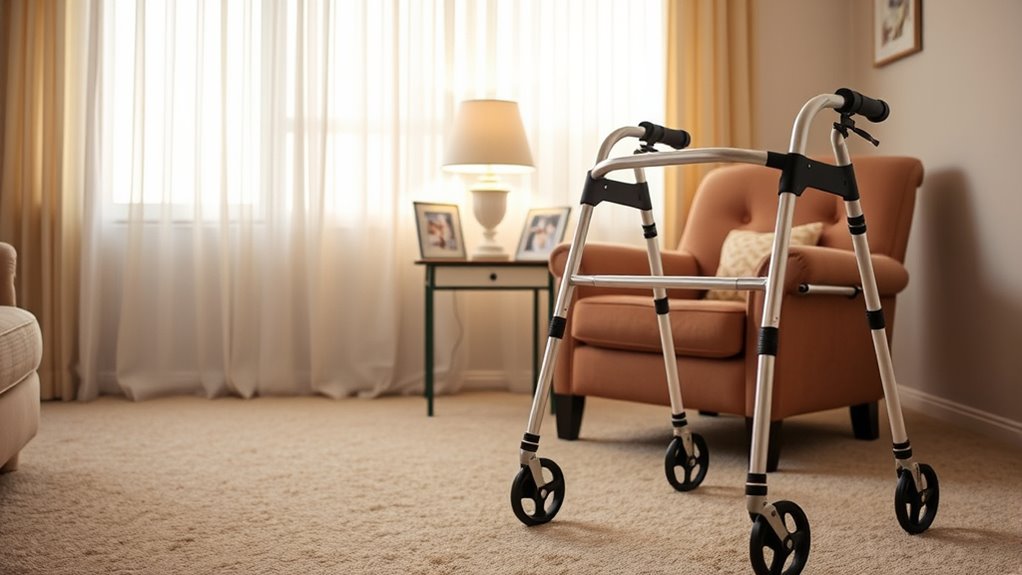
When it comes to your daily mobility, assistive devices can make a significant difference. A walker, for example, offers stability and support, especially if you experience balance issues or weakness. Whether you’re managing the living room, bedroom, or bathroom, a walker can help prevent falls and give you the confidence to move freely. If stairs are a concern, there are specialized assistive devices like stairlifts or portable handrails that can be attached temporarily or permanently. These devices don’t just improve safety—they promote independence by allowing you to handle everyday activities more comfortably.
Deciding whether you need a walker inside your house depends on your mobility level. If you find yourself leaning heavily on furniture or needing to hold onto walls for balance, a walker could be a smart addition. It’s also worth considering other assistive devices like canes or grab bars, especially in high-risk areas such as bathrooms or near stairs. Installing grab bars next to the toilet and in the shower provides extra support and reduces the risk of slips. Alongside these modifications, making sure pathways are clear of clutter is vital for safe movement. Keep walkways wide, free of cords or furniture that could trip you up, and ensure rugs are secured so they don’t slide under your feet.
Ultimately, enhancing mobility at home involves a combination of environmental adjustments and the right assistive devices. Taking these steps can help you move around more confidently, prevent falls, and maintain your independence longer. Regularly reassess your needs and consult with healthcare professionals or mobility specialists—they can recommend the best solutions tailored to your situation. Safety isn’t just about avoiding accidents; it’s about empowering you to stay active and engaged in your daily life. Incorporating features like high-quality projectors can also contribute to a more accessible and enjoyable living environment by making entertainment easily viewable from different areas of your home.
As an affiliate, we earn on qualifying purchases.
Frequently Asked Questions
How Do I Choose the Right Walker for Indoor Use?
To choose the right walker for indoor use, focus on adjusting the walker height so it’s comfortable and safe for you. Consider a lightweight walker for easier maneuverability, especially if you’ll be using it indoors often. Test different models to find one with a manageable weight that won’t strain you. Prioritize stability and ease of use, ensuring the walker fits your space and supports your mobility needs effectively.
Are There Stylish or Discreet Walker Options Available?
Think of a walker as your stylish sidekick, blending function with fashion. Yes, there are fashionable designs and discreet options that look more like chic accessories than medical devices. These sleek, modern walkers come in neutral colors or with subtle patterns, so you can move confidently without drawing attention. With these options, you get the support you need while staying true to your personal style.
Can a Walker Be Used on Different Types of Flooring Inside?
A walker works well on various indoor flooring types, including hardwood, tile, and carpet. To keep it functioning smoothly, you should perform regular walker maintenance, like checking the wheels and brakes. Indoor walker accessories, such as non-slip pads or rubber tips, can enhance stability and protect your floors. Make sure your walker is suited for your flooring to guarantee safety and ease of movement throughout your home.
What Safety Features Should I Look for in an Indoor Walker?
To guarantee safety with an indoor walker, look for features like non-slip grips to prevent slipping and enhance control. A foldable design makes it easy to store and maneuver through tight spaces, reducing the risk of accidents. You should also check for stability, lightweight construction, and adjustable height settings for a customized fit. These features together help you move confidently and safely around your home.
How Do I Train a Senior to Use a Walker Safely Indoors?
To train a senior to use a walker safely indoors, start with simple balance exercises to boost confidence. Show them how to stand tall and move slowly, supporting their weight as needed. Encourage practice in open spaces, and praise their efforts to build confidence. Consistent, gentle guidance helps them feel secure, making them more comfortable and proficient in using the walker independently.
As an affiliate, we earn on qualifying purchases.
Conclusion
Ultimately, choosing a walker inside your home isn’t just about mobility—it’s about reclaiming your independence and peace of mind. Think of it as your trusty shield, turning obstacles into stepping stones. With the right support, you’ll navigate every room with confidence and ease. Remember, the path to safer, more comfortable living isn’t a journey you take alone—it’s one you walk with a little help, transforming challenges into new opportunities for freedom.
As an affiliate, we earn on qualifying purchases.
As an affiliate, we earn on qualifying purchases.
Evergreen bestsellers Picks
bestsellers
As an affiliate, we earn on qualifying purchases.