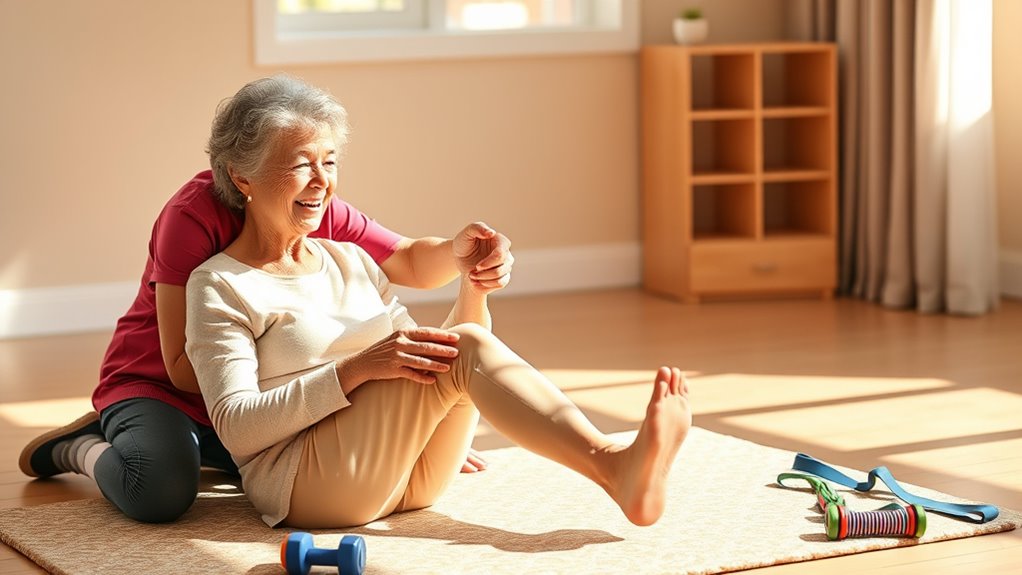

As a caregiver, you can help seniors stay active with simple exercises like chair sit-to-stand movements, heel-to-toe walks, and seated leg lifts to improve strength and balance. Incorporate gentle arm curls using light weights or water bottles, and encourage slow, controlled movements to prevent strain. Supporting their safety with sturdy furniture and supervision is essential. Keep exercises short and consistent—these small steps can considerably boost confidence and mobility. Keep going to discover even more effective ways to assist them.

Turn quiet afternoons into listening time
- Thousands of audiobooks, podcasts and originals
- Listen on your phone, tablet or Echo — also offline
- Cancel anytime
Key Takeaways
- Focus on balance exercises like shifting weight and heel-to-toe walking to prevent falls.
- Incorporate seated exercises such as lifting one foot or arm curls for strength and coordination.
- Use sturdy support, like chairs or countertops, to ensure safety during standing movements.
- Perform strength activities with light resistance bands or water bottles, emphasizing slow, controlled motions.
- Keep sessions brief (10-15 minutes), consistent, and tailored to the senior’s ability to promote adherence.
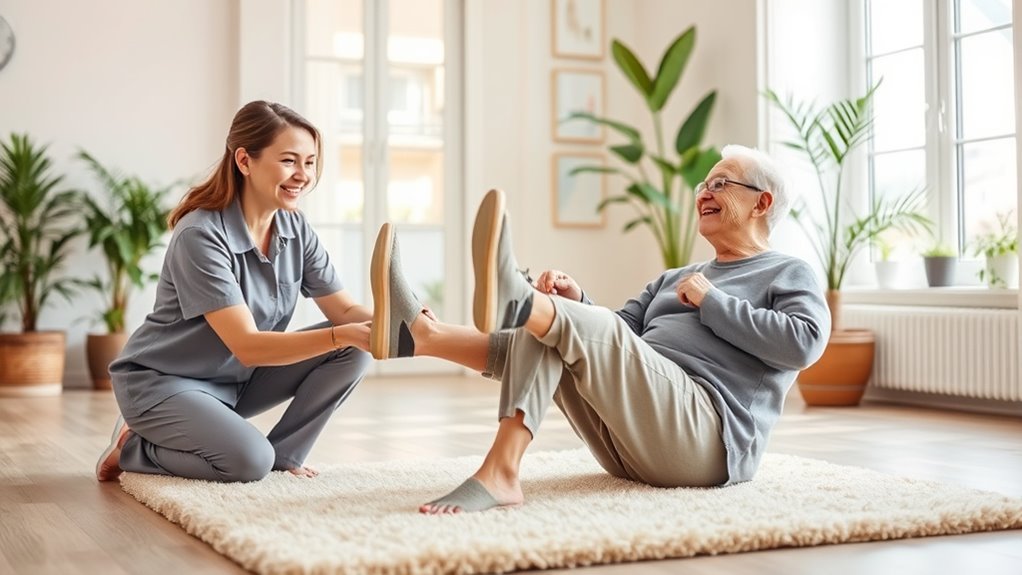
Staying active is fundamental for maintaining health and independence as you age. When you work with seniors, incorporating simple exercises can make a significant difference in their overall well-being. Two key areas to focus on are balance exercises and strength training. These activities help prevent falls, improve mobility, and boost confidence, making daily tasks easier and safer.
Start by integrating balance exercises into your routine. These are straightforward and don’t require special equipment. For example, have the senior stand near a sturdy chair or countertop for support, then encourage them to shift their weight from one foot to the other, holding each position for 10-15 seconds. You can also practice heel-to-toe walking, where they place one foot directly in front of the other along a straight line, like walking on a tightrope. This exercise challenges their stability and trains their muscles to respond quickly. Additionally, simple seated balance activities, such as lifting one foot slightly off the ground while seated, help enhance core stability without risking falls. These exercises should be done slowly and with supervision, especially if there’s any history of balance issues, to guarantee safety. Incorporating free floating movements can improve overall coordination and reduce the risk of falls.
Strength training is equally essential and easy to incorporate into daily routines. You don’t need heavy weights; body weight exercises or light resistance bands work well. Start with seated or standing leg lifts, where they lift one leg while holding onto a chair for support, then switch legs. This strengthens the hip and thigh muscles, which are fundamental for walking and maintaining posture. Arm exercises, like bicep curls with light weights or water bottles, help preserve upper-body strength needed for everyday tasks such as dressing or carrying groceries. Encourage slow, controlled movements to avoid strain. As their strength improves, you can increase repetitions gradually. Incorporating strength training two to three times a week, even for just 10-15 minutes, can yield noticeable benefits. The key is consistency and making exercises manageable so they’re more likely to stick with it.
light resistance bands for seniors
As an affiliate, we earn on qualifying purchases.
As an affiliate, we earn on qualifying purchases.
Frequently Asked Questions
How Often Should Caregivers Encourage Seniors to Exercise?
You should encourage seniors to exercise at least five days a week, aiming for about 30 minutes daily. Maintaining a consistent exercise frequency helps improve their strength and flexibility. To make it easier, create an activity scheduling routine that fits their preferences and energy levels. Regular activity boosts their health and mood, so stay flexible and attentive to their needs, adjusting the schedule as necessary to keep them engaged and safe.
Are There Exercises Suitable for Seniors With Limited Mobility?
Research shows that gentle, adapted exercises benefit seniors with limited mobility, making activities like chair yoga and seated stretches ideal options. You can help them perform these movements safely, promoting flexibility and circulation without overexertion. These exercises require minimal space and equipment, making them accessible and effective. Incorporate them into daily routines to support their physical health, boost mood, and enhance overall well-being.
What Safety Precautions Should Caregivers Take During Exercises?
You should focus on exercise safety by ensuring the environment is free of hazards and well-lit to prevent falls. Always supervise the senior closely, start with gentle movements, and avoid overexertion. Use supportive tools like chairs or walls for balance, and encourage slow, controlled motions. Regularly check that footwear and surfaces are safe, and listen to the senior’s feedback to prevent injury and promote fall prevention during exercises.
Can Seniors Exercise if They Have Chronic Health Conditions?
Yes, seniors with chronic health conditions can exercise safely if you get a medical consultation first. It’s important to discuss their specific conditions and limitations. You can then adapt exercises to suit their needs, focusing on gentle, low-impact activities. Always monitor their response and avoid pushing too hard. With proper guidance and customized routines, exercise can improve their strength, flexibility, and overall well-being.
How Can Caregivers Motivate Seniors to Stay Consistent?
You can keep seniors motivated by using effective techniques like setting small, achievable goals and celebrating their progress. Remember, a little encouragement goes a long way, so stay positive and patient. Using activity customization guarantees exercises stay interesting and suit their abilities. Incorporate their interests to make sessions enjoyable, and don’t forget to remind them that every step forward counts. This approach helps build consistency and boosts their confidence.
elderly balance exercise equipment
As an affiliate, we earn on qualifying purchases.
As an affiliate, we earn on qualifying purchases.
Conclusion
By incorporating these simple exercises into your daily routine, you can help seniors stay active and maintain their independence. For example, imagine helping your grandmother do gentle leg lifts; over time, she gains strength and confidence. Remember, consistency is key, and even small efforts make a big difference. Your support not only improves their physical well-being but also boosts their mood and quality of life. Together, you can make a positive impact every day.
As an affiliate, we earn on qualifying purchases.
As an affiliate, we earn on qualifying purchases.
Evergreen bestsellers Picks
bestsellers
As an affiliate, we earn on qualifying purchases.