Owning an AED at home is a smart move if you or your family have heart risks or want quick access during emergencies. It can markedly increase survival chances if someone experiences sudden cardiac arrest. Regular maintenance, legal awareness, and proper storage are essential to guarantee the device works when needed. If you want to understand how to be fully prepared and confident in using an AED, there’s more helpful information ahead.

Turn quiet afternoons into listening time
- Thousands of audiobooks, podcasts and originals
- Listen on your phone, tablet or Echo — also offline
- Cancel anytime
Key Takeaways
- Having an AED at home can significantly increase survival chances during sudden cardiac arrests.
- Regular maintenance and proper storage ensure the device is ready for emergency use.
- Familiarity with local laws and legal protections encourages confident and lawful AED deployment.
- Additional CPR and AED training improves response effectiveness during emergencies.
- Owning an AED demonstrates proactive safety measures for your family’s health and preparedness.
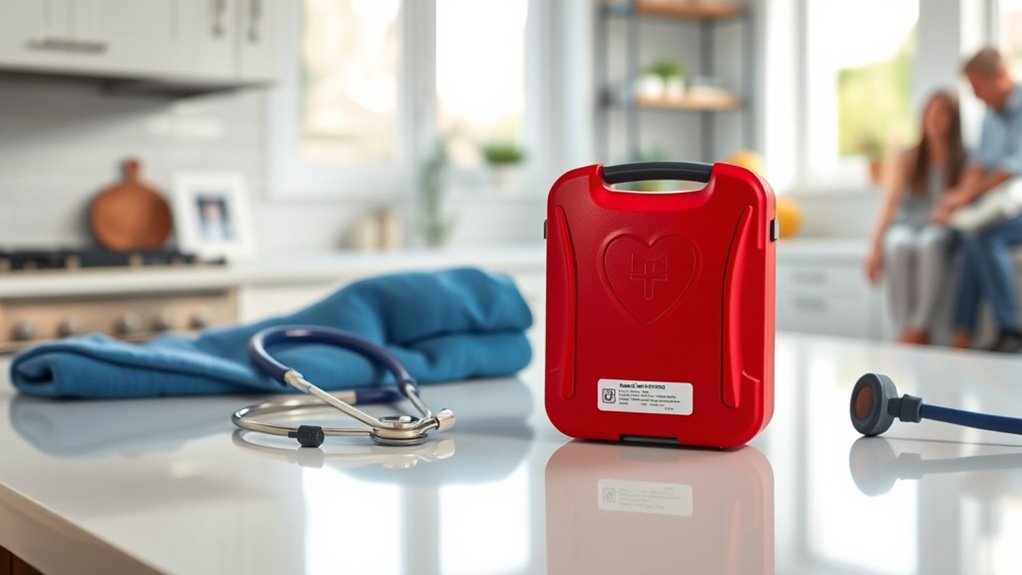
Have you ever wondered how to quickly respond to a sudden cardiac emergency at home? If you or someone in your family has a history of heart problems or is at risk for cardiac arrest, having an Automated External Defibrillator (AED) nearby could be a lifesaver. But just owning an AED isn’t enough—you need to guarantee proper AED maintenance so it’s ready when you need it most. Regularly checking the device’s battery life, ensuring electrode pads are within their expiration date, and following the manufacturer’s instructions are all essential steps. An AED that’s not properly maintained may not deliver the correct shock, which could be the difference between life and death.
Beyond keeping your AED in good shape, it’s important to understand the legal considerations involved. Laws regarding AED use vary by state and country, but generally, many places have Good Samaritan laws that protect individuals who use an AED in an emergency, provided they act in good faith and follow proper procedures. Still, you should familiarize yourself with the specific legal landscape in your area. Some regions may require specific training or certification to operate an AED legally, especially if you’re considering installing it in a public or community space within your home. Knowing your local laws can help you feel more confident in using the device during a crisis and avoid potential legal complications afterward.
Familiarize yourself with local AED laws and regulations to ensure confident and legal emergency use.
Having an AED at home can be a significant step toward safeguarding your loved ones, but it’s not just about purchase and placement. You need to commit to regular AED maintenance, which includes checking the device’s battery and electrode pads, replacing expired components, and ensuring the device is stored in an accessible, known location. Additionally, understanding legal considerations helps you navigate liability issues and ensures you’re protected when acting in an emergency. Some families also opt to undergo CPR and AED training, which can boost your confidence and ensure you’re prepared to use the device correctly and effectively.
Ultimately, owning a home defibrillator isn’t a decision to take lightly. It requires ongoing maintenance and awareness of legal obligations, but it can also be a crucial tool in saving a loved one’s life. Taking the time to understand these aspects means you’re not just hoping for the best—you’re actively prepared to respond swiftly and effectively if a cardiac emergency strikes. It’s about being proactive, informed, and ready to act when every second counts.
As an affiliate, we earn on qualifying purchases.
Frequently Asked Questions
Can Children Safely Use a Home Defibrillator?
Children can safely use a home defibrillator if they’re properly trained and supervised, guaranteeing child safety during emergency response. AEDs have built-in prompts and safety features that guide users through the process, making it accessible for trained individuals. It is crucial to keep the device in a safe, accessible location and ensure that caregivers and older children know how to operate it confidently, especially during urgent situations.
How Much Does a Home AED Typically Cost?
You’ll probably find that a home AED costs between $1,200 and $2,500, making it a steal for peace of mind, right? Of course, cost considerations vary based on features and brand. While the price range may seem steep, think of it as insurance for your loved ones. Investing in an AED could be the smartest decision you make—after all, not everyone gets a second chance.
Are There Legal Restrictions on Owning a Home Defibrillator?
Legal considerations and ownership regulations generally don’t restrict you from owning a home defibrillator, making it accessible for personal use. However, you should check your local laws, as some areas might have specific requirements or restrictions. Keep in mind that proper training and maintenance are essential for safe use. Always consult your healthcare provider or local authorities to ensure adherence to any relevant legal considerations before purchasing and installing an AED at home.
How Often Should a Home AED Be Maintained or Checked?
Think of your home AED like a car—regular maintenance keeps it ready. You should perform a device inspection monthly, checking the battery and pads, and follow the manufacturer’s maintenance schedule. Additionally, replace batteries or pads as recommended or if they show signs of wear. Proper upkeep guarantees your AED functions reliably in an emergency, giving you peace of mind and potentially saving lives when every second counts.
What Training Is Necessary to Operate a Home Defibrillator?
You should complete CPR certification to confidently operate a home defibrillator. Training includes learning emergency protocols, such as how to assess a person’s condition, perform CPR, and correctly use the AED. This hands-on instruction guarantees you’re prepared to act quickly and effectively during cardiac emergencies. Regular refreshers help maintain your skills, so you’re always ready to save a loved one’s life when seconds count.
automatic external defibrillator for home
As an affiliate, we earn on qualifying purchases.
As an affiliate, we earn on qualifying purchases.
Conclusion
Having a home defibrillator is like keeping a lighthouse shining through the storm—a beacon of hope in life’s darkest moments. While it may not be necessary for everyone, if you’re at higher risk or want peace of mind, it’s a powerful tool to have nearby. Think of it as your personal safety net, ready to catch you when life throws its unexpected twists. Ultimately, investing in an AED could be the difference between a tragedy and a second chance.
As an affiliate, we earn on qualifying purchases.
As an affiliate, we earn on qualifying purchases.
Cold & flu season Picks
humidifiers
As an affiliate, we earn on qualifying purchases.