
TL;DR

Turn quiet afternoons into listening time
- Thousands of audiobooks, podcasts and originals
- Listen on your phone, tablet or Echo — also offline
- Cancel anytime
UC Davis Health researchers are testing whether a home medication device made by HiDO Health can help older adults with mild cognitive impairment or dementia take prescriptions as directed. The one-year trial will enroll 50 people and compare device use, with training and support, against usual medication routines; its effects are not yet known.
UC Davis Health researchers are testing a home medication dispenser designed to use AI-assisted functions to help older adults with memory and thinking problems take prescription drugs as directed. The one-year clinical trial will enroll 50 people with mild cognitive impairment or dementia and compare those using the device with training and support against participants following their usual medication routines.
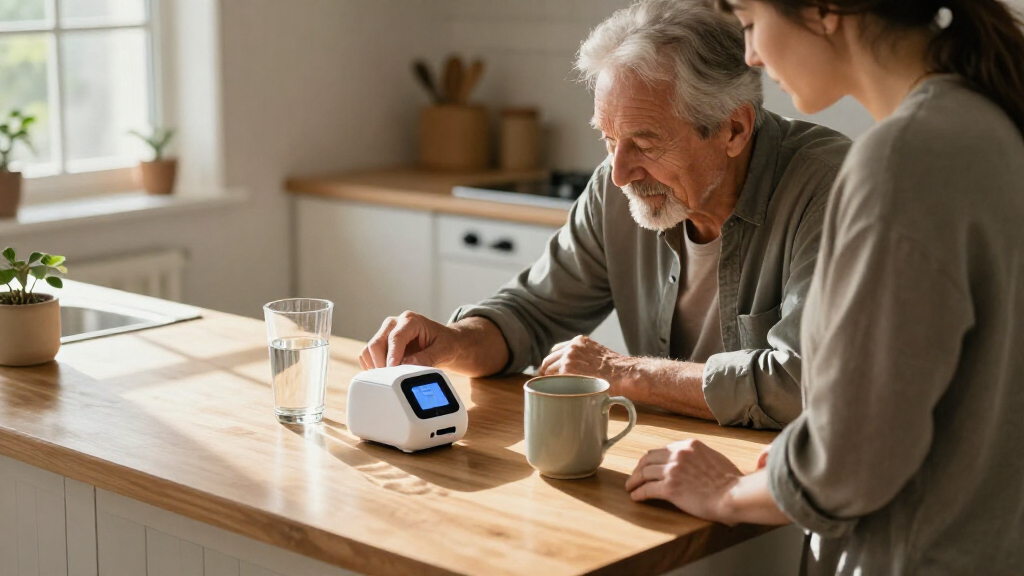
The device, made by HiDO Health, is about 17 inches (43 centimeters) tall and holds up to a 90-day supply of as many as seven medications. The system is designed to provide the right medication at the scheduled time, record when it is taken and make information available to caregivers approved by the user. Researchers are testing whether those functions improve medication adherence and help caregivers monitor use remotely.
Half of the trial participants will use the device with training and support; the other half will continue their usual routine. Researchers will follow both groups for one year, measuring medication adherence, cognition and daily functioning. They will also collect blood samples to track health indicators such as cholesterol and glucose for conditions treated by participants’ prescriptions. A UC Davis Health pharmacy team will review medications before participants start, as a safety measure.
The project is funded by a $2.48 million National Institute on Aging grant through its Phase II Small Business Innovation Research program. The researchers include UC Davis neuropsychologists Alyssa Weakley and Sarah Tomaszewski Farias. The source report describes earlier peer-reviewed research as providing initial evidence that the device is practical, accurate and usable for people with dementia and caregivers; the current trial is intended to test its effects further.
Testing Medication Support at Home
Medication routines can become difficult when memory and thinking change, while family caregivers may not be present to check whether a dose was taken. The device is intended to address a specific gap in ordinary reminders and pill organizers: removing a pill from a container does not establish that someone took it. A record that caregivers can check could offer more information than a reminder alarm or a conventional pillbox.
The practical stakes are meaningful, but the trial has not yet shown that the system prevents medication errors, improves health or allows people to remain independent longer. Those are possibilities researchers hope to examine, not established outcomes. The study’s measurements of adherence and health indicators should help clarify whether the device changes medication-taking behavior and whether any change is accompanied by other differences.
The results may also matter to caregivers who live apart from older relatives. For example, the report describes 88-year-old Marianne Blake, who lives independently, and her daughter, Patty Soulsby, who worries about missed or delayed doses. Their experience illustrates the problem the study is addressing; it does not provide evidence of the device’s effectiveness.
AI medication dispenser for seniors
As an affiliate, we earn on qualifying purchases.
As an affiliate, we earn on qualifying purchases.
From Pillboxes to Recorded Doses
Many familiar medication aids organize pills or prompt users with alarms. A standard pillbox can show that a compartment has been opened or medication removed, but that does not necessarily confirm ingestion. HiDO’s system is designed to dispense medication and record its use, with information shared with approved caregivers. The trial will test this approach under study conditions rather than assume that more technology automatically leads to better adherence.
The report cites estimates that 4.3 million older Americans live alone with memory and thinking problems, about a quarter of older adults with dementia or mild cognitive impairment. It also cites research associating medication errors with a 71% higher likelihood of hospitalization and a national study finding that more than 13% of older adults with dementia had difficulty managing medications. These figures describe broader concerns cited in the report; they are not findings from the UC Davis trial.
The trial includes people across a range of cognitive impairment, from mild cognitive impairment—changes in memory or thinking that can make some tasks harder—to moderate dementia, where those problems interfere with daily life and more help may be needed. Researchers plan to assess not only whether medication adherence changes, but also which participants benefit most and what support caregivers need to use the system.
“If we can have a medication device deliver that medication and, as a caregiver, know it was taken at the right time, that’s huge.”
— Alyssa Weakley, UC Davis neuropsychologist
automatic pill organizer with reminders
As an affiliate, we earn on qualifying purchases.
As an affiliate, we earn on qualifying purchases.
Results Await the One-Year Trial
No trial results are reported yet. The available information does not establish whether the device improves adherence, changes cognition or daily functioning, or affects participants’ health indicators. It also does not show how often the system might fail to record a dose, whether users will consistently operate it, or whether caregivers will find the shared information useful.
The study will include only 50 participants, and the report does not provide details on how they will be recruited, how assignment to the two groups will work, or what statistical comparisons researchers will use. It also does not specify the exact AI functions or explain what evidence the device uses to determine that medication was taken. Those details, along with any findings on safety, usability and which groups benefit, remain unreported.
The report cites early peer-reviewed research on practicality, accuracy and ease of use, but does not provide the study’s methods, sample size or results. That evidence should be distinguished from the outcomes of the new clinical trial. Researchers will need to publish or otherwise report the trial findings before readers can judge the device’s effectiveness.
medication adherence device for elderly
As an affiliate, we earn on qualifying purchases.
As an affiliate, we earn on qualifying purchases.
Researchers Track Participants for a Year
Researchers will enroll 50 adults with mild cognitive impairment or dementia, review their medications with the pharmacy team and provide training and support to the group assigned to use the HiDO dispenser. The comparison group will continue its usual routine. Both groups will be followed for one year, with medication adherence, cognition and daily functioning among the measures collected.
Blood samples will be used to monitor health indicators, including cholesterol and glucose, related to conditions treated with participants’ medications. The report does not give a date for publication of results. The key next development will be a report from the researchers showing whether the device changed medication adherence, how participants and caregivers used it, and what limitations emerged.
remote medication monitoring system
As an affiliate, we earn on qualifying purchases.
As an affiliate, we earn on qualifying purchases.
Key Questions
What is the UC Davis trial testing?
It is testing whether a HiDO Health medication dispenser, used with training and support, helps older adults with mild cognitive impairment or dementia take prescriptions as directed. Researchers will compare 25 device users with 25 people continuing their usual medication routine.
How does the device differ from a pillbox?
A conventional pillbox organizes medication and may show that a pill was removed, but that does not confirm it was taken. The HiDO system is designed to dispense medication at scheduled times and record medication use for approved caregivers to check. Whether it reliably improves adherence is what the trial is testing.
Has the device been shown to work?
The report cites earlier peer-reviewed research offering initial evidence on practicality, accuracy and ease of use, but it does not provide details of that research. The current trial has not reported results, so its effect on adherence, health or daily functioning is not yet known.
Who is eligible to take part?
The trial is intended for 50 people with conditions ranging from mild cognitive impairment to moderate dementia. The report does not state specific eligibility criteria, recruitment details or how participants can apply.
When will the findings be available?
Participants will be followed for one year. The report does not give a completion date or a timetable for publication, so the timing of findings has not been specified.
Source: rss
Halloween Picks
halloween
As an affiliate, we earn on qualifying purchases.