TL;DR

Turn quiet afternoons into listening time
- Thousands of audiobooks, podcasts and originals
- Listen on your phone, tablet or Echo — also offline
- Cancel anytime
A study of 567 older adults in rural South Africa found that hearing loss was associated with more than twice the odds of dementia. The researchers did not establish that hearing loss causes dementia or that treating it prevents the condition; clinicians say sensory health deserves attention as part of broader care.
A study of 567 older adults in rural South Africa found that hearing loss was associated with more than twice the odds of dementia, according to a report published Oct. 6 by Medical Xpress. The study does not show that hearing loss causes dementia or that treating it prevents the condition, but it supports paying attention to hearing and vision as part of older adults’ health care.
The research, published in Alzheimer’s & Dementia in 2025, examined sensory impairment and dementia among participants in the Health and Aging in Africa: A Longitudinal Study of an INDEPTH Community in South Africa, known as HAALSI. The participants lived in Agincourt, Mpumalanga. The study considered hearing, vision and dementia; the Medical Xpress report says visual impairment, affecting near and far vision, was also associated with elevated risk.
Geriatrician Dr. Brent Tipping of Wits Donald Gordon Medical Center, a co-author of the study, said the findings point to the value of hearing and vision interventions for overall brain health. That is a potential public-health implication, not evidence that a sensory intervention can prevent dementia. The report does not provide details on a specific hearing treatment tested in the study.
Tipping also described dementia assessment as broader than memory alone. Clinicians may review health conditions, daily functioning, available support and medicines, including sleeping medication that could contribute to confusion or daytime difficulties. Persistent or worsening memory changes have several possible explanations and should be assessed by a qualified health professional.
Sensory Health in Dementia Care
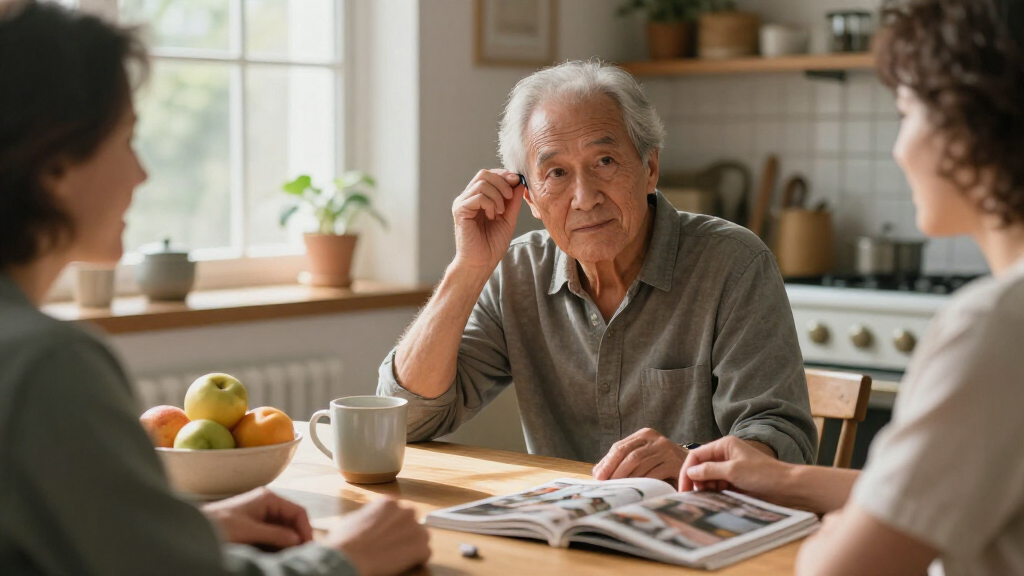
Hearing loss can affect communication and participation in everyday life, while sensory difficulties may complicate how cognitive problems are recognized and managed. The study adds evidence from an older rural South African population to discussion of modifiable dementia risk factors. Its findings make hearing and vision reasonable subjects for clinical attention, while leaving open whether addressing them changes a person’s dementia risk.
The wider stakes are substantial. The report cites a Global Burden of Disease projection that the number of people living with dementia could rise from about 57 million in 2019 to 153 million by 2050, driven in part by population growth and aging. That is a projection, not a count of future cases already observed. In South Africa, dementia can also affect families and communities where older adults support households and care for grandchildren.
Any response must account for the limits of specialist capacity. Tipping says South Africa has only two funded training positions nationally in geriatric medicine. Earlier attention to sensory and cognitive concerns may matter most when patients can access appropriate assessment and practical support.
As an affiliate, we earn on qualifying purchases.
Risk Factors and Lifelong Health
Dementia risk is not explained by one factor. The Medical Xpress report notes that the Lancet Commission estimates that addressing 14 modifiable risk factors could prevent or delay around 45% of dementia cases worldwide. This is an estimate across a group of risks; it does not mean any single measure, including hearing treatment, has been shown to prevent that share of cases.
Tipping points to measures such as managing blood pressure, cholesterol, diabetes and weight, remaining physically active, and addressing excessive alcohol use. He also emphasizes that cognitive health is shaped over a lifetime. The report highlights access to quality education from early childhood and notes concerns about unequal educational opportunity in South Africa. Tipping says learning can take many forms, including acquiring a skill or pursuing an absorbing interest.
Care for an older person with dementia often involves more than medical treatment. As the condition progresses, relatives may take over tasks such as driving, preparing meals and managing medication. Tipping says caregivers also need practical help and chances to rest. His approach reflects a broader geriatric goal: supporting independence and comfort for as long as possible, rather than focusing only on longevity.
“The patients have layers of complexity.”
— Dr. Brent Tipping
hearing amplifiers for older adults
As an affiliate, we earn on qualifying purchases.
As an affiliate, we earn on qualifying purchases.
What the Study Cannot Establish
The reported association does not establish that hearing loss directly causes dementia. It also does not show that hearing aids or other hearing interventions prevent or delay dementia. The report provides the study’s participant count and setting but does not give the detailed methods, effect estimates, or analysis needed to judge how other factors may have influenced the results.
The findings should not be interpreted as an individual prediction. A person with hearing loss will not necessarily develop dementia, and the reported association alone cannot determine a person’s risk. The report also does not specify what interventions, if any, were evaluated or whether the results apply to populations beyond the older adults studied in Agincourt.
vision and hearing health kits for seniors
As an affiliate, we earn on qualifying purchases.
As an affiliate, we earn on qualifying purchases.
Clinical Attention and Further Research
The report does not announce a new trial or a scheduled follow-up study. The next practical step it points toward is for hearing, vision and cognitive concerns to be considered within broader care for older adults, alongside health conditions, medicines and daily support needs. People concerned about hearing changes or persistent memory difficulties can discuss them with a qualified health professional; this article is not medical advice.
Further research would be needed to clarify how sensory impairment relates to dementia over time and whether treating hearing or vision problems changes cognitive outcomes. The source report does not set out a research timetable. For now, the findings support attention to sensory health without presenting hearing treatment as a proven dementia-prevention measure.
dementia prevention hearing devices
As an affiliate, we earn on qualifying purchases.
As an affiliate, we earn on qualifying purchases.
Key Questions
What did the South African study find?
It examined 567 older adults in Agincourt, Mpumalanga, and reported an association between hearing loss and more than twice the odds of dementia. The study was published in Alzheimer’s & Dementia in 2025.
Does hearing loss cause dementia?
The reported findings do not establish that hearing loss causes dementia. An association between two conditions does not, by itself, show that one causes the other.
Can treating hearing loss prevent dementia?
The source report does not show that hearing aids or another hearing intervention prevents dementia. It describes sensory interventions as important to overall brain health, while saying the study does not establish prevention.
What other health measures does the report mention?
Geriatrician Brent Tipping points to managing blood pressure, cholesterol, diabetes and weight, staying active, and addressing excessive drinking. These are part of broader health care, not a guarantee against dementia.
When should memory changes be assessed?
The report says persistent or worsening changes warrant assessment because forgetfulness can have several possible explanations, including factors such as medication. A qualified health professional can evaluate individual concerns.
Source: rss
Halloween Picks
halloween
As an affiliate, we earn on qualifying purchases.