
TL;DR

Turn quiet afternoons into listening time
- Thousands of audiobooks, podcasts and originals
- Listen on your phone, tablet or Echo — also offline
- Cancel anytime
A 2026 analysis in Public Policy & Aging Report says heat protections often fail to address the practical barriers older adults face, including cooling costs, housing conditions and mobility. The authors call for region-specific measures such as indoor temperature standards, expanded utility assistance and more accessible cooling centers.
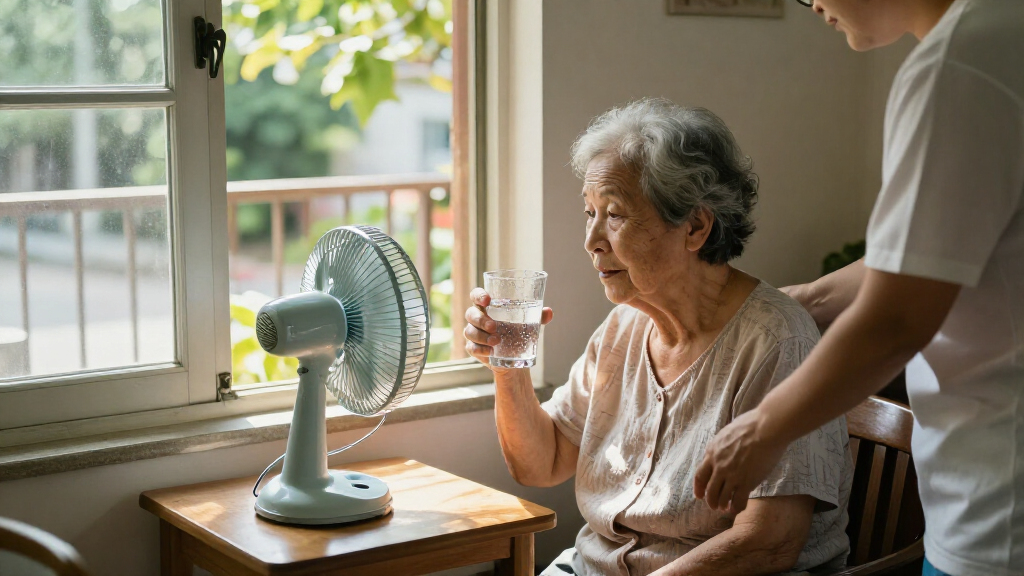
A new policy analysis says extreme heat poses serious risks to older adults and that existing public protections often fail to address whether they can afford, maintain or safely use cooling. Published in Public Policy & Aging Report, the article argues that rising heat requires policies shaped by local climates, housing and access to services—not just the availability of air conditioning.
The article, “On the Regional Spectrum of Barriers and Obstacles for Older Adults Facing Extreme Heat: Air Conditioning and Beyond,” was written by researchers led by Peter Crank, an assistant professor at the University of Waterloo. The authors describe financial, physical and structural obstacles, including high utility bills, cooling-system repairs, limited mobility and older homes that retain heat.
The analysis says older adults can be more vulnerable because aging can reduce the body’s ability to regulate temperature. Chronic conditions such as diabetes and neurodegenerative diseases, as well as some medications commonly prescribed to older people, can add to heat-related risks. The article links heat exposure to cardiovascular and respiratory problems, disrupted sleep, cognitive effects, reduced attention and mental health concerns.
Air conditioning, the authors argue, is not a complete safeguard if a resident cannot afford to run it or keep it working. They also describe limits to cooling centers: transportation, mobility, safety concerns, restricted opening hours and lack of awareness can make them difficult to use. The article recommends stronger renter protections, indoor temperature standards, more cooling assistance, repair and replacement support, and better access to cooling centers.
Cooling Access Beyond Air Conditioning
The findings frame heat safety as a question of reliable access to safe indoor temperatures, not simply whether a building has a cooling unit. For older adults on fixed or limited incomes, electricity costs and repair bills can determine whether air conditioning is usable during a heat wave. Mobility or cognitive limitations may also make it harder to install equipment, recognize dangerous indoor conditions or reach help.
The policy differences matter because a single nationwide approach may not address distinct risks. In hot regions, cooling systems may be essential, while homes in traditionally colder cities can be poorly equipped for prolonged heat. The authors’ proposals could affect renters, utility-assistance programs, housing standards and local emergency planning. The analysis identifies these as policy needs; it does not report that its recommendations have been adopted or measure their effects.
portable air conditioner for seniors
As an affiliate, we earn on qualifying purchases.
As an affiliate, we earn on qualifying purchases.
Heat Risks Across Different Regions
The researchers contrast conditions in the desert Southwest and the Northeast. In some Arizona cities, rental rules require air-conditioning systems to work, be repaired promptly and cool a home to as much as 20 degrees Fahrenheit below the outdoor temperature. The article notes that Phoenix had 70 days in 2024 when temperatures reached at least 110°F (43°C). On days that hot, a home meeting that temperature-difference requirement could still exceed 90°F (32°C) indoors.
In the Northeast, the analysis points to older buildings designed to retain heat in winter. It says many homes in cities such as Boston lack central air conditioning, while indoor cooling standards and renter protections remain limited. The authors also say energy assistance in the region has traditionally focused more on winter heating than summer cooling. These examples illustrate the article’s argument that local housing and climate conditions should shape heat policy.
““Air conditioning only protects people if they can afford to run it, maintain it and use it safely.””
— Amir Baniassadi, assistant scientist II at the Hinda and Arthur Marcus Institute for Aging Research at Hebrew SeniorLife and a co-author
energy-efficient cooling fans for elderly
As an affiliate, we earn on qualifying purchases.
As an affiliate, we earn on qualifying purchases.
Policy Effects Remain Unmeasured
The article is a policy analysis, not a report of a new intervention or a measured evaluation of specific programs. The supplied report does not provide estimates of how many older adults are exposed to unsafe indoor temperatures, how many lack usable cooling, or how much the proposed measures would cost. It also does not establish which policies would reduce heat-related illness or deaths most effectively.
The examples from Arizona and the Northeast illustrate regional challenges, but the report does not provide a complete state-by-state assessment. The supplied material also does not identify a government response, implementation timetable or funding commitment. Whether proposed standards or assistance programs will be adopted remains unclear.
indoor temperature monitor for seniors
As an affiliate, we earn on qualifying purchases.
As an affiliate, we earn on qualifying purchases.
Local Heat Protections to Watch
The researchers call for policymakers to consider indoor temperature standards, renter protections and expanded utility assistance, alongside support for cooling-system maintenance and replacement. They also recommend making cooling centers easier to reach and use, including addressing transport, operating hours and accessibility barriers.
The analysis does not announce a next policy milestone. Readers can watch for whether local and state governments respond with new cooling rules, summer energy aid or changes to emergency services. Any such proposals would need to account for regional housing and climate conditions, the authors argue; specific measures and timelines have not been provided in the source material.
As an affiliate, we earn on qualifying purchases.
Key Questions
What does the new analysis say about older adults and extreme heat?
It says older adults face heightened heat-related risks and that cooling protections may fall short when people cannot afford, maintain or safely use air conditioning, or access cooling centers.
Why may air conditioning not be enough?
According to the analysis, equipment can be too costly to run or repair, difficult to install or maintain, or unable to keep older housing at a safe temperature during severe heat.
How do heat-related barriers differ by region?
The article describes high cooling demand and affordability concerns in the Southwest, while noting that older homes in the Northeast may lack air conditioning and retain heat. It argues that policies should reflect local climates and housing.
What policy changes do the authors recommend?
They propose stronger renter protections, indoor temperature standards, expanded utility assistance, support for cooling-system repairs or replacement, and more accessible cooling centers.
Does the analysis show that these recommendations have been adopted?
No adoption or implementation is reported in the supplied material. The article makes policy recommendations, but their status and expected effects are not specified.
Source: rss
Cold & flu season Picks
humidifiers
As an affiliate, we earn on qualifying purchases.