
Adaptive dining tools like plate guards, easy-grip utensils, and stable cups help you enjoy meals safely and with confidence. These tools prevent spills, make handling food and drinks easier, and support your independence during mealtime. By choosing the right equipment, you can participate more comfortably in social dining and maintain your dignity. To discover practical tips and inspiring success stories, keep exploring how these solutions can enhance your mealtime experience.
Open a free Amazon Business account
Business pricing, bulk buying and tax-exempt orders.
As an affiliate, we earn on qualifying purchases.
Key Takeaways
- Adaptive dining tools like plate guards, ergonomic utensils, and spill-resistant cups enhance safety, control, and independence for seniors.
- Plate guards with raised edges and compartments prevent spills and organize meals, simplifying eating for seniors with limited dexterity.
- Ergonomic utensils with non-slip handles and angled shafts improve grip and reduce wrist strain, promoting easier self-feeding.
- Cups with stable, non-slip bases and spill-resistant lids minimize tipping and spills, ensuring safer drinking experiences.
- Proper selection and gradual integration of adaptive tools support seniors’ confidence, social participation, and dignity during meals.
adaptive plate guard with raised edges
As an affiliate, we earn on qualifying purchases.
As an affiliate, we earn on qualifying purchases.
Benefits of Adaptive Dining Tools for Seniors
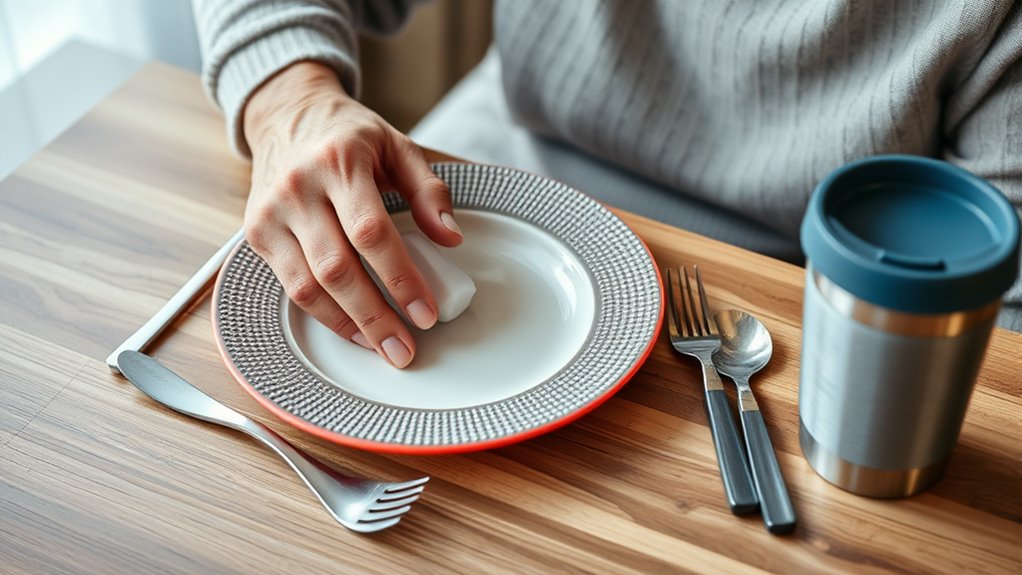
Adaptive dining tools offer numerous benefits for seniors, making mealtime safer and more independent. With the right tools, you can simplify meal planning by choosing items that suit your needs, reducing frustration and mess. These tools help you maneuver your plate, utensil, or cup more easily, which means less worry about spills or injuries. They also encourage social dining by enabling you to participate comfortably in shared meals without feeling self-conscious or dependent on others. Using adaptive utensils and plate guards, you gain control over your eating experience, boosting confidence and dignity. Ultimately, these tools support your desire to enjoy meals with family and friends, fostering connection and enjoyment while maintaining your independence.
As an affiliate, we earn on qualifying purchases.
Types of Plate Guards and Their Uses

Plate guards come in various designs to help you eat more independently and reduce mess. These plate guard varieties include raised edges, segmented designs, and adjustable options tailored to your needs. They prevent food from spilling over the sides and keep everything within reach. Some guards have built-in compartments for different food types, making meal organization easier. Others are removable and easy to clean, ensuring hygiene and convenience. When considering utensil adaptations, certain plate guards work better with specific utensils, enhancing your control. For example, some guards are compatible with ergonomic handles or angled utensils. Choosing the right type depends on your dexterity and eating habits, but all aim to promote independence and comfort during meals.
spill-resistant cups for elderly
As an affiliate, we earn on qualifying purchases.
As an affiliate, we earn on qualifying purchases.
Innovative Utensils Designed for Ease and Comfort

Innovative utensils are designed to make eating easier and more comfortable, especially for those with limited dexterity or strength. These utensils often feature ergonomic handles or adaptive designs that improve grip and control. Handheld technology plays a crucial role, incorporating features like angled or flexible shafts to reduce wrist strain and enhance precision. Many utensils are customizable to fit specific dietary modifications, such as specialized forks or spoons for pureed foods or textured diets. These adaptations help you maintain independence during meals by simplifying complex movements. The focus is on comfort, functionality, and safety, ensuring you can eat with less effort and frustration. Incorporating adaptive design principles can further optimize these tools for individual needs. By integrating these innovations, you can enjoy a more relaxed and satisfying dining experience tailored to your needs. European cloud innovation supports the development of smart, adaptive solutions for assistive devices, including innovative utensils.
adaptive dining tools for limited dexterity
As an affiliate, we earn on qualifying purchases.
As an affiliate, we earn on qualifying purchases.
Cups and Mugs That Promote Stability and Safety

When choosing cups and mugs, look for features like non-slip bases that keep them stable on the table. Ergonomic grip handles make it easier to hold and control, reducing spills. Spill-resistant designs add an extra layer of safety, especially for those with limited mobility or dexterity. Selecting properly designed cups can further enhance safety and ease of use for seniors. Additionally, choosing cups with ergonomic features can help accommodate various hand strengths and grip difficulties, promoting independence. Utilizing safety-focused designs can significantly minimize accidents and improve confidence during use. Incorporating stability-enhancing features such as weighted bases can further prevent tipping and spills, aligning with reliable safety tips to ensure consistent safety.
Non-Slip Base Design
Have you ever experienced a mug slipping from your grasp or tumbling off the table? A non-slip base is essential for ensuring safety and stability. It provides a firm grip on surfaces, reducing the risk of spills and accidents. With a focus on stability enhancement, these designs feature textured or rubberized bottoms that keep cups steady. They’re especially helpful for seniors or anyone with limited dexterity. Features to look for include:
- Rubberized or silicone non-slip bases
- Textured bottoms for grip
- Wide, stable footings
- Durable, slip-resistant materials
Investing in cups with a non-slip base promotes confidence during meals and minimizes messes. These small but crucial modifications make a significant difference in maintaining independence and safety at the table. Non-slip design is particularly important in preventing accidents caused by slips or tipping. Incorporating adaptive kitchen features can further enhance safety and ease of use for seniors or those with mobility challenges. Utilizing personality assessments like the 16PF can also help identify individuals who may benefit most from additional safety features at mealtime. Additionally, selecting slip-resistant materials can improve durability and safety over time, with advancements in material technology enhancing overall performance.
Ergonomic Grip Handles
A non-slip base helps keep cups stable on surfaces, but the way you hold them also impacts safety. Ergonomic grip handles are designed to improve stability and reduce the risk of spills. These handles often feature cutlery customization options, allowing you to adjust the grip to match your hand’s strength and comfort. If you have limited grip strength, ergonomic handles provide a larger, easier-to-grasp surface, making it simpler to hold your cup securely. By promoting a comfortable grip, these handles help you maintain better control, decreasing the chance of accidents. They’re especially beneficial for seniors who need additional support with daily activities. Understanding ergonomics can help you choose the most suitable handles for your needs. Additionally, selecting handles made from non-slip materials can further enhance safety during use. Using ergonomic design principles ensures the handles are tailored for comfort and safety. Incorporating adaptive assistive devices like ergonomic handles can significantly improve independence and safety during daily routines. When choosing ergonomic handles, consider weight distribution to ensure they support a natural grip and reduce hand fatigue. With ergonomic grip handles, you can enjoy drinking independently with increased confidence and safety.
Spill-Resistant Features
To prevent spills and enhance safety, many cups and mugs now feature spill-resistant designs that prioritize stability. These designs help reduce accidents and make drinking safer for seniors. You can find options with wide, non-slip bases or lids that prevent accidental tipping. Many models are available in various color options to suit personal preferences or make identification easier. Material durability is also key—sturdy plastics or stainless steel ensure long-lasting use without cracks or breaks. Incorporating safety features can further improve the overall safety of drinking vessels. Additionally, including Gold IRA Markets can provide additional peace of mind by offering reliable and trusted product options. Ensuring that these stability features are in place can significantly decrease the risk of spills and promote confidence during use. Moreover, selecting cups with appropriate material safety standards ensures that the materials used are non-toxic and suitable for seniors. Properly designed cups and mugs can also incorporate ergonomic grip features to make handling even easier and safer.
Factors to Consider When Selecting Adaptive Dining Equipment
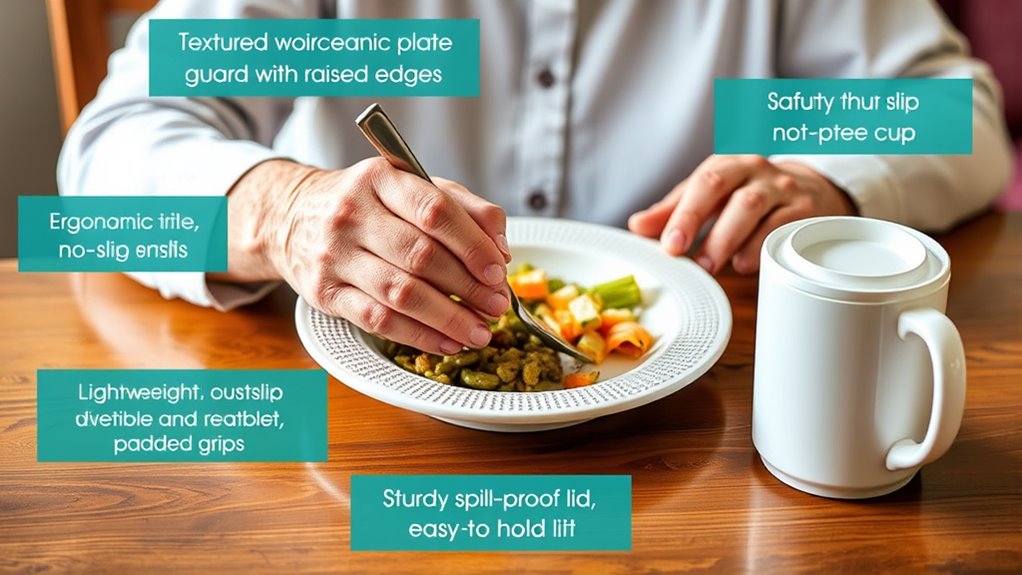
Choosing the right adaptive dining equipment involves considering several key factors to guarantee safety, comfort, and independence. First, think about your meal planning needs—if you often prepare foods requiring specific textures or consistencies, select tools that accommodate those requirements. Additionally, take your dietary restrictions into account; for example, if you have difficulty gripping utensils, choose ergonomic designs that provide a secure hold. Comfort is essential, so look for lightweight, easy-to-handle items that won’t cause strain. Durability matters too—equipment must withstand daily use. Incorporating ergonomic features can significantly improve ease of use and reduce fatigue. When evaluating products, researching adaptive dining tools can help identify options that offer both quality and affordability. Finally, ensure the adaptations match your environment and routines, simplifying mealtime and promoting independence. By focusing on these factors, you can select equipment that truly enhances your dining experience and supports your unique needs.
Tips for Incorporating Adaptive Tools Into Daily Meals

Start by choosing simple adaptive tools that fit your needs and lifestyle. Introduce them gradually into your routine to make the progression easier. This approach helps you become comfortable with new techniques without feeling overwhelmed.
Easy Tool Selection
Ever wonder how to effortlessly incorporate adaptive tools into your daily meals? Choosing the right tools can enhance your dining experience while respecting dietary restrictions. Focus on tools that improve food presentation, making meals more appealing and easier to handle. Consider ergonomic utensils if grip is a concern or non-slip mats for stability. Select plates with built-in guards to prevent spills and cups with adaptive lids for easier drinking. Keep in mind your specific needs, such as textured handles for better grip or color contrast to distinguish food. By matching the tools to your preferences, you simplify mealtime and boost confidence. Remember, the key is to select tools that seamlessly fit into your routine—making adaptive dining natural and enjoyable.
Incorporate Gradually
Introducing adaptive tools gradually allows you to adjust comfortably without feeling overwhelmed. Start by integrating one new tool at a time into your meal planning. For example, try using a plate guard during lunch before introducing other utensils or cups. This approach helps you build confidence and understand how each tool enhances your independence. As you become more comfortable, incorporate adaptive tools into social dining situations to ensure they fit seamlessly into mealtimes with family or friends. Taking small steps minimizes frustration and allows you to evaluate what works best for your needs. Patience is key—gradual incorporation guarantees you adapt smoothly, making mealtimes more enjoyable and less stressful. Over time, these tools will feel like natural parts of your daily routine.
Success Stories: Improving Independence and Dignity Through Adaptive Dining
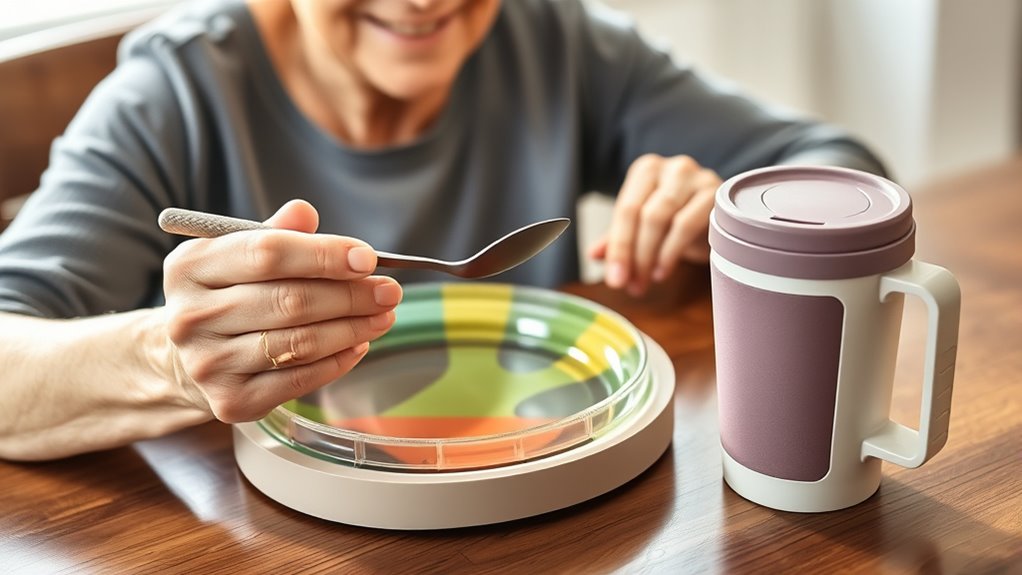
Many individuals have experienced a renewed sense of independence and dignity through adaptive dining solutions. They now enjoy more confident mealtime conversation and better adherence to social dining etiquette. Adaptive tools like plate guards and specialized utensils help them eat more comfortably, fostering a sense of achievement. Families and caregivers report remarkable improvements in their loved ones’ self-esteem and social interactions.
- Restored confidence during meals
- Enhanced ability to participate in group dining
- Better engagement in conversation without worry
- Preservation of dignity in social settings
These success stories show how adaptive dining empowers seniors to maintain independence, enjoy social connections, and feel respected at the table. By removing barriers, you help create a positive mealtime experience that reinforces dignity and social inclusion.
Frequently Asked Questions
Are Adaptive Dining Tools Suitable for All Types of Dietary Restrictions?
Adaptive dining tools can generally accommodate various dietary restrictions, but you need to take into account nutritional compatibility and cultural considerations. They help you manage textures or grip issues, yet some restrictions may require specific utensils or plates. It’s crucial to choose tools that respect your cultural food practices and ensure they support your nutritional needs. Customization might be necessary to align with your unique diet, making adaptive tools versatile and effective for many dietary restrictions.
How Do I Clean and Maintain Adaptive Dining Equipment?
Did you know 80% of adaptive dining equipment users find proper cleaning boosts durability? To keep your tools in top shape, use gentle cleaning techniques like warm soapy water and avoid abrasive cleaners. Regular maintenance tips include inspecting for damage, drying thoroughly, and storing in a dry place. This ensures your adaptive dining equipment stays hygienic, safe, and functional, making mealtime easier and more enjoyable every day.
Can Adaptive Utensils Be Used by Individuals With Limited Hand Strength?
Yes, adaptive utensils can be used by individuals with limited hand strength. Their design often features enlarged or textured hand grips, making it easier to hold and control. These ergonomic features help you maintain a secure grip, reducing strain and making eating more comfortable. If needed, you can also customize the hand grip for better stability, ensuring you can use the utensils effectively despite limited hand strength.
Are There Customizable Options for Different Meal Sizes and Preferences?
Yes, you can find customizable options for different meal sizes and preferences. You’ll appreciate how adaptive utensils often feature adjustable components for precise meal portioning, making it easier to control portion sizes. Many products also allow for utensil customization, such as grip modifications or length adjustments, ensuring you get a comfortable, personalized dining experience that meets your specific needs and preferences.
What Is the Cost Range for High-Quality Adaptive Dining Tools?
They say you get what you pay for, and that’s true for adaptive dining tools. High-quality options typically range from $15 to $50, depending on features and materials. Durable materials like BPA-free plastics or stainless steel ensure longevity. You’ll find various pricing options to suit different needs, but investing in sturdy, well-made tools guarantees safety and ease during meals. Quality pays off in comfort and reliability.
Conclusion
Embracing adaptive dining tools transforms mealtime from a challenge into an opportunity for independence. While these devices may seem simple, they empower you to enjoy your meals with confidence and dignity. Just as a sturdy plate guard prevents spills, your newfound comfort fosters a sense of control. In blending practicality with empowerment, adaptive tools remind you that even small changes can lead to meaningful independence and renewed joy at every meal.
Flea & tick season Picks
flea and tick prevention
As an affiliate, we earn on qualifying purchases.