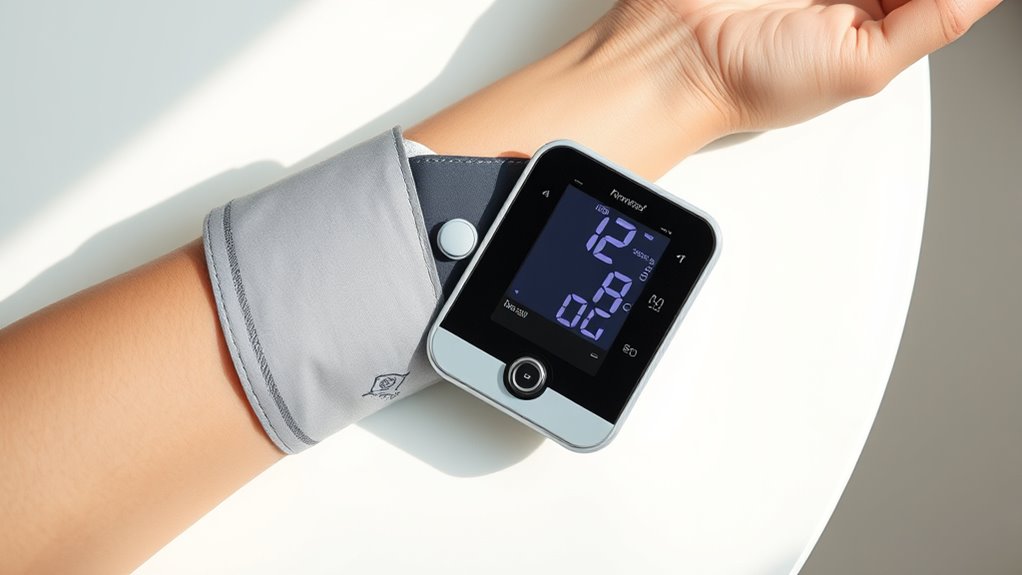

To get accurate home blood pressure readings, choose consistent times and avoid caffeine, exercise, and smoking beforehand. Sit with your back supported, feet flat, and your arm at heart level on a flat surface. Use a validated, well-maintained device and take multiple measurements, recording each result. Maintaining a steady routine and proper posture helps. Keep reading to discover more tips that can make tracking your health easier and more reliable.
Key Takeaways
- Measure blood pressure at the same times daily, following a consistent routine to track trends accurately.
- Ensure proper arm support at heart level with a comfortable, relaxed posture during readings.
- Wait at least 30 minutes after caffeine, smoking, or exercise before measuring.
- Take multiple readings one minute apart and record all results for reliability.
- Use a validated, well-maintained monitor and check calibration annually for accurate measurements.
Choose the Right Time and Conditions for Measuring
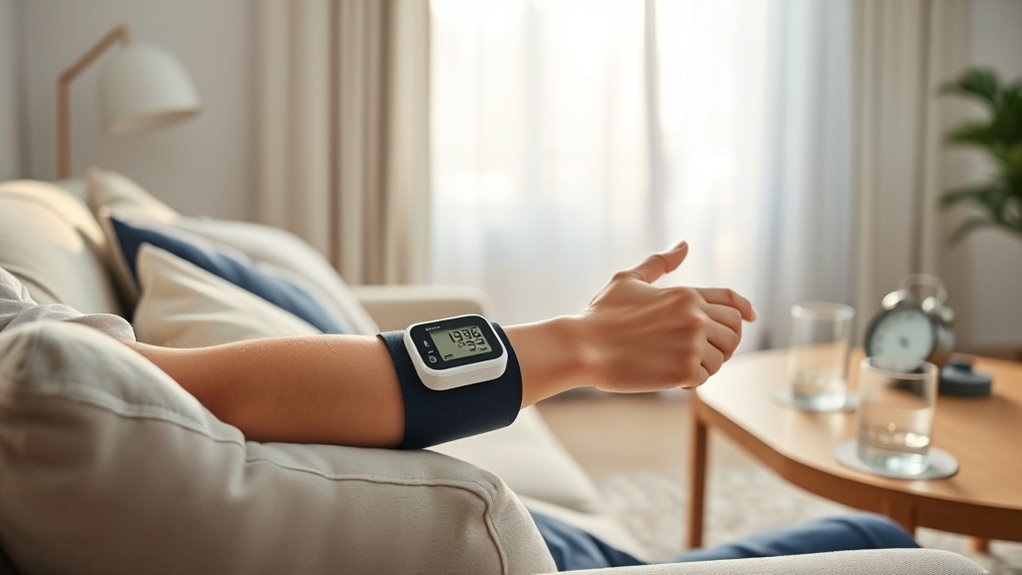
To get the most accurate blood pressure readings, you need to choose the right time and conditions for measuring. Timing considerations are important—measure your blood pressure at the same times each day, such as morning and evening, to track trends accurately. Avoid taking readings immediately after exercise, caffeine, or smoking, as these can temporarily raise your blood pressure. Environmental factors also matter; ensure you’re in a quiet, comfortable space with a stable temperature. Avoid measuring when you’re stressed or anxious, as these feelings can skew results. Sit calmly for five minutes before taking a reading. Ensuring proper calibration of your blood pressure monitor is also essential for accurate measurements. Additionally, maintaining consistent measurement techniques helps improve the reliability of your readings. Being aware of measurement timing and environmental factors can significantly improve your blood pressure accuracy. Using validated devices and following manufacturer instructions can further enhance measurement precision. Regularly checking your device’s accuracy through professional calibration can prevent measurement errors over time. By paying attention to timing considerations and environmental factors, you’ll get more consistent and reliable blood pressure measurements, helping you better manage your health.
Sit Properly With Support for Your Arm and Back

Sit in a comfortable chair that supports your back, ensuring you stay relaxed during measurement. Keep your arm level with your heart to get an accurate reading. Use a cushion or support if needed to maintain proper arm and back positioning. To enhance the accuracy of your readings, consider using smart blood pressure monitors, which offer automated features and connectivity options. Ensuring proper body positioning is essential for reliable blood pressure results. Additionally, maintaining a consistent measurement environment, such as a quiet, comfortable space, can help improve the accuracy of your readings. Being mindful of cuff placement also contributes significantly to measurement accuracy.
Use a Comfortable Seat
Using a comfortable seat is essential for accurate blood pressure readings, as discomfort can lead to body movements that skew results. Focus on chair comfort by choosing a seat that supports your back well, helping you stay relaxed during measurement. Make sure your chair has proper arm padding or add a cushion to support your arm comfortably. Your arm should rest at heart level, so adjust your seat height if needed. Sit with your back fully supported and keep your feet flat on the floor. Avoid crossing your legs, which can affect blood flow. Staying comfortable minimizes muscle tension and movement, giving you a more accurate reading. Additionally, maintaining a proper measurement environment free from distractions can further improve accuracy. Remember that body position plays a crucial role in obtaining reliable blood pressure readings. Taking the time to find the right seat setup makes a significant difference in the reliability of your blood pressure measurements, especially when you create a comfortable and supportive workspace that promotes proper posture. Ensuring your body positioning is correct helps achieve consistent and precise readings over time.
Keep Arm Level With Heart
Ensuring your arm is level with your heart is essential for an accurate blood pressure reading. Proper arm positioning helps prevent measurement errors that can occur if your arm is too high or too low. Sit comfortably with your back supported and rest your arm on a flat surface, such as a table, so that the cuff is at the same level as your chest. Keep your palm facing upward and avoid crossing your legs or leaning on one side. Maintaining this position ensures measurement accuracy, providing a true reflection of your blood pressure. Take a moment to adjust your arm if needed before measuring. Correct arm positioning is a simple yet crucial step in obtaining reliable readings at home. Awareness of measurement errors can help you recognize the importance of proper technique for the most accurate results.
Support Your Back Properly
Supporting your back during blood pressure measurement helps maintain proper posture and reduces muscle tension that can affect your reading. To achieve this, make certain your chair provides good ergonomic support, keeping your back straight and supported. Proper posture correction minimizes errors caused by slouching or leaning.
Here are key tips:
- Use a chair with lumbar support to maintain the natural curve of your spine.
- Sit back fully, avoiding leaning forward or slouching.
- Keep your feet flat on the floor and your back flush against the chair for stability.
Position Your Arm Correctly at Heart Level

To get an accurate blood pressure reading, ensuring your arm is positioned at heart level is vital. Proper arm positioning helps avoid false readings caused by gravity. Keep your arm relaxed and supported on a flat surface, like a table, with the cuff at the same height as your heart. Use this table to understand the importance:
| Arm Positioning | Heart Level Alignment | Impact on Readings |
|---|---|---|
| Unsupported arm | Below heart level | Overestimates blood pressure |
| Unsupported arm | Above heart level | Underestimates blood pressure |
| Supported arm | At heart level | Accurate readings |
| Relaxed posture | Proper alignment | Consistent results |
| Tension avoided | Correct arm position | Reliable measurements |
Additionally, maintaining a calm environment during measurement can further improve accuracy. Incorporating smart home technology such as voice assistants or automated reminders can help ensure you follow proper positioning and environment for more consistent results. Being aware of measurement conditions like room temperature and quiet surroundings can also impact the accuracy of your readings. Proper posture, environmental factors, and consistent blood pressure readings are crucial for accurate monitoring.
Avoid Caffeine, Exercise, and Smoking Before Measuring

Before measuring your blood pressure, make sure to wait at least 30 minutes after eating, exercising, or smoking. These activities can temporarily raise your readings and give you inaccurate results. Limiting stimulant intake helps guarantee your measurements reflect your true blood pressure. Understanding blood pressure is essential for managing your health effectively. Additionally, proper cuff placement ensures a more accurate reading by preventing measurement errors. Being aware of how digital distractions can impact your focus may also improve the consistency of your readings. Recognizing the importance of accurate readings can help you better track and manage your cardiovascular health. Ensuring your environment is well-ventilated can also contribute to more reliable measurements by reducing external influences.
Wait Before Measurement
Waiting at least 30 minutes after consuming caffeine, exercising, or smoking guarantees your blood pressure reading is accurate. Proper measurement timing is essential for reliable results, and pre measurement preparation helps prevent false readings. During this waiting period, avoid any activities that could temporarily raise your blood pressure.
To guarantee accurate readings, keep these tips in mind:
- Rest quietly in a chair with your back supported and feet flat on the floor.
- Relax your arm, keeping the cuff at heart level.
- Stay still and avoid talking during the measurement.
Following these guidelines helps you get consistent, precise blood pressure readings at home, giving you a better understanding of your health status.
Limit Stimulant Intake
Stimulants like caffeine, nicotine from smoking, and recent exercise can temporarily raise your blood pressure, leading to inaccurate readings. These stimulant effects can give a false high, making it seem like your blood pressure is worse than it actually is. To get the most accurate results, avoid caffeine and nicotine for at least 30 minutes before measuring. Also, refrain from vigorous exercise during this period, as it can skew your numbers. Caffeine avoidance is especially important because caffeine can cause a short-term spike in blood pressure, even hours after consumption. By limiting stimulant intake before your measurement, you ensure your readings truly reflect your resting blood pressure, helping you manage your health more effectively.
Take Multiple Readings and Record the Results
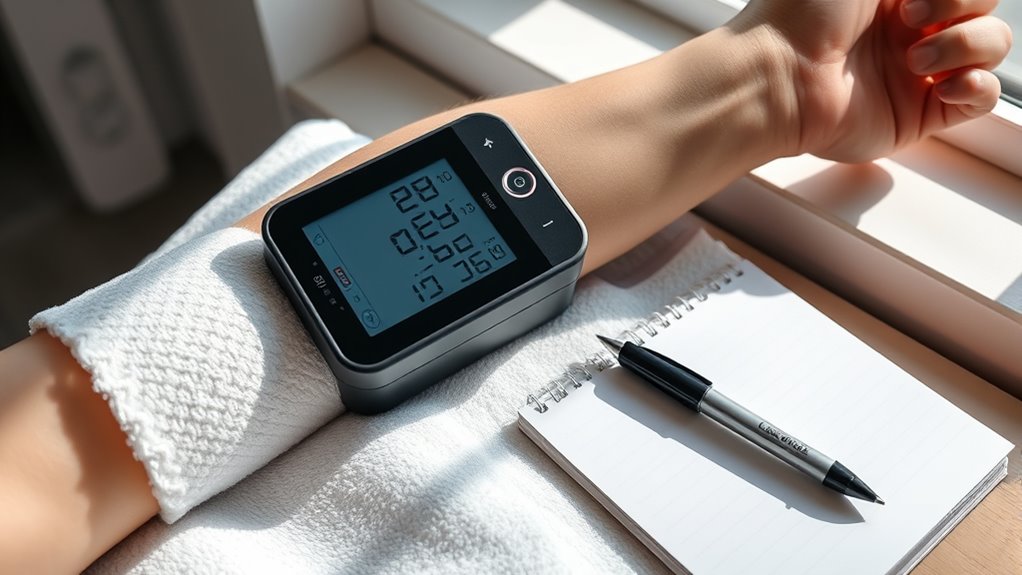
Taking multiple blood pressure readings during a single session guarantees you get an accurate picture of your blood pressure levels. To do this effectively, follow proper recording techniques and take duplicate measurements. This helps smooth out any fluctuations and provides a reliable reading. When recording results, note down each measurement carefully, including the date and time. Remember these key points:
- Take at least two readings, a minute apart, to ensure consistency.
- Use duplicate measurements to verify accuracy.
- Record all readings promptly and clearly in a log or notebook.
Use a Validated and Well-Maintained Blood Pressure Monitor
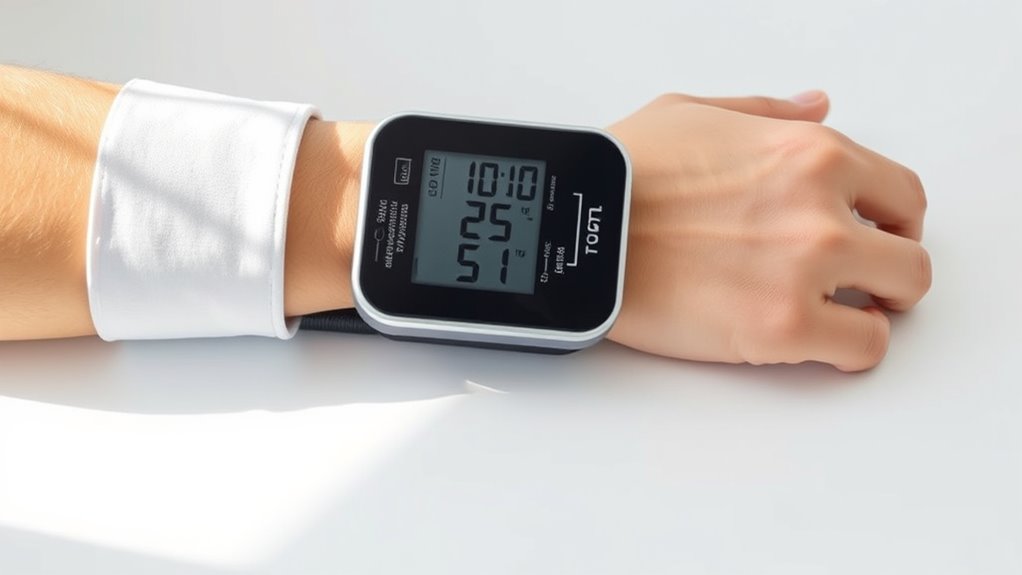
Using a validated and well-maintained blood pressure monitor is essential for obtaining accurate readings. Regular calibration guarantees your device remains reliable; most monitors should be calibrated annually or as recommended by the manufacturer. Checking the calibration frequency prevents drift that could lead to inaccurate results. Additionally, monitor battery life affects performance—low batteries can cause inconsistent readings or device errors. Always replace batteries promptly to maintain accuracy. Keep your monitor clean and stored properly to avoid damage. Using a validated monitor verified by reputable health organizations guarantees the device measures blood pressure correctly. Avoid using old or unverified monitors, as they may produce misleading results. Proper maintenance and timely calibration help you get trustworthy readings for better health management.
Be Consistent With Your Measurement Routine

To get the most accurate picture of your blood pressure, it’s important to measure at the same times and under similar conditions each day. Sticking to a consistent measurement schedule helps reduce variability and ensures your data tracking is reliable. When you follow a routine, you can better identify trends and changes over time.
Here are some tips to stay consistent:
- Measure at the same time each day, such as morning and evening.
- Avoid caffeine, exercise, and smoking 30 minutes before readings.
- Record each measurement immediately to keep your data tracking accurate.
Frequently Asked Questions
How Often Should I Check My Blood Pressure at Home?
You should check your blood pressure at home at least once a day, ideally around the same time each day to guarantee measurement consistency. If your doctor recommends more frequent monitoring, follow their guidance. A steady monitoring schedule helps track trends accurately. Be sure to rest for a few minutes before measuring, and avoid caffeine or exercise beforehand for the most reliable readings.
Can Stress or Anxiety Affect My Home Blood Pressure Readings?
Stress impact and anxiety effects can definitely influence your home blood pressure readings. When you’re anxious, your body releases hormones that temporarily raise your blood pressure, leading to higher readings. To get accurate results, try to stay calm and relaxed before measuring. Deep breathing or sitting quietly for a few minutes can help reduce anxiety effects, ensuring your readings reflect your true blood pressure rather than temporary stress.
What Should I Do if My Readings Are Consistently High?
If your readings are consistently high, don’t ignore them — about 1 in 3 adults has hypertension. You should consult your healthcare provider to discuss possible medication adjustments and lifestyle modifications, like reducing salt intake, exercising regularly, and managing stress. Keep track of your readings, stay consistent with your medication, and follow your doctor’s advice to lower your blood pressure effectively and reduce health risks.
Is It Necessary to Take Blood Pressure Readings on Both Arms?
You don’t need to take blood pressure readings on both arms every time, but it’s helpful to check for arm dominance and verify reading consistency. Start with your dominant arm, usually the one you use most, as it might give slightly higher readings. If you notice significant differences between arms, consult your doctor. Regularly monitoring on the same arm helps track your blood pressure accurately over time.
How Do I Interpret the Differences Between Multiple Readings?
You should look for consistency across your readings to interpret differences properly. If readings vary considerably, it could be due to measurement variability or other factors like posture or stress. Focus on patterns over time rather than single measurements. Consistent readings, especially if they stay high or low, help your healthcare provider assess your blood pressure accurately. Keep track of multiple readings to identify true trends and ensure reliable monitoring.
Conclusion
By choosing the right time, sitting properly, positioning your arm correctly, avoiding caffeine and exercise, taking multiple readings, using a validated monitor, and staying consistent, you guarantee accurate blood pressure readings. These simple steps create a routine you can trust, a routine that empowers you, a routine that helps you manage your health. Make these habits part of your daily life, and you’ll gain clearer insights, greater confidence, and better control over your blood pressure.