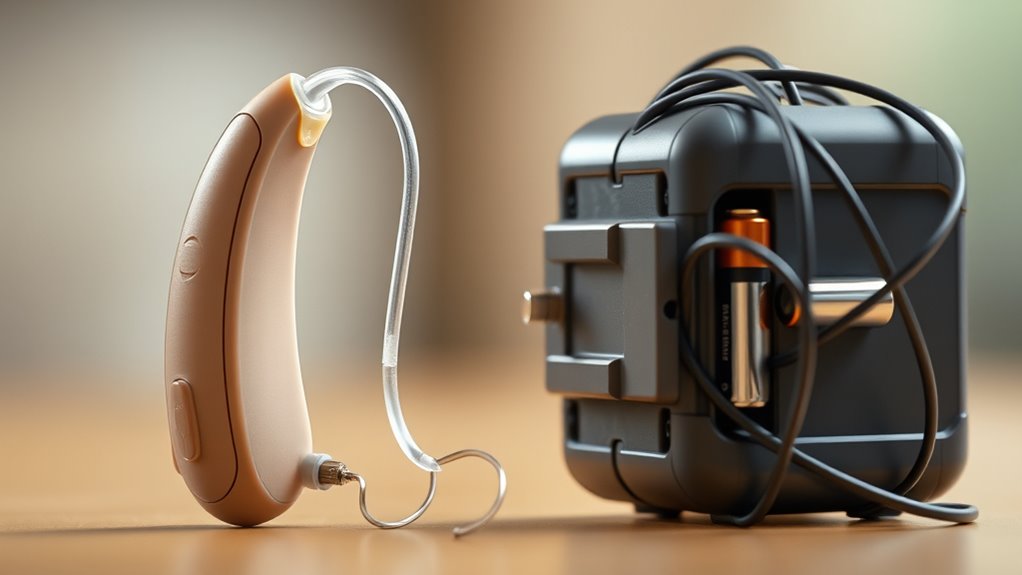

Affordable hearing amplifiers might seem like a quick fix, but they often lack the advanced features, sound clarity, and customization of true hearing aids. They amplify all sounds equally, which can overwhelm you in noisy settings and distort speech. Genuine hearing aids are professionally fitted, regulated for safety, and designed for long-term use, offering clear sound and improved hearing health. If you want to understand how to make the best choice, keep exploring these differences.
Key Takeaways
- Affordable hearing amplifiers lack advanced noise reduction, sound processing, and customization features found in genuine hearing aids.
- Hearing aids are regulated medical devices offering superior sound clarity, tailored fit, and long-term durability.
- Amplifiers often distort sounds and do not differentiate background noise from speech, reducing overall hearing quality.
- True hearing aids include ongoing support, maintenance, and insurance coverage, unlike basic amplifiers with limited services.
- Investing in certified hearing aids ensures safety, reliability, and effective long-term hearing health benefits.
How Hearing Amplifiers Work and Their Limitations
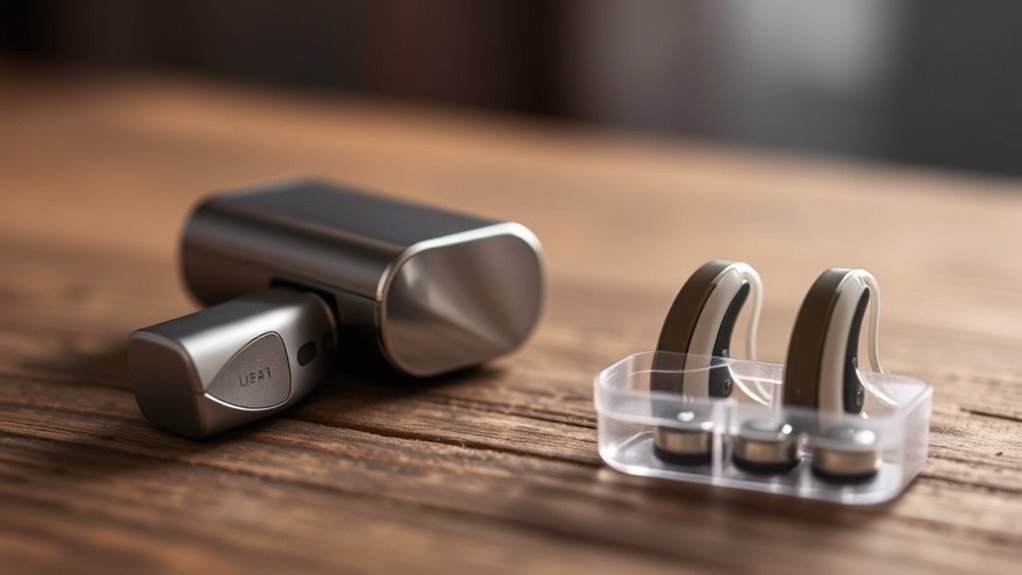
Hearing amplifiers work by picking up sounds from your environment through a microphone, then boosting those sounds before sending them directly to your ears. This process provides sound amplification, making quiet sounds more audible. However, these devices have limitations. They don’t differentiate between important sounds, like speech, and background noise, which can lead to overwhelming or unclear audio. Unlike true hearing aids, they lack advanced features such as noise reduction and frequency customization. As a result, device limitations mean you might not get a natural listening experience or improved clarity in challenging environments. While affordable and easy to use, hearing amplifiers simply don’t offer the tailored assistance that actual hearing aids provide for those with more significant hearing loss. Additionally, they do not incorporate digital signal processing technologies found in true hearing aids, which are essential for optimized hearing in complex situations.
The Technology Behind Genuine Hearing Aids

Genuine hearing aids use advanced sound processing to deliver clearer audio tailored to your environment. They also feature customized fitting technology that guarantees comfort and ideal performance. Plus, their noise reduction capabilities help minimize background sounds, so you can focus on what matters most. Additionally, high-quality components ensure durability and consistent performance over time. Modern designs and advanced technology further enhance user experience by making devices more discreet and easier to operate. Implementing sound processing features helps optimize hearing clarity in diverse auditory settings. Incorporating user-centered design ensures these devices are both accessible and comfortable for daily use. Moreover, technology integration allows for seamless connectivity with other devices, enhancing overall usability.
Advanced Sound Processing
While affordable hearing amplifiers often rely on basic amplification, advanced sound processing is the hallmark of genuine hearing aids. This technology allows for sound customization, adjusting how sounds are amplified based on your environment and hearing needs. It filters out background noise, making speech clearer and more natural. Additionally, sophisticated feedback prevention systems detect and reduce whistling or squealing before it becomes disruptive. These features work together to deliver a more comfortable and seamless listening experience. Unlike simple amplifiers, true hearing aids analyze sound patterns in real-time, prioritizing important sounds while minimizing distractions. Real-time sound analysis ensures you hear more clearly across various settings, making genuine hearing aids a more effective and reliable solution for those with hearing loss.
Customized Fitting Technology
Customized fitting technology guarantees your hearing device provides the most effective and comfortable experience. When your device is tailored to your ear’s unique shape, it enhances your hearing health by delivering clearer sound and reducing discomfort. This precise fit also minimizes the need for frequent device maintenance, as a well-fitted hearing aid stays secure and functions properly longer. Unlike generic amplifiers, genuine hearing aids use advanced scanning and molding techniques to create a personalized fit, ensuring peak performance. Proper customization helps prevent issues like feedback, irritation, or poor sound quality. Additionally, the use of personalized fitting technology in genuine hearing aids ensures optimal comfort and functionality for each individual user. By choosing devices with customized fitting technology, you invest in a solution that promotes better hearing health and reduces the hassle of adjustments or repairs, giving you peace of mind and confidence in your hearing device.
Noise Reduction Capabilities
Noise reduction technology is a key feature that sets high-quality hearing aids apart from basic amplifiers. It helps minimize background noise, making it easier to focus on conversations and improve speech intelligibility. Genuine hearing aids use advanced algorithms to distinguish speech from unwanted sounds, reducing the impact of background noise in real time. This feature is especially important in noisy environments like restaurants or crowded places, where clarity is essential. Affordable amplifiers often lack sophisticated noise reduction, resulting in muddled sounds and decreased speech comprehension. By filtering out background noise effectively, true hearing aids enhance your overall hearing experience, allowing you to engage confidently in conversations without straining or missing important details. This technology makes a significant difference in everyday communication. advanced algorithms play a crucial role in delivering effective noise reduction and overall sound quality. Additionally, ongoing innovations in noise management continue to improve the user experience by providing clearer, more natural sound environments, with some devices now incorporating adaptive filtering that automatically adjusts to changing noise levels for optimal clarity. The integration of digital signal processing further refines these features, ensuring more precise and personalized hearing assistance.
Cost Differences and What They Cover

You’ll notice that prices for hearing devices vary widely, affecting what’s included in each option. Affordable amplifiers often cover basic sound enhancement, while hearing aids tend to offer more advanced features and ongoing services. Understanding these differences helps you choose the right solution for your needs and budget. Additionally, device features and functionality, along with after-sales support, play a crucial role in determining the overall value and suitability for individual users. Being aware of the tax implications of medical devices can also influence your purchasing decisions, especially when considering long-term costs and potential insurance coverage. Recognizing the importance of well-sourced name coverage ensures that consumers make informed choices based on comprehensive and reliable information. Moreover, considering the hydrotherapy benefits associated with certain devices might influence your decision if water-related health aspects are a priority.
Price Range Variability
How much you pay for a hearing amplifier or aid can vary widely depending on what features and services are included. This price disparity means you might find budget options that cost less but offer limited performance, or high-end models with advanced technology. Your choice impacts quality, durability, and support. Additionally, Free Floating options may lack the comprehensive features found in more expensive models. Here’s a quick look at the range:
| Price Range | What It Typically Covers |
|---|---|
| Budget options | Basic amplification, minimal support |
| Mid-range | Better sound quality, some customization |
| Premium | Advanced features, full aftercare services |
Understanding this variability helps you decide what’s right for your needs and budget, avoiding surprises later. Considering the warranty and after-sales support included can also influence the overall value of your purchase.
Included Features and Services
The features and services included with hearing amplifiers and aids can substantially affect their overall cost. True hearing aids often come with extensive offerings, such as regular hearing aid maintenance, advanced sound processing, and personalized programming. These extras can guarantee better performance and longevity. In contrast, amplifiers usually lack these added services, which may lead to higher maintenance costs down the line. Additionally, insurance coverage options often cover a significant portion of hearing aid expenses, making them more affordable. When comparing the two, consider what’s included, such as:
- Ongoing hearing aid maintenance and adjustments
- Advanced features like noise reduction
- Insurance coverage options for repairs and replacements
- support infrastructure often accompanies true hearing aids, providing users with ongoing assistance and troubleshooting to ensure optimal device performance. This support network can be a crucial factor in long-term user satisfaction and device durability. Moreover, a comprehensive auditory processing support system can significantly enhance the user’s overall hearing experience and success with their device.
Sound Quality and Clarity Comparison

While both affordable hearing amplifiers and traditional hearing aids aim to improve sound perception, their sound quality and clarity often differ considerably. Affordable devices may boost volume but often lack sound fidelity, making speech sound distorted or muffled. True hearing aids are engineered for superior audio clarity, filtering background noise and enhancing speech intelligibility. Here’s a quick comparison:
| Feature | Affordable Amplifiers | Hearing Aids |
|---|---|---|
| Sound Fidelity | Basic, often distorted | High, natural sound reproduction |
| Background Noise Control | Limited | Advanced noise filtering |
| Speech Clarity | Sometimes muffled | Clear, crisp speech |
| Customization | Minimal | Tailored to your hearing loss |
| Overall Audio Quality | Variable, often lower | Consistently high-quality sound |
Your choice impacts how well you perceive sounds and conversations daily.
Customization and Fitting Processes
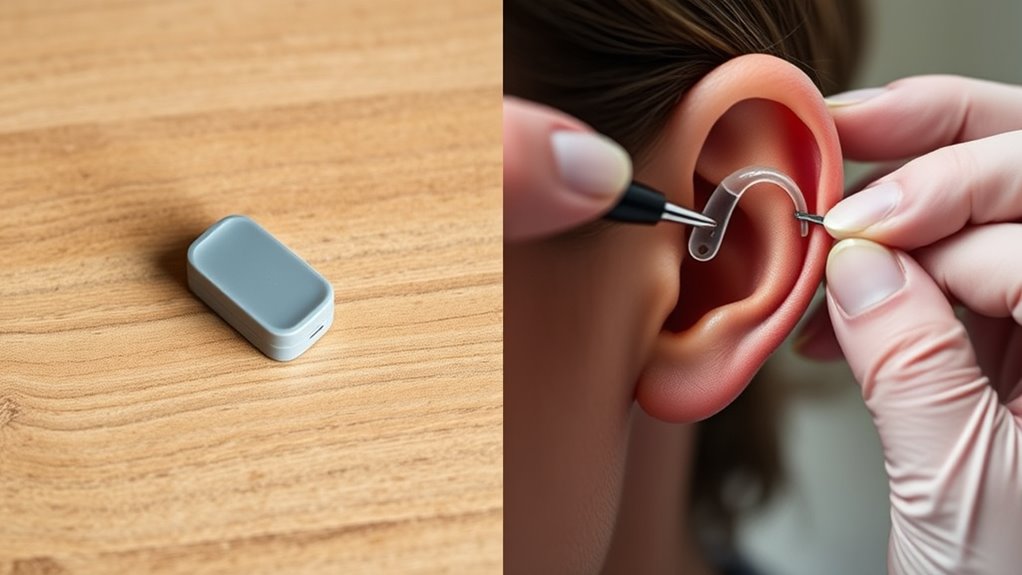
Customization and fitting are essential steps that determine how well a hearing device works for you. When choosing between affordable amplifiers and professional hearing aids, the process involves personalized fitting procedures and a range of personalization options. This guarantees the device adapts ideally to your hearing needs. With professional fitting, audiologists tailor the device to your ear shape and hearing profile, providing better comfort and sound quality. In contrast, many affordable amplifiers lack this level of customization, often offering a one-size-fits-all approach. To maximize effectiveness, look for devices that provide:
- Multiple personalization options for tailored sound
- Precise fitting procedures for comfort and clarity
- Adjustable settings to adapt to your environment
This process directly impacts your overall hearing experience and satisfaction, especially considering that customized fittings are crucial for optimal device performance and comfort.
The Importance of Professional Evaluation

Professional assessment plays a crucial role in guaranteeing you get the most effective hearing solution. Without it, you risk misdiagnosing your hearing loss causes or overlooking issues like earwax buildup that can mimic hearing loss. A thorough evaluation by an audiologist identifies specific problems, guiding proper treatment. Here’s what a professional evaluation covers:
| Aspect | What It Checks | Why It Matters |
|---|---|---|
| Earwax buildup | Obstructions affecting hearing | Clears blockages, restores clarity |
| Hearing thresholds | Degree and type of hearing loss | Determines appropriate device |
| Hearing loss causes | Medical or environmental factors | Guides treatment plan |
| Ear health | Infections, damage | Ensures overall ear health |
| External issues | Eardrum damage, other anomalies | Prevents misdiagnosis |
Skipping professional assessment risks ineffective solutions and ongoing hearing issues.
Durability and Long-Term Reliability
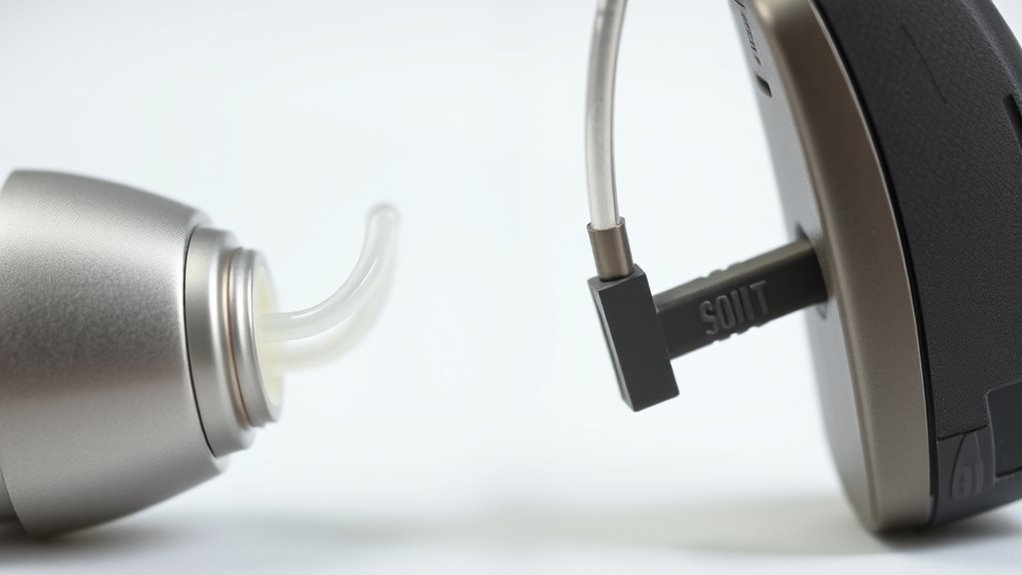
Durability and long-term reliability are essential factors to contemplate when choosing a hearing device, as they determine how well it will perform over time. Cheaper amplifiers often lack the build quality of genuine hearing aids, leading to issues like shortened battery life and fragile components. You should consider how the device handles daily wear and tear, especially if you plan to use it extensively.
- Poor device aesthetics can make them more prone to damage or neglect
- Low-quality batteries may require frequent replacements, reducing dependability
- Fragile construction can lead to breakage or malfunction over time
Investing in a durable device ensures consistent performance and longevity, saving you money in the long run. Remember, true hearing aids are designed to withstand daily use, providing you with dependable support for your hearing health.
Potential Risks of Using Over-the-Counter Devices
While affordable hearing amplifiers may seem like a convenient solution, they come with potential risks that you should be aware of. One major concern is DIY risks—you might not properly fit or adjust the device, which can worsen your hearing issues or cause discomfort. Without professional guidance, you could miss underlying health problems that require medical attention. Additionally, legal concerns exist because over-the-counter devices aren’t regulated as strictly as prescribed hearing aids. Using them improperly might lead to unintended damage or interfere with other treatments. Relying solely on these amplifiers can give a false sense of improvement, delaying necessary professional evaluation. Overall, while they seem affordable, the risks could outweigh the benefits if you’re not cautious.
Making an Informed Choice for Your Hearing Health
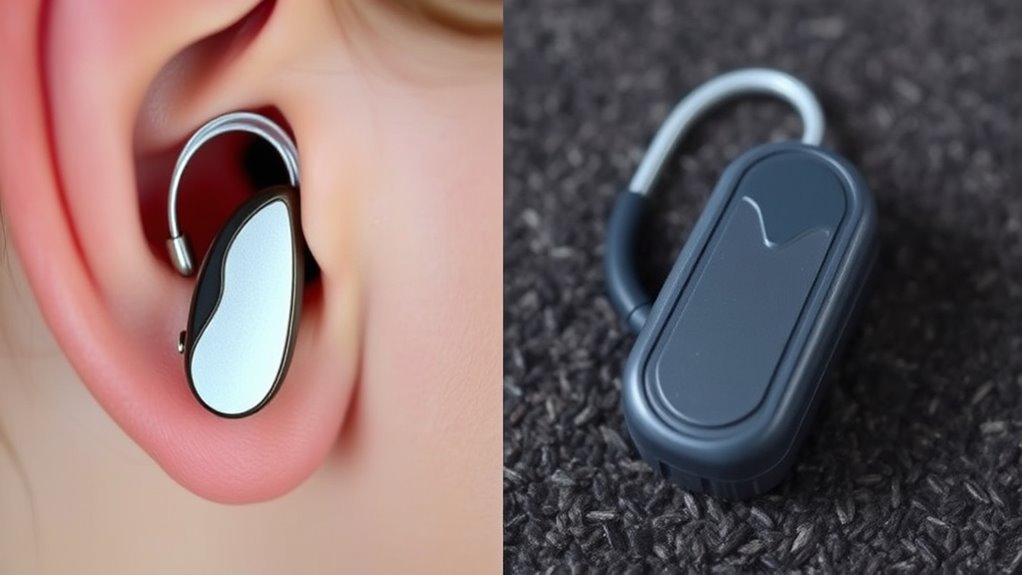
Making an informed choice about your hearing health means understanding all your options and their potential impact. When evaluating devices, consider factors like cosmetic appearance and user comfort, which affect your confidence and daily experience. True hearing aids typically offer better sound quality, personalized settings, and long-term reliability. Be aware that affordable devices may compromise on discreetness and comfort, leading to dissatisfaction. To make the best decision, weigh these key points:
Choose hearing solutions that prioritize comfort, discreetness, and long-term reliability for better confidence and daily experience.
- Cosmetic appearance: How discreet and attractive the device looks.
- User comfort: How comfortable and easy it is to wear for extended periods.
- Long-term benefits: The durability and effectiveness over time.
Your goal should be a device that comfortably fits your lifestyle, offers clear sound, and boosts confidence in your hearing health.
Frequently Asked Questions
Can Over-The-Counter Devices Fully Replace Professional Hearing Aids?
Over-the-counter devices can’t fully replace professional hearing aids because they lack personalized device customization, which is crucial for effective hearing safety. While these devices might help mild hearing loss, they often don’t address specific needs or provide the same sound clarity. For better results and protection, consulting an audiologist ensures your device is tailored to your hearing profile, offering a safer and more effective solution.
How Do Hearing Amplifiers Affect Long-Term Hearing Health?
Hearing amplifiers can negatively impact your long-term hearing health if used improperly. They might mask hearing loss symptoms temporarily but don’t address underlying issues, potentially worsening hearing loss over time. If you ignore early signs of hearing loss, your ear health could decline further, making future treatment more difficult. Always consult a professional to safeguard your hearing and ensure proper management of hearing loss, rather than relying solely on over-the-counter amplifiers.
Are There Hidden Costs Associated With Genuine Hearing Aids?
Yes, genuine hearing aids often come with hidden costs like limited cost transparency and potential repair expenses. You might face extra charges for warranty coverage or replacements if issues arise. It’s important to ask your provider about all costs upfront, including warranty details, so you’re not surprised later. Investing in quality hearing aids can save you money and hassle over time, ensuring better hearing health and peace of mind.
What Are the Legal Regulations Surrounding OTC Hearing Devices?
Coincidentally, recent changes mean OTC hearing devices now fall under specific regulatory standards designed to guarantee safety and effectiveness. You’re protected by consumer protections that regulate quality and labeling, making it easier to choose a device confidently. These regulations aim to prevent misleading claims, so you get reliable products. Always check that OTC hearing aids meet the FDA regulations to ensure they’re safe and meet your needs without unnecessary risks.
How Often Should Hearing Aids Be Professionally Evaluated or Serviced?
You should have your hearing aids professionally evaluated and serviced at least once a year. Regular hearing maintenance guarantees your device stays calibrated correctly, optimizing sound quality and comfort. During these check-ups, professionals can perform device calibration, address any issues, and replace worn parts. Staying consistent with these evaluations helps maintain your hearing health and ensures your device continues to function effectively.
Conclusion
Choosing between affordable hearing amplifiers and genuine hearing aids can seem overwhelming. While cheaper options might save you money now, they often fall short in sound clarity and long-term reliability. Investing in a proper hearing aid ensures you get personalized fitting, better sound quality, and lasting durability. Don’t let the initial cost discourage you—you’re prioritizing your hearing health and quality of life for years to come. Make an informed decision that truly benefits your hearing and well-being.