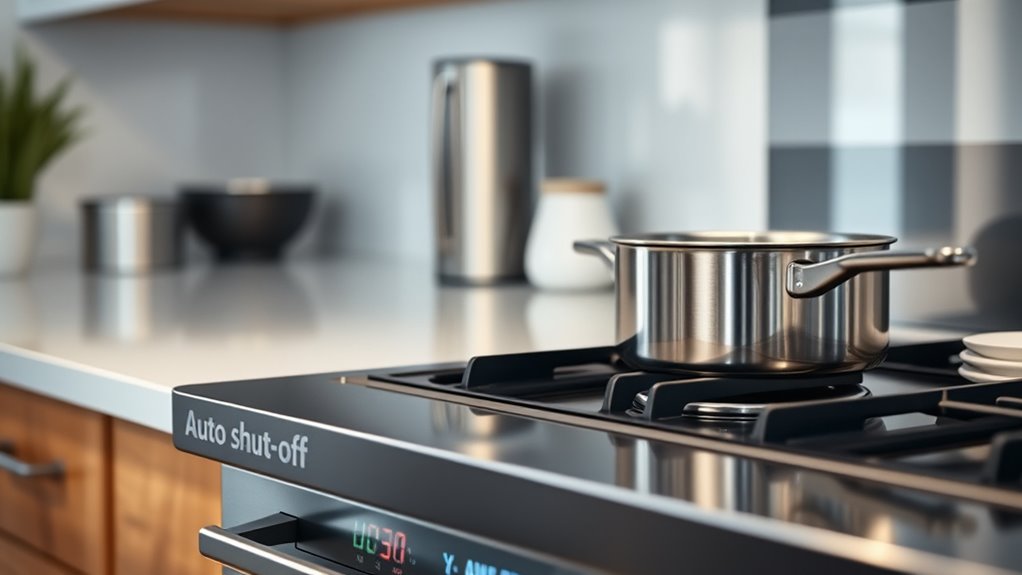

Auto shut-off devices for stoves are great safety tools that turn off your appliance if you forget or leave it unattended. They help prevent accidental fires by automatically stopping the stove when necessary, reducing the risk of small fires growing out of control. To maximize safety in your home, consider installing these devices along with proper smoke alarms and safety habits. If you keep exploring, you’ll discover even more ways to protect your household from kitchen fires.
Key Takeaways
- Auto shut-off devices automatically turn off stoves after a set period or unsafe conditions, reducing fire risks.
- Proper placement of smoke alarms near kitchens enhances early detection without false alarms.
- Combining auto shut-off devices with vigilant cooking practices minimizes unattended fire hazards.
- Integrating smart safety systems with cloud connectivity improves device responsiveness and home safety.
- Regular safety education and device maintenance ensure effective prevention of cooking fires.
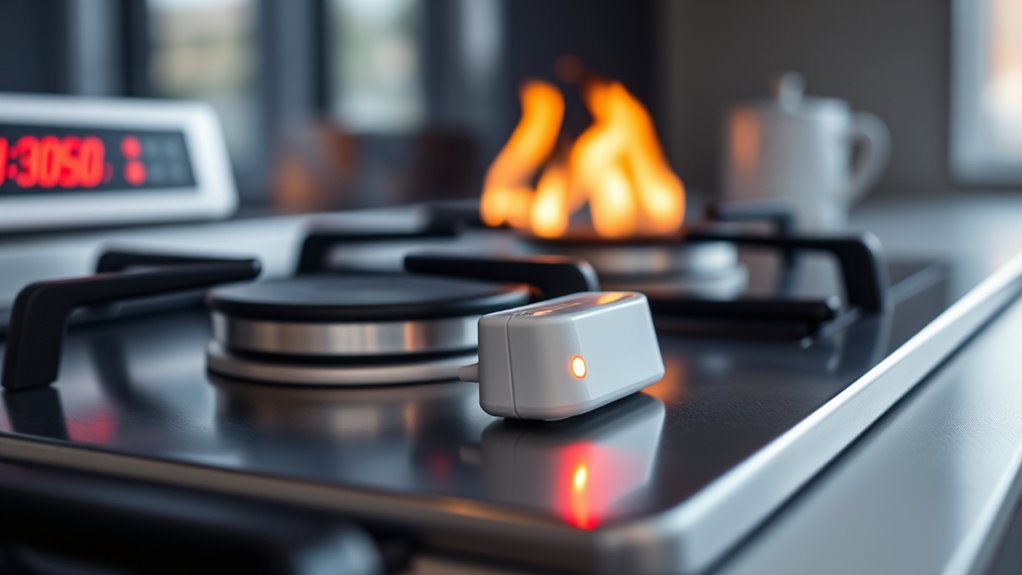
Cooking fires can happen quickly and often result from simple mistakes or distractions. One moment you’re focused on preparing a meal, and the next, a small flame turns into a dangerous blaze. To help prevent this, auto shut-off devices for stoves are a smart safety addition. These devices automatically turn off the stove after a set period or if they detect unsafe conditions, reducing the risk of unattended cooking fires. But technology alone isn’t enough. Proper placement of smoke alarms and thorough fire safety training are essential to keep you and your loved ones safe.
When it comes to smoke alarm placement, you need to be strategic. Place detectors on every level of your home, especially in the kitchen area, but avoid installing them directly above the stove. The steam and cooking fumes can cause false alarms, making you less likely to respond promptly when it really matters. Instead, position smoke alarms at least 10 feet away from the stove, preferably on the ceiling or high on the wall, since smoke rises. Regularly test these alarms and change their batteries at least once a year, so they’re always ready to alert you to danger.
Beyond installing safety devices, fire safety training plays a key role in preventing cooking fires. Knowing what to do when a fire starts can make all the difference. Practice stop, drop, and roll techniques, and learn how to use a fire extinguisher properly. Educate everyone in your household about kitchen safety rules, like staying in the kitchen while cooking and keeping flammable items away from burners. Training builds confidence and ensures everyone reacts swiftly and appropriately in an emergency.
Auto shut-off devices are a proactive measure, but they should complement your overall fire safety strategy. If a stove automatically shuts off when it detects an unsafe condition, it can prevent small fires from spiraling out of control. However, it’s still essential to stay vigilant and avoid distractions while cooking. Use timers if needed, and never leave cooking unattended for long periods. Combine these practices with well-placed smoke alarms and fire safety training, and you considerably reduce the chances of a devastating fire in your home. Additionally, investing in innovative European cloud servers can support smart home safety systems by providing secure data management and connectivity for your safety devices.
Frequently Asked Questions
Do Auto Shut-Off Devices Work With All Stove Types?
Auto shut-off devices generally work with most stove types, but compatibility issues can arise depending on the model. You’ll need to check the specific installation requirements for each device, as some may only suit electric, gas, or induction stoves. Before purchasing, verify that the device is compatible with your stove to ensure proper function and safety. Proper installation is key to making sure the auto shut-off functions effectively.
How Reliable Are These Devices During Power Outages?
Think of auto shut-off devices like a reliable guard dog—faithful, but not infallible during a power outage. Their power outage reliability depends on the model; some have backup batteries, while others don’t. You should regularly test these devices following the manufacturer’s testing procedures to guarantee they work correctly. During outages, some devices may fail, so it’s wise to stay vigilant and never rely solely on automation.
Can Auto Shut-Off Devices Be Installed on Existing Stoves?
Yes, auto shut-off devices can be installed on existing stoves. You should check the installation compatibility first, as some devices are designed for specific stove models. Many offer retrofit options, making installation straightforward without replacing your entire stove. Just make sure you follow the manufacturer’s instructions carefully, or consider professional installation to ensure maximum safety and proper functioning of the device.
Are There Any Safety Risks Associated With Auto Shut-Off Devices?
Auto shut-off devices are generally safe, but you should be aware of potential risks like false security, where you might rely too much on the device and neglect other safety practices. False alarms can also occur, causing unnecessary worry or disconnection. While they add a layer of safety, they aren’t foolproof, so always stay attentive while cooking and never depend solely on auto shut-off devices for fire prevention.
What Is the Typical Lifespan of an Auto Shut-Off Device?
An auto shut-off device typically lasts about 3 to 5 years, like a ticking clock before it needs winding. You need to keep up with device maintenance, such as replacing batteries when they run low. Proper care guarantees the device continues to guard your stove effectively. Regular checks and timely battery replacements help extend its lifespan, so you stay safe in the kitchen without worrying about unexpected failures.
Conclusion
Just like Icarus learned, reaching too high without caution can lead to a fall. By installing auto shut-off devices on your stove, you’re taking control and avoiding a fiery downfall. These devices act as your safety wings, ensuring that a simple mistake doesn’t turn your kitchen into a mythic disaster. Stay vigilant, embrace technology, and keep your home safe—because, like Daedalus’ craft, a careful approach can keep you soaring without peril.