
You may find that one walking aid can meet both indoor and outdoor needs, especially if it’s lightweight, sturdy, and easy to maneuver. However, the different terrains and obstacles you face mean that having two devices—like a stable indoor walker and a rugged outdoor model—can boost safety and confidence. By understanding your daily environments and the features of each aid, you can choose what’s best for you. Keep exploring to learn how to make the right choice.
Key Takeaways
- Indoor environments require lightweight, stable aids like walkers or canes for smooth, flat surfaces.
- Outdoor terrain demands sturdier devices with larger wheels and traction for uneven surfaces.
- A single versatile aid may suffice indoors, but outdoor needs often require specialized equipment.
- Using separate devices enhances safety and mobility tailored to each environment.
- Consulting a healthcare professional helps determine if one or two aids best suit individual outdoor and indoor needs.

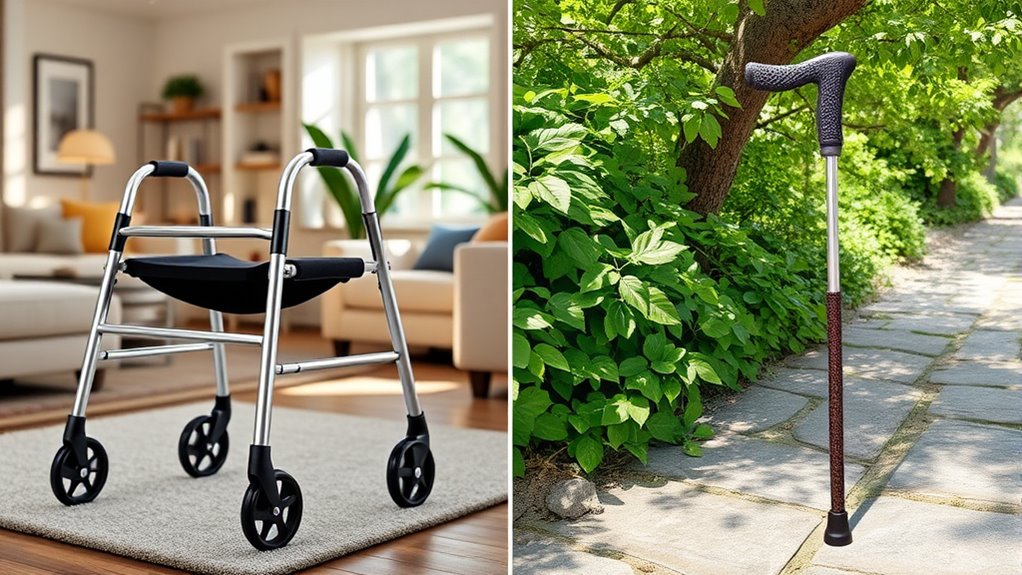
When choosing walking aids, it’s important to take into account where you’ll be using them most often. The environment greatly influences the type of support you need, especially when considering indoor safety and outdoor mobility. If your daily routines are primarily indoors, your walking aid should prioritize stability on smooth, flat surfaces like hardwood or tile floors. Indoor safety requires a device that offers reliable balance support, easy maneuverability, and minimal risk of tripping. For example, a standard walker or a sturdy cane with a broad base can help you navigate tight spaces, avoid obstacles, and reduce the chance of falls. These aids are often lightweight, easy to fold, and designed with gentle curves to prevent catching on furniture or rugs, making them ideal for confined spaces.
On the other hand, if your activities extend outside, your device needs to handle uneven terrain, inclines, and outdoor obstacles. Outdoor mobility demands a walking aid that provides robust support and traction. A four-wheeled rollator with larger wheels can handle pavement cracks and grassy patches better than a basic cane or small-wheeled walker. These devices often come with features like brakes for safety on slopes and wider seats for resting during longer outings. When selecting a walking aid for outdoor use, durability and stability become essential, as outdoor surfaces can be unpredictable and less forgiving than indoor flooring.
For outdoor mobility, choose a four-wheeled rollator with sturdy support and traction.
Many people wonder if they should invest in two different devices, and the answer depends on your lifestyle and health status. If you spend most of your time indoors, a single indoor aid might suffice, but if you frequently venture outside, having an outdoor-specific device can enhance your independence and safety. Some walking aids are versatile enough to serve both purposes; for example, a sturdy cane with good grip can be used indoors and outdoors, especially if it’s adjustable and lightweight. However, for those who require more support or face challenging terrains outside, it’s worth considering specialized equipment for each setting. Using the right aid in the right environment minimizes risks and maximizes your mobility.
Assessing your Gold IRA market options and understanding the different types of aids available can help you make an informed decision. Ultimately, choosing the correct walking aid involves assessing your daily environments and needs. Prioritize indoor safety to prevent falls at home, but don’t overlook outdoor mobility, which can markedly impact your freedom and confidence outside. If you’re unsure, consulting a healthcare professional can help you determine whether one device can do both jobs or if having two tailored aids will best support your independence and safety.
Frequently Asked Questions
Can I Use the Same Walking Aid for Both Indoor and Outdoor Use?
Yes, you can use the same walking aid for both indoor and outdoor use. Look for one with an ergonomic handle for comfort and a lightweight frame for easy maneuverability. A versatile device helps you move smoothly inside your home and outdoors without switching. Just guarantee it’s sturdy enough for uneven terrain outside, so you stay safe and supported wherever you go.
Are There Specific Features to Look for in Outdoor Walking Aids?
When choosing outdoor walking aids, look for features like a sturdy, lightweight frame that’s easy to carry and maneuver, plus an ergonomic grip that provides firm, comfortable support. These features guarantee stability, safety, and simplicity when steering through uneven terrains or outdoor obstacles. A well-designed outdoor aid helps you walk with confidence, control, and comfort, making each outdoor excursion secure and enjoyable.
How Do Indoor Walking Aids Differ in Design From Outdoor Ones?
Indoor walking aids typically feature an ergonomic grip and a lightweight frame, making them easier to maneuver in tight spaces. Outdoor aids, on the other hand, often have sturdier construction, larger wheels, and added stability for uneven terrain. You’ll find that indoor devices prioritize comfort and agility, while outdoor ones focus on durability and support. Choosing the right aid depends on your environment and mobility needs.
Is It Necessary to Switch Devices When Transitioning Between Indoor and Outdoor Environments?
Switching devices isn’t always necessary, but it can be like changing shoes for comfort. If your indoor aid has an ergonomic grip and suits your weight capacity outdoors, you might stick with it. However, outdoor aids often have sturdier frames for uneven terrain, so if your current device doesn’t meet those needs, switching guarantees safety and support. Always choose a walking aid tailored to each environment for maximum stability.
What Are the Safety Considerations for Outdoor Walking Aids?
When using outdoor walking aids, prioritize safety by checking terrain stability to prevent slips or falls. Make sure your device is weather-resistant to handle rain or uneven surfaces. Adjust the height for proper support, and always watch for obstacles like stones or wet leaves. Use grips designed for outdoor use, and carry an emergency kit if needed. Staying alert and choosing the right aid helps you stay safe and confident outdoors.
Conclusion
Ultimately, whether you need different walking aids indoors and outdoors depends on your specific needs. While some believe one device can serve both purposes, the environment often demands tailored support for safety and comfort. It’s worth questioning if a single aid truly meets all challenges or if investing in separate devices offers better stability and confidence. Sometimes, adapting your equipment reflects a deeper understanding that your mobility needs evolve with your surroundings.